
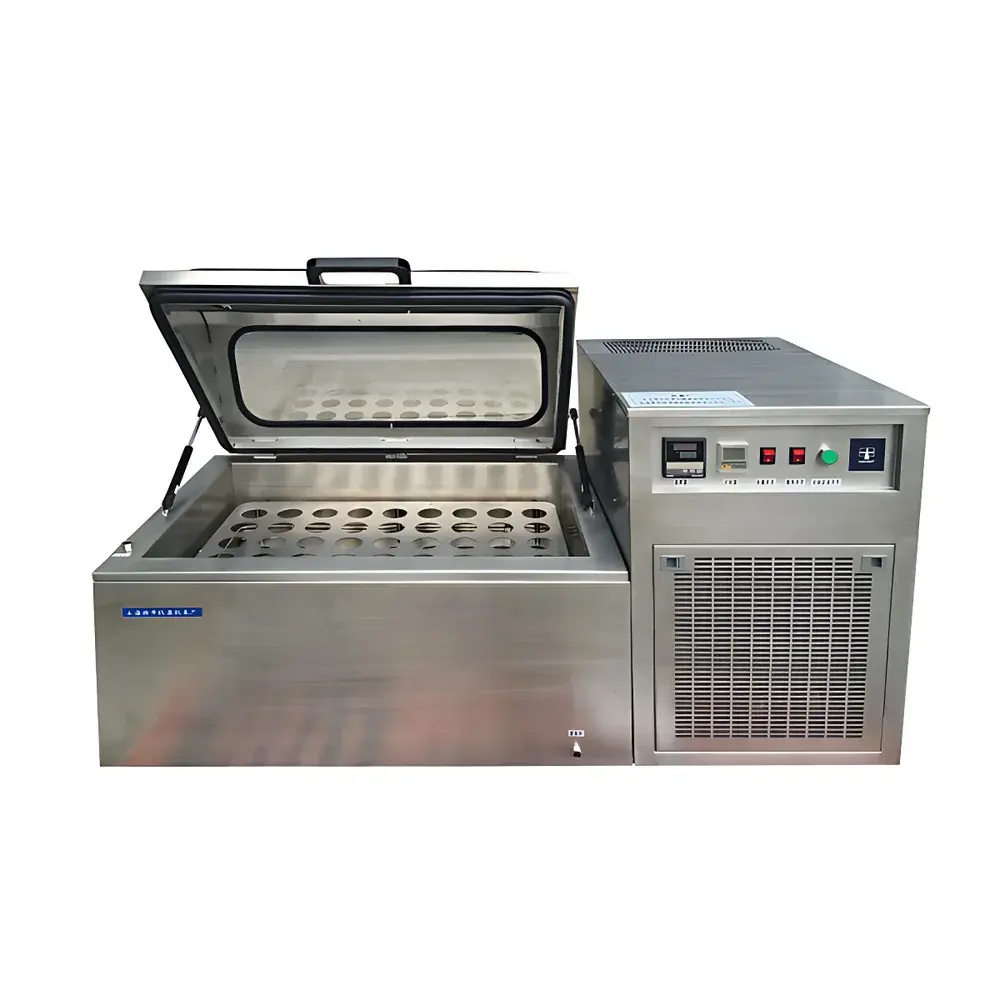
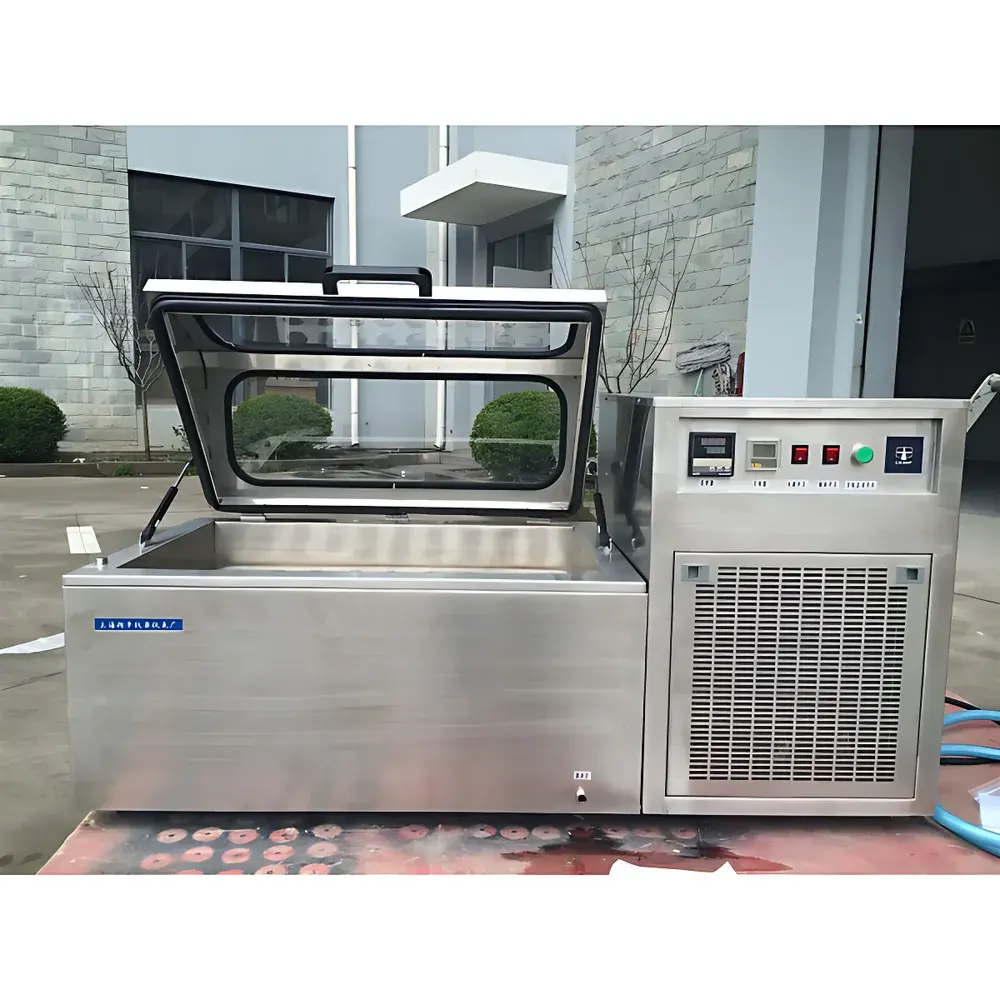
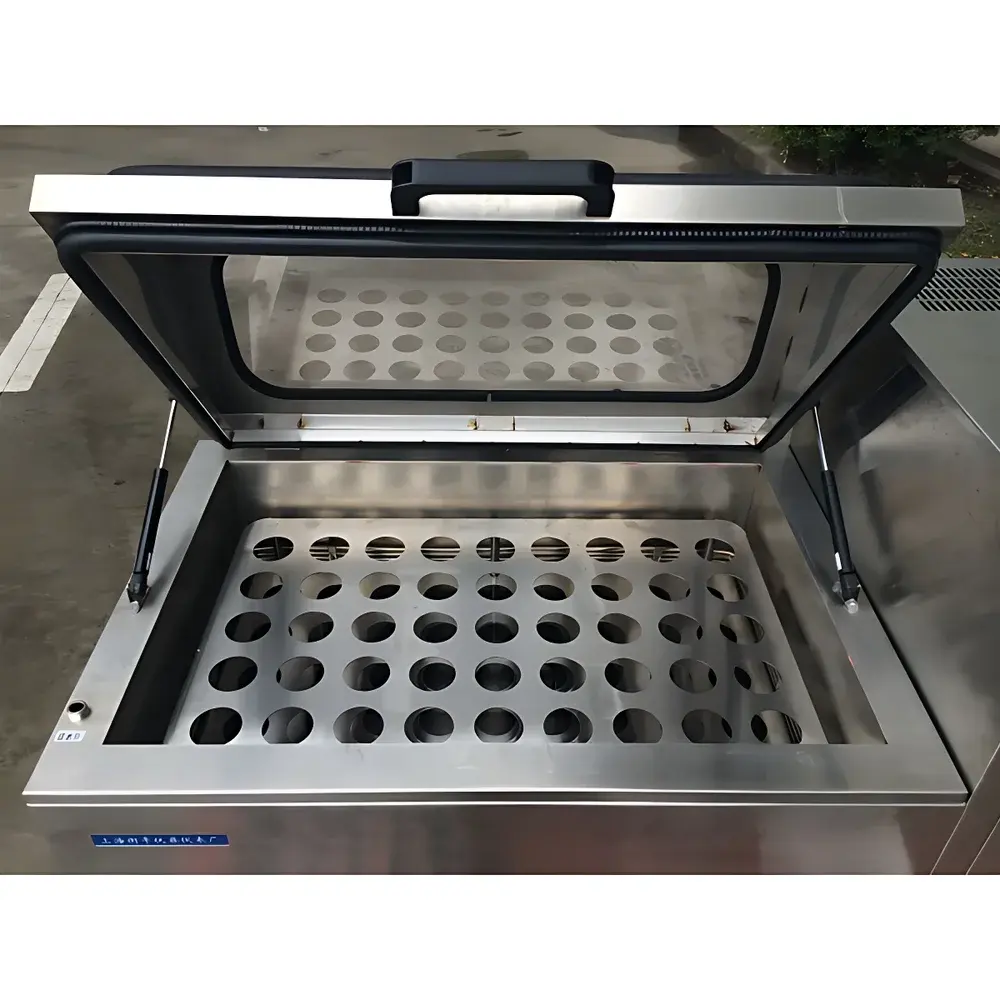
Shanghai Hengping Low-Temperature Constant-Temperature Bath / Cryogenic Circulating Thermostat
| Brand | Hengping |
|---|---|
| Origin | Shanghai, China |
| Model | Low-Temperature Constant-Temperature Bath |
| Temperature Range | Typically –20 °C to +100 °C (configurable) |
| Control Accuracy | ±0.1 °C |
| Display | High-Brightness LED Digital Display |
| Control Algorithm | PID Auto-Tuning |
| Timer Function | 0–999.9 hours |
| Construction | Full 304 Stainless Steel |
| Cooling Method | Air-Cooled Compressor System |
| Circulation Mode | Forced Internal Circulation with External Port Capability |
| Power Supply | 220 V AC, 50 Hz |
| Compliance | Designed for GLP-compliant lab environments |
Overview
The Shanghai Hengping Low-Temperature Constant-Temperature Bath is an engineered precision thermal management system designed to deliver stable, uniform, and programmable temperature control across a broad operational range—typically from –20 °C to +100 °C, depending on configuration. It functions as a closed-loop circulating thermostat, utilizing a hermetically sealed air-cooled refrigeration unit combined with a high-efficiency stainless-steel bath reservoir and integrated pump. The system operates on the principle of forced convection heat exchange: a thermally stable fluid (typically water or water–glycol mixture) is continuously circulated through the bath chamber and, optionally, external equipment via dual inlet/outlet ports. This enables both internal sample immersion and external temperature conditioning of analytical instruments (e.g., viscometers, spectrophotometers, calorimeters) or process lines. Its architecture supports steady-state thermal equilibrium with minimal spatial gradient (<0.2 °C across 150 mm immersion depth), making it suitable for applications requiring traceable, reproducible thermal conditions in R&D, quality control, and production validation settings.
Key Features
- Full 304 stainless-steel construction ensures corrosion resistance, long-term structural integrity, and compatibility with aqueous and mild organic media.
- PID auto-tuning temperature controller provides dynamic response to load changes and maintains setpoint stability within ±0.1 °C under standard operating conditions.
- High-brightness LED digital display offers real-time visibility of set temperature, actual bath temperature, and remaining timer duration—even under laboratory ambient lighting.
- Programmable timer (0–999.9 hours) supports unattended operation, scheduled shutdown, and compliance with time-bound thermal protocols (e.g., ASTM D2556 for viscosity conditioning).
- Air-cooled compressor design eliminates dependency on facility chilled water, enabling flexible benchtop deployment without plumbing modifications.
- Integrated circulation pump delivers consistent flow rates (adjustable up to 15 L/min) with low pulsation, minimizing thermal disturbance during sensitive measurements.
Sample Compatibility & Compliance
The bath accommodates a wide variety of sample formats—including glassware (beakers, flasks, cuvettes), metal fixtures, sensor probes, and modular instrument modules—provided they fit within the standard reservoir dimensions (typical capacity: 15–30 L). It is routinely deployed in laboratories adhering to ISO/IEC 17025, USP , and internal GLP/GMP documentation frameworks. While not certified to IEC 61000-4 electromagnetic immunity standards out-of-the-box, its analog-digital hybrid control board exhibits robust noise rejection in typical analytical lab EM environments. Device calibration procedures align with ISO 17025 Clause 6.6; users are advised to perform periodic verification using NIST-traceable RTD probes per internal SOPs.
Software & Data Management
This model operates via embedded firmware with no proprietary PC software requirement. However, analog voltage output (0–5 V or 4–20 mA) and RS232 serial interface are available as optional configurations—enabling integration into centralized Lab Information Management Systems (LIMS) or SCADA platforms for audit-trail-capable data logging. When equipped with communication modules, it supports timestamped temperature recording at user-defined intervals (1 s to 60 min), compliant with FDA 21 CFR Part 11 requirements when deployed with validated third-party acquisition software and electronic signature controls.
Applications
- Thermal conditioning of samples prior to rheological, viscometric, or density analysis (e.g., ASTM D445, ISO 3104).
- Stabilization of optical components and detectors in UV-Vis, FTIR, and fluorescence instrumentation.
- Controlled cooling/heating cycles in polymer crystallization studies and phase transition characterization.
- Supporting cold-chain validation for pharmaceutical excipients and biologics formulation development.
- Providing auxiliary temperature control for electrochemical cells, dissolution testers, and accelerated aging chambers.
FAQ
What is the standard temperature stability specification?
At 25 °C ambient and no external load, the system achieves ±0.1 °C stability over 30 minutes with typical water fill.
Can this unit be used with external recirculation loops?
Yes—dual 3/4″ BSP threaded ports support external circulation; maximum recommended loop length is 10 m with ≤2 m vertical lift.
Is glycol-based coolant compatible?
Yes; up to 30% ethylene or propylene glycol is supported—though maximum low-temperature limit shifts downward accordingly.
Does the unit include calibration documentation?
Factory calibration certificate is provided; full metrological traceability requires user-performed verification against accredited reference standards.
What maintenance intervals are recommended?
Compressor oil inspection every 24 months; condenser coil cleaning every 6 months in dust-prone environments; annual verification of PID response curve.
Related Products



