
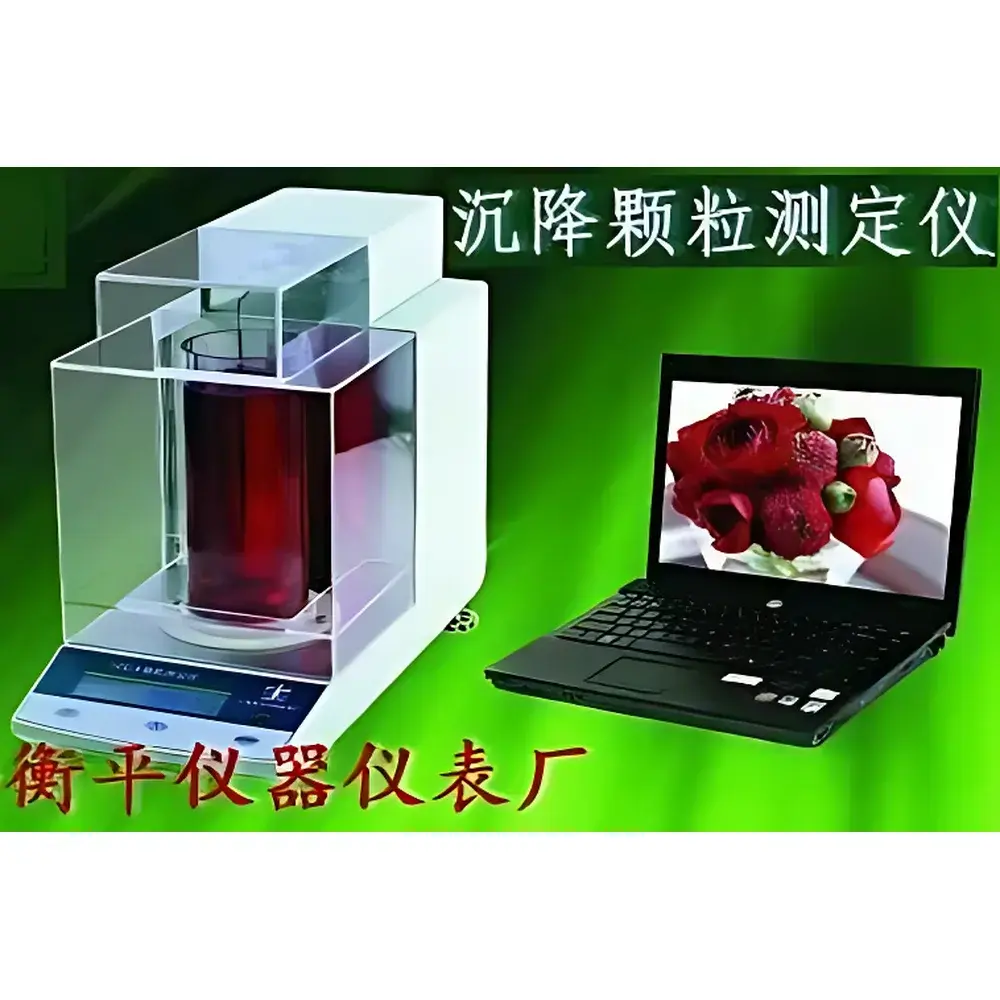
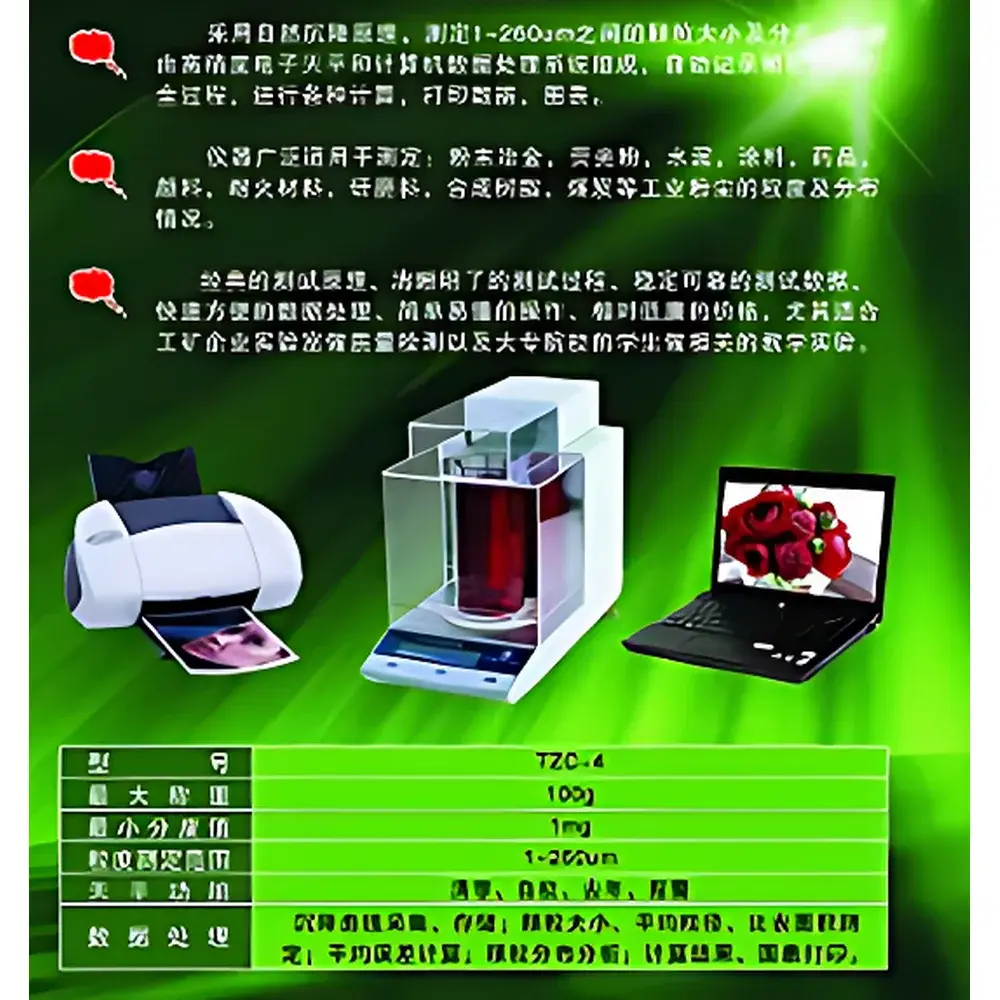
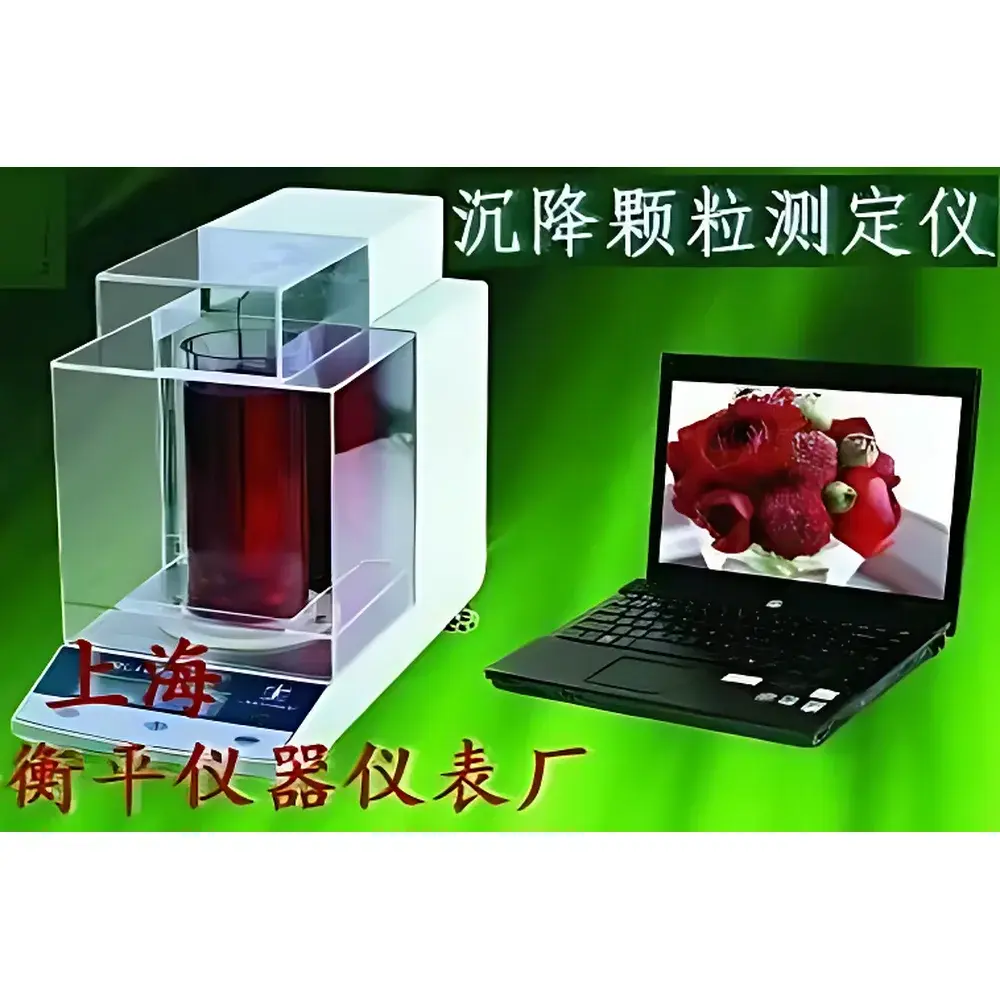
Shanghai Hengping TZC-4 Sedimentation Particle Size Analyzer
| Brand | Hengping |
|---|---|
| Origin | Shanghai, China |
| Model | TZC-4 |
| Measurement Principle | Gravity/centrifugal sedimentation |
| Particle Size Range | 1–260 µm |
| Maximum Weighing Capacity | 100 g |
| Readability | 1 mg |
| Data Acquisition | Real-time沉降 curve recording via integrated electronic balance and PC software |
| Environmental Requirements | 15–25 °C, RH 50–85%, temperature stability ≤1 °C/h |
| Compliance | Designed for GLP-aligned laboratory workflows |
Overview
The Shanghai Hengping TZC-4 Sedimentation Particle Size Analyzer is a benchtop instrument engineered for quantitative particle size distribution (PSD) analysis of dry or dispersed powders using the fundamental physical principle of gravitational (and optionally centrifugal) sedimentation. Based on Stokes’ law, the instrument determines particle equivalent spherical diameter by measuring the terminal settling velocity of particles suspended in a liquid medium under controlled hydrodynamic conditions. Unlike optical or laser-based methods, sedimentation provides direct, density-corrected size data—particularly valuable for irregular, dense, or polydisperse particulates where shape-induced scattering artifacts compromise other techniques. The TZC-4 integrates a high-resolution analytical balance (100 g capacity, 1 mg readability) with real-time data acquisition hardware and proprietary software to record continuous mass-versus-time sedimentation curves. This enables calculation of cumulative and differential PSDs, mean diameters (e.g., D10, D50, D90), specific surface area (via volume-surface mean), and statistical dispersion metrics—all traceable to NIST-traceable mass calibration standards.
Key Features
- Integrated high-stability electronic balance with auto-zero, internal calibration, tare, and overload alarm functions—ensuring consistent mass measurement across extended acquisition cycles.
- Real-time sedimentation curve acquisition: Software synchronizes time-stamped mass readings at user-defined intervals (e.g., 1–30 s), capturing full settling dynamics from initial suspension to asymptotic equilibrium.
- Automated post-acquisition computation: Calculates particle size distribution histograms, arithmetic/geometric mean diameters, standard deviation, skewness, and specific surface area without manual interpolation.
- GLP-supportive operation: All raw curves, processed results, and operator metadata (date/time, sample ID, analyst name) are timestamped and stored in encrypted binary format compliant with audit trail requirements.
- Benchtop mechanical design: Rigid aluminum chassis minimizes vibration sensitivity; recommended installation on inertia-damped optical tables or isolated lab benches per ISO 20487 for gravimetric stability.
Sample Compatibility & Compliance
The TZC-4 accommodates a broad range of industrial powders—including pigments, abrasives, pharmaceutical excipients, cement clinker, metallurgical powders, ceramic precursors, coal fly ash, and polymer granules—provided they exhibit sufficient density contrast with the dispersant (typically water, ethanol, or xylene) and remain non-agglomerating during sedimentation. Sample preparation follows ASTM D1898 and ISO 13321 protocols for wet dispersion, sonication, and surfactant stabilization. While not certified to IEC 61000-4 electromagnetic immunity standards, the system meets Class II safety requirements per GB 4793.1 (equivalent to IEC 61010-1) for laboratory electrical equipment. Data integrity conforms to principles outlined in FDA 21 CFR Part 11 for electronic records when used with validated software configurations and access-controlled user accounts.
Software & Data Management
The proprietary Windows-based application provides a dual-mode interface: “Data Acquisition” for live curve capture and “Data Processing” for retrospective analysis of stored datasets. Raw sedimentation curves are saved in .hpd binary format (Hengping Particle Data), with optional export to CSV, Excel, or PDF reports containing tabular results, histogram plots, cumulative distribution graphs, and summary statistics. Version-controlled software updates maintain backward compatibility with legacy TZC-2 datasets. Audit logs record all critical events—including method parameter changes, calibration executions, report generation, and user logins—supporting internal quality audits and regulatory inspections under ISO/IEC 17025 or GMP Annex 11 frameworks.
Applications
This analyzer serves routine QC laboratories in pigment manufacturing (e.g., TiO2 dispersion quality control), pharmaceutical solid dosage development (API particle sizing for dissolution rate prediction), cement production (fineness verification per ASTM C114), and powder metallurgy (atomized metal powder classification). It also supports academic research in colloidal science, sedimentology, and environmental aerosol characterization—where density-dependent settling behavior must be resolved independently of optical properties. Its 1–260 µm dynamic range bridges the gap between sieve analysis (>63 µm) and laser diffraction (<1 µm), offering orthogonal validation for multi-method PSD strategies.
FAQ
What dispersion media are compatible with the TZC-4?
Water, ethanol, isopropanol, xylene, and kerosene are commonly used—selection depends on particle wettability, density, and chemical stability. Viscosity and density must be entered manually for Stokes’ law correction.
Can the TZC-4 measure nanoparticles below 1 µm?
No. Due to Brownian motion dominance and insufficient settling velocity, reliable measurement is limited to ≥1 µm under gravity; centrifugal enhancement extends lower detection to ~0.5 µm but requires custom rotor adaptation not included in standard TZC-4 configuration.
Is the software compliant with 21 CFR Part 11?
Out-of-the-box, it supports electronic signatures and audit trails; full Part 11 compliance requires site-specific validation including password policies, role-based access controls, and electronic record retention procedures.
How often must the balance be calibrated?
Daily zeroing is mandatory; internal calibration using certified 100 g weights is recommended before each analytical session or after ambient temperature shifts >2 °C.
Does the system support automated sample changers?
Not natively—the TZC-4 is a single-sample, manual-load platform. High-throughput labs typically deploy parallel units or integrate with third-party autosamplers via RS-232 or USB-serial emulation (custom firmware required).



