
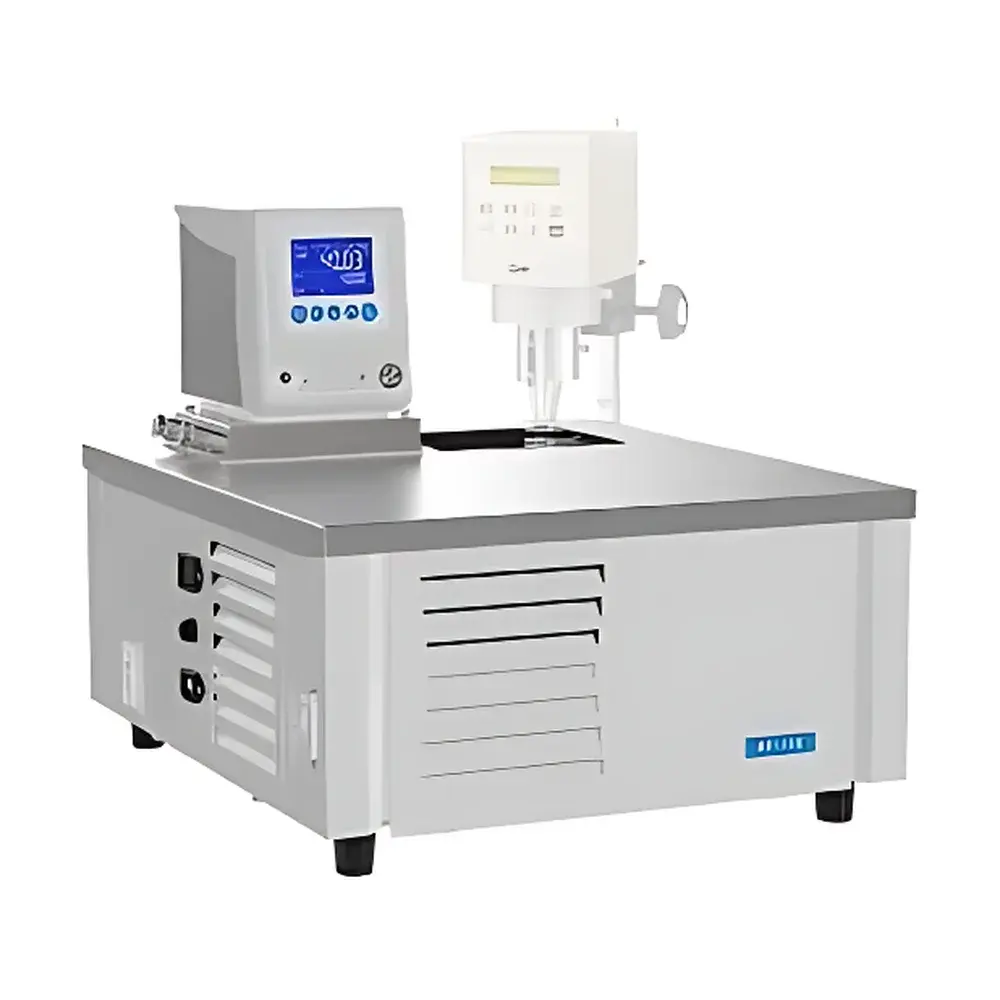
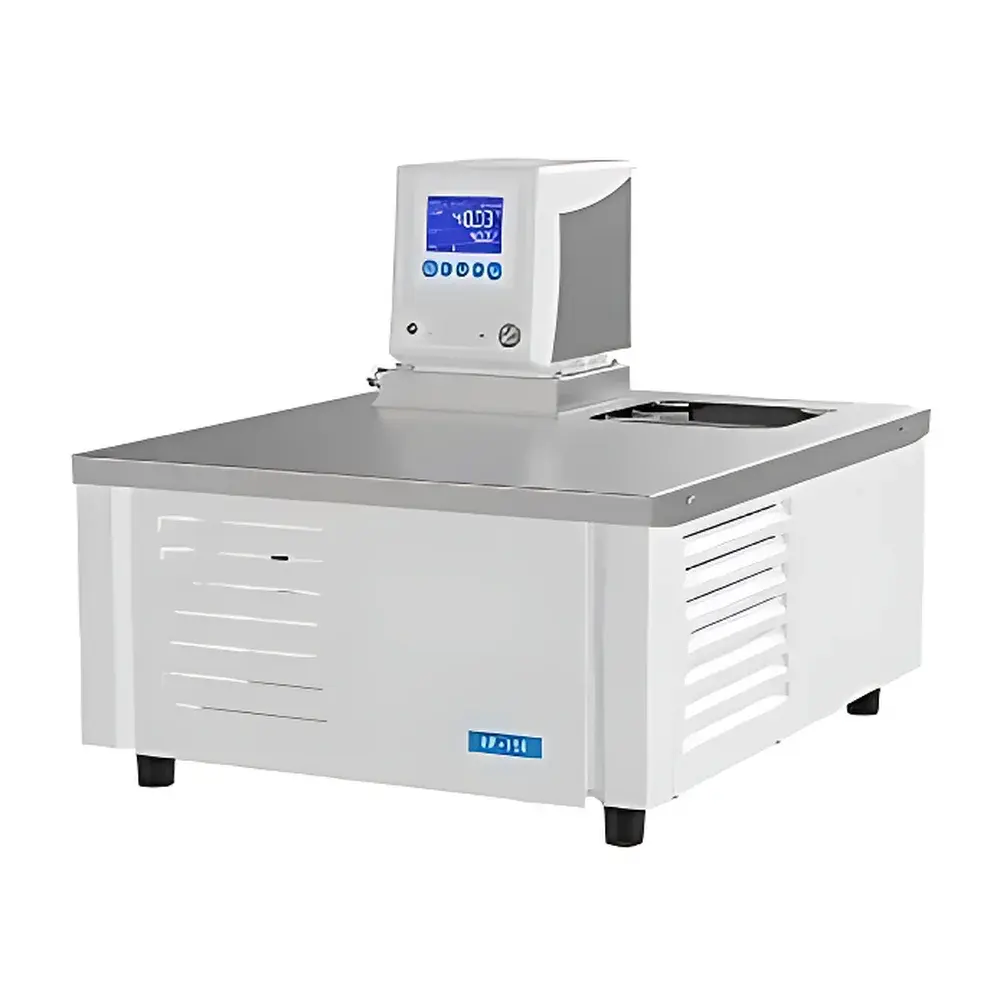
Shanghai Yiheng BP-150 High-Precision Refrigerated & Heated Circulating Bath for Viscometers
| Brand | Shanghai Yiheng |
|---|---|
| Origin | Shanghai, China |
| Model | BP-150 |
| Bath Volume | 7 L |
| Temperature Range | −10 °C to 100 °C (customizable up to 150 °C) |
| Temperature Stability | ±0.02 °C |
| Temperature Display Resolution | 0.01 °C |
| Circulation Flow Rate | 8 L/min |
| Pump Head | 1.1 m |
| Internal/External Circulation | Yes |
| Refrigerant Mass | 150 g |
| Cooling Capacity | 150 W at −20 °C |
| Heating/Cooling Power | 1200 W |
| Power Supply | 220 V / 50 Hz |
| Liquid Inlet/Outlet Port Diameter | φ16 mm |
| Compatible Heat Transfer Fluids | Deionized water (≥10 °C), 50% ethylene glycol + 50% deionized water (<10 °C) |
Overview
The Shanghai Yiheng BP-150 is a high-precision refrigerated and heated circulating bath engineered for demanding laboratory applications requiring tight thermal control and long-term stability. Designed specifically to serve as a temperature-regulated fluid source for rotational viscometers, rheometers, and other externally coupled analytical instruments, the BP-150 employs a dual-mode thermoelectric-compressor hybrid architecture—integrating a high-efficiency hermetic compressor with PID-controlled resistive heating—to achieve rapid, bidirectional thermal response without overshoot or drift. Its core function is to maintain a stable thermal environment for viscosity measurements under ISO 2555, ASTM D2196, and DIN 53019 standards, where temperature deviation directly impacts shear rate–viscosity correlation and Newtonian/non-Newtonian fluid characterization accuracy. The unit’s 7 L stainless steel (SUS304) bath chamber supports both direct immersion of sample containers (e.g., 500 mL beakers) and closed-loop external circulation to peripheral devices such as chromatographic columns, electrophoresis units, spectrophotometers, and rotary evaporators.
Key Features
- PID-based digital temperature controller with LCD interface, enabling simultaneous display of setpoint, actual bath temperature, and real-time deviation (±0.01 °C resolution)
- Integrated dual-circulation system: switchable between internal recirculation (for bath homogeneity) and external circulation (for remote temperature control of auxiliary equipment)
- High-capacity centrifugal pump delivering 8 L/min flow rate and 1.1 m head pressure, ensuring consistent thermal transfer across extended tubing lengths and elevated backpressure scenarios
- Corrosion-resistant SUS304 stainless steel bath tank and fluid pathways, compatible with aqueous and glycol–water mixtures (50:50 v/v) for sub-zero operation
- Dual safety architecture: hardware-level overtemperature cutoff (heater disable above set limit), dry-run protection (flow sensor–triggered shutdown), and comprehensive electrical safeguards (overcurrent, overvoltage, ground-fault detection)
- Service-oriented mechanical design: removable front air grille for condenser cleaning, bottom-mounted drain valve for bath fluid exchange, and standardized φ16 mm quick-connect ports for seamless integration into lab infrastructure
- Compressor with delayed startup logic to reduce inrush current and extend service life; low-noise operation (<58 dB(A)) suitable for shared laboratory environments
Sample Compatibility & Compliance
The BP-150 is validated for use with standard viscometry configurations—including Ubbelohde, Ostwald, and rotational spindle systems—as well as ancillary instrumentation requiring precise thermal anchoring: capillary electrophoresis modules, HPLC column ovens, polarimeters, and refractometers. Its temperature stability of ±0.02 °C over 24 hours meets the repeatability requirements specified in ISO/IEC 17025 for calibration laboratories performing thermometer verification (e.g., mercury-in-glass, Pt100 RTDs) and infrared thermometer validation using blackbody modules (optional accessory). When operated with certified reference fluids and traceable NIST-traceable thermistors, the system supports GLP-compliant viscosity testing workflows and satisfies audit criteria for FDA 21 CFR Part 11–aligned data integrity when paired with optional USB logging.
Software & Data Management
While the BP-150 operates via an embedded microcontroller with no native network interface, it offers two mutually exclusive digital output options for traceable data capture: RS232 serial communication (compatible with standard terminal emulators and legacy lab software) or USB mass-storage mode (recording timestamped temperature logs in CSV format at user-defined intervals). The multi-segment programmable controller stores up to seven independent profiles, each comprising nine sequential steps—enabling automated ramp-hold-cool cycles for temperature-dependent viscosity sweeps (e.g., Arrhenius modeling of polymer melts). All logged data retain instrument ID, operator tag, and environmental metadata required for ISO 17025 documentation.
Applications
- Viscosity profiling of Newtonian and non-Newtonian fluids across temperature gradients (e.g., lubricants, pharmaceutical suspensions, food emulsions)
- Thermal conditioning of chromatographic columns and detector cells to minimize retention time drift
- Calibration of contact and non-contact thermometers per JJG 1116–2015 and ISO/IEC 17025 Annex A.3
- Stabilization of optical path lengths in interferometric and spectroscopic setups sensitive to thermal expansion
- Controlled-temperature fermentation monitoring and bioreactor jacketing (when integrated with external heat exchangers)
- Preconditioning of test specimens prior to tensile, rheological, or dielectric property measurement
FAQ
What temperature accuracy can be expected during extended viscometry runs?
The BP-150 maintains ±0.02 °C stability over 24-hour periods under load, verified using calibrated PT100 probes traceable to national metrology institutes.
Is the bath compatible with silicone oil or other high-boiling-point media?
No—only deionized water (≥10 °C) or 50% ethylene glycol/water (≤10 °C) are approved. Silicone oils risk pump seal degradation and thermal runaway due to insufficient thermal conductivity.
Can the unit be integrated into a LabVIEW or Python-based automation framework?
Yes—via RS232 ASCII command protocol (AT-style syntax); full command set and error-handling specifications are provided in the technical manual.
Does the system support 21 CFR Part 11 compliance out-of-the-box?
Not natively—but when used with validated third-party USB logging software featuring electronic signatures, audit trails, and role-based access control, it fulfills Part 11 requirements for raw temperature data.
What maintenance intervals are recommended for optimal performance?
Condenser cleaning every 3 months (depending on ambient dust levels), annual refrigerant pressure verification, and biannual inspection of pump impeller wear and seal integrity.



