
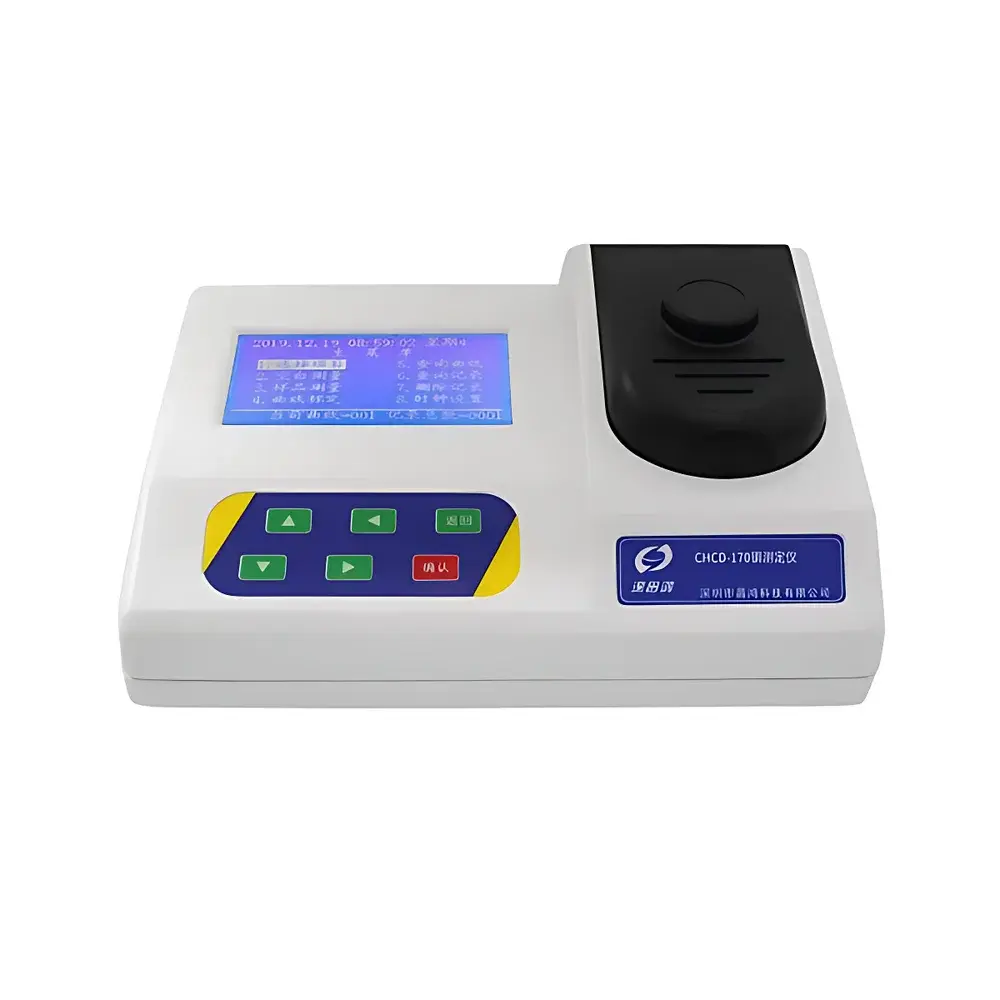
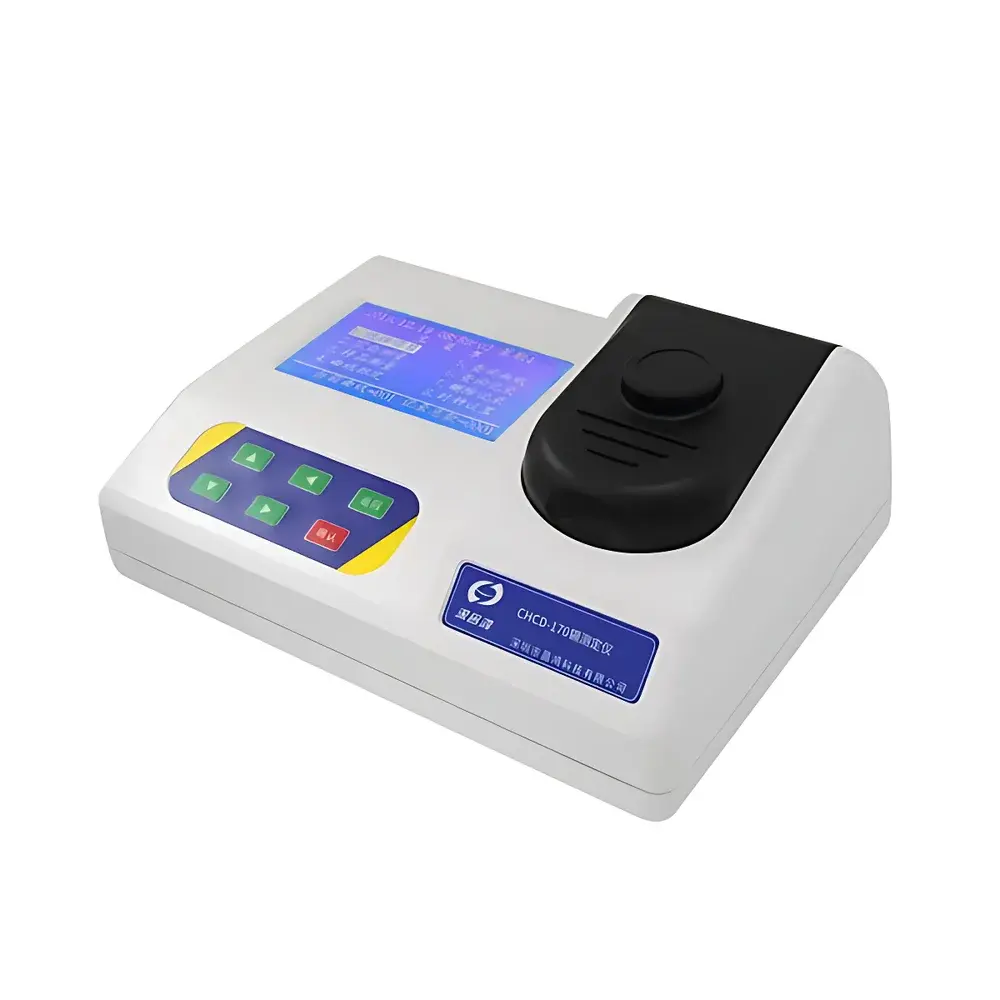
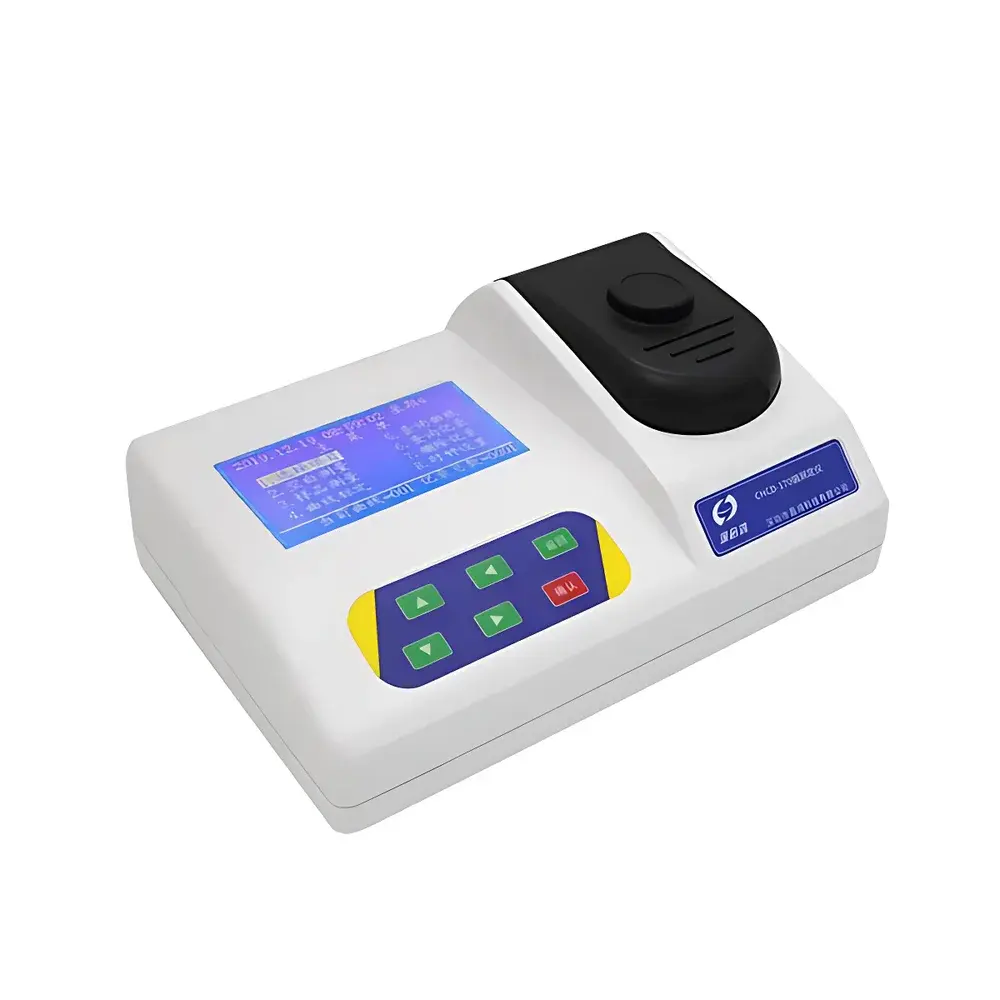
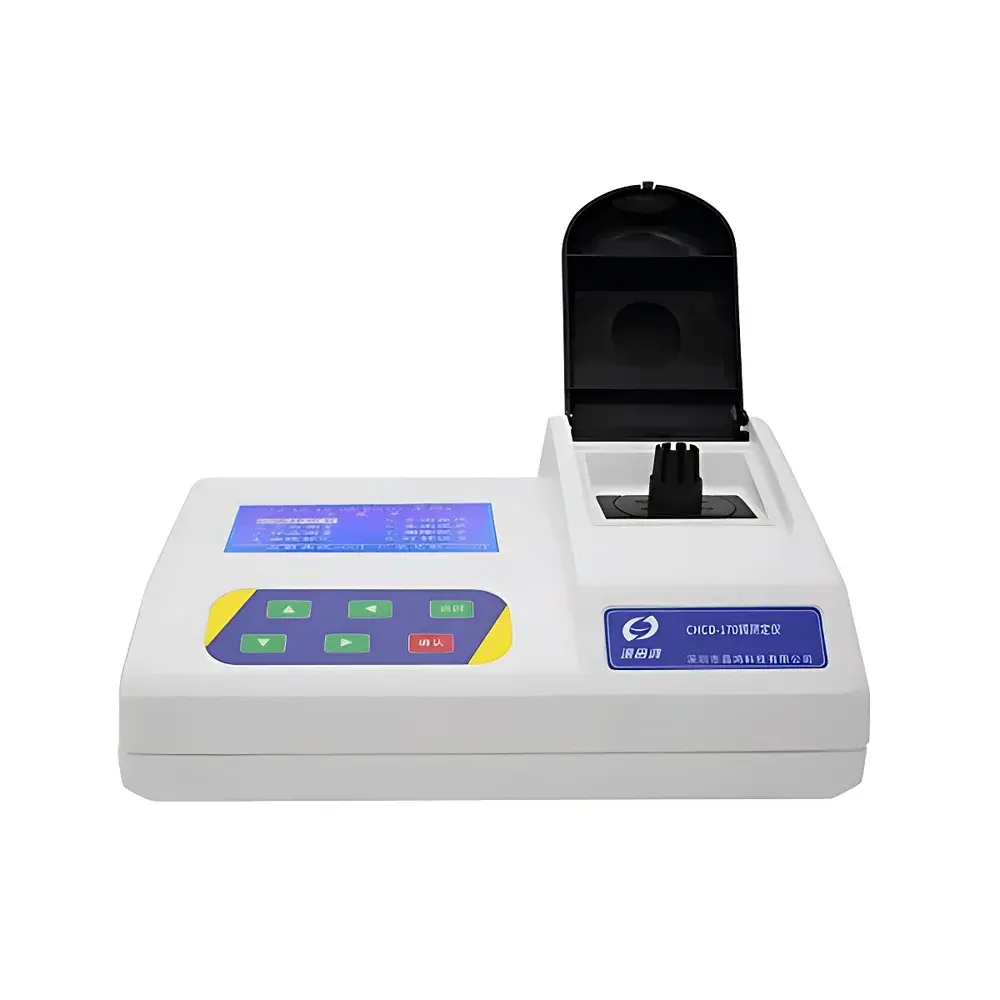
Shenchanghong CHCD-170 Cadmium Analyzer
| Brand | Shenchanghong |
|---|---|
| Origin | Shenzhen, China |
| Manufacturer Type | Direct Manufacturer |
| Product Category | Domestic |
| Model | CHCD-170 |
| Instrument Type | Benchtop Laboratory Analyzer |
| Detection Principle | Photometric Method (Visible Absorption Spectrophotometry) |
| Target Analyte | Cadmium (Cd²⁺) |
| Analysis Time | 20 min |
| Accuracy | ≤ ±5% |
| Precision (RSD) | ≤ 3% |
| Resolution | 0.01 mg/L |
| Measurement Range | 0.01–0.50 mg/L |
| Optical Drift | < 0.002 A in 20 min |
| Dimensions (W×D×H) | 266 × 200 × 130 mm |
| Weight | < 1.0 kg |
| Operating Temperature | 5–40 °C |
| Relative Humidity | ≤ 85% RH |
| Power Supply | AC 220 V ± 10%, 50 Hz ± 0.5 Hz |
| Environmental Requirements | Low vibration, minimal electromagnetic interference, no direct sunlight |
Overview
The Shenchanghong CHCD-170 Cadmium Analyzer is a dedicated benchtop photometric instrument engineered for the quantitative determination of dissolved cadmium (Cd²⁺) in water samples using standardized colorimetric methodology. It operates on the principle of visible-light absorption spectrophotometry, where cadmium ions react with a selective chromogenic reagent—typically dithizone or 1-(2-pyridylazo)-2-naphthol (PAN)—to form a stable, colored complex. The intensity of absorbance at a defined wavelength (commonly 520–560 nm) is linearly proportional to cadmium concentration within the calibrated range (0.01–0.50 mg/L), enabling accurate quantification per Beer–Lambert law. Designed for routine compliance testing in municipal water utilities, environmental monitoring laboratories, and industrial effluent control facilities, the CHCD-170 delivers trace-level cadmium analysis without requiring atomic absorption spectroscopy (AAS) or inductively coupled plasma (ICP) infrastructure—offering a cost-effective, field-deployable alternative while maintaining regulatory-grade reliability.
Key Features
- High-stability optical architecture incorporating imported long-life, high-luminance LED light source and precision narrow-band interference filters, ensuring minimal spectral drift (<0.002 A over 20 min) and robust inter-day repeatability (RSD ≤ 3%).
- Benchtop form factor (266 × 200 × 130 mm; <1.0 kg) optimized for space-constrained laboratory environments, with corrosion-resistant ABS housing rated for continuous operation under ambient humidity ≤85% RH.
- Integrated 16-bit low-power microcontroller system supporting real-time signal processing, automatic zero calibration, and dual-curve storage—retaining both factory-default calibration and up to three user-defined calibration curves.
- Backlit monochrome LCD display with intuitive Chinese-language menu navigation—designed for operational efficiency by non-specialist technicians while preserving full parameter transparency (absorbance, concentration, date/time stamp).
- No external PC or software driver required for basic operation; all measurement protocols—including reagent blank subtraction, curve fitting (linear regression), and result averaging—are executed onboard.
Sample Compatibility & Compliance
The CHCD-170 is validated for use with clarified, filtered aqueous matrices including drinking water, surface water, groundwater, wastewater effluents, and leachates. Sample pretreatment—such as acid digestion (per EPA Method 200.2 or ISO 11047) for total cadmium determination—is performed externally; the analyzer itself measures filterable (dissolved) Cd²⁺ in prepared extracts. Its performance aligns with core requirements of ISO 8692 (water quality — determination of cadmium by photometric methods), GB/T 5750.6–2023 (Chinese Standard Methods for Drinking Water Quality), and supports data integrity practices consistent with GLP and ISO/IEC 17025:2017 documentation frameworks. While not inherently 21 CFR Part 11 compliant (as it lacks electronic signature functionality), audit-ready records—including calibration logs, raw absorbance values, and operator timestamps—can be manually transcribed into LIMS or validated spreadsheets.
Software & Data Management
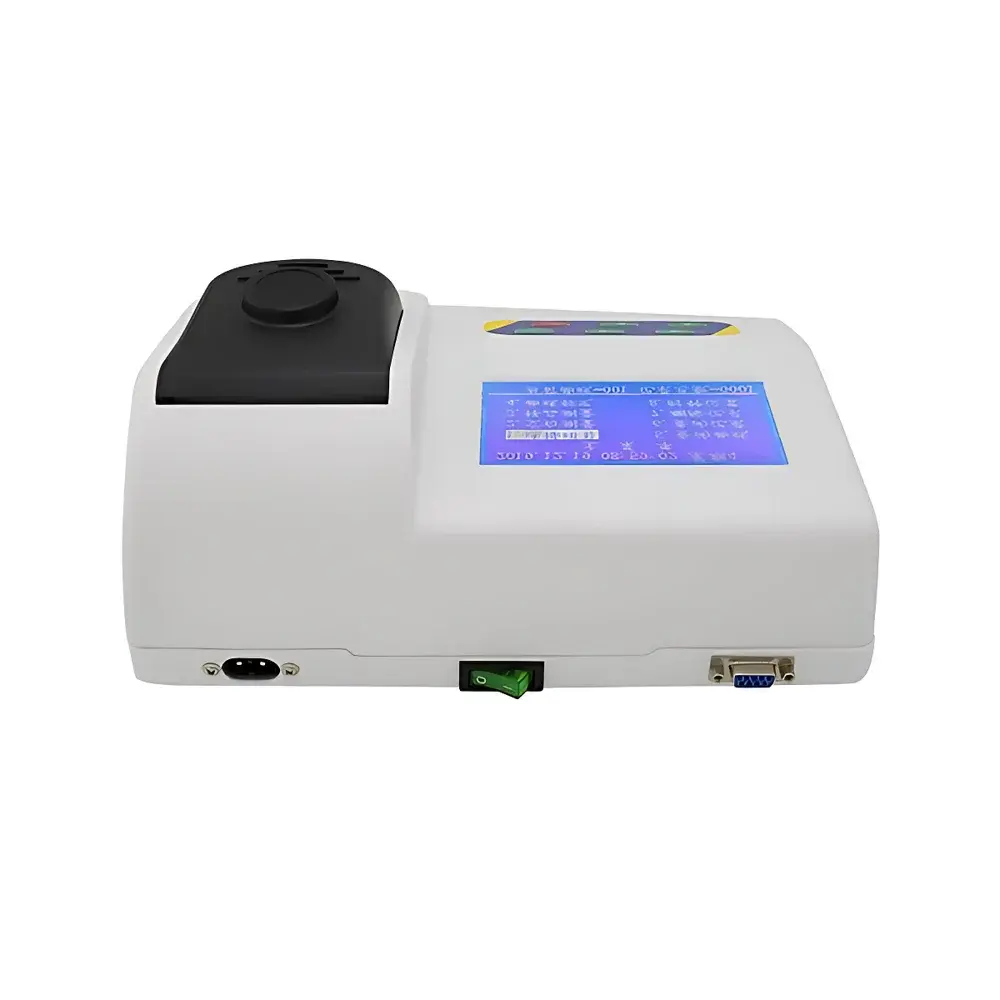
Data handling is fully embedded: each measurement stores concentration (mg/L), absorbance (A), date/time, and active calibration curve ID directly in non-volatile memory. Up to 500 test records are retained with timestamped history. Export is manual via visual readout or optional RS-232 serial interface (available upon request) for integration with legacy lab systems. No proprietary desktop software is required; however, exported ASCII-formatted logs are compatible with common data analysis tools (e.g., Excel, OriginLab, R). Firmware updates—delivered via USB-to-serial adapter—are supported for future method expansion (e.g., lead or copper adaptation using alternate reagents).
Applications
- Regulatory monitoring of cadmium in municipal drinking water supplies against WHO (3 µg/L), EU (5 µg/L), and US EPA MCL (5 µg/L) guideline values.
- Industrial pretreatment verification for electroplating, battery manufacturing, and pigment production facilities discharging to sewer systems.
- Field-deployable screening during environmental site assessments (ESAs) and brownfield investigations where rapid turnaround (<20 min/sample) is critical.
- Educational use in university environmental chemistry labs for teaching metal speciation, complexometric titration principles, and analytical validation metrics (LOD, LOQ, recovery studies).
- Quality assurance for water treatment chemicals and activated carbon filters via influent–effluent cadmium differential analysis.
FAQ
What sample volume is required for analysis?
A minimum of 10 mL of pre-filtered (0.45 µm) water sample is recommended; reagent volumes are fixed at 1.0 mL per test.
Is digestion required for total cadmium measurement?
Yes—this instrument measures dissolved cadmium only. Total recoverable cadmium requires acid digestion (e.g., HNO₃/H₂O₂ microwave-assisted per EPA 3051A) prior to analysis.
Can the CHCD-170 be used for other heavy metals?
Not natively. It is optically and chemically configured specifically for cadmium. Cross-reactivity with cobalt or nickel may occur; dedicated analyzers are recommended for multi-element workflows.
How often must the calibration curve be renewed?
Factory calibration remains valid for 12 months under proper storage; users should verify with certified reference standards (e.g., NIST SRM 1643e) before each analytical batch.
Does the instrument support external printer output?
No built-in thermal printer; hardcopy reporting requires manual transcription or serial-data capture via third-party terminal software.
Related Products







