
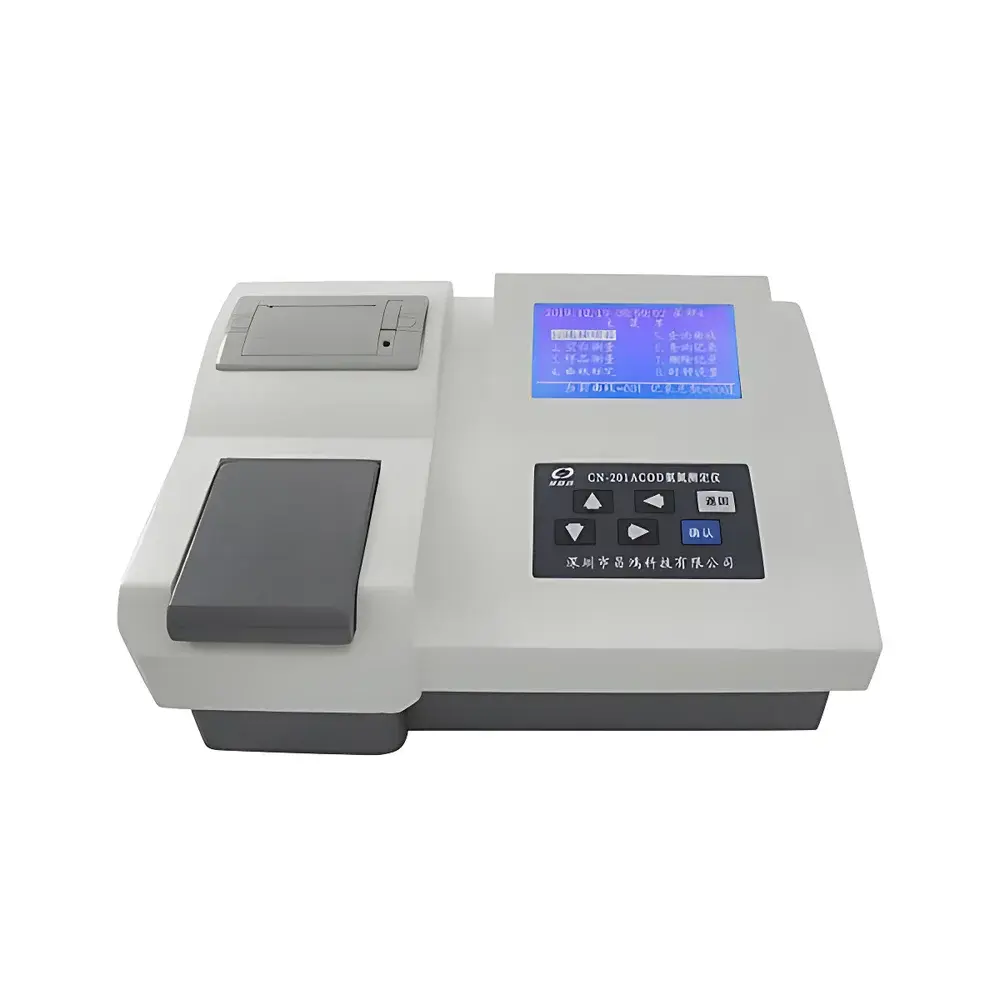
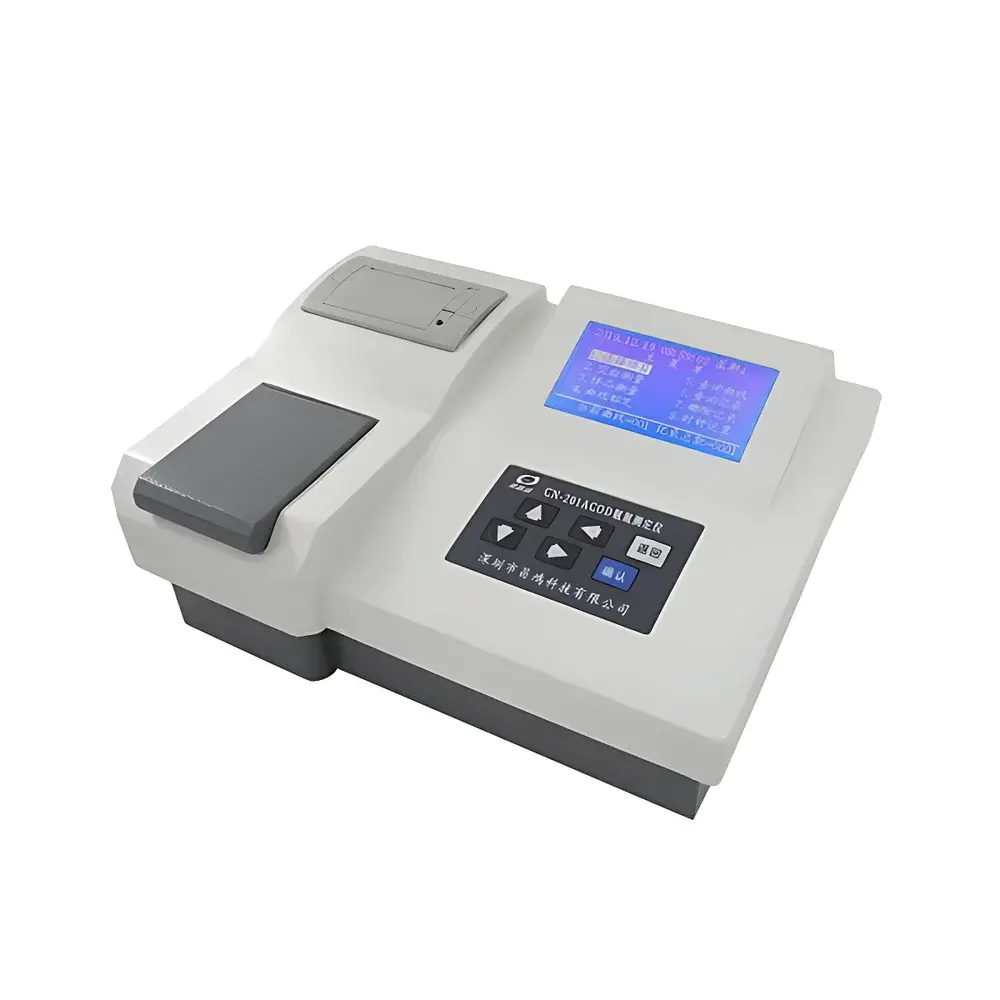
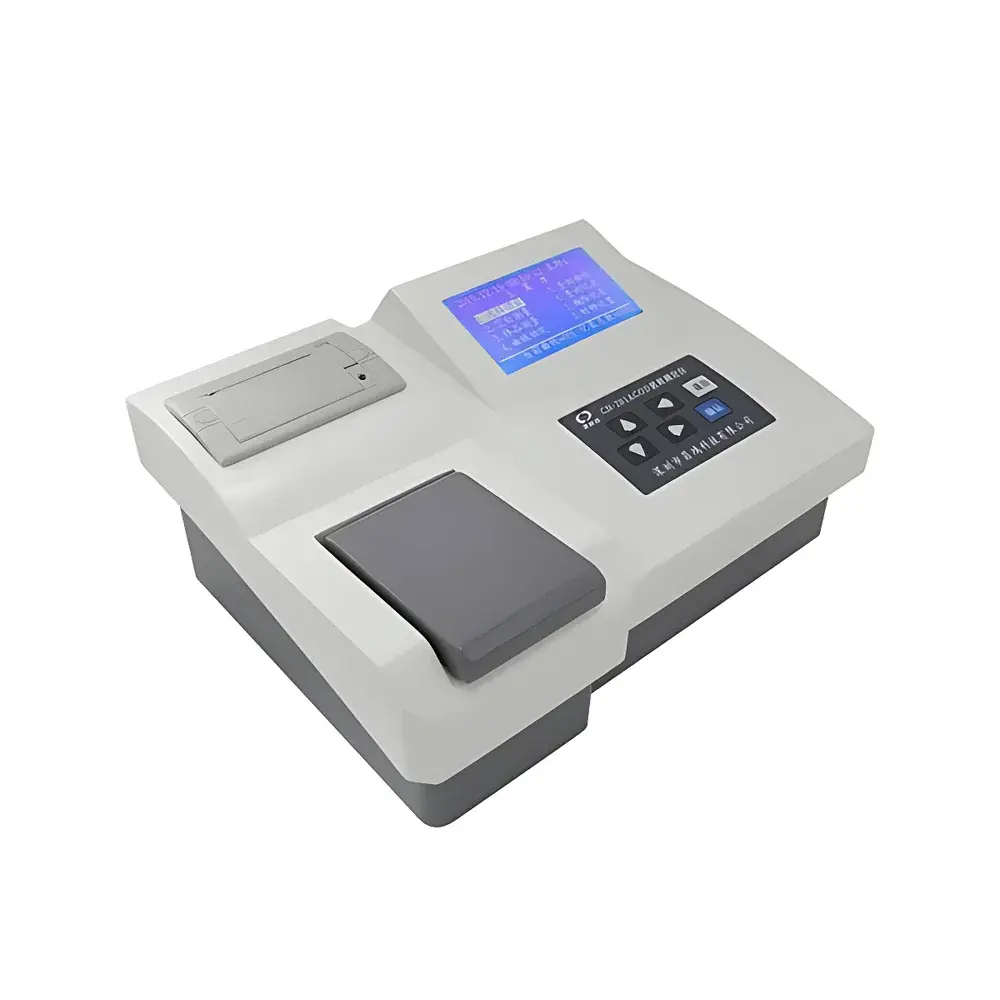
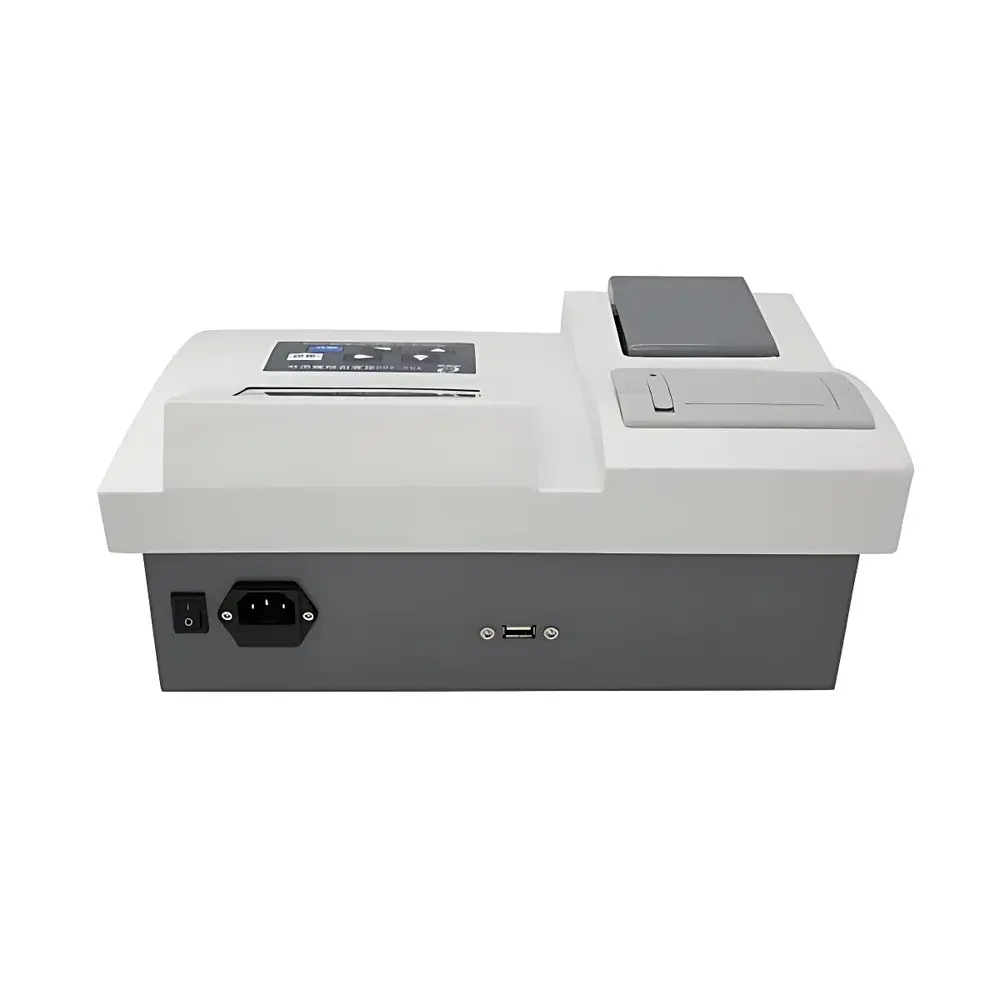
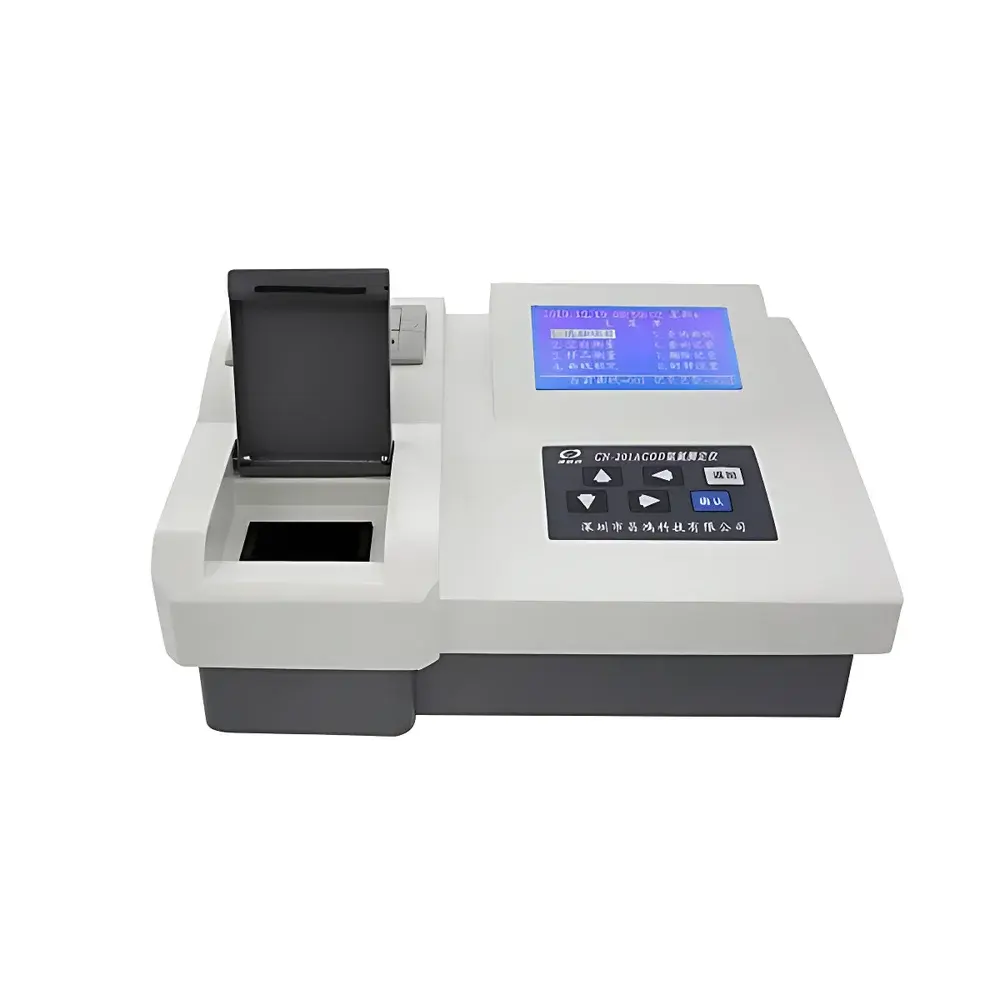
Shenchanghong CN-201A Dual-Parameter COD and Ammonia-Nitrogen Analyzer
| Brand | Shenchanghong |
|---|---|
| Origin | Shenzhen, China |
| Manufacturer Type | Direct Manufacturer |
| Instrument Type | Benchtop Laboratory Analyzer |
| Measurement Principle | Rapid Digestion–Spectrophotometric Method (610 nm) |
| COD Range | 5–2000 mg/L |
| Ammonia-N Range | 0.02–25 mg/L |
| Accuracy | ≤ ±5% (COD), ≤ ±3% FS (NH₃-N) |
| Repeatability | ≤ ±3% |
| Detection Limit | 0.01 mg/L (COD), 0.02 mg/L (NH₃-N) |
| Digestion Time | 15 min (COD), Adjustable 1–9999 min |
| Total Analysis Time | ~20 min per batch |
| Batch Capacity | Up to 20 samples (with DIS-16B digester) |
| Optical Drift | < 0.002 A in 20 min |
| Chloride Interference Tolerance | ≤ 2000 mg/L (COD mode) |
| Power Consumption | <10 W (analyzer), <500 W (digester) |
| Dimensions (Analyzer) | 340 × 250 × 130 mm |
| Weight (Analyzer) | 4.0 kg |
| Digester Display | 3.5″ color TFT touchscreen (320 × 240), bilingual Chinese/English UI |
Overview
The Shenchanghong CN-201A is a benchtop dual-parameter spectrophotometric analyzer engineered for precise, routine quantification of Chemical Oxygen Demand (COD) and ammonia-nitrogen (NH₃-N) in wastewater, surface water, and industrial effluent samples. It implements the standardized rapid digestion–colorimetric method per ISO 8467 (for COD) and ISO 7150-1 (for ammonia-nitrogen), utilizing narrow-band interference optics centered at 610 nm for COD and 420 nm for NH₃-N (via Nesslerization or salicylate reaction—configurable per reagent kit). The system decouples optical measurement and thermal digestion into two physically independent modules: the photometric analyzer maintains long-term optical stability by isolating the detector and light source from thermal and mechanical perturbations generated during digestion. This architecture ensures reproducible absorbance readings under repeated laboratory use—critical for compliance with GLP and internal QA/QC protocols.
Key Features
- High-stability optical platform employing imported long-life cold LED sources and precision narrow-band interference filters, minimizing spectral drift and enabling ≤ ±3% repeatability across daily operation.
- Modular design: Independent analyzer and digester units prevent heat-induced baseline drift and allow concurrent digestion and measurement cycles—increasing lab throughput without compromising data integrity.
- Programmable PID-controlled digester (DIS-16B/DIS-20B/DIS-25B/DIS-36B series) with ±0.5 °C temperature accuracy and adjustable ramp-hold profiles; supports standard COD digestion at 165 °C for 15 min, as well as custom protocols for total phosphorus, heavy metals, or other oxidizable parameters.
- Dual-use digestion–colorimetric tubes (borosilicate glass, Class A tolerance) rated for ≥50 autoclave cycles; eliminate cross-contamination and reduce consumable costs versus disposable cuvettes.
- Onboard data management: Stores up to 20 user-defined calibration curves (10 for COD, 10 for NH₃-N) and 400 result records with timestamp, sample ID, and operator tag—retained after power loss via non-volatile memory.
- Integrated 3.5″ color TFT touchscreen (320 × 240) on digester and large LCD display on analyzer, both supporting bilingual (Chinese/English) menu navigation—facilitating multilingual lab environments and audit-ready operation logs.
Sample Compatibility & Compliance
The CN-201A accepts raw, filtered, or centrifuged aqueous samples within pH 4–10 and turbidity < 50 NTU. Its chloride interference tolerance of ≤2000 mg/L (COD mode) accommodates moderately saline industrial discharges without pre-treatment dilution. All measurement workflows align with internationally recognized standard methods: COD determination follows ISO 8467 and HJ 828–2017 (China EPA), while ammonia-nitrogen analysis conforms to ISO 7150-1 and HJ 535–2009. Data storage and instrument operation support audit trails required under ISO/IEC 17025:2017 Clause 7.7 (result reporting) and are compatible with laboratory information management systems (LIMS) via USB mass-storage mode—enabling traceable export of .csv files for regulatory submission.
Software & Data Management
No proprietary software installation is required. The analyzer operates autonomously with embedded firmware supporting full calibration curve generation (linear, quadratic, or polynomial), multi-point standardization, and blank subtraction. Results are viewable in real time on the front-panel LCD with unit auto-scaling (mg/L, µg/L). Integrated thermal printer provides immediate hard-copy output of current results or historical batches. USB 2.0 interface mounts the device as a removable drive—allowing direct drag-and-drop transfer of encrypted .csv datasets to Windows/macOS workstations. All stored records include metadata: date/time stamp, digestion temperature/duration, calibration ID, and operator code—satisfying documentation requirements for FDA 21 CFR Part 11–aligned environments when paired with institutional electronic signature policies.
Applications
- Wastewater treatment plant (WWTP) process control: monitoring influent/effluent COD and NH₃-N to optimize aeration basin loading and denitrification efficiency.
- Environmental monitoring stations: field-deployable verification of discharge compliance against national limits (e.g., China’s GB 8978–1996, EU Urban Wastewater Treatment Directive).
- Industrial QA/QC labs: routine testing of electroplating rinse waters, food processing effluents, pharmaceutical manufacturing streams, and landfill leachate.
- Educational laboratories: teaching core principles of redox titration alternatives, spectrophotometric quantification, and method validation (LOD/LOQ, linearity, spike recovery).
- Third-party testing facilities: accredited analyses supporting ISO/IEC 17025 scope expansion for water quality parameters.
FAQ
Does the CN-201A require annual recalibration by the manufacturer?
No—users perform full optical and concentration calibration in-house using NIST-traceable standards. Factory calibration certificates are provided; however, routine verification (e.g., daily blank check, weekly standard check) satisfies ISO/IEC 17025 metrological traceability requirements.
Can the instrument measure COD and NH₃-N simultaneously in one sample?
No—the analyzer measures one parameter per run. However, the same sample aliquot may be split and processed sequentially using dedicated reagent kits, with results correlated automatically via sample ID tagging.
Is the DIGESTION module compatible with non-COD applications?
Yes—temperature and time are fully programmable (1–9999 min, up to 200 °C), enabling adaptation for total Kjeldahl nitrogen (TKN), total phosphorus (TP), or chromium(VI) digestion per APHA Standard Methods.
What is the expected lifetime of the optical components?
The cold LED light source is rated for >100,000 hours; interference filters maintain spectral integrity for ≥5 years under normal lab conditions (non-corrosive atmosphere, no condensation).
Are reagents supplied with CE/ISO certification documentation?
Yes—each reagent kit (COD and NH₃-N) includes a Certificate of Analysis (CoA) with lot-specific purity, shelf life, and conformity to ISO 6060 (COD) and ISO 7150-1 (NH₃-N) reference material specifications.
Related Products







