
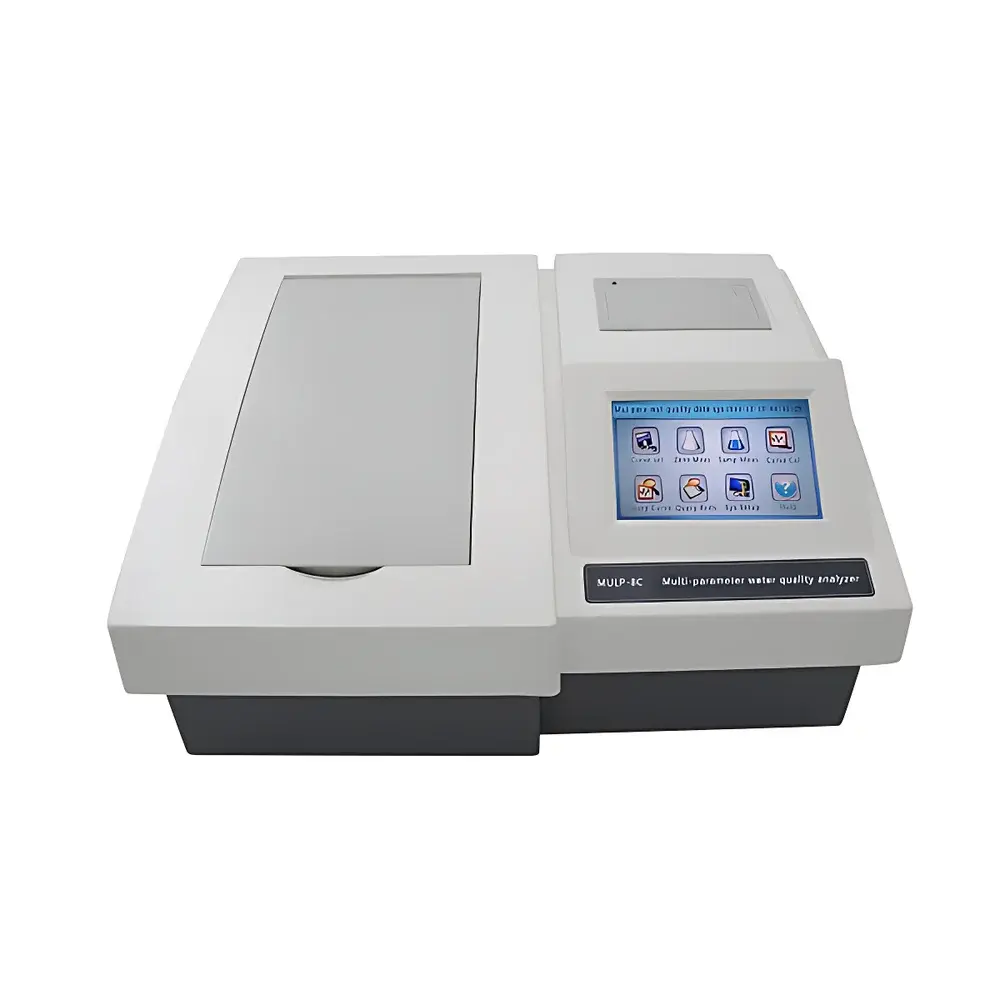
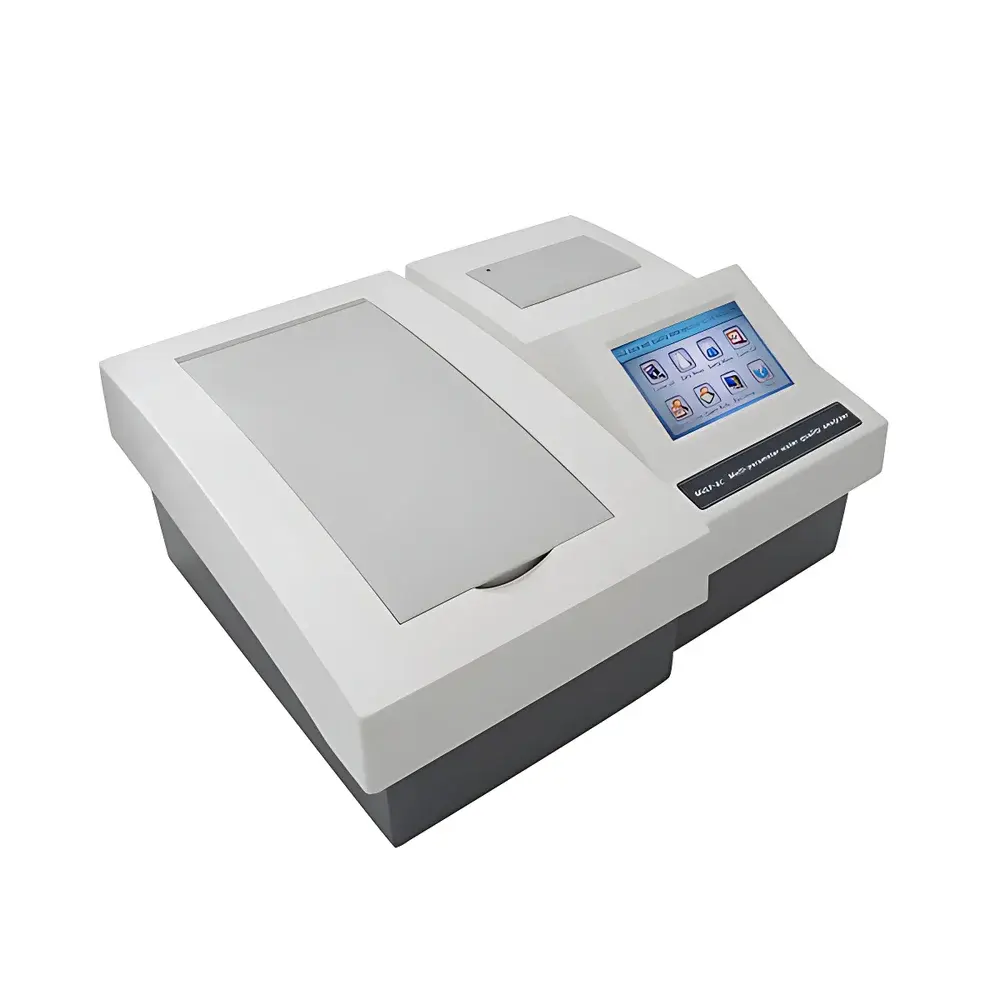
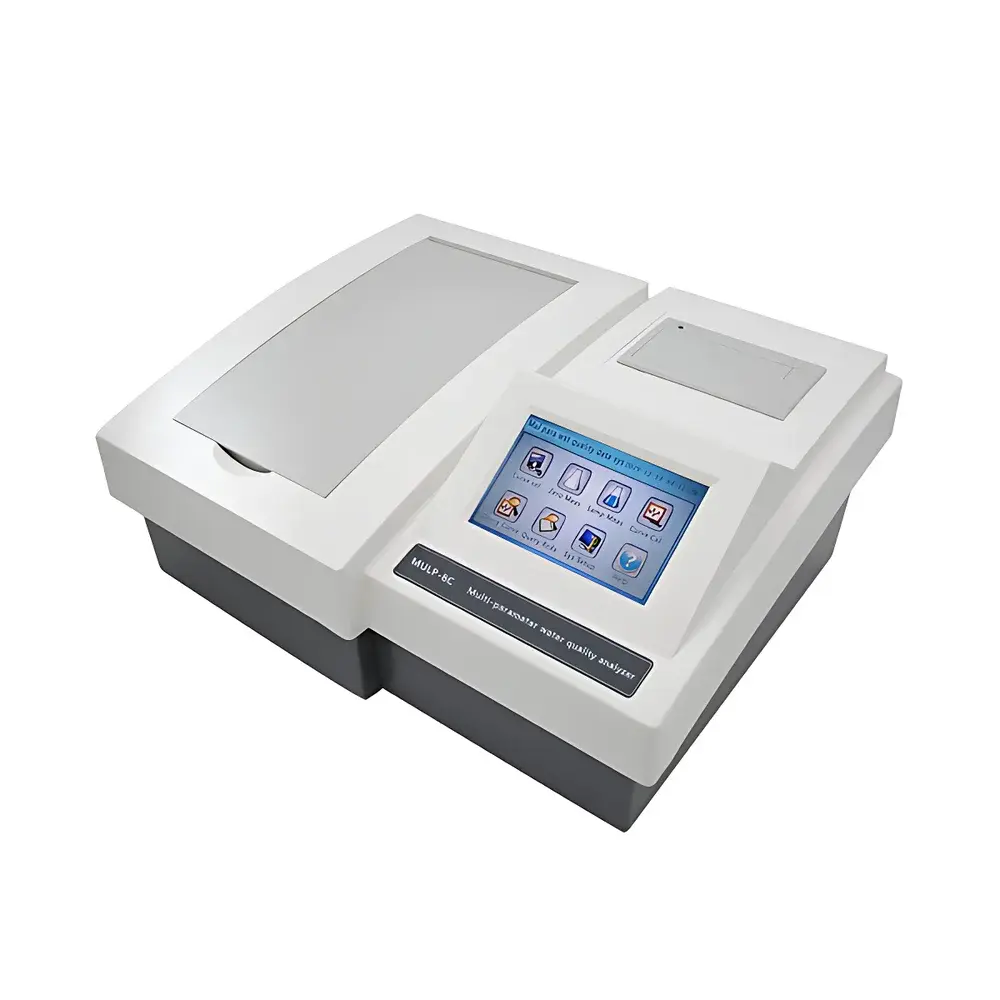
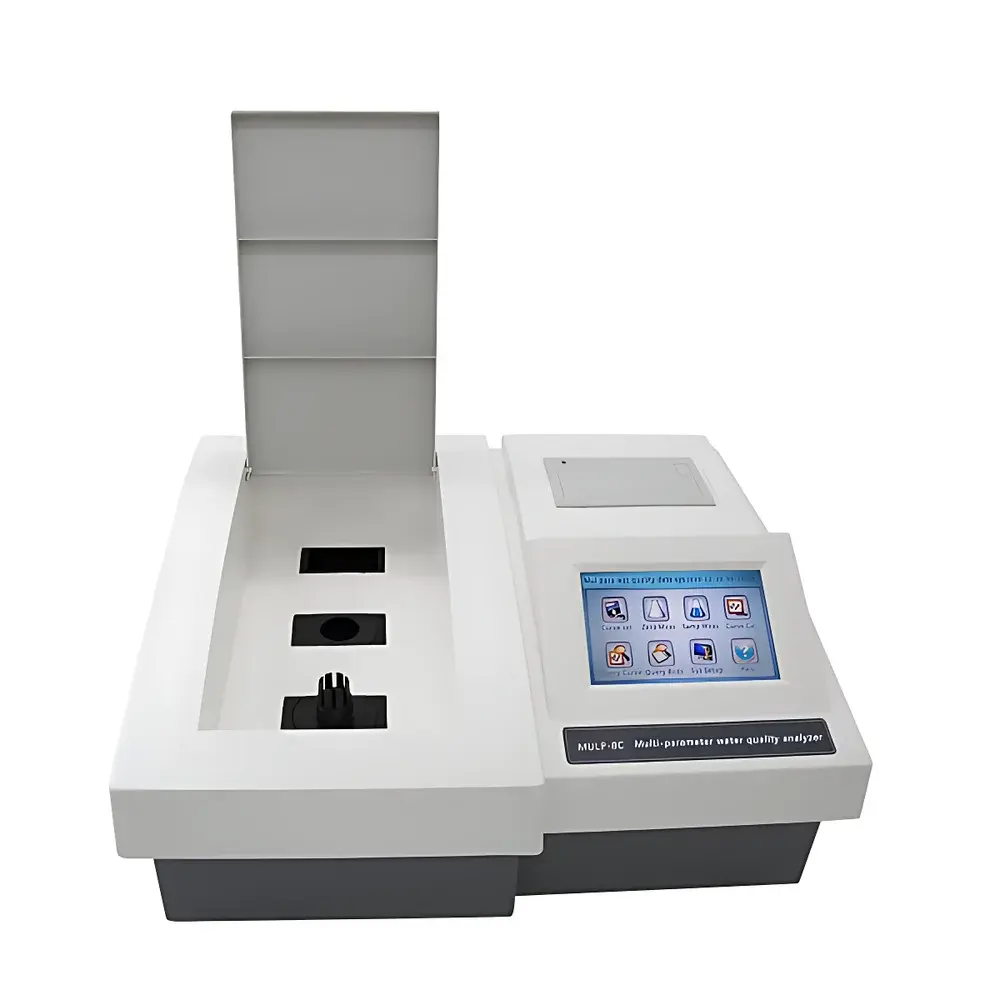
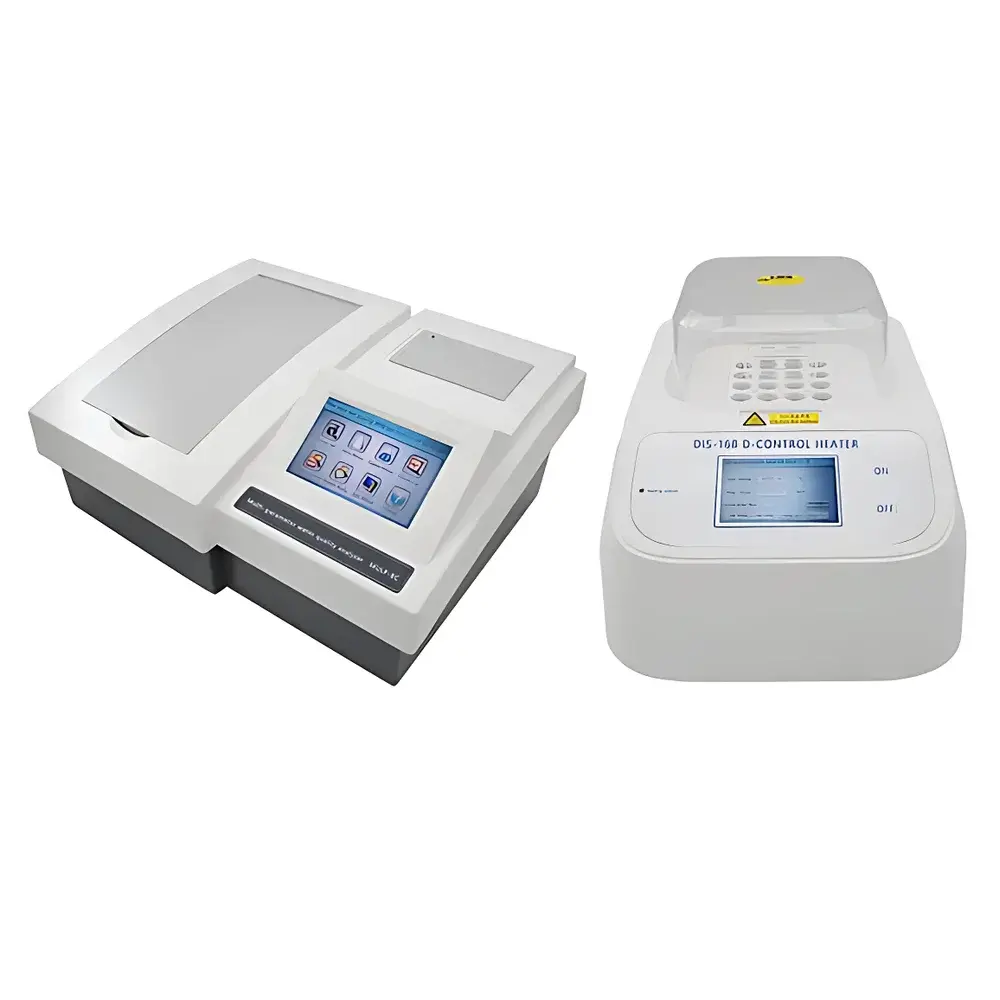
Shenchanghong MULP-8C Benchtop Multi-Parameter Water Quality Analyzer
| Brand | Shenchanghong |
|---|---|
| Origin | Guangdong, China |
| Manufacturer Type | Manufacturer |
| Country of Origin | China |
| Model | MULP-8C |
| Instrument Type | Laboratory Water Quality Analyzer |
| Measurable Parameters | Multi-parameter water quality determination |
| Wavelength Options | 340, 420, 440, 470, 520, 540, 560, 610, 630, 660, 680, 700 nm |
| Absorbance Accuracy | ±0.005 AU |
| Absorbance Range | −2.000 to +2.000 AU |
| Measurement Error | ≤5% (typical), ≤10% (for select parameters) |
| Light Intensity Adjustment | 16-level adjustable |
| Display | 5-inch color TFT touchscreen |
| Data Storage | 300 calibration curves, 1,000 measurement records |
| Power Supply | AC 220 V (165–240 V), 30 W |
| Dimensions | 400 × 310 × 158 mm |
| Weight | 5 kg |
| Operating Environment | 10–35 °C, ≤90% RH (non-condensing) |
Overview
The Shenchanghong MULP-8C is a benchtop multi-parameter water quality analyzer engineered for precision photometric analysis in environmental monitoring laboratories, municipal water treatment facilities, and academic research settings. It operates on the principle of single-wavelength spectrophotometry, applying the Beer–Lambert law to quantify analyte concentrations in aqueous samples based on measured absorbance. Unlike scanning spectrophotometers, the MULP-8C employs fixed-wavelength LED sources—selectable from twelve discrete wavelengths (340–700 nm)—to optimize sensitivity and specificity for common water quality indicators including nitrate, phosphate, ammonia, COD, turbidity (via formazin-equivalent calibration), iron, manganese, chloride, fluoride, and over 90 additional parameters defined by standardized colorimetric or enzymatic methods. Its optical architecture features an optimized light path with 16-step adjustable intensity control, enabling dynamic range extension without manual gain adjustment or sample dilution. The instrument’s embedded microprocessor executes real-time baseline correction and drift compensation during each measurement cycle, ensuring long-term stability under routine laboratory use.
Key Features
- 5-inch high-resolution color TFT touchscreen with intuitive icon-driven interface and bilingual (English/Chinese) language support
- Onboard password protection for power-on access and system configuration, supporting role-based user permissions
- Integrated self-calibration routine activated prior to each measurement sequence to correct for optical drift and detector aging
- 16-level programmable light intensity control—enables optimization for low-absorbance or highly turbid samples without hardware modification
- Flexible calibration management: supports up to 300 user-defined calibration curves stored internally; each curve retains full metadata (standard values, corresponding absorbances, calibration date, operator ID)
- Dual curve-fitting algorithms: linear regression and segmented (piecewise) interpolation—critical for non-linear responses such as high-range phosphate or residual chlorine assays
- Robust data integrity tools: automatic backup of calibration and measurement history; one-click factory reset with optional retention of user curves
- Direct connectivity via USB 2.0 for data export (CSV, TXT), firmware updates, and PC-based remote operation using included software suite
Sample Compatibility & Compliance
The MULP-8C accepts standard 10 mm, 20 mm, or 50 mm rectangular cuvettes (glass or quartz) and accommodates both liquid-phase colorimetric reagents and pre-packaged test kits compliant with ISO 7027 (turbidity), ISO 6777 (ammonia), ISO 6878 (phosphate), and APHA Standard Methods (e.g., 4500-NO₃⁻ F, 4500-P E). All internal calibration protocols adhere to GLP-aligned traceability requirements: each calibration event logs timestamp, operator ID, standard lot number, and raw absorbance readings. While not certified to IEC 61000-4 electromagnetic immunity standards out-of-box, the instrument meets CE marking essential requirements for laboratory electrical safety (EN 61010-1) and is routinely deployed in ISO/IEC 17025-accredited environmental testing labs where method validation per ISO/IEC 17025:2017 Clause 7.2.2 is performed by end users.
Software & Data Management
The MULP-8C ships with Windows-compatible desktop software that enables secure bidirectional data exchange, audit-trail-enabled report generation, and batch calibration curve import/export. All measurement records include mandatory fields: sample ID, parameter name, wavelength used, absorbance value, concentration result, uncertainty estimate (based on calibration RMSE), and operator signature. Software supports FDA 21 CFR Part 11-compliant electronic signatures when configured with domain-authenticated login and time-stamped digital signing. Data exports are structured to align with LIMS integration protocols (e.g., ASTM E1467-02), and CSV outputs include ISO 8601 timestamps and SI-unit annotations. Internal memory maintains a non-volatile log of all system events—including power cycles, calibration attempts, and password failures—for forensic review during internal audits.
Applications
The MULP-8C serves as a primary analytical platform for routine compliance testing across multiple regulatory frameworks: municipal wastewater effluent monitoring per China’s GB 18918-2002, surface water quality assessment per GB 3838-2002, drinking water safety verification per GB 5749-2022, and industrial discharge screening per local ecological environment bureau requirements. It is widely deployed in third-party environmental testing laboratories performing contract analyses for EIA reports, in university teaching labs for instrumental analysis coursework, and in R&D departments developing new water treatment formulations. Its flexibility in curve customization and wavelength selection makes it particularly suitable for method development work involving novel chromogenic reagents or modified EPA-approved procedures.
FAQ
Does the MULP-8C support GLP-compliant data archiving?
Yes—the instrument logs every calibration and measurement with immutable timestamps, operator IDs, and raw absorbance data. When paired with the desktop software, full audit trails and electronic signatures meet GLP documentation requirements.
Can custom calibration curves be imported from external spectrophotometers?
Yes—CSV-formatted curve data (wavelength, standard concentration, measured absorbance) can be imported directly via USB, preserving all metadata and enabling cross-platform method harmonization.
Is the optical system temperature-compensated?
No dedicated thermoelectric cooler is integrated; however, the LED light source exhibits <0.02% intensity drift per °C within the specified operating range (10–35 °C), and software applies ambient-temperature-corrected baseline referencing.
What maintenance is required to sustain measurement accuracy?
Annual verification using NIST-traceable neutral density filters (at 440 nm and 660 nm) is recommended. Cuvette alignment and LED output stability should be checked semiannually per manufacturer’s maintenance checklist.
How does the MULP-8C handle turbid or colored samples?
The 16-level light intensity adjustment allows attenuation of incident light to prevent detector saturation, while the dual-path zero-reference design minimizes scattering artifacts. For highly turbid matrices, users may apply method-specific blank correction protocols stored in the curve library.







