
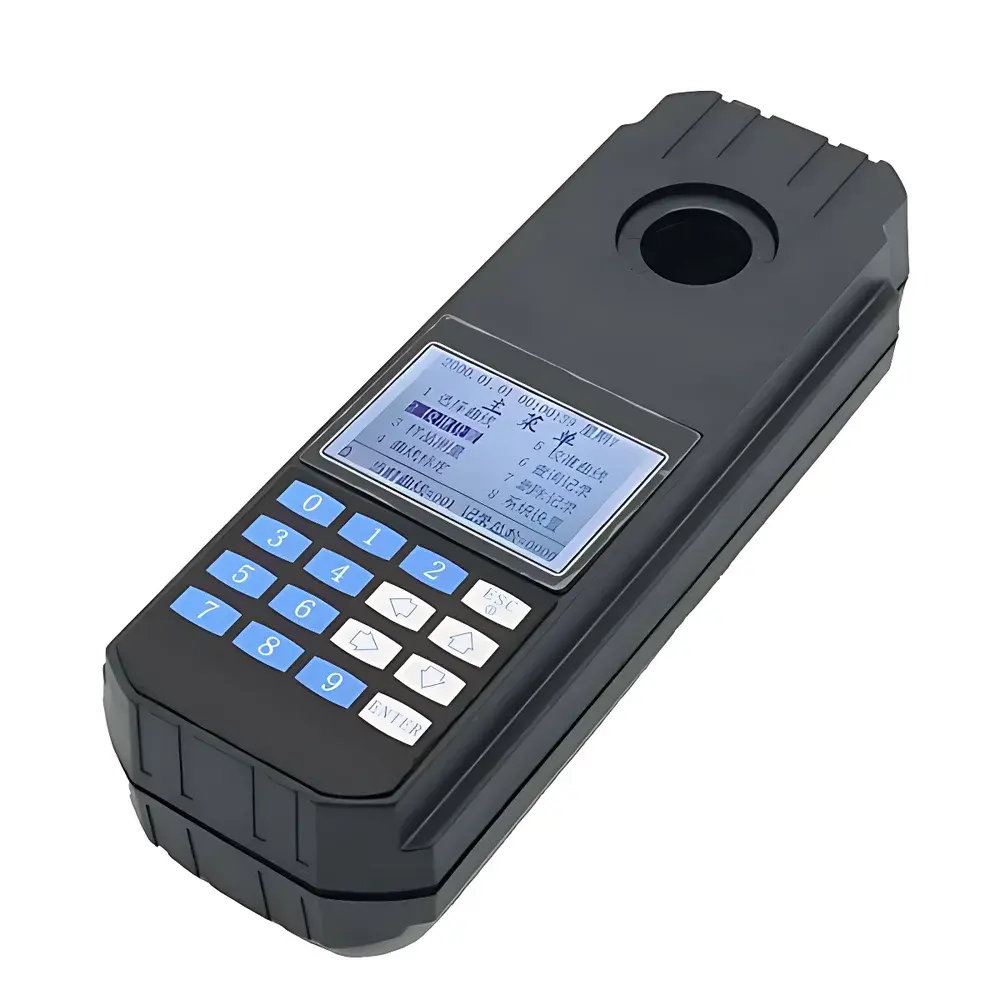
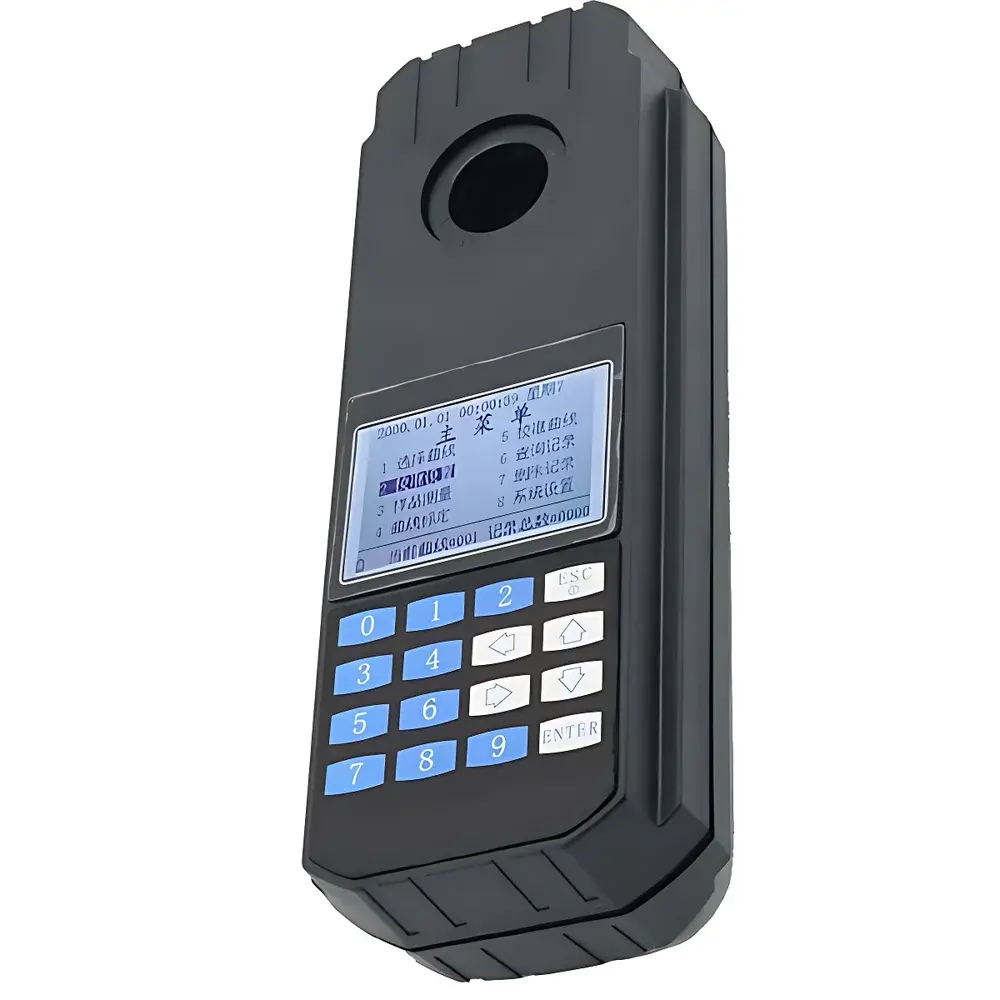
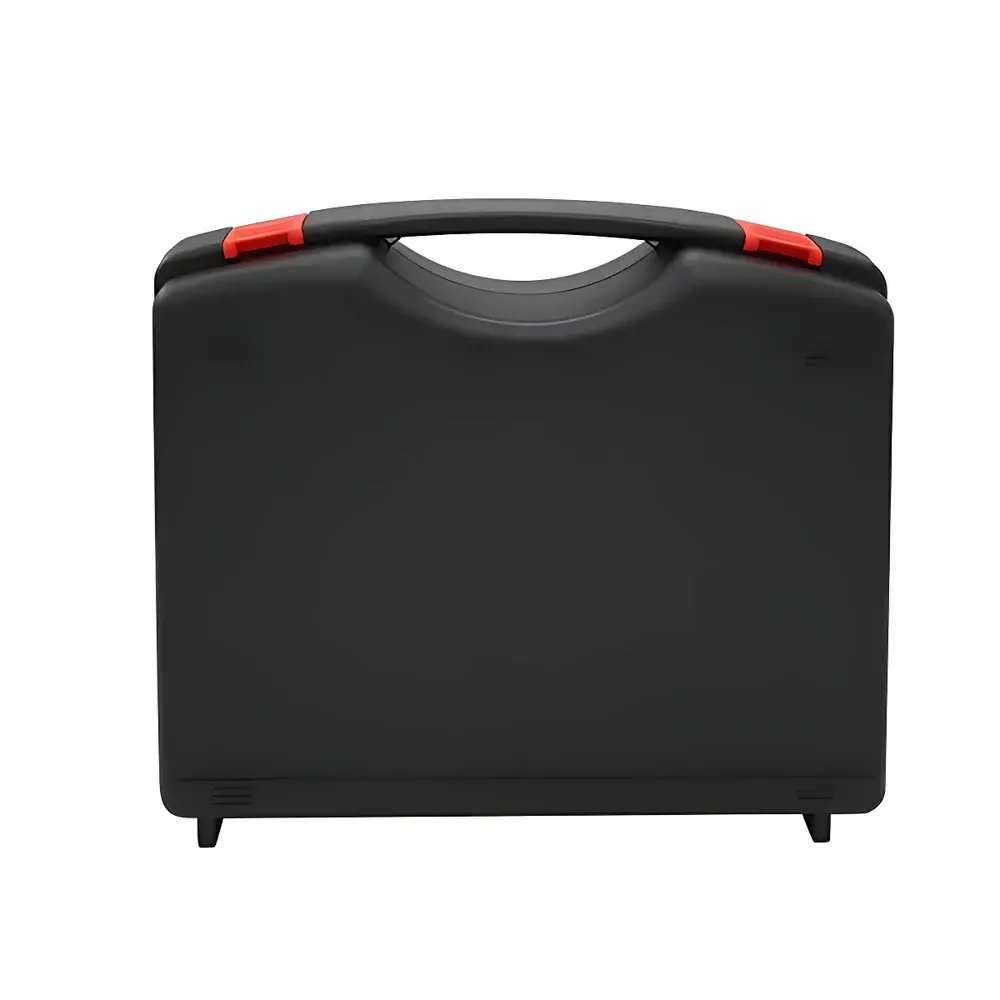
Shenchanghong PCHAL-130 Portable Aluminum Photometer
| Brand | Shenchanghong |
|---|---|
| Origin | Shenzhen, China |
| Manufacturer Type | Direct Manufacturer |
| Regional Classification | Domestic (China) |
| Model | PCHAL-130 |
| Instrument Type | Portable |
| Detection Principle | Photometric (Colorimetric) Method |
| Target Analyte | Aluminum (Al³⁺) in Water |
| Measurement Time | 20 min per sample |
| Accuracy | ±5% of Full Scale (F.S.) |
| Resolution | 0.01 mg/L |
| Measurement Range | 0.01–4.00 mg/L |
| Repeatability | ≤3% RSD |
| Dimensions | 80 × 230 × 55 mm |
| Weight | 500 g |
| Power Supply | 4 × AA batteries (alkaline or rechargeable) |
| Operating Temperature | 5–40 °C |
| Relative Humidity | ≤85% RH (non-condensing) |
| Ingress Protection | IP65 |
| Data Storage | 20 calibration curves + 199 measurement records with timestamp (YYYY-MM-DD HH:MM:SS), including concentration, absorbance, and transmittance values |
Overview
The Shenchanghong PCHAL-130 Portable Aluminum Photometer is a field-deployable, battery-powered analytical instrument engineered for quantitative determination of dissolved aluminum (Al³⁺) in environmental water samples—including surface water, groundwater, drinking water, wastewater effluents, and industrial process streams. It operates on the principle of photometric (colorimetric) analysis, wherein aluminum ions react with a specific chromogenic reagent—typically 8-hydroxyquinoline or aluminon—to form a stable, colored complex. The intensity of absorbance at a defined wavelength (typically 530–560 nm, depending on the reagent system) is measured using a high-stability optical path and correlated to aluminum concentration via a pre-calibrated curve. Designed for compliance with standard methods such as EPA Method 200.7 (ICP-OES reference), ISO 8692:2012 (water quality — determination of aluminum by spectrophotometry), and GB/T 5750.6–2023 (Chinese national standard for aluminum in drinking water), the PCHAL-130 delivers trace-level quantification with laboratory-grade reliability under non-laboratory conditions.
Key Features
- High-performance optical architecture featuring imported long-life (≥100,000 h), high-brightness LED light source coupled with narrow-band interference filters—ensuring minimal spectral drift and immunity to ambient light interference.
- Embedded 16-bit low-power microcontroller enabling extended field operation: up to 6 months of standby time and ≥1,200 measurements per full battery set (4 × AA).
- Rugged handheld enclosure fabricated from impact-resistant ABS polymer with IP65-rated ingress protection—certified against dust ingress and water jets from any direction, suitable for humid, rainy, or dusty outdoor environments.
- Integrated data management system storing up to 20 user-defined calibration curves and 199 timestamped measurement records—including concentration (mg/L), absorbance (A), transmittance (%T), and full ISO 8601-compliant timestamps (year, month, day, hour, minute, second).
- Ergonomic, one-handed operation with intuitive button interface and backlit LCD display optimized for readability under direct sunlight or low-light field conditions.
Sample Compatibility & Compliance
The PCHAL-130 is validated for use with clarified, filtered aqueous samples meeting standard pretreatment requirements for photometric metal analysis: turbidity 0.5 mg/L, Cu²⁺ > 0.2 mg/L, Cr⁶⁺ > 0.1 mg/L), and pH adjustment to 4.0–5.5 prior to color development. Sample volume requirement is 10 mL per test. The instrument conforms to key regulatory frameworks governing environmental monitoring instrumentation, including ISO/IEC 17025:2017 (general requirements for competence of testing and calibration laboratories), GLP (Good Laboratory Practice) data integrity expectations for field instruments, and alignment with QA/QC protocols outlined in US EPA Guidance for Field Instruments Used in Water Quality Monitoring (EPA/600/R-17/277). While not FDA 21 CFR Part 11-certified out-of-the-box, audit trails and immutable timestamped records support traceability in GMP-aligned water system validation workflows.
Software & Data Management
Data export is supported via optional USB-C interface (firmware v2.1+), enabling direct transfer of CSV-formatted measurement logs to Windows/macOS platforms without proprietary software. Calibration curves may be imported/exported in .cal format compatible with common LIMS interfaces. All stored data retain cryptographic integrity—no record can be edited or deleted without triggering an automatic audit log entry. Firmware updates are delivered via signed binary packages verified through SHA-256 checksums, ensuring secure field maintenance. No cloud connectivity or remote telemetry is implemented, preserving data sovereignty—a critical requirement for government-contracted environmental surveys and regulated utility monitoring programs.
Applications
- Field verification of aluminum removal efficiency in coagulation-flocculation units at drinking water treatment plants.
- Routine monitoring of aluminum leaching from corroded distribution system pipes or aluminum-based coagulant residuals in finished water.
- Compliance sampling for municipal wastewater discharge permits referencing aluminum limits (e.g., EU WFD Annex X, China’s GB 8978–1996).
- Ecological risk assessment of acid-sensitive lakes and streams where dissolved aluminum toxicity correlates with pH-driven mobilization.
- Emergency response screening during industrial spill incidents involving aluminum sulfate, polyaluminum chloride (PACl), or bauxite processing runoff.
FAQ
What sample pretreatment is required before analysis?
Samples must be filtered through a 0.45 µm membrane filter and adjusted to pH 4.0–5.5 using dilute acetic acid or buffer solution. High-turbidity or heavily colored samples require centrifugation or additional filtration.
Can the PCHAL-130 measure other metals besides aluminum?
No—the optical path, filter set, and factory-installed calibration curves are dedicated exclusively to aluminum quantification using its specified chromogenic method. Cross-reactivity with iron, chromium, or copper is minimized but not eliminated; interference correction is not supported.
Is third-party calibration verification available?
Yes—NIST-traceable aluminum standard solutions (e.g., NIST SRM 3104a) are compatible for field verification. Certificate of Analysis (CoA) for each batch of reagents is provided with every kit.
How is instrument performance validated during extended field deployment?
Built-in self-diagnostic routines verify LED output stability, detector linearity, and zero-point drift before each measurement cycle. A daily blank check using deionized water is recommended as part of documented QA/QC procedures.
Does the device meet international shipping and electromagnetic compatibility standards?
Yes—it complies with IEC 61326-1:2013 (EMC for laboratory equipment) and UN 38.3 for lithium-free AA battery transport. CE marking is applied per Directive 2014/30/EU (EMC) and 2014/35/EU (LVD).
Related Products







