
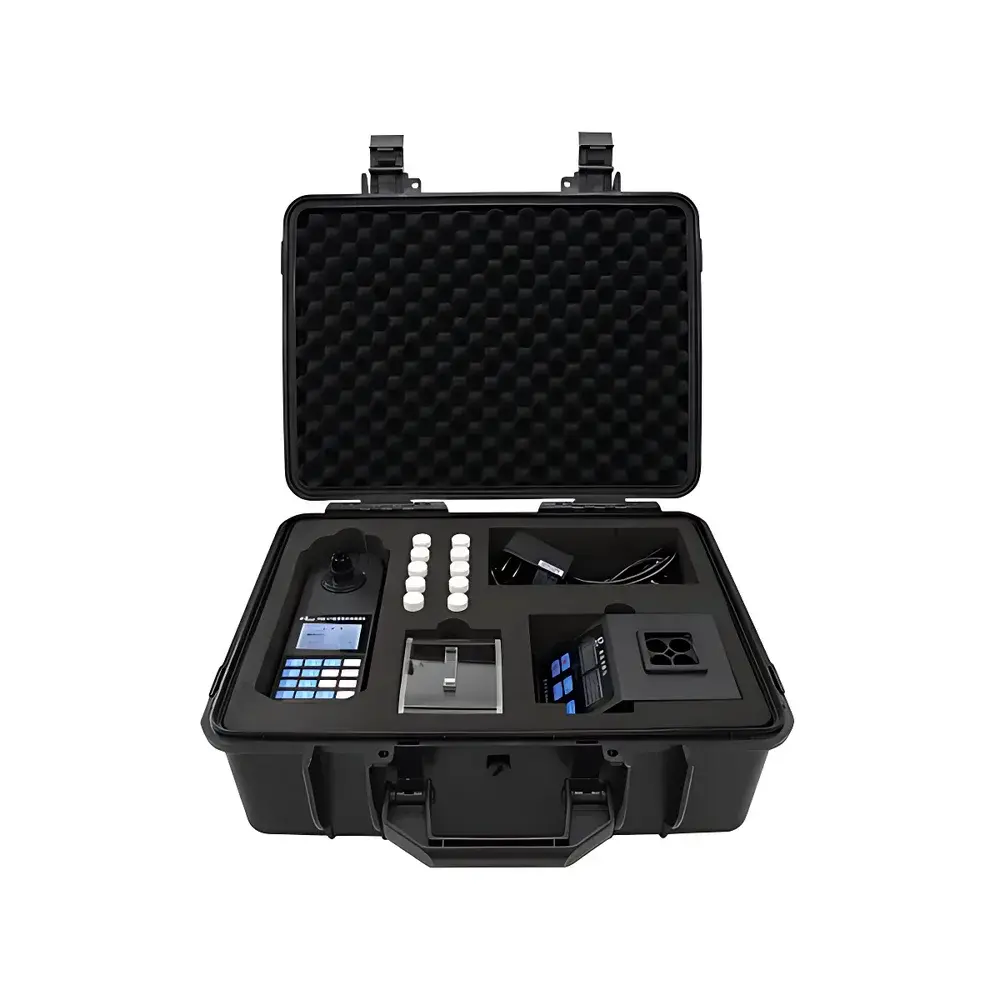
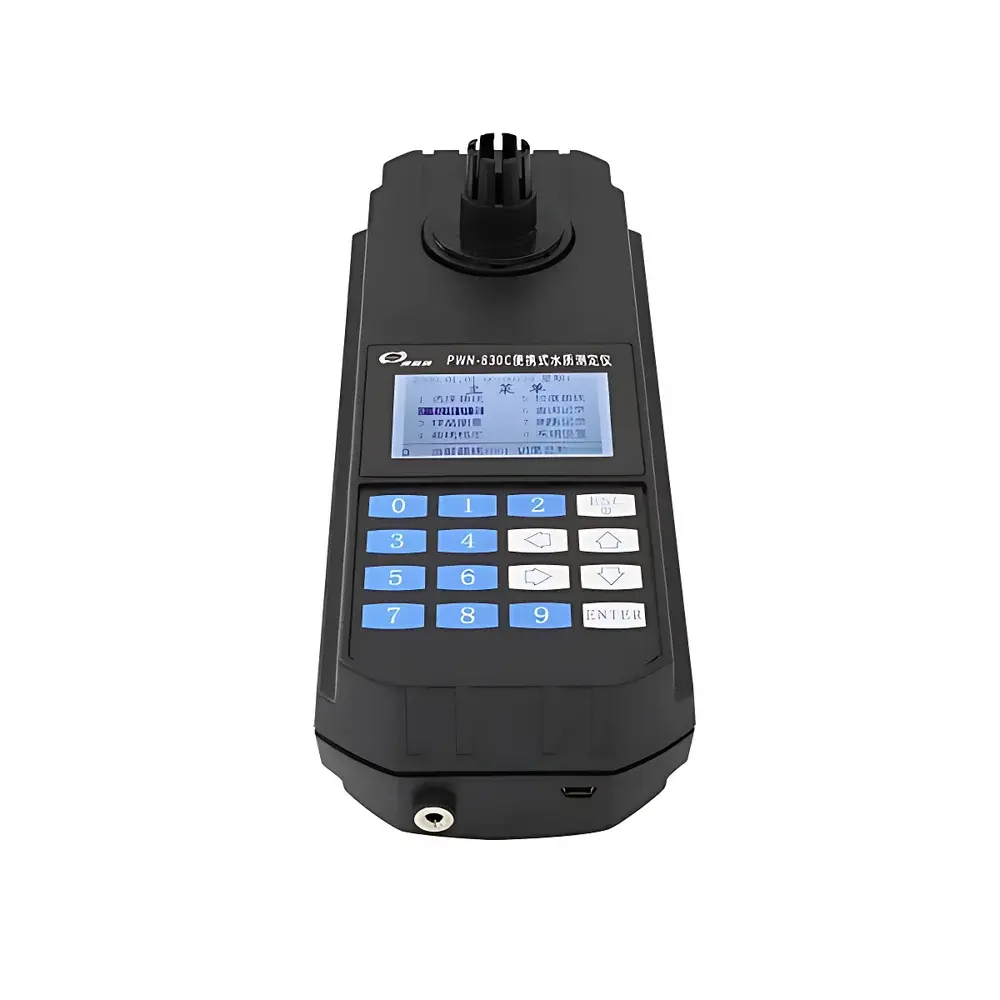
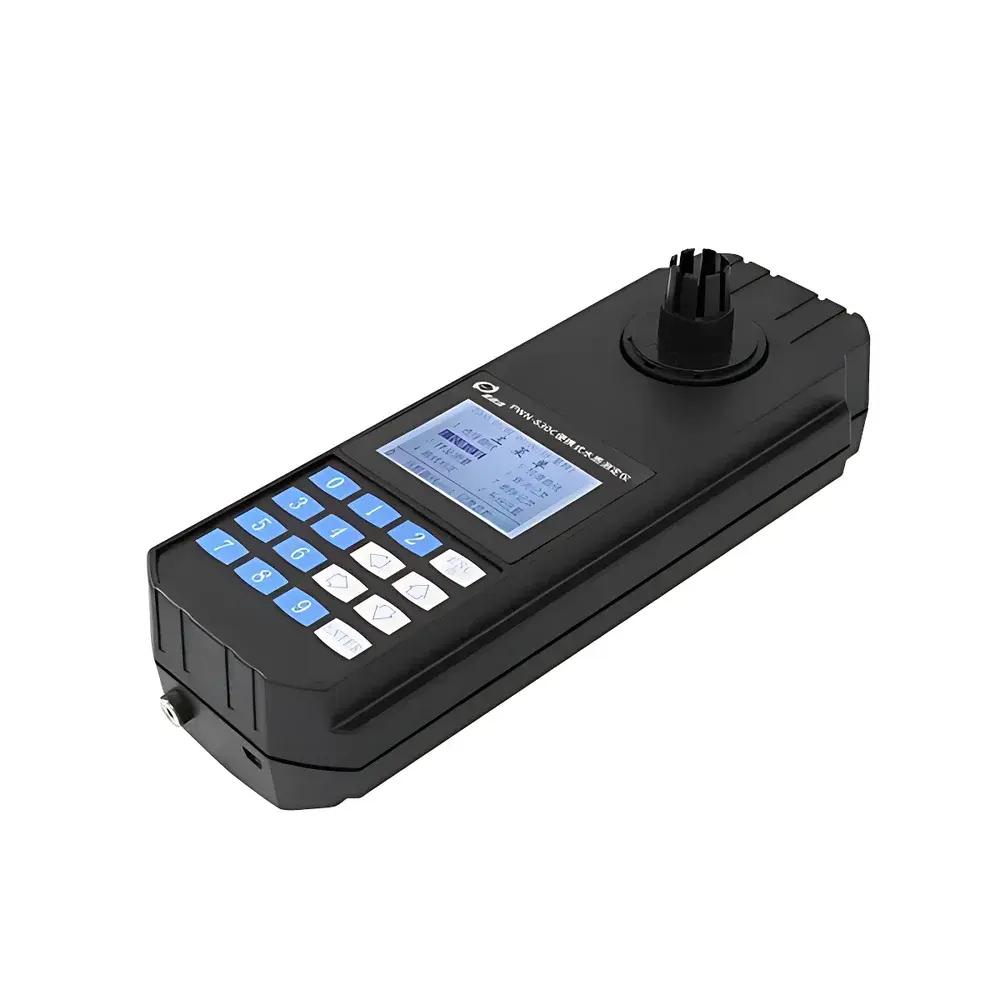
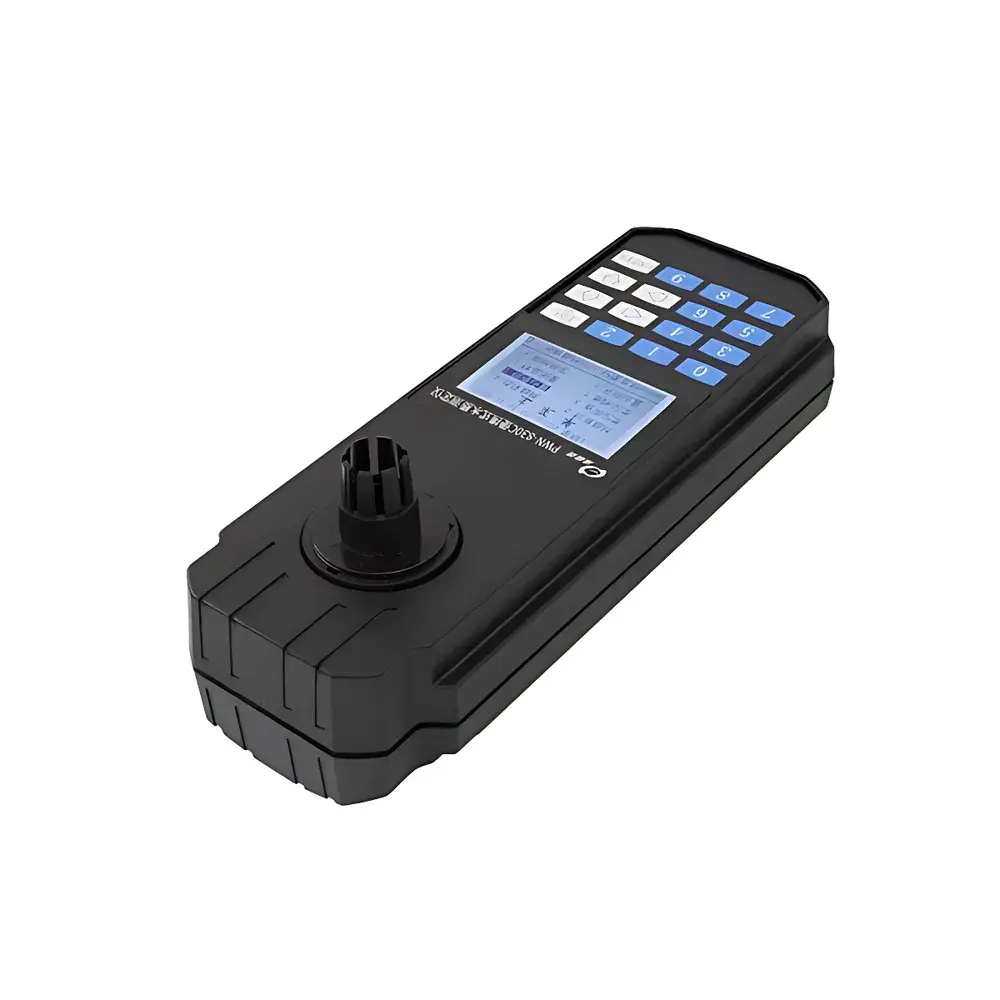
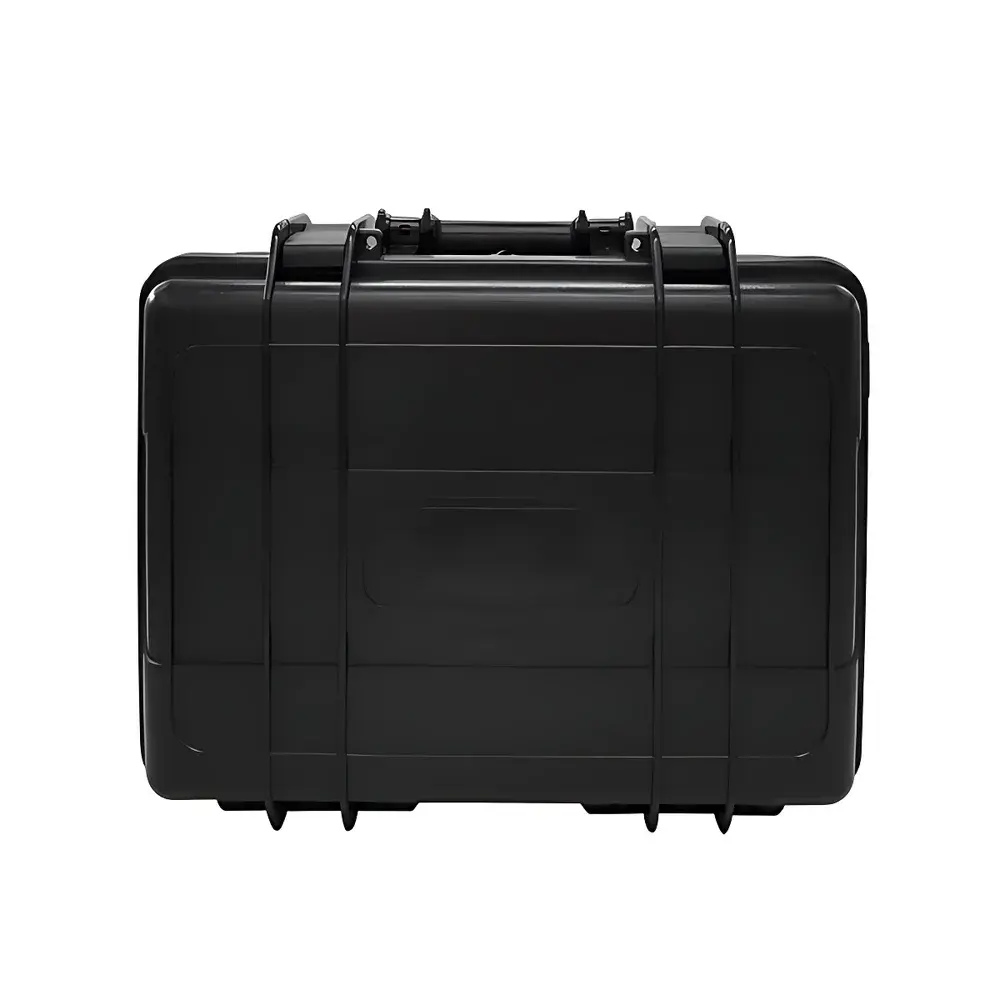
Shenchanghong PWN-830C Portable COD, Ammonia Nitrogen & Total Nitrogen Water Quality Analyzer
| Brand | Shenchanghong |
|---|---|
| Origin | Guangdong, China |
| Manufacturer Type | OEM/ODM Manufacturer |
| Country of Origin | China |
| Model | PWN-830C |
| Instrument Type | Portable/HANDHELD Water Quality Analyzer |
| Measured Parameters | Chemical Oxygen Demand (COD), Ammonia Nitrogen (NH₃-N), Total Nitrogen (TN) |
| Measurement Range | COD 0–2000 mg/L (dilution enabled) |
| Accuracy | COD ≤ ±5% |
| Repeatability | ≤3% RSD |
| Optical Drift | <0.002 A within 20 min |
| Chloride Interference Tolerance (COD) | ≤2000 mg/L Cl⁻ |
| Dimensions | Analyzer 80 × 230 × 55 mm (W×L×H) |
| Enclosure Rating | IP65 |
| Data Storage | 30 calibration curves + 199 timestamped measurement records (YYYY-MM-DD hh:mm:ss, absorbance, transmittance) |
| Interface | USB port for data export and PC connectivity |
| Power | DC 12 V (AC/DC adapter included) |
Overview
The Shenchanghong PWN-830C is a field-deployable, multi-parameter water quality analyzer engineered for rapid, on-site quantification of Chemical Oxygen Demand (COD), Ammonia Nitrogen (NH₃-N), and Total Nitrogen (TN) in surface water, wastewater, and drinking water sources. It employs standardized colorimetric methodologies compliant with ISO 6060 (COD), ISO 7150-1 (ammonia nitrogen), and ISO 11905-1 (total nitrogen), adapted for portable instrumentation through precision optical engineering and thermally stabilized digestion. Unlike benchtop spectrophotometers requiring laboratory infrastructure, the PWN-830C integrates a dedicated 4-position digital digestion unit—physically decoupled from the optical module—to eliminate thermal cross-talk and ensure measurement integrity under ambient temperature fluctuations. Its optical architecture utilizes cold LED light sources and narrow-band interference filters (center wavelength ±1 nm tolerance), minimizing spectral drift and enabling stable photometric performance over extended field deployments.
Key Features
- Modular design: Independent digestion unit and analyzer head prevent heat-induced baseline shift during simultaneous operation.
- PID-controlled digestion system: Maintains setpoint accuracy within ±0.5 °C across 0–200 °C range, with programmable ramp-hold profiles for method-specific protocols (e.g., 150 °C/120 min for COD, 105 °C/30 min for TN).
- Ultra-low-power embedded platform: 16-bit microcontroller architecture with intelligent power gating reduces average current draw to 6 months of battery-backed standby without recharge.
- Ruggedized housing: Injection-molded ABS enclosure rated IP65 per IEC 60529, resistant to dust ingress and low-pressure water jets—validated for use in rain, high-humidity environments, and unsealed vehicle-mounted operations.
- Comprehensive data governance: Timestamped storage (year/month/day/hour/minute/second) for all measurements, including raw absorbance (A), transmittance (%T), and concentration values; supports audit-ready traceability.
- USB 2.0 interface: Enables direct data extraction to Windows/macOS systems using vendor-neutral CSV export; compatible with LIMS integration via serial emulation mode.
Sample Compatibility & Compliance
The PWN-830C accommodates standard 16 mm OD glass or quartz digestion tubes (15 mL volume), supporting both open-reflux and sealed-vessel digestion protocols. It is validated for use with EPA-approved reagent kits (e.g., Hach DRB200-compatible COD vials, TNTplus 836 for ammonia, and TNT873 for total nitrogen) as well as manufacturer-supplied reagent sets. All measurement algorithms adhere to the photometric principles outlined in ASTM D1253 (COD), ASTM D1426 (ammonia), and ASTM D5176 (total Kjeldahl nitrogen), with internal calibration verification traceable to NIST SRM 2195 (potassium hydrogen phthalate for COD) and NIST SRM 2196 (ammonium sulfate for NH₃-N). The instrument meets electromagnetic compatibility requirements per EN 61326-1:2013 and carries CE marking for environmental monitoring applications.
Software & Data Management
No proprietary software installation is required for basic operation. All calibration curve management—including linear, quadratic, and polynomial fitting—is performed directly on-device via intuitive menu navigation. Up to 30 user-defined calibration curves can be stored with metadata (date created, operator ID, standard lot number). Measurement records include full metrological context: sample ID, digestion temperature/duration, reagent batch, and operator notes (up to 32 characters). Data export via USB generates ISO 8601-compliant CSV files containing columns for datetime stamp, parameter name, measured value, unit, uncertainty flag, and QC status. For regulated environments, optional firmware upgrade enables 21 CFR Part 11–compliant electronic signatures and audit trail logging (user action, timestamp, before/after values).
Applications
The PWN-830C serves as a primary field tool for municipal wastewater operators conducting routine effluent compliance checks against discharge permits (e.g., China’s GB 18918-2002, EU Urban Wastewater Treatment Directive 91/271/EEC). It supports rapid assessment of influent/effluent nitrogen loading in activated sludge plants, stormwater runoff screening at construction sites, and source water vulnerability mapping in rural watersheds. Environmental consultancies deploy it for Tier 1 site characterization prior to detailed lab analysis, while regulatory agencies utilize its portability for unannounced inspections of industrial pretreatment systems. Its compact footprint and battery resilience make it suitable for drone-assisted deployment in inaccessible wetlands and riverine transects where fixed monitoring stations are impractical.
FAQ
Is the PWN-830C suitable for regulatory reporting under Chinese national standards?
Yes—it implements methodology equivalents of HJ 399-2007 (COD), HJ 535-2009 (ammonia nitrogen), and HJ 636-2012 (total nitrogen), with documented linearity, LOD/LOQ validation, and inter-laboratory reproducibility consistent with GB/T 3358.2-2012 statistical requirements.
Can the digestion unit be used independently of the analyzer?
Yes—the digestion block operates autonomously with its own LCD interface and timer; no data link or power sharing with the optical unit is required.
What is the minimum detectable concentration for ammonia nitrogen?
The instrument achieves a practical limit of detection (LOD) of 0.02 mg/L NH₃-N using the salicylate-hypochlorite method with 30 mm pathlength cuvettes, verified per ISO 11843-2:2000.
Does the device support GLP-compliant data archiving?
With optional firmware activation, it logs operator login events, calibration history, measurement sequence IDs, and modification timestamps—fully aligned with GLP Annex 11 and ISO/IEC 17025:2017 documentation requirements.
How often must the optical system be recalibrated?
Factory calibration remains stable for ≥12 months under normal field use; annual verification using neutral density filters (NIST-traceable) is recommended, with automatic zero-check routines executed at startup.







