
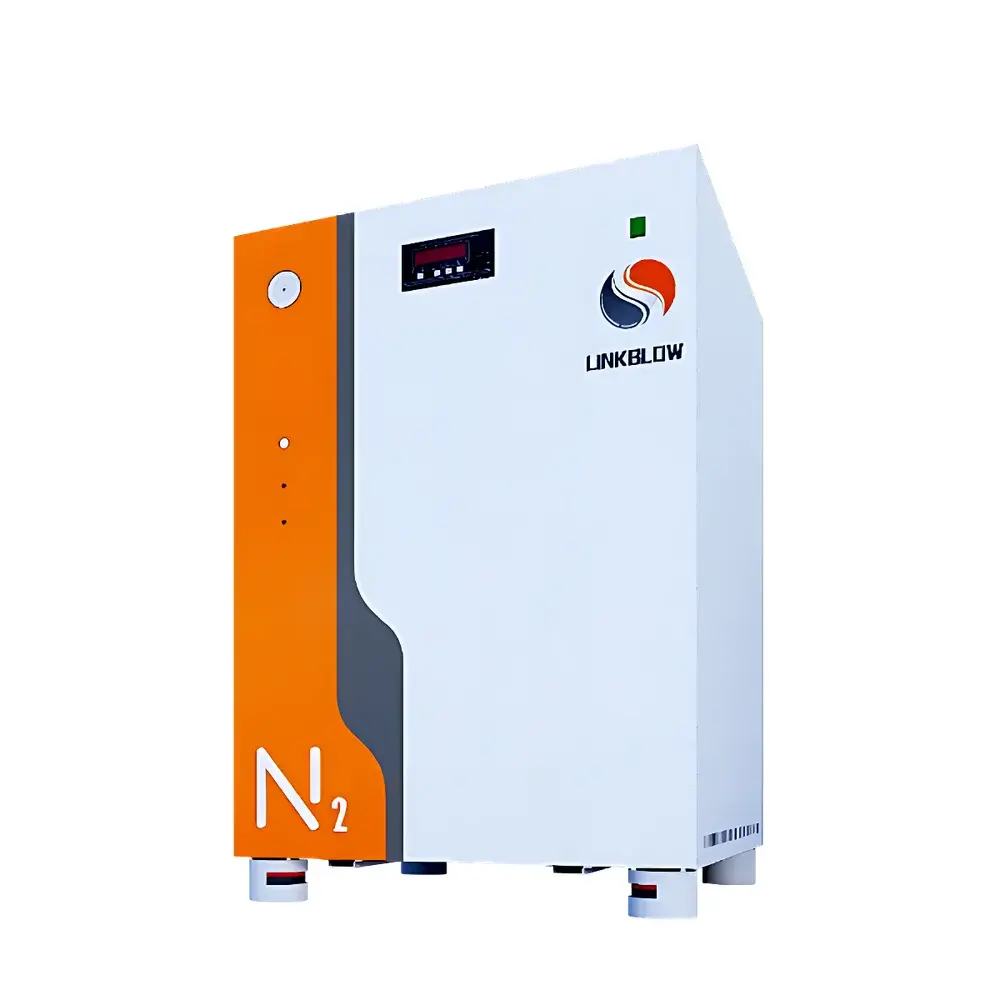
Shengtai Jinggong N-S PSA Nitrogen Generator for SO₂ Distillation Systems
| Brand | RUNRONG INSTRUMENT |
|---|---|
| Origin | Shanghai, China |
| Type | Pressure Swing Adsorption (PSA) Nitrogen Generator |
| Output Flow | 0–20 L/min (adjustable) |
| Output Pressure | 0–0.7 MPa (adjustable) |
| Nitrogen Purity | ≥99.9% |
| Compliance | Designed for GB/T 16489–1996, HJ/T 60–2000, GB 5009.34–2020, HJ/T 70–2001 |
Overview
The Shengtai Jinggong N-S PSA Nitrogen Generator is an engineered solution designed specifically to support analytical workflows requiring stable, oil-free, and high-purity nitrogen supply in sulfur compound analysis—particularly for automated and manual SO₂ distillation systems. Built upon pressure swing adsorption (PSA) technology, the system separates nitrogen from ambient air by selectively adsorbing oxygen, moisture, and carbon dioxide on carbon molecular sieve (CMS) beds under controlled pressure cycles. This principle enables continuous on-site generation without cryogenic infrastructure or cylinder logistics. The N-S model integrates a built-in oil-free scroll air compressor, eliminating hydrocarbon contamination risks critical for trace-level sulfur speciation and COD determination. Its dual-stage thermal gas conditioning module—comprising independent heating and cooling zones—ensures consistent dew point suppression (<−40 °C typical), minimizing water interference in distillation headspace purging and carrier gas applications.
Key Features
- Onboard digital purity monitor with real-time display (99.9%–99.999% selectable range), calibrated against traceable reference standards and validated per ISO 8573-1 Class 2 for particulates, Class 2 for moisture, and Class 1 for oil content.
- Integrated oil-free air compressor delivering <15 dB(A) acoustic emission at 1 m distance—suitable for shared laboratory environments where low-noise operation is mandated by occupational health protocols.
- Multi-stage purification architecture: pre-filtration (0.01 µm), catalytic deoxygenation (Pd-based), and high-flux desiccant/adsorbent cartridge stack—certified to reduce residual O₂ to <10 ppmv and H₂O to <1 ppmv (v/v).
- Thermally isolated hot/cold gas processing units maintain stable outlet temperature across ambient fluctuations (10–35 °C), preventing condensation in downstream glassware and ensuring reproducible purge efficiency during SO₂ liberation steps.
- Front-panel flow and pressure regulators with dual-scale analog dials (0–20 L/min; 0–0.7 MPa), enabling fine-tuned adjustment to match method-specific requirements in GB 5009.34–2020 (distillation-trapping-titration) and HJ/T 70–2001 (acid digestion + nitrogen purging).
Sample Compatibility & Compliance
The N-S generator is validated for use with both standard and fully automated SO₂ distillation apparatuses—including those compliant with national standard methods for sulfide quantification in water, soil, and food matrices. It meets the instrumental gas supply specifications outlined in GB/T 16489–1996 (spectrophotometric determination of sulfide), HJ/T 60–2000 (iodometric titration after distillation), and GB 5009.34–2020 (modified pararosaniline method). For high-manganese index (CODMn) analysis per HJ/T 70–2001, the unit provides inert blanking gas that satisfies the requirement for oxygen-free purge during acid reflux stabilization. All internal wetted materials comply with USP Class VI biocompatibility standards; full material traceability documentation is available upon request for GLP/GMP audits.
Software & Data Management
While the N-S operates as a standalone hardware system without embedded firmware or network connectivity, it supports audit-ready operation through mechanical calibration logs and user-maintained operational records. Optional RS-232 or 4–20 mA analog output modules (available as accessories) enable integration into centralized lab monitoring platforms compliant with FDA 21 CFR Part 11—supporting electronic signature-capable data logging of flow rate, pressure, and runtime hours. All calibration certificates (purity, flow, pressure) are issued with NIST-traceable references and include uncertainty budgets per ISO/IEC 17025 guidelines.
Applications
- Nitrogen blanking and carrier gas supply for SO₂ distillation systems used in environmental water testing (e.g., wastewater, surface water, groundwater).
- Inert atmosphere maintenance during sample digestion in sulfide preservation protocols per ISO 16232-5.
- Purge gas for CODMn determinations where oxygen exclusion prevents premature oxidation of potassium permanganate reagent.
- Support gas for GC-TCD/FID systems performing sulfur speciation when coupled with distillation interfaces.
- General-purpose high-purity nitrogen source for glove box inerting, solvent evaporation, and LC mobile phase sparging where oil-free grade is mandatory.
FAQ
What regulatory standards does the N-S generator meet for laboratory use?
It is engineered to fulfill gas quality requirements referenced in GB/T 16489–1996, HJ/T 60–2000, GB 5009.34–2020, and HJ/T 70–2001—and supports compliance with ISO 8573-1 Class 1–2 compressed air quality tiers.
Can the N-S be integrated into an automated SO₂ distillation platform?
Yes. Its analog control interface and stable pressure/flow response allow seamless synchronization with programmable distillation controllers via 4–20 mA or relay-triggered start/stop signals.
Is routine maintenance required beyond filter replacement?
Annual CMS bed performance verification is recommended; filter cartridges require replacement every 6,000 operating hours or per moisture breakthrough testing—documentation templates provided in the operator manual.
Does the unit support GMP/GLP documentation requirements?
Full traceability packages—including calibration reports, material declarations, and installation qualification (IQ) checklists—are available for regulated laboratories conducting method validation or audit preparation.
How does the dual-temperature gas conditioning improve analytical reproducibility?
By decoupling heating and cooling functions, the module prevents thermal shock-induced condensation during rapid ambient shifts—critical for maintaining consistent purge gas dryness across multi-batch SO₂ distillation runs.



