
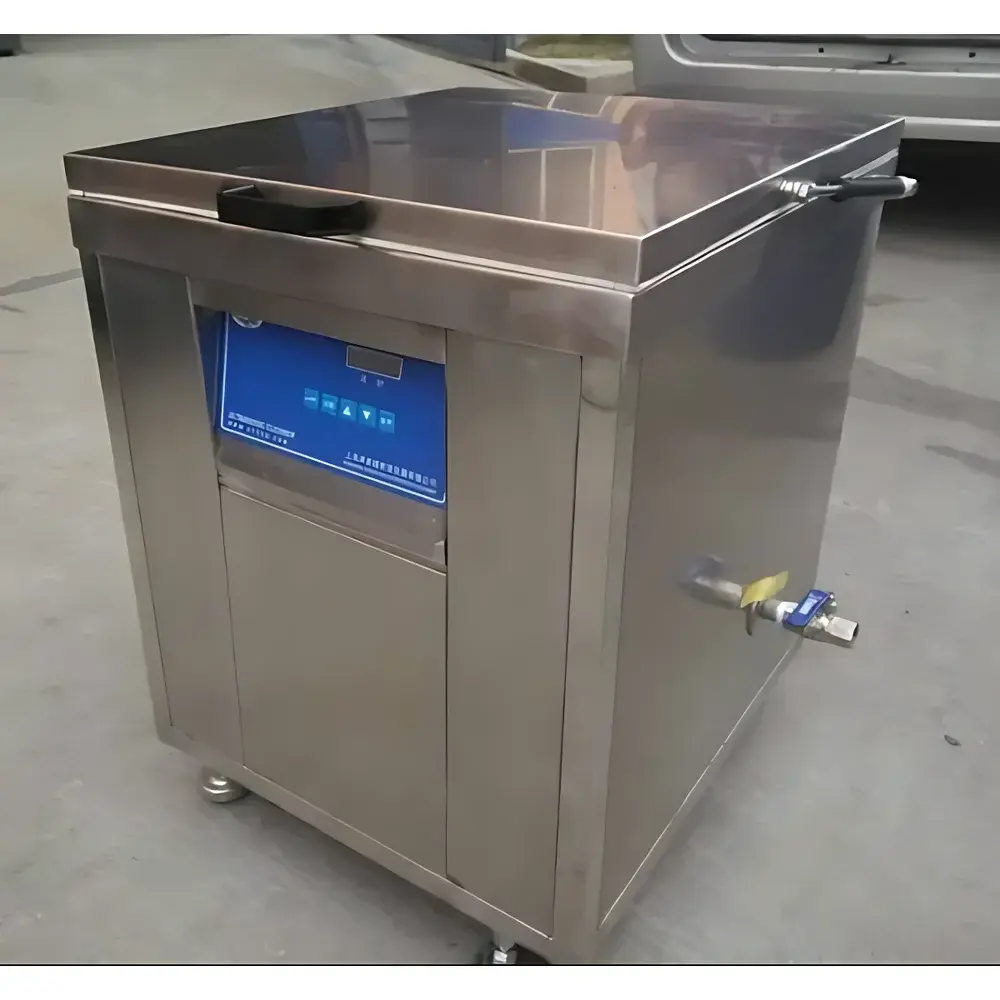
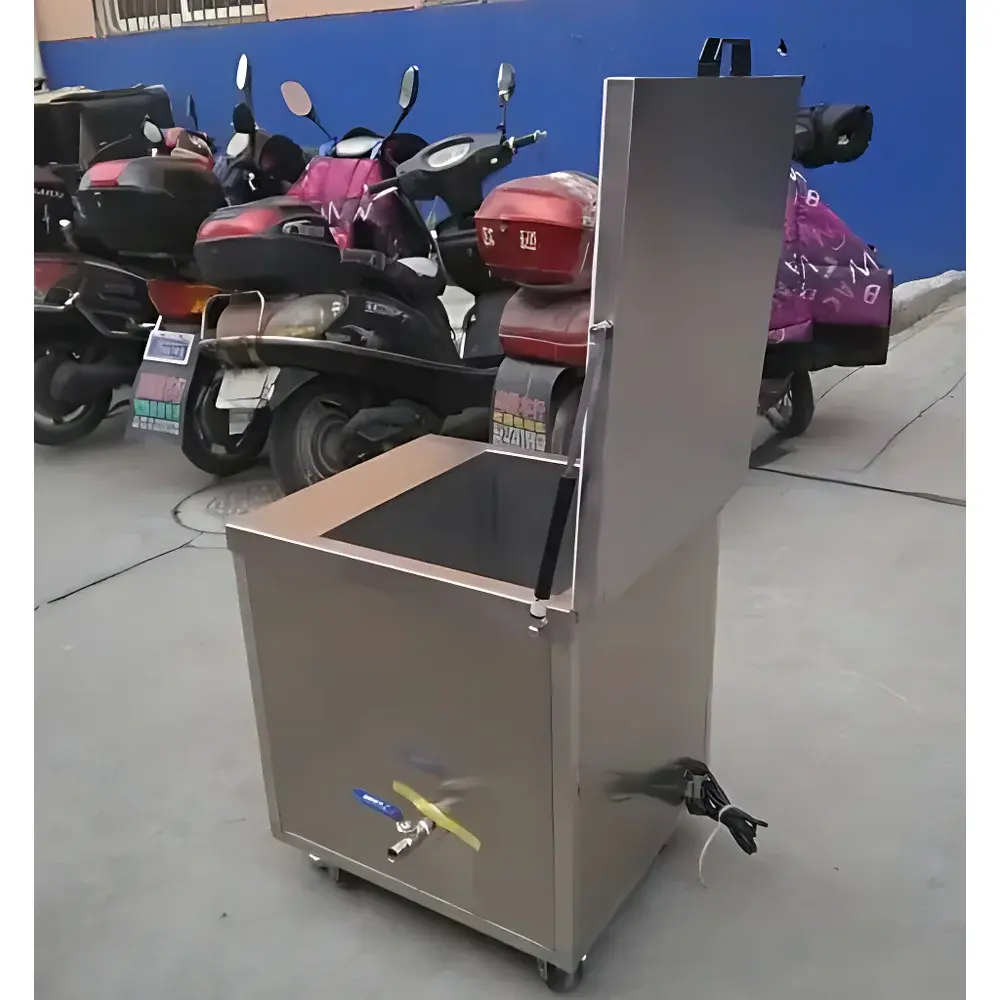
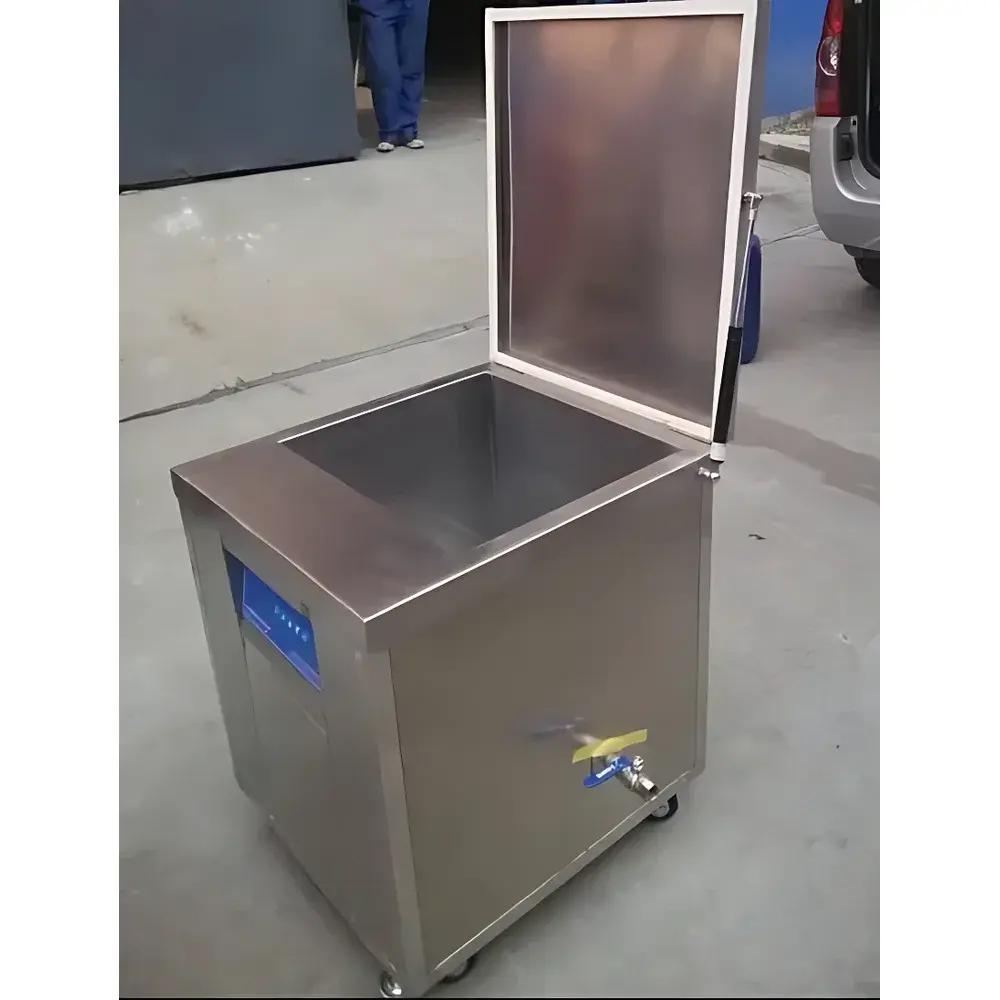
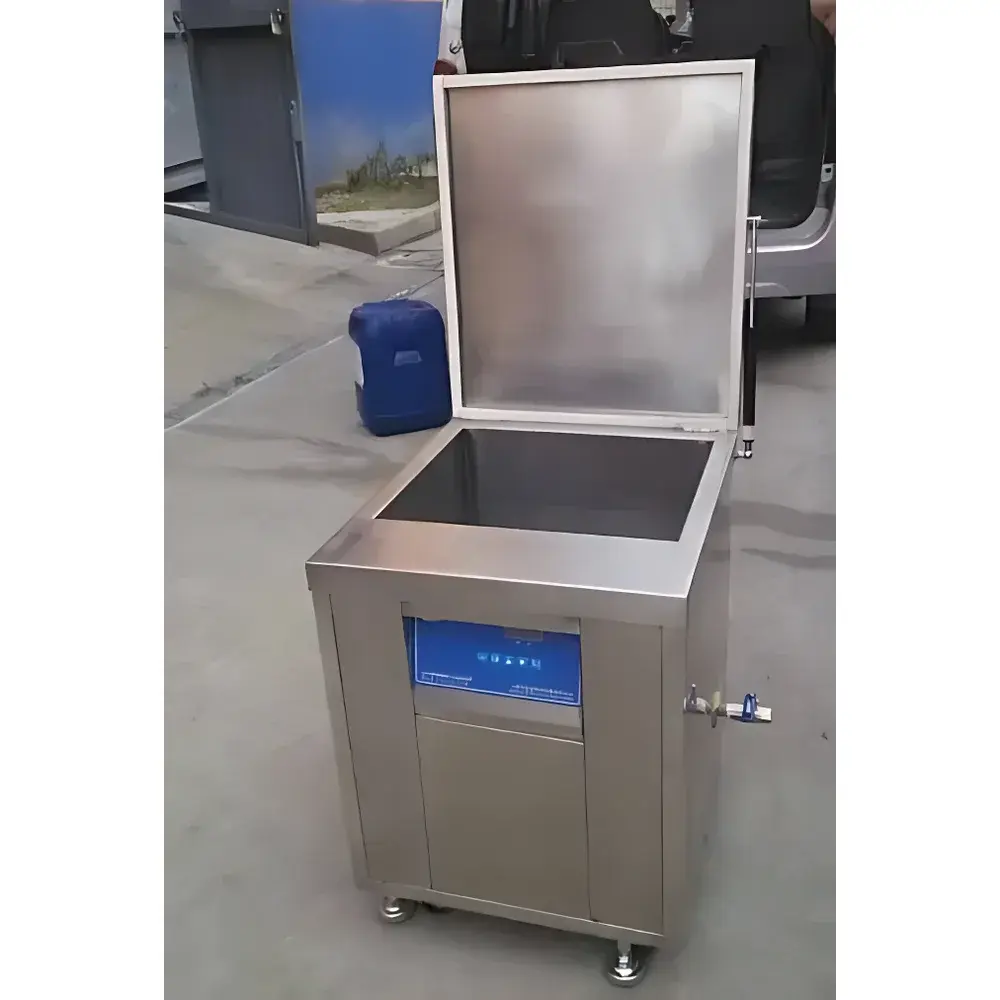
Shengyan SCQ-131220 54L Vertical Benchtop Ultrasonic Cleaner
| Brand | Shengyan Ultrasonics (sycs) |
|---|---|
| Origin | Shanghai, China |
| Model | SCQ-131220 |
| Tank Capacity | 54 L |
| Ultrasonic Frequency | 25 kHz (single-frequency) |
| Total Ultrasonic Power | 750 W |
| Transducer Count | 18 pcs |
| Timer Range | 1–600 min (digital, adjustable) |
| Temperature Control | Not available |
| Power Adjustment | Not available |
| Noise Reduction Lid | Included |
| Drain/Inlet | Manual valve |
| Construction | SUS304 stainless steel tank and exterior housing |
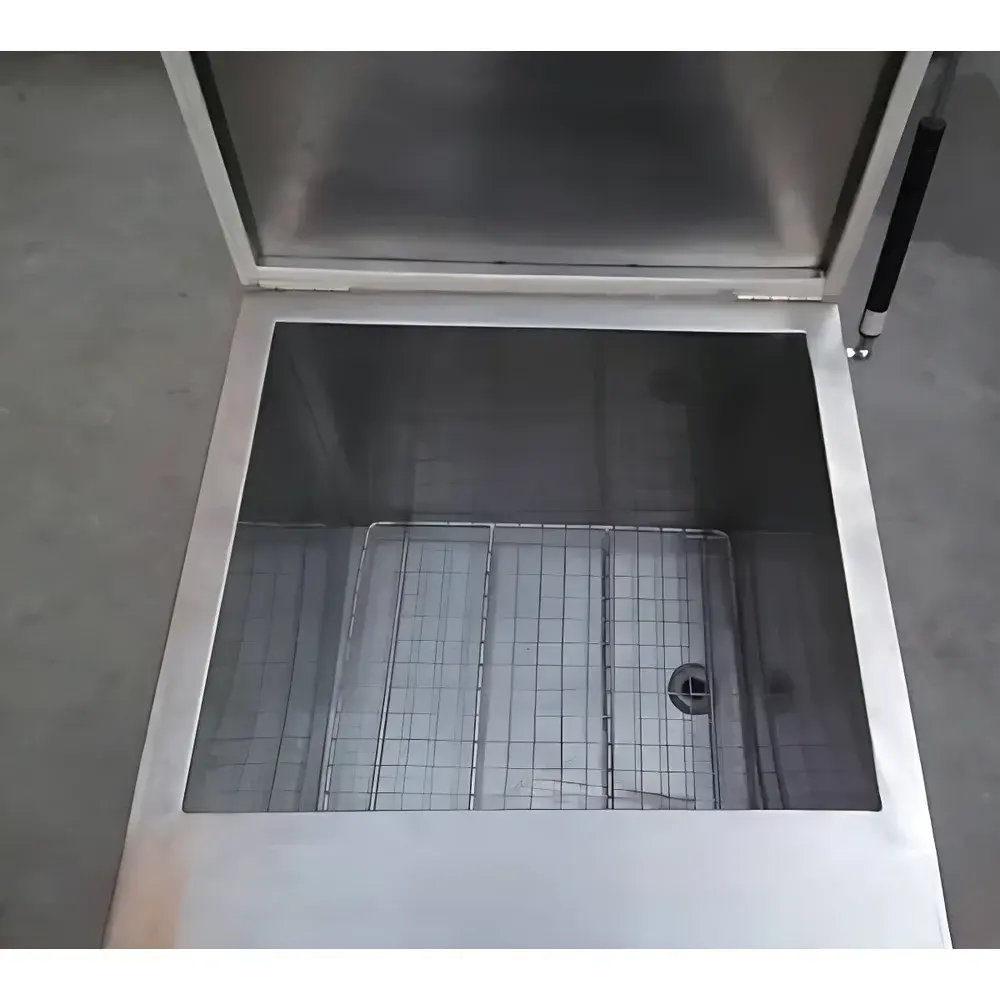
| Internal Dimensions | 420 × 370 × 350 mm |
| External Dimensions | 480 × 540 × 630 mm |
| Standard Accessories | Stainless steel mesh basket, integrated telescoping lid |
Overview
The Shengyan SCQ-131220 is a vertically oriented, benchtop ultrasonic cleaner engineered for consistent, high-intensity cavitation-based cleaning in non-GMP laboratory, industrial maintenance, and precision service environments. Operating at a fixed frequency of 25 kHz, the unit leverages low-frequency ultrasonic energy to generate robust cavitation bubbles in aqueous or solvent-based media—ideal for removing particulate contaminants, oxides, flux residues, oils, and biofilms from complex geometries. Its 54-liter stainless steel tank (SUS304) supports batch processing of large or multiple components, including printed circuit boards, optical lenses, surgical instruments, dental prostheses, and automotive sensors. Unlike high-frequency cleaners optimized for delicate microstructures, the 25 kHz output delivers deeper mechanical scrubbing action—particularly effective for macro-scale contamination on metals, glass, and rigid polymers. The system is designed for standalone operation without external chillers or recirculation pumps, making it suitable for controlled but non-regulated workflows where reproducibility—not audit-trail compliance—is the primary requirement.
Key Features
- High-power 750 W ultrasonic output distributed across 18 industrial-grade piezoelectric transducers bonded to the tank bottom—ensuring uniform energy distribution and minimizing dead zones.
- Digital LED timer with precise 1–600 minute adjustment in 1-minute increments; memory retention upon power cycle.
- Integrated telescoping noise-reduction lid constructed from SUS304 stainless steel—reducing airborne acoustic emission by ≥15 dB(A) while maintaining full visual access during operation.
- Full SUS304 construction: seamless tank, reinforced outer chassis, and corrosion-resistant hardware—rated for continuous use in humid or solvent-exposed settings.
- Manual fill/drain system with brass ball valves and silicone-sealed fittings—designed for compatibility with deionized water, ethanol, isopropanol, and mild alkaline detergents (pH 9–11).
- Included stainless steel mesh basket with elevated support feet—prevents direct contact between parts and tank bottom, preserving transducer integrity and enabling even cavitation exposure.
Sample Compatibility & Compliance
The SCQ-131220 accommodates a broad range of sample types and sizes, including but not limited to: glassware (vials, cuvettes, condensers), metallic components (circuit boards, watch movements, orthodontic tools), medical devices (endoscope accessories, reusable laryngoscope blades), and consumer goods (jewelry, eyeglass frames, dental aligners). It is not intended for sterilization per ISO 17664 or EN 285; rather, it serves as a pre-sterilization cleaning step aligned with AAMI ST79 recommendations for soil removal prior to steam autoclaving. While not certified to UL 61010-1 or IEC 61000-6-3, its electrical design conforms to general-purpose industrial safety standards applicable to Class II laboratory equipment in non-clinical settings. No regulatory documentation (e.g., FDA 510(k), CE marking under MD Directive) is provided, as the unit is classified as general-purpose cleaning instrumentation—not a medical device or in vitro diagnostic tool.
Software & Data Management
This model operates via embedded microcontroller logic with no external software interface, cloud connectivity, or data logging capability. All operational parameters—including elapsed time and active cycle status—are displayed on a dual-digit LED screen. No audit trail, user authentication, or electronic record storage is implemented; therefore, it does not meet FDA 21 CFR Part 11 requirements for electronic signatures or ALCOA+ data integrity principles. For laboratories requiring traceable cleaning validation, integration with external timers, thermal probes, or particulate counters is possible via analog signal taps (not supplied). Routine verification may be performed using aluminum foil erosion tests (per ASTM E1755-00) or thermoluminescent dosimetry strips to confirm spatial uniformity of cavitation intensity.
Applications
- Electronics manufacturing: removal of rosin flux, solder paste residue, and particulate debris from PCB assemblies prior to AOI inspection.
- Dental laboratories: cleaning of metal frameworks, acrylic denture bases, and CAD/CAM milled restorations before try-in or bonding.
- Optical servicing: degreasing of lens barrels, prism housings, and camera sensor mounts without surface scratching.
- Automotive R&D: preparation of fuel injectors, brake caliper components, and MEMS sensors for dimensional metrology or coating adhesion testing.
- Academic research: sample preparation for SEM/EDS analysis, where carbonaceous or hydrocarbon contamination must be eliminated prior to vacuum loading.
- Maintenance workshops: restoration of vintage chronograph movements, hearing aid receivers, and precision gauge blocks.
FAQ
Is this unit suitable for cleaning delicate MEMS devices or semiconductor wafers?
No. The 25 kHz frequency and high-power density may induce mechanical stress or micro-pitting on sub-50 µm features. For such applications, a 80–130 kHz high-frequency cleaner with degassed DI water and pulsed mode is recommended.
Can I use acetone or chlorinated solvents in this tank?
No. The unit is not explosion-proof and lacks solvent recovery or ventilation integration. Only water-miscible, non-halogenated solvents (e.g., ethanol, IPA, Tergazyme™) are permitted.
Does the timer retain settings after power loss?
Yes—the microcontroller preserves the last configured time value in non-volatile memory.
Is the stainless steel mesh basket included standard or optional?
It is supplied as standard equipment. Custom rack fixtures (e.g., PCB holders, instrument trays) are available as non-standard OEM accessories.
What is the expected service life of the transducers under continuous daily use?
With proper maintenance (avoiding dry operation, regular descaling, and solvent compatibility adherence), transducer mean time between failures exceeds 5,000 operating hours.



