
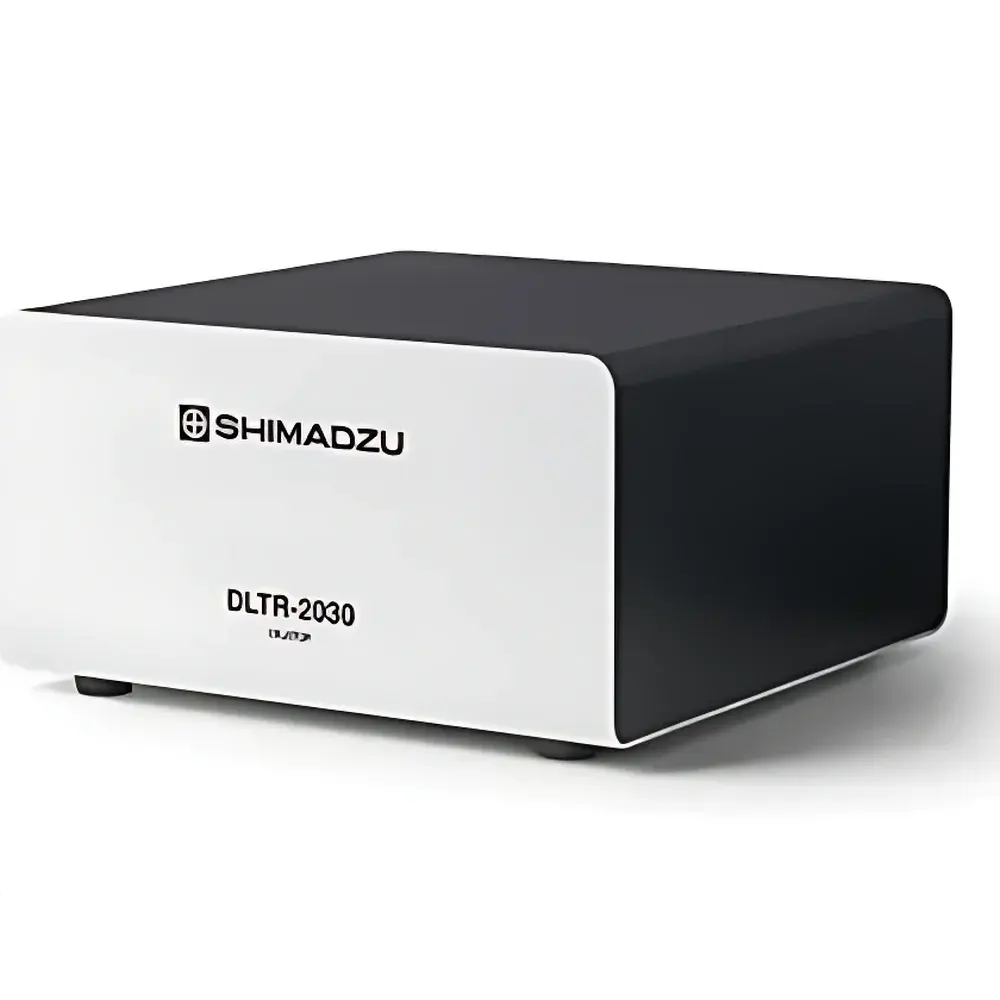
Shimadzu DLTR-2030 High-Precision Gas Dilution System
| Brand | Shimadzu |
|---|---|
| Model | DLTR-2030 |
| Origin | Jiangsu, China |
| Manufacturer Type | Original Equipment Manufacturer (OEM) |
| Regional Classification | Domestic (PRC) |
| Pricing | Available Upon Request |
Overview
The Shimadzu DLTR-2030 High-Precision Gas Dilution System is an engineered solution for trace-level gas standard preparation in analytical laboratories requiring metrologically sound calibration workflows. Designed specifically for seamless integration with the Nexis GC-2030 gas chromatograph, the DLTR-2030 operates on a dynamic, continuous-flow dilution principle—utilizing precisely regulated mass flow control to generate certified reference gas mixtures across multiple concentration decades (typically 1:10 to 1:10,000 dilution ratios). Its core architecture implements dual-stage mass flow controllers (MFCs) with real-time feedback compensation, enabling stable output concentrations under variable backpressure and ambient temperature fluctuations. This system is not a standalone detector but a critical upstream calibration infrastructure component—supporting regulatory-compliant method validation, instrument qualification (IQ/OQ), and routine QC/QA procedures in environmental monitoring, petrochemical process analysis, and academic research labs.
Key Features
- High-accuracy dynamic dilution using Shimadzu DAFC (Digital Automatic Flow Controller) technology, delivering flow stability ≤ ±0.5% of full scale over extended operation cycles.
- Compact modular design: Standalone unit measures only 25 cm in length; valve-box-integrated configuration mounts directly adjacent to GC inlet manifolds, minimizing dead volume and spatial footprint.
- Fully inertized fluidic path: All wetted surfaces—including stainless-steel tubing, electropolished fittings, and PFA/PEEK-lined valves—are passivated and silanized to suppress adsorption of reactive species (e.g., H2S, NH3, SO2, formaldehyde) and ensure quantitative recovery of sulfur-containing compounds.
- Corrosion-resistant construction: Compatible with aggressive gas matrices including Cl2, NOx, HCl, and HF at ppm-level concentrations when configured with optional chemically resistant seals and flow elements.
- Integrated digital control interface supporting Ethernet and USB connectivity, enabling remote operation and synchronization with GC acquisition software via standardized protocols (e.g., TCP/IP, Modbus RTU).
Sample Compatibility & Compliance
The DLTR-2030 accommodates single-component or multi-component primary standard gases (e.g., certified NIST-traceable cylinders containing CH4/N2, CO/air, or C2H4/He) as source materials. It supports diluent gases including ultra-high-purity N2, synthetic air, He, and Ar—subject to appropriate MFC range selection. The system complies with ISO 6145-4 (Gas mixtures — Preparation of calibration gas mixtures using dynamic volumetric methods) and aligns with ASTM D6420 (Standard Test Method for Determination of Gaseous Compounds by Gas Chromatography) requirements for calibration gas generation. For regulated environments, audit trails, user access controls, and electronic signature support are available through optional firmware modules compliant with FDA 21 CFR Part 11 and GLP/GMP data integrity standards.
Software & Data Management
The dedicated DLTR Control Software provides intuitive workflow automation—from initial MFC calibration and leak verification to multi-point calibration curve generation. Users define target concentrations, dwell times, and sequence logic via drag-and-drop interface; the software automatically calculates required flow setpoints, initiates GC auto-injection triggers, and logs timestamped dilution parameters (e.g., carrier/diluent flow rates, pressure, temperature) alongside raw chromatographic response data. All operational records—including method files, calibration logs, and system diagnostics—are stored in encrypted SQLite databases with configurable retention policies. Export options include CSV, PDF reports, and direct integration into LIMS platforms via ODBC drivers.
Applications
- Environmental air monitoring: Preparation of low-concentration VOC, BTEX, and odorant standards for EPA Method TO-14/TO-15 compliance testing.
- Industrial hygiene: Generation of workplace exposure limit (WEL/PEL) calibration standards for fixed and portable gas detectors.
- Method development & validation: Establishing linear dynamic ranges for GC-FID, GC-ECD, and GC-MS systems in accordance with ISO/IEC 17025 requirements.
- Research laboratories: Controlled delivery of reactive gas pulses for kinetic studies, catalyst evaluation, and sensor response characterization.
- Reference material certification: Supporting accredited RM producers in preparing secondary standards traceable to national metrology institutes.
FAQ
What gas types are compatible with the DLTR-2030?
The system supports inert, polar, and reactive gases—including H2S, NH3, SO2, Cl2, NO, and formaldehyde—provided the optional corrosion-resistant configuration is selected.
Can the DLTR-2030 be used without a Shimadzu GC?
Yes. While optimized for Nexis GC-2030 integration, it functions as a stand-alone dilution source compatible with any gas chromatograph or analyzer accepting analog/digital trigger inputs and standard gas inlet connections (e.g., 1/8″ Swagelok).
Is calibration certificate included with purchase?
Each unit ships with a factory calibration report traceable to JCSS (Japan Calibration Service System); NIST-traceable recalibration services are available through Shimadzu authorized service centers.
How is system performance verified post-installation?
Built-in leak-check routines, flow verification protocols using certified reference flows, and automated linearity assessment across five-point dilution series are accessible via the control software.
Does the system meet ISO/IEC 17025 requirements for accredited labs?
When operated with validated methods, documented change control, and enabled audit-trail functionality, the DLTR-2030 satisfies technical requirements for calibration gas generation under Clause 6.4 (Equipment) and Clause 7.7 (Sampling) of ISO/IEC 17025:2017.
Related Products







