
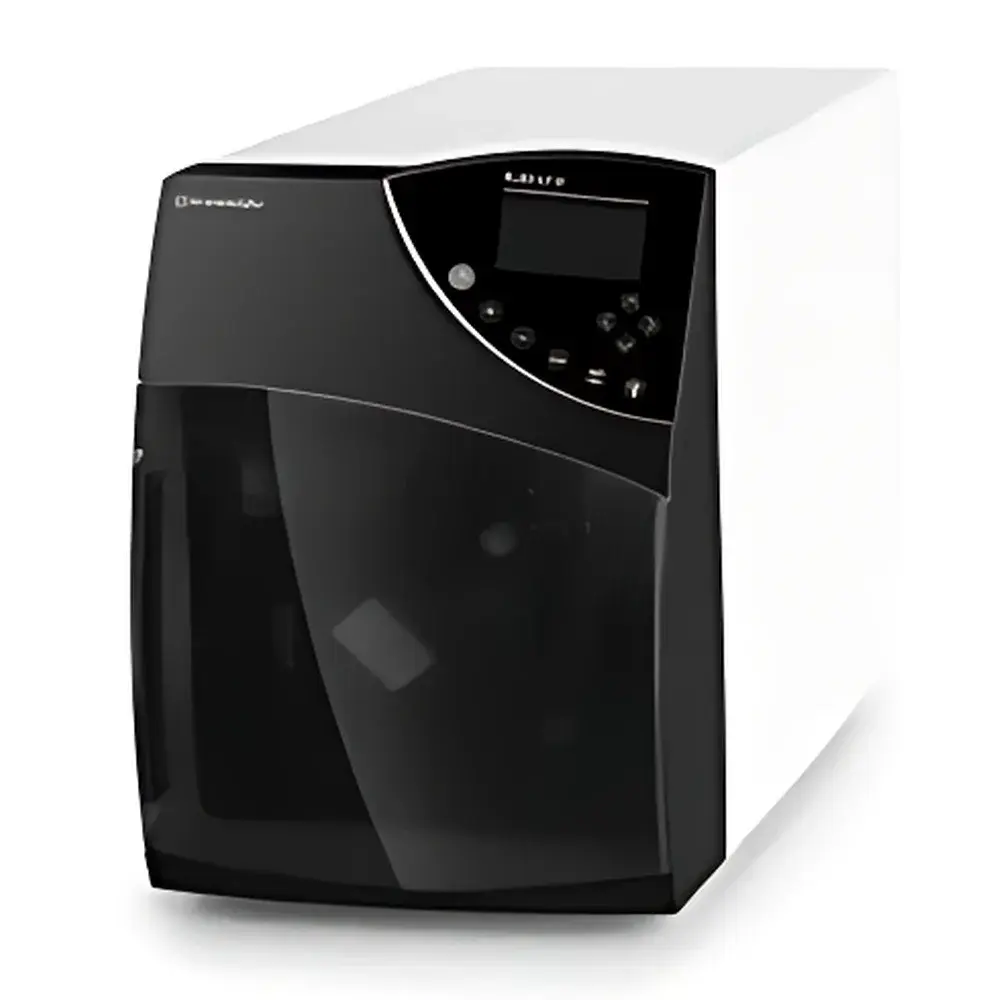
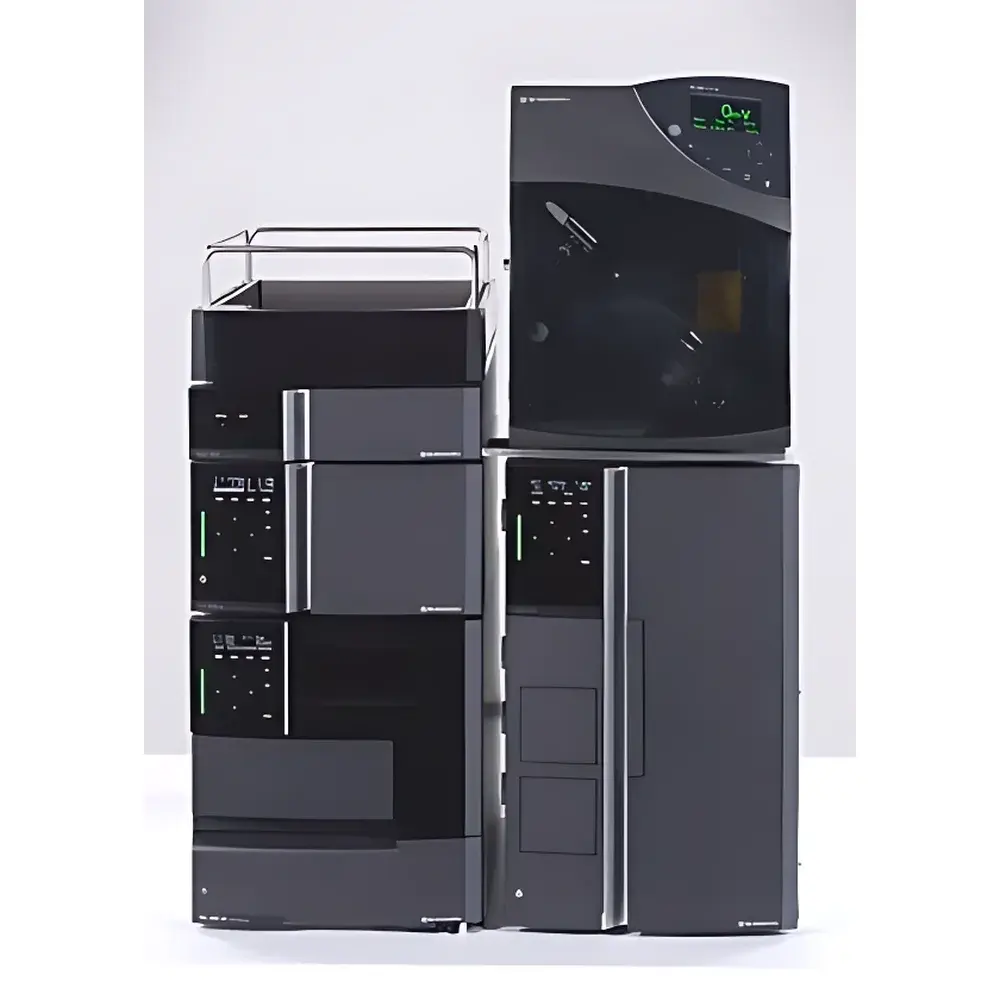
Shimadzu ELSD-LT III Evaporative Light Scattering Detector
| Brand | Shimadzu |
|---|---|
| Origin | Imported |
| Manufacturer | Shimadzu Corporation |
| Model | ELSD-LT III |
| Detection Principle | Evaporative Light Scattering (ELSD) |
| Wavelength | 450 nm |
| Light Source | High-Stability Laser Diode |
| Detection Mode | Photometric Scattering |
| 雾化器� | 容性: UHPLC, SFC, and Preparative LC configurations |
| Dynamic Linear Range | Up to 5 decades without gain switching |
| Design Height | ~67% of predecessor’s height |
| Real-time Monitoring | Drift Tube Temperature & Nebulizer Gas Pressure |
Overview
The Shimadzu ELSD-LT III is a high-performance evaporative light scattering detector engineered for universal, non-destructive detection in liquid chromatography systems. Unlike UV-Vis or fluorescence detectors, the ELSD-LT III operates on the physical principle of nebulization, solvent evaporation, and laser-based light scattering—making it inherently responsive to virtually any non-volatile or semi-volatile analyte that lacks chromophores. This includes carbohydrates (e.g., oligosaccharides, dextrans), lipids (phospholipids, triglycerides), surfactants (polysorbates, alkyl glucosides), synthetic polymers (PEGs, PVP), and natural product glycosides. Its core measurement pathway involves post-column nebulization of the LC effluent into fine droplets, controlled evaporation of the mobile phase in a heated drift tube, and subsequent detection of scattered light from residual non-volatile analyte particles using a stabilized 450 nm laser source. The detector’s design adheres to fundamental aerosol physics principles—namely, Mie scattering theory—ensuring reproducible signal generation proportional to analyte mass over a broad concentration span.
Key Features
- Laser-Optimized Sensitivity: Equipped with a photometrically regulated 450 nm laser diode, the ELSD-LT III delivers significantly improved signal-to-noise ratio and long-term intensity stability—critical for quantitative trace analysis across multi-day method validation runs.
- Extended Dynamic Linear Range: Achieves up to five orders of magnitude (10⁵) linear response without manual gain adjustment, enabling simultaneous quantification of major and minor components in complex mixtures—such as botanical extracts or polymer dispersity profiles—without peak saturation or re-injection.
- Adaptable Nebulization Architecture: Supports interchangeable nebulizers optimized for distinct flow regimes: low-flow micro-UHPLC (≤0.5 mL/min), supercritical fluid chromatography (SFC), and high-flow preparative LC (up to 20 mL/min), ensuring consistent droplet size distribution and minimal carryover.
- Enhanced Semi-Volatile Detection: Features an integrated thermal management system with precisely controlled drift tube temperature ramping and optimized gas-assisted particle focusing—enabling robust detection of semi-volatile compounds (e.g., fatty acids, sterols, medium-chain triglycerides) previously challenging for conventional ELSDs.
- Compact Footprint & Integrated Diagnostics: Occupies ~30% less bench space than prior-generation models; incorporates real-time monitoring of nebulizer gas pressure and drift tube temperature with automated shutdown upon out-of-spec condition—supporting GLP-compliant operational integrity.
Sample Compatibility & Compliance
The ELSD-LT III is compatible with common reversed-phase, HILIC, and normal-phase mobile phases—including aqueous buffers, acetonitrile, methanol, isopropanol, and CO₂-based SFC eluents—provided volatile modifiers are used. It complies with ICH Q2(R2) guidelines for detector suitability in method validation and supports audit-trail-capable data acquisition when interfaced with Shimadzu LabSolutions software under 21 CFR Part 11-compliant configurations. While not intrinsically compliant with ISO/IEC 17025 calibration requirements, its performance verification protocols align with ASTM D7777–15 (Standard Practice for ELSD Performance Testing) and USP Chromatography General Chapter recommendations for universal detection validation.
Software & Data Management
Fully integrated with Shimadzu LabSolutions LC/GC software (v5.9+), the ELSD-LT III enables synchronized instrument control, real-time signal visualization, and automated baseline correction. Raw analog output (0–1 V) and digital RS-232/USB communication support third-party CDS platforms including Empower, Chromeleon, and OpenLab. All operational parameters—including drift tube setpoint, nebulizer gas pressure, laser enable status, and hardware fault logs—are timestamped and stored within the acquisition database. Audit trails record user actions, parameter changes, and system alerts—meeting GMP/GLP documentation expectations for regulated environments.
Applications
The ELSD-LT III is routinely deployed in pharmaceutical QC labs for assay of excipients (e.g., lactose, mannitol), active ingredient quantification in non-UV-absorbing formulations (e.g., heparin sodium, chondroitin sulfate sodium), and residual solvent profiling in API purification workflows. In nutraceutical and food safety testing, it supports quantification of saponins, phytosterols, and emulsifiers in complex matrices. Academic and industrial polymer laboratories use it for molecular weight distribution analysis of polyethers and polysaccharides via SEC-MALS-ELSD hyphenation. Its compatibility with SFC makes it ideal for chiral separation monitoring of agrochemical intermediates and cannabinoid derivatives.
FAQ
What types of compounds can be detected by the ELSD-LT III?
It detects non-volatile and semi-volatile compounds lacking strong UV absorbance—such as carbohydrates, lipids, surfactants, polymers, and glycosylated natural products—provided they form stable particles after solvent evaporation.
Is the ELSD-LT III compatible with UHPLC systems?
Yes—via optional low-dead-volume nebulizers designed for flow rates down to 0.05 mL/min and backpressure tolerance up to 130 MPa.
Does it require special mobile phase considerations?
Non-volatile buffers (e.g., phosphate, citrate) must be avoided; volatile alternatives such as ammonium acetate/formate or TFA are required to prevent nozzle clogging and baseline drift.
How is calibration performed?
Response is inherently non-linear but reproducible; calibration curves are constructed using serial dilutions of representative standards—no absolute molar sensitivity is claimed, but relative quantitation is highly robust across batches.
Can it be used in regulated GxP environments?
Yes—when operated with validated LabSolutions software, electronic signatures, and full audit trail activation per 21 CFR Part 11 requirements.




