
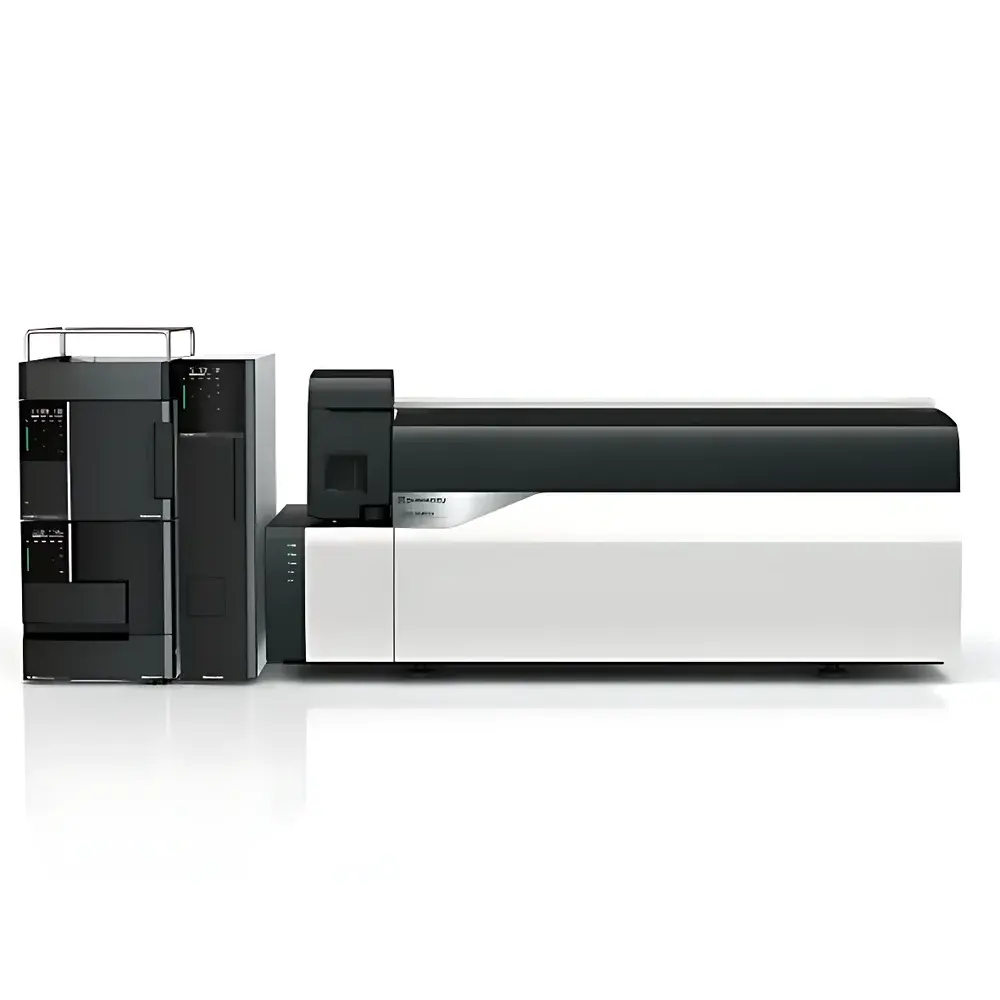
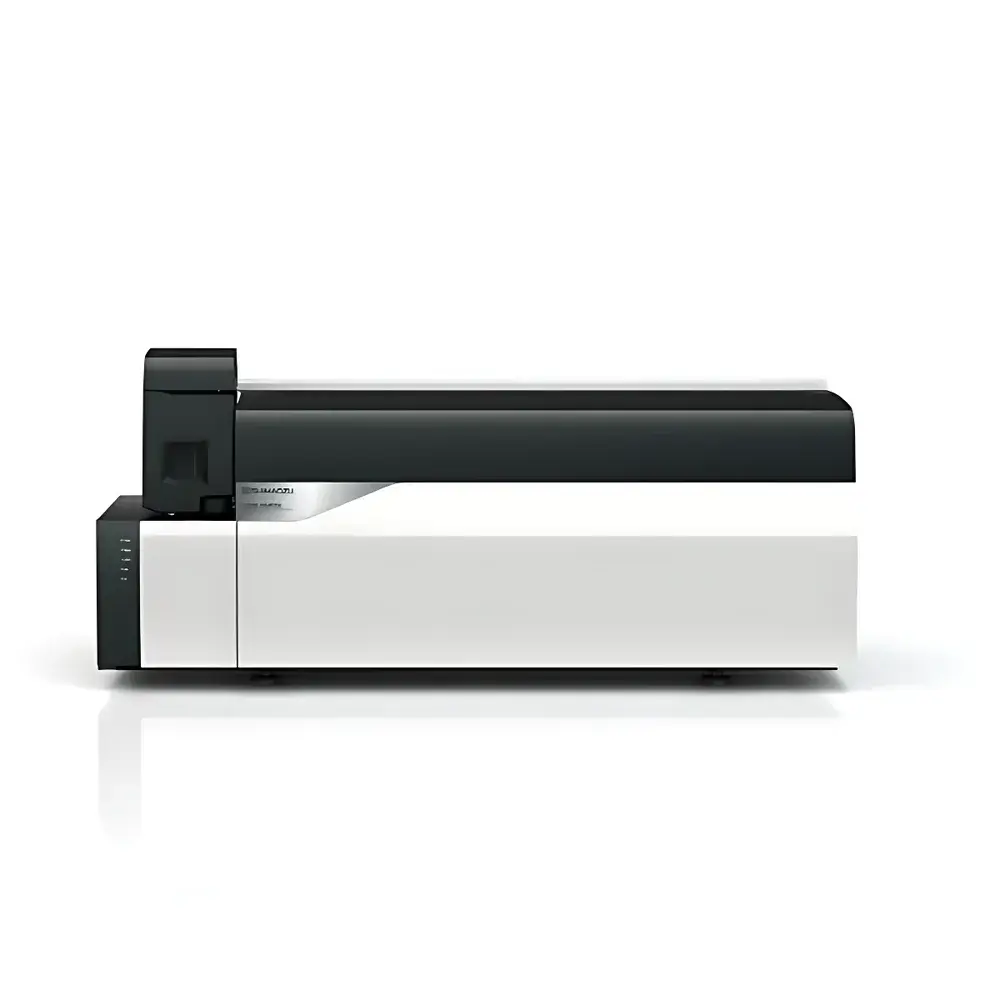
Shimadzu LCMS-8045RX Triple Quadrupole Liquid Chromatography Mass Spectrometer
| Brand | Shimadzu |
|---|---|
| Origin | Japan |
| Manufacturer Type | Original Equipment Manufacturer (OEM) |
| Instrument Type | Tandem Quadrupole (QqQ) |
| Model | LCMS-8045RX |
| Application Scope | General-Purpose Quantitative and Qualitative Analysis |
| Compliance | Designed for GLP/GMP, ISO/IEC 17025, and FDA 21 CFR Part 11–enabled workflows |
Overview
The Shimadzu LCMS-8045RX is a robust, high-performance triple quadrupole liquid chromatography mass spectrometer engineered for routine quantitative analysis in regulated and research-intensive laboratories. It operates on the well-established tandem mass spectrometry (MS/MS) principle—employing three quadrupole mass filters (Q1 → q2 → Q3) in sequence—to deliver exceptional selectivity, sensitivity, and reproducibility for targeted compound detection across complex matrices. Unlike single-quadrupole or time-of-flight platforms, the LCMS-8045RX excels in multiple reaction monitoring (MRM) mode, enabling precise quantification of low-abundance analytes in biological fluids, environmental extracts, food homogenates, and pharmaceutical formulations. Its architecture integrates electrospray ionization (ESI) and atmospheric pressure chemical ionization (APCI) sources with optimized ion optics, ensuring stable signal generation and minimal matrix-induced suppression—even under high-throughput conditions.
Key Features
- Enhanced ion source design with improved contamination resistance and extended maintenance intervals—reducing downtime and improving long-term signal stability.
- “Performance Manager” functionality: automated pre-run system diagnostics, real-time status verification, and self-calibration routines—including mass axis calibration and detector gain optimization—ensuring consistent instrument readiness.
- Eco Mode operation: intelligent power management that transitions the system to low-power standby after user-defined idle periods, achieving up to 31% reduction in annual energy consumption without compromising startup readiness.
- Intuitive, fully localized Chinese-language Mass Spectrometer software interface—designed for rapid method development, acquisition control, and post-run data review—while maintaining full compatibility with English-language regulatory reporting templates.
- Seamless integration with Shimadzu Nexera UHPLC systems via native communication protocols, supporting coordinated automation including scheduled power-on/off, column oven temperature ramping, and gradient synchronization.
- Ruggedized mechanical design and thermally stabilized RF electronics—optimized for continuous 24/7 operation in QC laboratories requiring high instrument uptime and minimal operator intervention.
Sample Compatibility & Compliance
The LCMS-8045RX supports a broad range of sample types—from aqueous extracts and plasma supernatants to pesticide residues in soil digests and residual solvents in active pharmaceutical ingredients (APIs). Its dual-mode ion source accommodates both polar and non-polar compounds across molecular weights from ~50 to 1,500 Da. The system meets essential requirements for compliance-driven environments: hardware timestamps, audit-trail-enabled software logging, electronic signature support, and secure user access controls align with FDA 21 CFR Part 11, ISO/IEC 17025:2017, and ICH M10 guidelines. Routine performance qualification (PQ) procedures—including sensitivity, retention time stability, and peak area repeatability tests—are fully scriptable within the software environment to support GLP and GMP documentation workflows.
Software & Data Management
Data acquisition and processing are handled by Shimadzu’s LabSolutions LCMS software, which provides comprehensive tools for MRM method setup, dynamic dwell time allocation, scheduled retention time alignment, and integrated peak integration with customizable baseline algorithms. All raw data files (.qgd format) are stored with embedded metadata—including instrument configuration, calibration history, and user authentication logs—enabling full traceability. Export options include CSV, PDF, and XML formats compliant with LIMS interfaces and third-party statistical packages (e.g., Simca, R, Python-based chemometrics libraries). Software updates follow a validated release cycle, with version-controlled change documentation available upon request for internal validation teams.
Applications
The LCMS-8045RX is routinely deployed in pharmaceutical quality control labs for assay validation, impurity profiling, and stability-indicating assays per ICH Q2(R2); in environmental testing facilities for EPA Method 1694 and EU Water Framework Directive priority pollutant screening; in food safety laboratories for mycotoxin, veterinary drug residue, and pesticide multiresidue analysis (EU SANTE/11312/2021); and in academic and contract research organizations for metabolomics biomarker verification and pharmacokinetic studies. Its balanced sensitivity-to-cost ratio makes it especially suitable for mid-volume laboratories transitioning from older-generation triple quad systems seeking improved ruggedness, reduced operational overhead, and future-ready software architecture.
FAQ
Does the LCMS-8045RX support remote monitoring and control?
Yes—via secure HTTPS-based web interface and optional LabSolutions Remote Client, enabling real-time status viewing, queue management, and method execution from off-site locations.
Is the system compatible with third-party HPLC/UHPLC systems?
It supports standard analog/digital I/O triggers and ASCII command protocols (e.g., Agilent, Waters, Thermo), though full bidirectional automation (e.g., autosampler synchronization) is optimized with Shimadzu Nexera platforms.
What validation documentation is provided with the instrument?
Shimadzu supplies Factory Acceptance Test (FAT) reports, Installation Qualification (IQ) templates, and Operational Qualification (OQ) test scripts aligned with ASTM E2500 and USP guidelines.
Can the LCMS-8045RX be upgraded to support additional ionization modes?
The base configuration includes ESI and APCI; additional sources such as DUIS (Direct Ultrafast Ionization Source) or MALDI modules require hardware retrofit and are not field-upgradable on this model.
What is the typical maintenance interval for the ion source and detector?
Under standard operating conditions (≤100 injections/day), source cleaning is recommended every 2–4 weeks, and detector replacement is typically required after ≥2 years or 5,000–8,000 acquisition hours—subject to usage profile and matrix complexity.






