
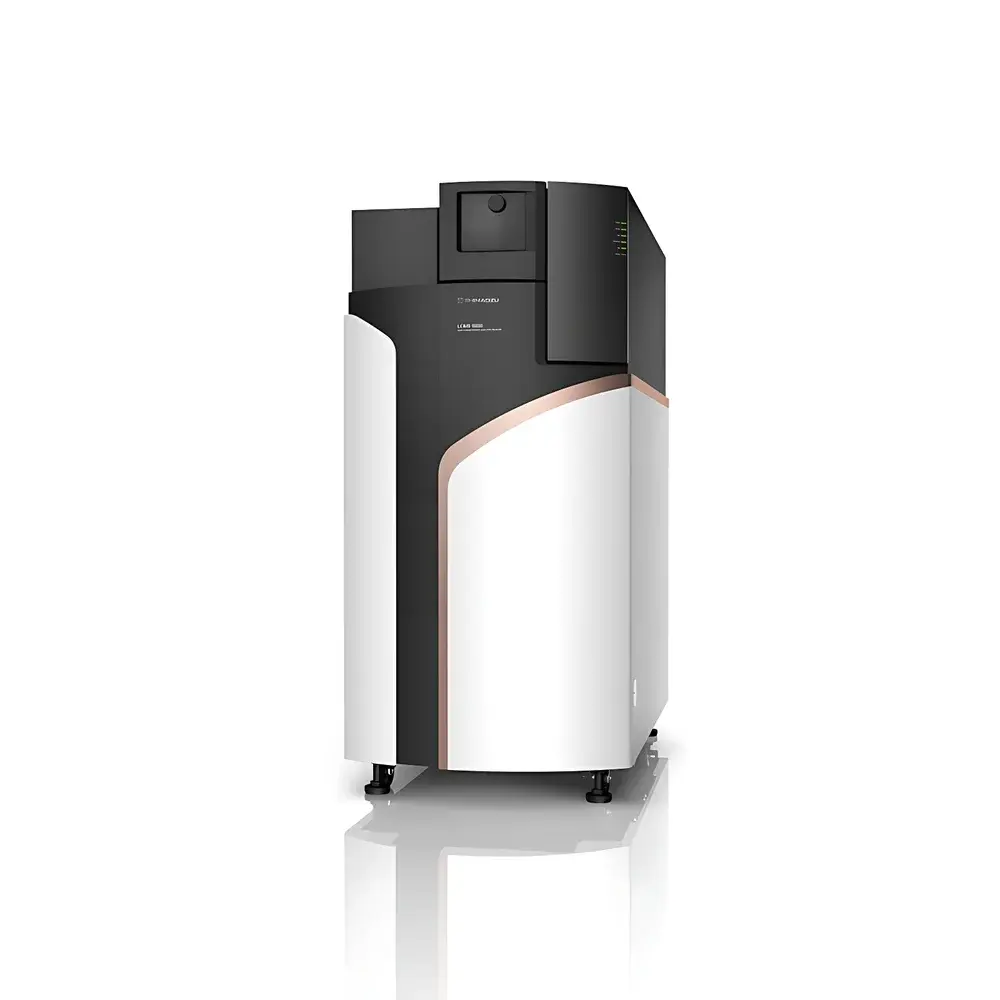
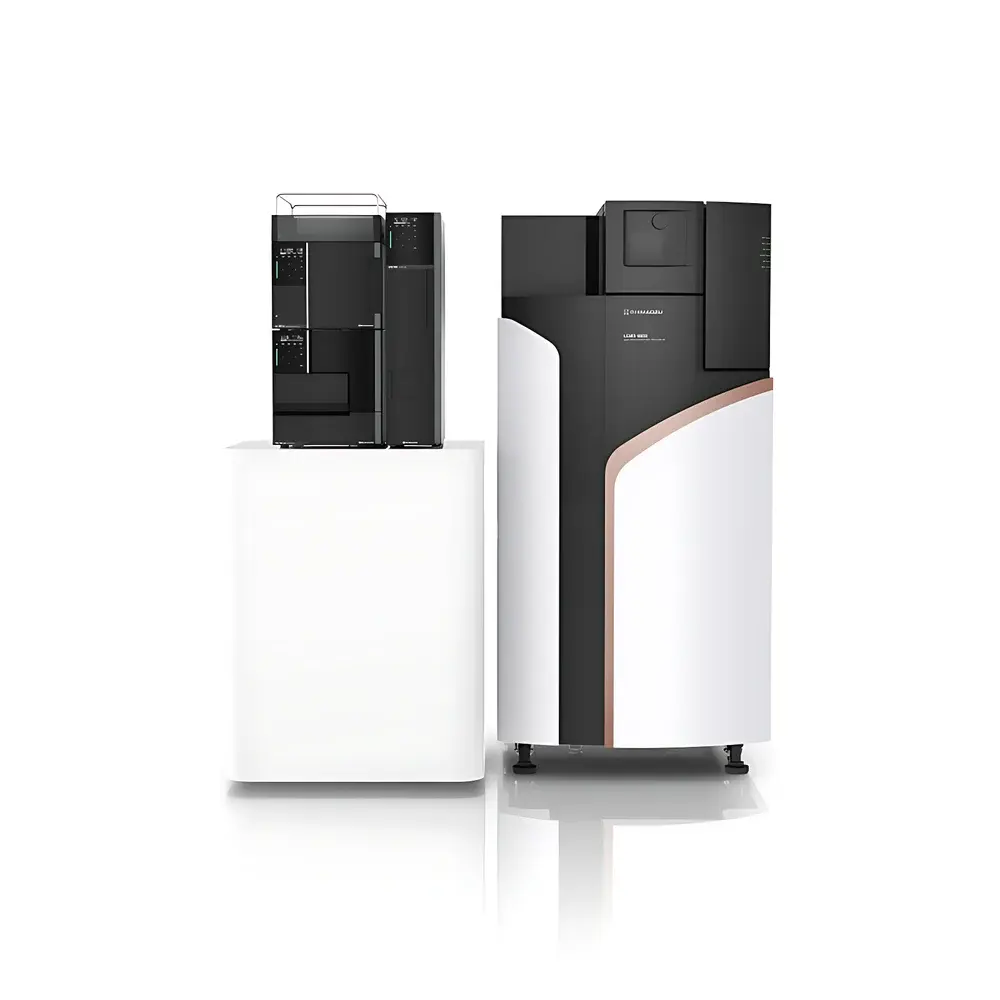
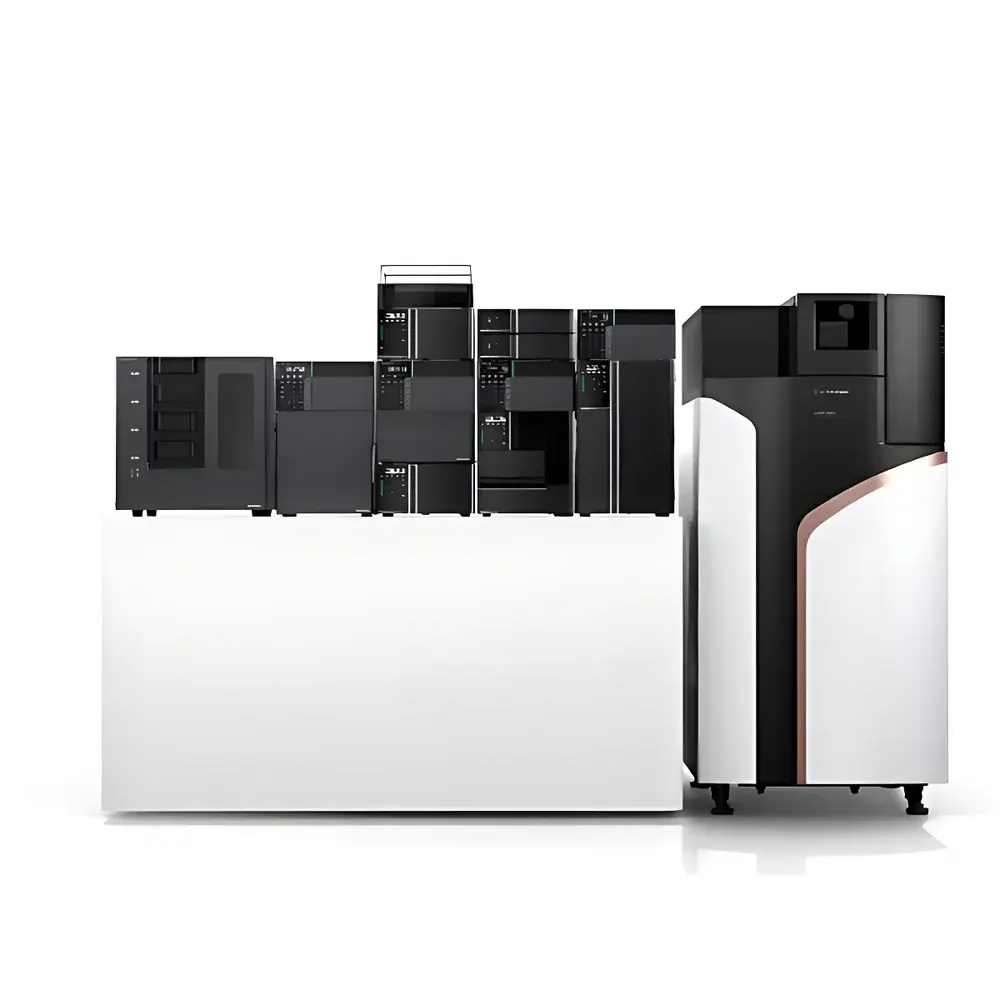
Shimadzu LCMS-9050 Quadrupole-Time-of-Flight Liquid Chromatography Mass Spectrometer
| Brand | Shimadzu |
|---|---|
| Origin | Japan |
| Manufacturer Type | Original Equipment Manufacturer (OEM) |
| Product Category | Imported Instrument |
| Model | LCMS-9050 |
| Instrument Type | Quadrupole-Time-of-Flight (Q-TOF) |
| Mass Range | 10–40,000 m/z |
| Sensitivity | S/N ≥ 50,000 (1 pg reserpine in ESI+ mode) |
| Resolution | >50,000 (FWHM at m/z 609) |
| Mass Accuracy | <1 ppm (internal calibration, 24-h stability) |
Overview
The Shimadzu LCMS-9050 is a high-performance quadrupole-time-of-flight (Q-TOF) liquid chromatography mass spectrometer engineered for untargeted and targeted high-resolution qualitative and quantitative analysis in regulated and research environments. It integrates a robust triple-stage quadrupole ion transmission system with a next-generation orthogonal acceleration TOF mass analyzer, delivering simultaneous high sensitivity, ultra-high mass resolution, and sub-part-per-million mass accuracy under routine operation. The instrument operates on the principle of electrospray ionization (ESI) or alternative atmospheric pressure ionization methods, followed by mass-selective filtering in the quadrupole, collision-induced or radical-induced dissociation in the UF-Sweeper III collision cell, and precise time-of-flight measurement in a temperature-stabilized reflectron TOF. Its architecture supports both data-dependent acquisition (DDA) and data-independent acquisition (DIA), enabling comprehensive structural characterization, metabolite identification, impurity profiling, and intact protein analysis across pharmaceutical, environmental, food safety, and life science applications.
Key Features
- Ultra-High Mass Accuracy & Stability: iRefTOF reflectron design with proprietary electrode geometry ensures optimal electric field homogeneity, minimizing trajectory dispersion and energy spread; combined with an integrated high-precision temperature control system (heater + optimized sensor placement), long-term mass drift is suppressed to <1 ppm over 24 hours.
- Enhanced Ion Utilization Efficiency: UF-Accumulation technology synchronizes ion release from the collision cell with orthogonal acceleration timing, increasing duty cycle without compromising temporal resolution; UF-Grating orthogonal extraction electrodes—fabricated via Shimadzu’s precision micromachining—maintain dimensional integrity even under high extraction fields (>8 kV), preserving both sensitivity and mass accuracy.
- High-Speed Polarity Switching: Proprietary UF-Stabilization algorithm embedded in a custom-designed high-voltage power supply enables stable, repeatable polarity switching in ≤0.5 s—without signal suppression or mass shift—supporting single-injection dual-polarity analysis.
- 200 Hz Acquisition Rate: Real-time spectral acquisition at up to 200 spectra per second facilitates high-fidelity peak detection in UHPLC gradients and improves DDA/DIA coverage in complex matrices.
- Modular Ion Source Architecture: Tool-free, cable-free, and tubing-free interchangeability between ESI, APCI, and DUIS sources; all sources feature auxiliary heating and are compatible with the Calibration Delivery System (CDS) interface.
- Radical-Induced Dissociation (HAD/OAD) Option: Complementary to CID, this optional fragmentation method employs hydrogen or hydroxyl radicals to induce structurally informative cleavages—particularly valuable for low-proton-affinity compounds, lipids, and post-translationally modified peptides.
Sample Compatibility & Compliance
The LCMS-9050 accommodates a broad range of analytes—from small molecules (20 kDa)—across diverse sample matrices including plasma, urine, tissue extracts, fermentation broths, and environmental water extracts. Its vacuum architecture—comprising a 65 m³/h rotary pump and dual turbo-molecular pumps with total pumping speed >790 L/sec—ensures rapid evacuation and stable high-vacuum conditions essential for TOF performance and long-term detector reliability. The system complies with ISO/IEC 17025 requirements for testing laboratories and supports audit-ready operation under GLP and GMP frameworks. When configured with LabSolutions LCMS software and enabled audit trail, electronic signature, and secure user authentication modules, it meets FDA 21 CFR Part 11 criteria for regulated bioanalysis and quality control workflows.
Software & Data Management
LabSolutions LCMS is the fully localized, native Chinese-language workstation for high-resolution Q-TOF data acquisition, processing, and reporting—unique in the global Q-TOF market. It provides unified control across MS, MS/MS (DDA/DIA), MRM, and SIM modes, with user-definable quadrupole isolation windows and customizable scan functions. The software features automated method optimization tools—including automatic tuning, retention time alignment, and background subtraction—and supports batch processing of large-scale datasets. Quantitative workflows incorporate internal standard normalization, matrix-matched calibration, and QC sample monitoring. Reporting templates are fully editable and export directly to PDF; raw data (.qgd format) and processed results are managed within a hierarchical project structure supporting version control and metadata tagging compliant with FAIR (Findable, Accessible, Interoperable, Reusable) principles.
Applications
- Non-targeted metabolomics and lipidomics with accurate mass screening and in silico fragmentation prediction
- Structural elucidation of unknown impurities and degradants in pharmaceutical development (ICH Q3, Q5)
- Peptide mapping, top-down proteomics, and characterization of monoclonal antibody variants
- Residue analysis in food and agricultural products per EU MRLs and USDA standards
- Environmental contaminant screening (e.g., PFAS, pesticides, microplastic additives) using suspect and non-suspect workflows
- Forensic toxicology and doping control requiring high mass fidelity and retrospective data mining
FAQ
What is the maximum achievable resolution under typical operating conditions?
Resolution >50,000 (FWHM) is routinely achieved at m/z 609 using the standard tuning compound reserpine, with consistent performance across the 10–40,000 m/z range.
Can the LCMS-9050 perform quantitative analysis with regulatory compliance?
Yes—when operated with validated methods, calibrated using traceable standards, and supported by LabSolutions LCMS audit-trail-enabled configuration, it fulfills requirements for GLP/GMP-compliant quantitation per USP & EP guidelines.
Is remote diagnostics and service support available outside Japan?
Shimadzu maintains certified service centers in North America, Europe, and Asia-Pacific, with remote diagnostic capability via secure TLS-encrypted connection and spare parts logistics through bonded warehouses in Beijing, Shanghai, Dallas, and Rotterdam.
How does the CDS system prevent cross-contamination during mass calibration?
The Calibration Delivery System uses a dedicated secondary probe housed within a modular auxiliary ion source interface—physically isolated from the analytical flow path—enabling concurrent calibration and sample analysis without shared tubing or valves.
Does the instrument support open-access operation in core facilities?
Yes—user role-based permissions, method locking, automated QC checks, and scheduled calibration routines make it suitable for multi-user shared-resource environments with minimal operator intervention.




