
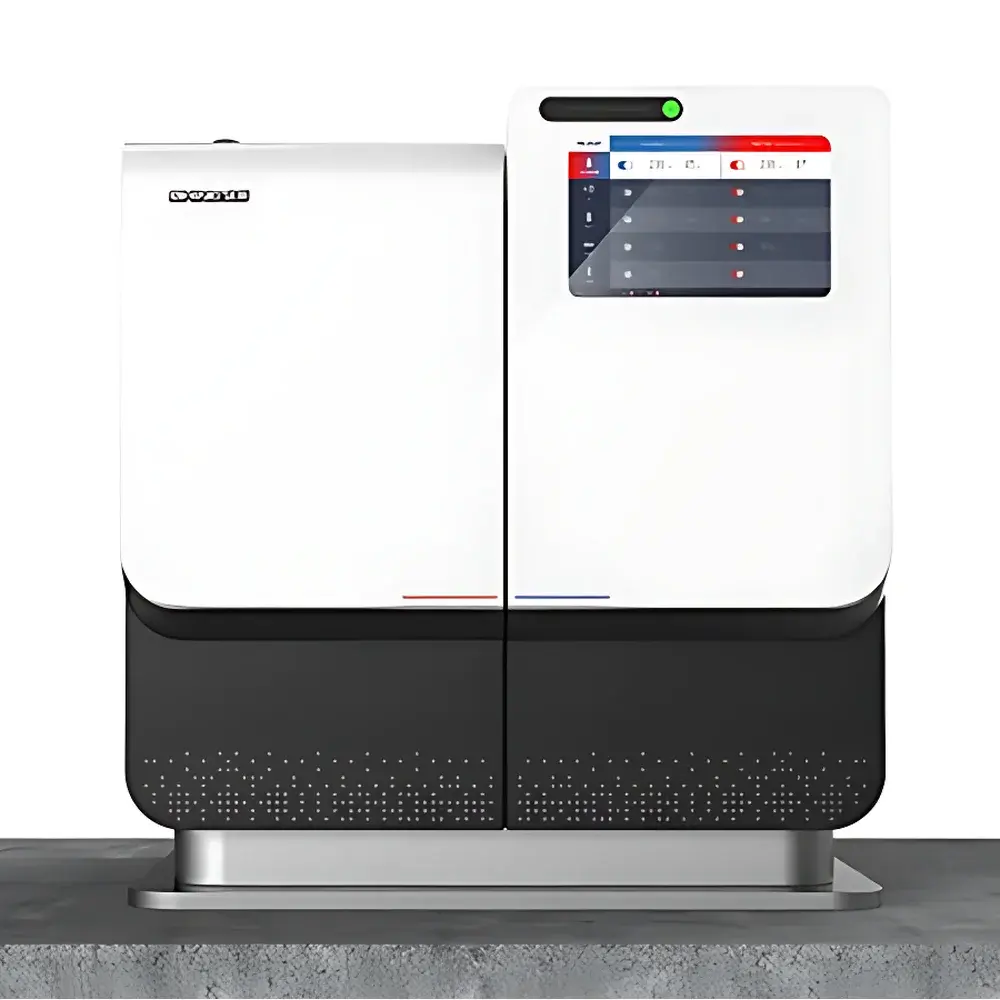
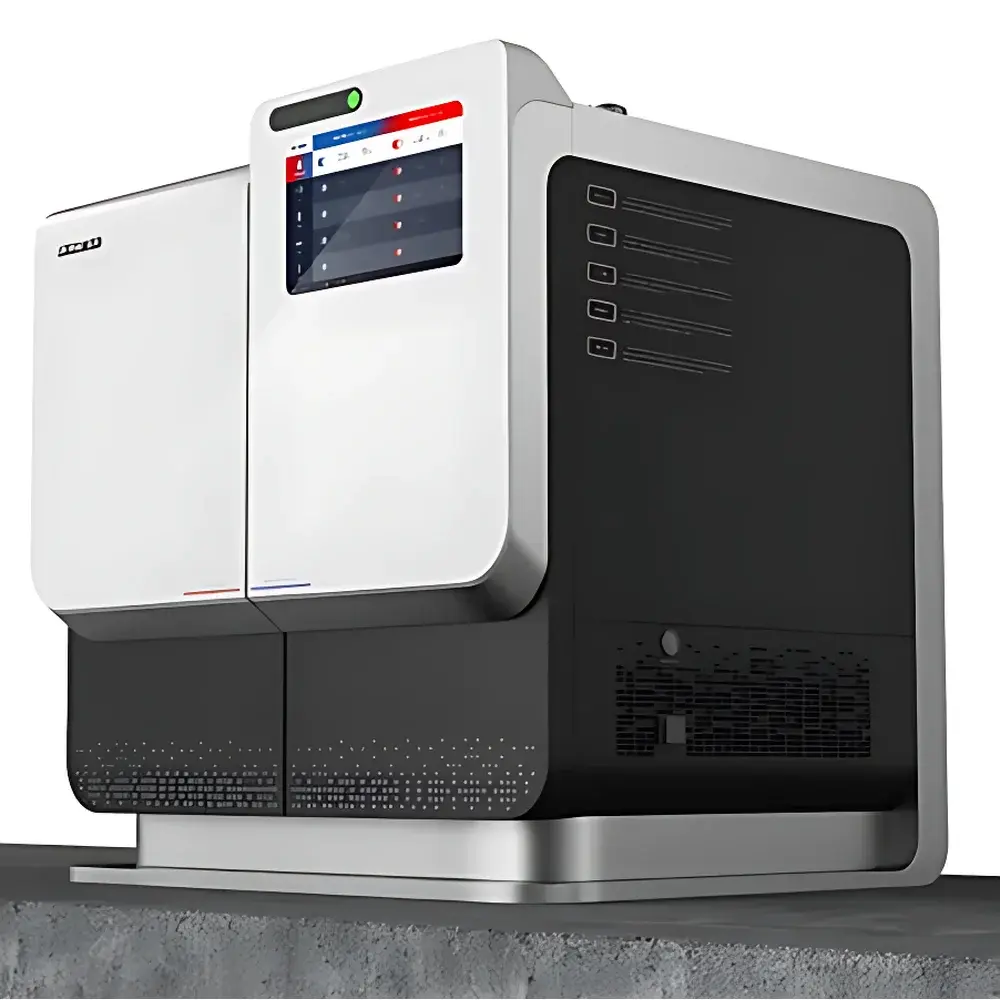
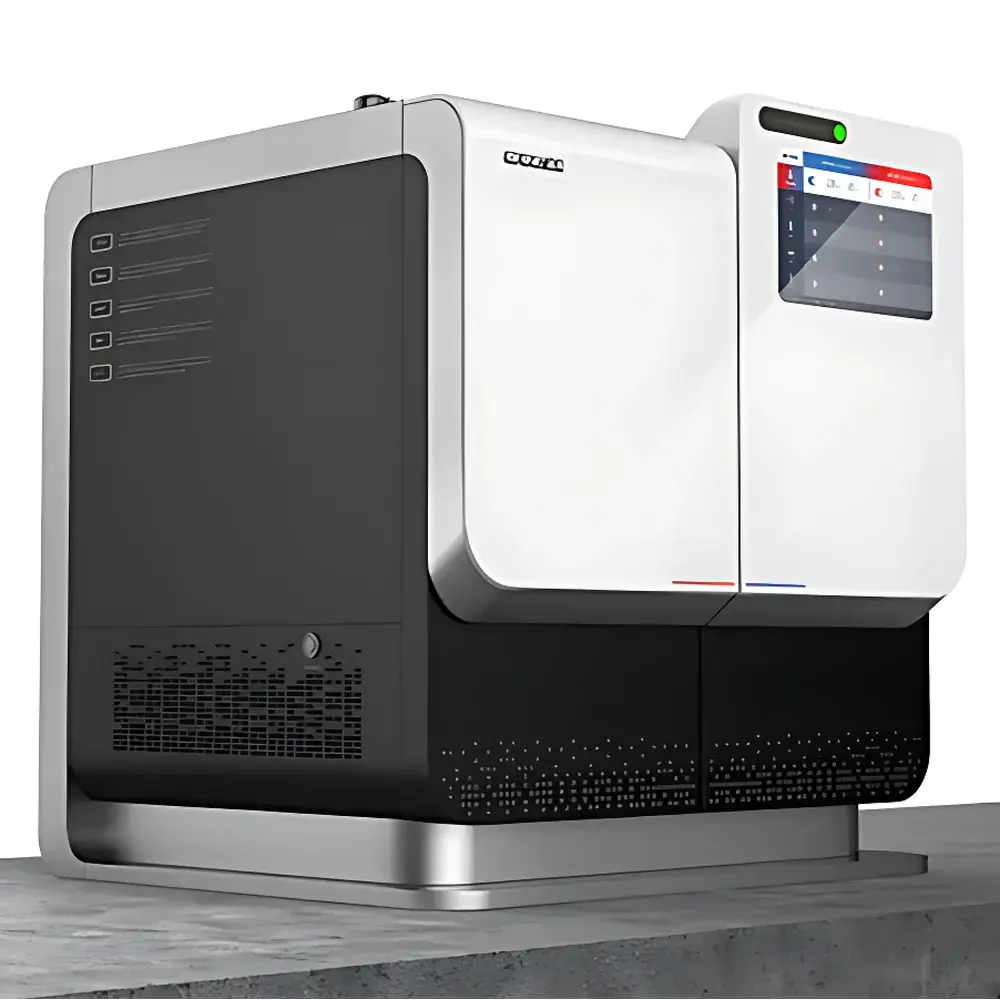
Shine CIC-D300+ Dual-Channel Intelligent Ion Chromatograph
| Brand | Shine |
|---|---|
| Origin | Shandong, China |
| Manufacturer Type | Direct Manufacturer |
| Instrument Type | Laboratory Benchtop Ion Chromatograph |
| Application | Dedicated Multi-Ion Analysis System |
| Pump Maximum Pressure | 35 MPa (PEEK construction) |
| Flow Rate Range | 0.1–5.0 mL/min |
| Eluent Delivery Precision | 0.001–9.999 mL/min |
| Max Operating Pressure | 35 MPa (PEEK) |
| Operating Temperature Range | Ambient +5°C to 60°C |
| Temperature Reproducibility | ±0.2°C |
| Eluent Concentration Range | 0.1–100 mM |
Overview
The Shine CIC-D300+ is a dual-channel, fully integrated intelligent ion chromatograph engineered for high-precision, simultaneous anion and cation analysis in regulated and research-intensive laboratory environments. Based on suppressed conductivity detection and eluent generation technology, the system implements a dual-flow-path architecture where each channel operates independently—eliminating cross-talk and enabling true parallel analysis of complementary ion species (e.g., F⁻/Cl⁻/NO₂⁻/PO₄³⁻ alongside Li⁺/Na⁺/NH₄⁺/K⁺). Its core measurement principle relies on ion-exchange chromatography coupled with electrolytically generated high-purity eluents (KOH for anions; methanesulfonic acid, MSA, for cations), ensuring baseline stability, low system noise, and minimal manual intervention. Designed for compliance-critical workflows, the CIC-D300+ meets fundamental operational requirements for GLP, ISO/IEC 17025, and USP water quality testing protocols.
Key Features
- Dual-Independent Channel Architecture: Two physically isolated fluidic paths with independent pumps, detectors, and temperature-controlled compartments—enabling concurrent method execution without reconfiguration or carryover risk.
- Electrolytic Eluent Generation (EG): Integrated dual-membrane KOH/MSA generators produce ultra-high-purity eluents on-demand; eliminates manual preparation, reduces carbonate contamination, and supports gradient elution down to 0.001 mL/min precision.
- Auto-Range Conductivity Detector: Wide dynamic linear range (>10⁵) enables quantification of trace-level (sub-ppb) and high-concentration (mM) ions within a single run—critical for environmental leachate or pharmaceutical excipient screening.
- In-Line Ultra-Pure Water Purification Module: Integrated pre-filtration and deionization stage ensures consistent resistivity >18.2 MΩ·cm at point-of-use; suppresses baseline drift and enhances signal-to-noise ratio during long-duration sequences.
- Suction-Based Autosampler Interface: Peristaltic-driven sample aspiration minimizes valve-based carryover; compatible with standard 10–100 µL loop volumes and 96-well plate formats.
- Multi-Stage Degassing System: Combines constant-pressure low-vacuum degassing with inline gas–liquid phase separation—reducing dissolved O₂ and CO₂ to <5 ppb, essential for low-conductivity eluent stability.
- Two-Stage Fluid Delivery: Primary high-pressure PEEK piston pump + secondary low-pulse peristaltic pump ensure pulse-free flow across full 0.1–5.0 mL/min range—even at sub-0.5 mL/min for capillary-scale separations.
- Integrated Thermal Management: Multi-zone PID-controlled heating (±0.2°C reproducibility) covers detector cell, suppressor, and eluent pre-heating zones—ensuring retention time stability under ambient fluctuations from 15°C to 35°C.
- Comprehensive Safety Monitoring: Real-time diagnostics include eluent reservoir level alerts, leak detection via pressure decay algorithms, overpressure/underpressure thresholds, and operator-action logging—fully auditable per FDA 21 CFR Part 11 Annex 11 guidelines.
Sample Compatibility & Compliance
The CIC-D300+ accommodates aqueous matrices including drinking water, wastewater, pharmaceutical buffers, semiconductor process chemicals, nuclear coolant samples, and battery electrolyte extracts. It supports EPA Methods 300.0, 300.1, and 316.0; ISO 10304-1/-2; ASTM D4327 and D6919; and Chinese standard HJ 1041–2019. All wetted components—including pump heads, injection valves, and detector cells—are constructed from chemically inert PEEK, PTFE, or titanium to withstand aggressive eluents (e.g., 100 mM KOH) and prevent metal leaching. The system’s firmware includes configurable audit trails, electronic signatures, and method locking—facilitating validation under GMP, GLP, and ISO 17025 quality systems.
Software & Data Management
Controlled via Shine IC Navigator v4.x, the platform provides intuitive method building, real-time chromatogram overlay, peak integration with customizable baselines, and automated calibration curve generation (linear, quadratic, or weighted). Raw data are stored in vendor-neutral .cdf format compliant with Waters Empower and Thermo Chromeleon import standards. Audit trail logs capture all user actions, parameter changes, and instrument events with timestamps and operator IDs—exportable as PDF or CSV for regulatory submission. Optional LIMS integration supports HL7 and ASTM E1384 message protocols.
Applications
- Environmental monitoring: Quantification of halides, oxyanions, and alkali metals in surface water, groundwater, and flue gas desulfurization scrubber solutions.
- Pharmaceutical QC: Residual counterion profiling (e.g., Na⁺ in monoclonal antibody formulations), chloride testing in parenteral preparations per USP .
- Semiconductor manufacturing: Ultra-trace fluoride and sulfate analysis in ultrapure water (UPW) distribution loops per SEMI F63.
- Nuclear industry: Anionic corrosion inhibitors (e.g., NO₂⁻, PO₄³⁻) and cationic fission products (Cs⁺, Sr²⁺) in primary coolant streams.
- Power generation: Monitoring of acetate, formate, and chloride ingress in turbine condensate systems per ASTM D4582.
FAQ
Does the CIC-D300+ support gradient elution?
Yes—via synchronized dual EG modules delivering precise, programmable KOH or MSA concentration gradients from 0.1 to 100 mM with 0.001 mM resolution.
Can it be validated for GMP environments?
Yes—the system includes full 21 CFR Part 11 compliance features: role-based access control, electronic signatures, immutable audit trails, and IQ/OQ/PQ documentation templates.
What is the minimum detectable concentration for common anions?
At optimal S/N (3:1), typical MDLs are: Cl⁻ = 0.05 µg/L, SO₄²⁻ = 0.1 µg/L, NO₃⁻ = 0.08 µg/L—achievable using 25 µL injection and 4-mm analytical columns.
Is column oven temperature independently controllable per channel?
Yes—each channel features a dedicated Peltier-cooled/heated column compartment with setpoint range 20–60°C and stability ±0.1°C.
How often does the EG module require maintenance?
Under normal operation (8 h/day), the KOH generator membrane stack requires replacement every 12–18 months; MSA module lifetime exceeds 24 months due to lower electrochemical load.
Related Products






