
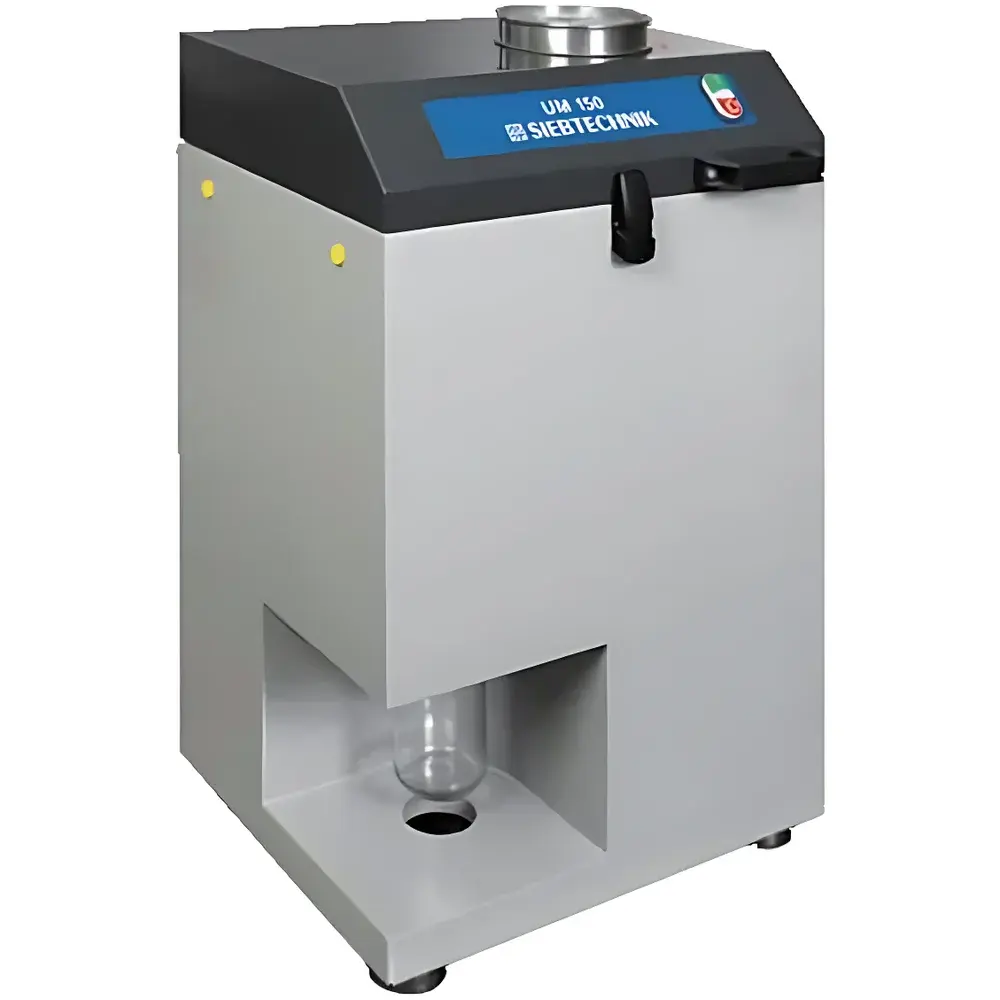
Siebtechnik UM150 Continuous/Intermittent Multi-Function Grinder
| Brand | Siebtechnik |
|---|---|
| Origin | Germany |
| Model | UM150 Continuous/Intermittent Multi-Function Grinder |
| Motor Power | 1100 W |
| Rated Speed | 2850 rpm |
| Max Feed Size | <15 mm |
| Final Particle Size | 150–500 µm |
| Throughput (Continuous) | 80 kg/h |
| Sieve Options | 150 µm, 315 µm, 500 µm |
| Batch Collection Volumes | 500–5000 mL |
| Safety | Interlocked Lid Activation |
| Operation Modes | Continuous Feed & Intermittent Batch |
Overview
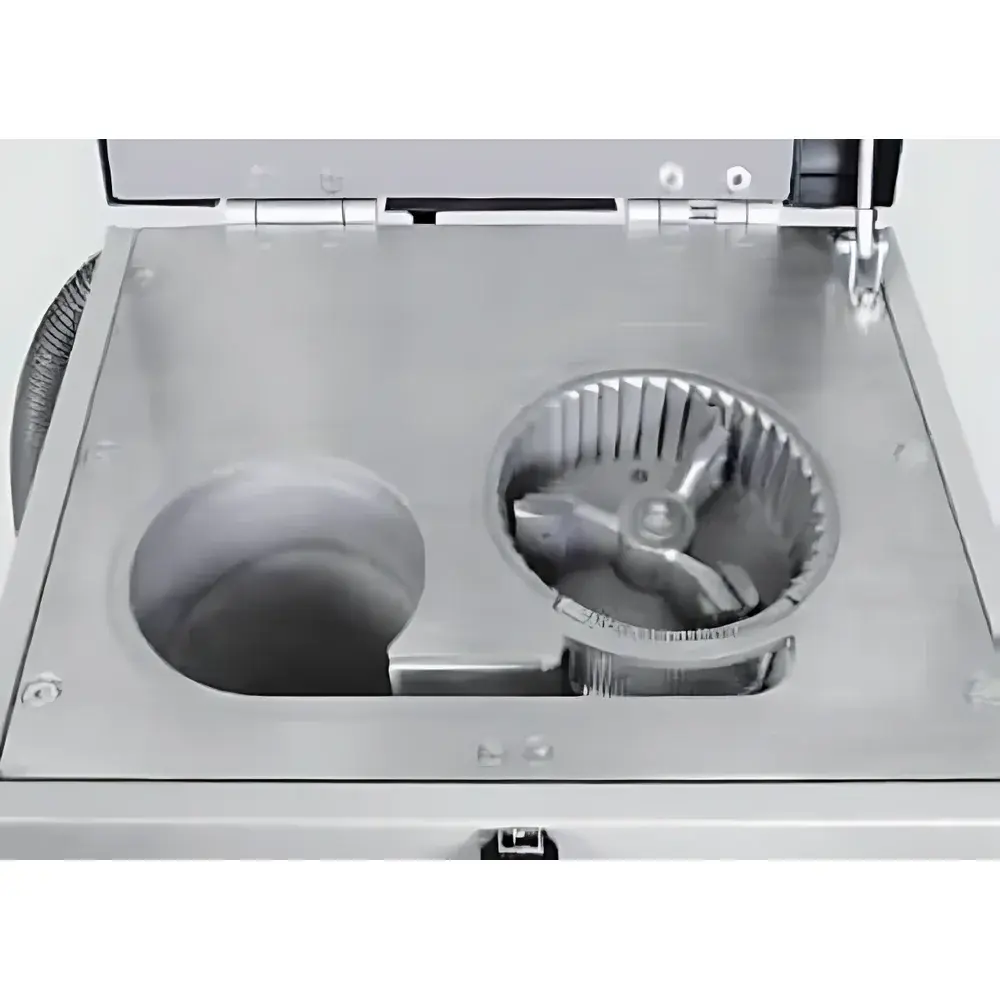
The Siebtechnik UM150 Continuous/Intermittent Multi-Function Grinder is an industrial-grade, precision-engineered comminution system designed for the reproducible, low-heat, dust-free size reduction of medium-hard to hard, brittle materials. Based on a high-inertia rotor-driven impact and shear grinding principle—operating under controlled vacuum conditions—the UM150 delivers consistent particle size distribution without thermal degradation or cross-contamination. Its dual-mode architecture supports both continuous high-throughput processing (up to 80 kg/h) and flexible batch operation with variable collection volumes (500–5000 mL), making it suitable for routine sample preparation in geochemical laboratories, metallurgical QA/QC facilities, cement and ceramics R&D centers, and environmental testing labs requiring ISO/IEC 17025-compliant material homogenization.
Key Features
- Vacuum-assisted grinding environment: Minimizes oxidation, suppresses dust generation, and eliminates airborne particulate exposure—critical for occupational health compliance (OSHA silica exposure limits, EU Directive 2004/37/EC)
- Interlocked safety lid: Mechanical and electrical interlock ensures motor activation only when the lid is fully closed and sealed, meeting EN 60204-1 machinery safety standards
- Low-speed, high-torque rotor design (2850 rpm): Reduces mechanical energy input per unit mass, limiting temperature rise during grinding—ideal for thermolabile or pyrophoric samples such as coal, activated carbon, or certain pharmaceutical excipients
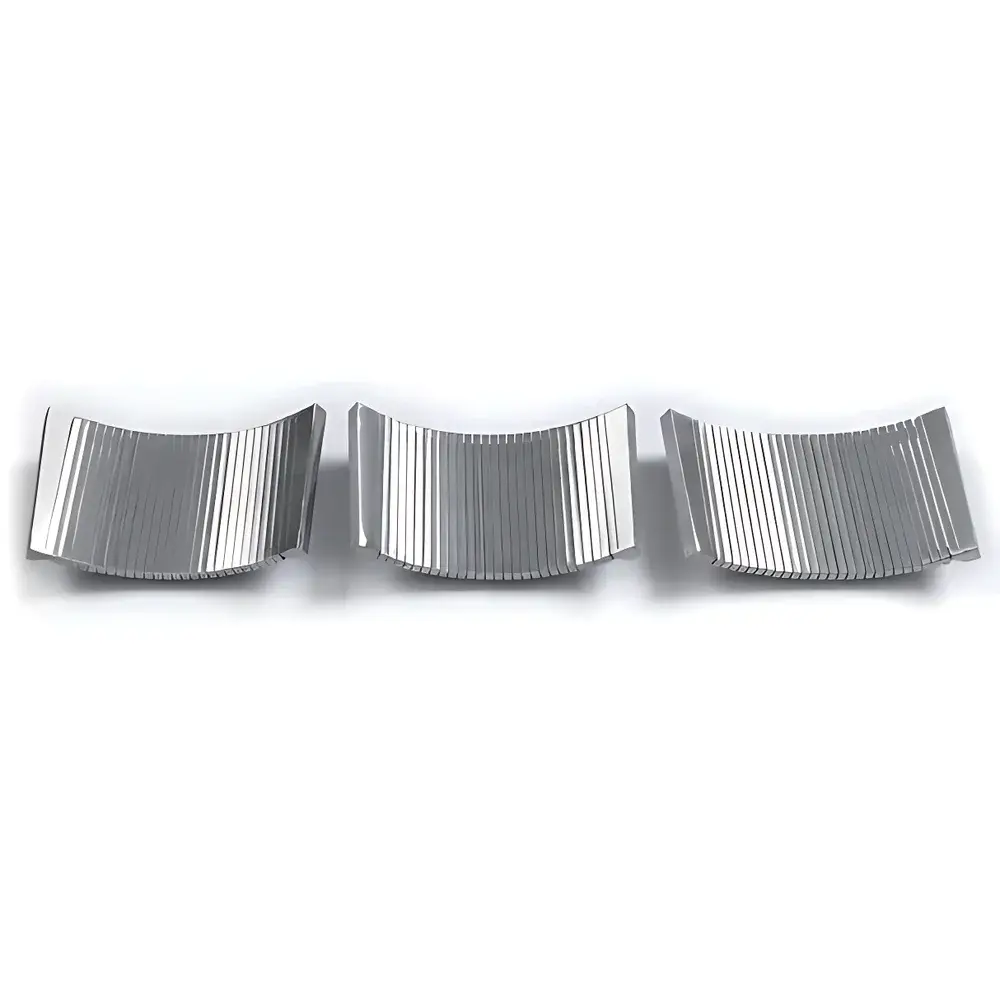
- Modular sieve system: Interchangeable stainless steel perforated screens (150 µm, 315 µm, 500 µm) enable precise endpoint control without tooling changes or recalibration
- Full-metal construction: Non-plastic, corrosion-resistant housing (AISI 304 stainless steel) ensures long-term dimensional stability, resistance to abrasive wear, and compatibility with aggressive cleaning agents required under GLP/GMP environments
- One-touch automated cycle: Integrated control logic coordinates feed initiation, grinding duration, vacuum hold, post-grind chamber purge, and automatic internal cleaning—reducing operator intervention and procedural variability
Sample Compatibility & Compliance
The UM150 is validated for dry grinding of inorganic, non-fibrous, brittle solids including but not limited to: coal, coke, slag, quartz, feldspar, limestone, clay, ceramic raw materials, sintered oxides, and geological core samples. It is not intended for fibrous, elastic, oily, or highly ductile materials. The system complies with key international standards relevant to laboratory instrumentation: DIN 55302 (grinding equipment safety), ISO 13320:2020 (laser diffraction particle sizing method prerequisites), and ASTM D2974 (standard test methods for moisture, ash, and organic matter in peat and other organic soils). Vacuum operation supports adherence to OSHA 1910.1200 (Hazard Communication) by eliminating respirable crystalline silica (RCS) aerosols during coal or rock pulverization.
Software & Data Management
The UM150 operates via an embedded microcontroller with programmable logic—not PC-dependent software—ensuring deterministic timing, electromagnetic compatibility (EMC Class B), and uninterrupted operation in electrically noisy industrial lab environments. Each grinding cycle logs timestamp, mode (continuous/batch), sieve ID, vacuum pressure profile, total runtime, and lid engagement status to internal non-volatile memory. Audit trails are exportable via USB-C interface in CSV format, supporting traceability requirements under FDA 21 CFR Part 11 (when paired with validated LIMS integration) and ISO/IEC 17025 Clause 7.7 (result reporting integrity). No cloud connectivity or remote access is implemented—data sovereignty and network isolation are preserved by design.
Applications
- Geochemical assay preparation: Homogenizing drill core fragments prior to XRF, ICP-OES, or fire assay analysis
- Fuel quality control: Reducing coal and coke samples to <150 µm for proximate and ultimate analysis per ASTM D3172/D3176
- Construction materials testing: Preparing cement clinker, slag, or pozzolanic additives for Blaine surface area determination (ISO 20920)
- Environmental soil screening: Producing representative sub-samples from heterogeneous field-collected matrices for heavy metal leaching tests (TCLP, SPLP)
- Ceramic and refractory R&D: Controlled size reduction of sintered alumina, zirconia, or silicon carbide for particle packing density modeling
FAQ
What types of materials are incompatible with the UM150?
Materials with high elasticity (e.g., rubber, polymers), fibrous structure (e.g., wood chips, cellulose), or significant moisture content (>2% w/w) are unsuitable. The grinder is strictly for dry, brittle, inorganic solids.
Can the UM150 be integrated into an automated sample prep line?
Yes—its dry-contact relay outputs and vacuum pressure analog signal (0–10 V) support synchronization with upstream vibratory feeders and downstream sieving or weighing modules under PLC control.
Is calibration required before use?
No routine calibration is mandated; however, periodic verification of sieve aperture accuracy per ISO 3310-1 and vacuum sensor linearity (using calibrated reference gauges) is recommended annually or per internal QA schedule.
Does the system meet explosion protection requirements for coal grinding?
The UM150 is not ATEX-certified. For explosive atmospheres, additional engineering controls (e.g., inert gas purging, grounding verification, and zone-rated enclosures) must be implemented externally per IEC 60079-10-1.
How is maintenance documented for regulatory audits?
Maintenance logs—including screen replacement dates, bearing lubrication records, vacuum pump oil changes, and interlock function tests—are retained in the instrument’s internal memory and exported alongside operational data for audit readiness.



