
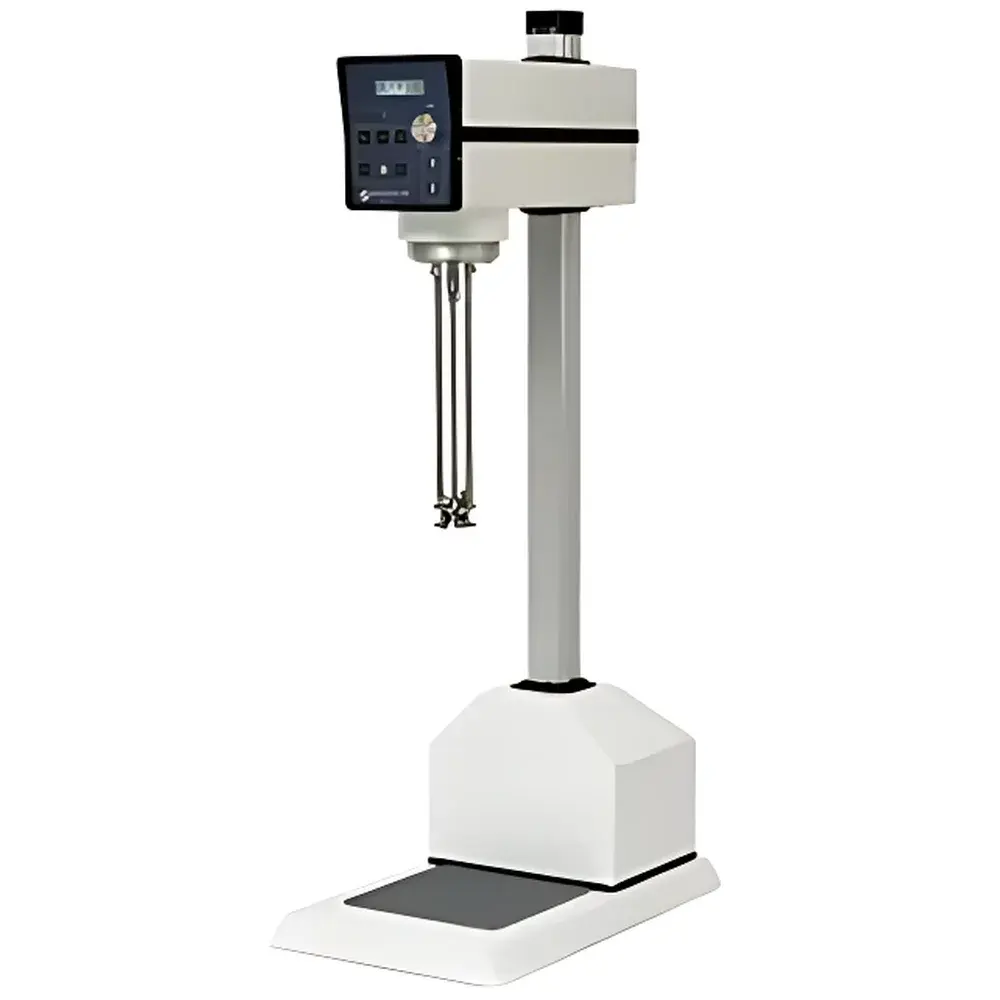
Silverson L5M-A High-Shear Laboratory Mixer & Emulsifier
| Brand | Silverson |
|---|---|
| Origin | United Kingdom |
| Model | L5M-A |
| Instrument Type | Rotor-Stator Probe-Type Homogenizer |
| Dimensions (W×D×H) | 940 × 305 × 508 mm |
| Processing Volume Range | 1 mL to 12 L |
Overview
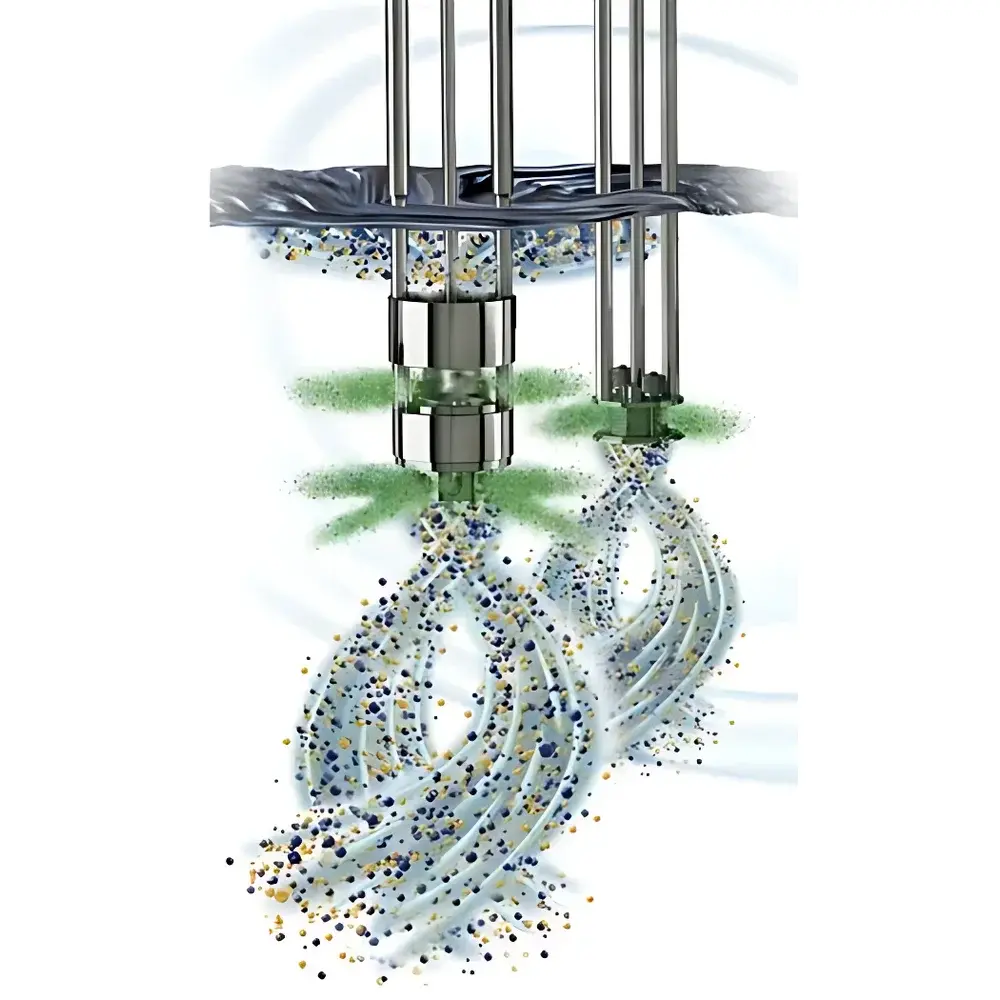
The Silverson L5M-A is a high-shear, rotor-stator based laboratory mixer and emulsifier engineered for precision, reproducibility, and scalability in R&D, quality assurance, analytical development, and pilot-scale production environments. Operating on the fundamental principle of controlled hydrodynamic cavitation and multi-stage mechanical shear, the L5M-A subjects materials to four sequential mixing mechanisms within its precision-machined workhead: (1) axial aspiration of bulk material into the rotor-stator cavity; (2) centrifugal acceleration across a tightly toleranced rotor-tip-to-stator-gap (typically < 100 µm); (3) intense hydraulic shear as fluid is forced radially through stator orifices at velocities exceeding 20 m/s; and (4) high-velocity radial ejection into the vessel body, establishing a closed-loop circulation pattern with minimized vortexing and air entrainment. This architecture enables consistent particle size reduction, droplet breakup, dispersion stabilization, and rapid dissolution—critical for formulation development in pharmaceuticals, cosmetics, food science, agrochemicals, and advanced materials research.
Key Features
- Digitally controlled touch-screen interface with real-time RPM monitoring, programmable integral timer (0–99 min 59 s), and motor current feedback for process validation and load tracking
- Motor unit rated at 750 W (1 hp), 60 Hz, delivering up to 8,000 rpm with infinitely variable electronic speed control and integrated on/off switch
- Electric lift column enabling precise, repeatable vertical positioning of the workhead—enhancing cleaning accessibility, operator safety, and batch-to-batch consistency
- Robust two-piece motor housing constructed from non-chip white nylon coating; base fitted with removable solvent-resistant anti-slip pads
- All wetted parts manufactured from ASTM A276 Type 316L stainless steel; stator bushings available in bronze alloy or PTFE for compatibility with abrasive or chemically aggressive media
- Modular rotor-stator workhead system supporting over 40 interchangeable configurations—including universal, square-hole, porous, axial-flow, slotted disintegration, and tubular inline variants
Sample Compatibility & Compliance
The L5M-A accommodates viscous, heterogeneous, and shear-sensitive samples ranging from low-viscosity aqueous solutions (1 mPa·s) to highly structured gels and suspensions (>10,000 mPa·s). Its scalable design supports direct correlation between lab-scale results and full-scale manufacturing processes—enabling predictive modeling per ISO 13320 (laser diffraction particle sizing) and ASTM D2703 (emulsion stability testing). The instrument’s construction and operational parameters comply with general requirements for GLP-compliant laboratories, and its programmable timer and digital audit trail support traceability aligned with FDA 21 CFR Part 11 principles when integrated with validated data management systems.
Software & Data Management
While the L5M-A operates as a standalone unit with embedded firmware, its digital interface outputs time-stamped RPM, duration, and motor load data via analog signal or optional RS-232/USB connectivity. When interfaced with third-party SCADA or LIMS platforms, it supports automated batch logging, SOP-driven parameter recall, and electronic signature-capable run records. All programmable functions—including ramp profiles, hold times, and safety interlocks—are configurable without proprietary software dependencies, facilitating integration into regulated QA/QC workflows requiring documented change control and version history.
Applications
- Pharmaceutical: Preparation of nanoemulsions, microsuspensions, and polymer-based nanocarriers; dissolution testing of poorly soluble APIs; homogenization of sterile filtration pre-filters
- Food & Beverage: Stabilization of dairy alternatives (oat, almond), reduction of fat globule size in dressings, dispersion of hydrocolloids (xanthan, guar gum), and cell disruption in fermentation broths
- Materials Science: Exfoliation of graphene oxide dispersions, deagglomeration of metal oxide nanoparticles (TiO₂, SiO₂), and uniform blending of conductive pastes for battery electrode slurries
- Chemical & Coatings: Pigment dispersion in solvent- and water-based paints; preparation of stable organosols; viscosity-controlled mixing of crosslinker systems
- Biotechnology: Mechanical lysis of yeast and bacterial cells; homogenization of tissue homogenates prior to protein extraction; preparation of liposomal delivery systems
FAQ
What is the minimum and maximum sample volume the L5M-A can process?
The L5M-A is validated for volumes from 1 mL (using micro-workheads) up to 12 L in standard jacketed or open vessels. Optimal performance is achieved when the workhead immersion depth meets the manufacturer’s recommended submersion ratio (typically ≥1.5× head diameter).
Can the L5M-A be used for sterile applications?
Yes—when equipped with autoclavable 316L stainless steel workheads and validated cleaning-in-place (CIP) protocols, the L5M-A meets basic requirements for aseptic processing in early-phase biopharma development. Full sterilization validation must be performed per user-defined SOPs.
Is the L5M-A compliant with ISO or ASTM standards for emulsification testing?
While the instrument itself is not certified to a specific standard, its operational repeatability and shear-rate profile enable compliance with method sections in ISO 7027 (turbidity), ASTM D1401 (emulsion separation), and USP <729> (light scattering for subvisible particles) when paired with appropriate ancillary instrumentation.
How does the L5M-A compare to ultrasonic or high-pressure homogenizers for nanoparticle synthesis?
Unlike ultrasonic probes (cavitation-dominated, energy-intensive, scale-limited) or high-pressure homogenizers (shear + impact, high maintenance), the L5M-A delivers controllable, scalable, and mechanically robust rotor-stator shear—ideal for intermediate-scale optimization where thermal management, particle attrition control, and process transfer fidelity are prioritized.



