
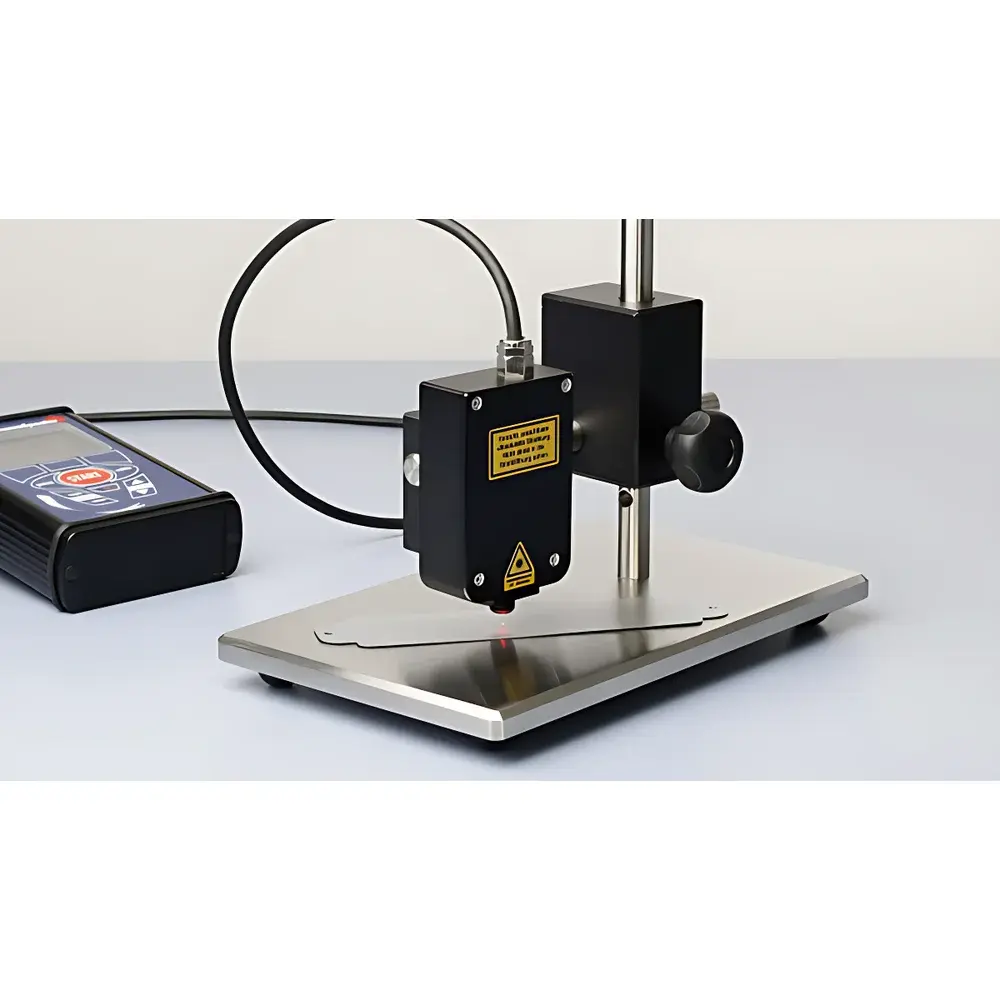
SITA CleanoSpector & Fluoscan 3D Surface Cleanliness Analyzer for Laser Welding Pre-Process Quality Control
| Brand | SITA |
|---|---|
| Origin | Germany |
| Model | CleanoSpector, Fluoscan 3D |
| Detection Principle | UV-Induced Fluorescence (Confocal Optical Method) |
| Measurement Range | 0–100% Relative Contamination Index (RCI) |
| Resolution | 0.1% RCI |
| Repeatability | ±0.5% RCI |
| Sample Type | Metallic substrates (steel, aluminum, titanium, sintered metal components) |
| Compliance | ISO 8502-10, ASTM D7235, VDA 19.1, ZVEI Guideline “Cleanliness in Electrical Contacts” |
| Software | SITA CleanControl v4.x with Audit Trail, Electronic Signature, and 21 CFR Part 11 Compliance Mode |
| Data Export | CSV, PDF, XML |
| Interface | USB 3.0, Ethernet, Optional Bluetooth |
| Operating Temperature | 10–40 °C |
| Calibration | Traceable to NIST-traceable reference standards |
Overview
The SITA CleanoSpector and Fluoscan 3D are non-destructive, quantitative surface cleanliness analyzers engineered specifically for pre-weld process validation in high-precision laser welding applications. These instruments operate on the principle of confocal UV-induced fluorescence detection: a precisely filtered ultraviolet light source (λ = 254 nm or 365 nm, configurable per substrate and contaminant profile) excites organic residues—primarily hydrocarbons, oils, greases, and coolant additives—adsorbed on metallic surfaces. Emitted fluorescence is captured by a high-sensitivity photodiode array within a spatially resolved confocal optical path, enabling depth-selective signal acquisition and suppression of ambient light interference. The resulting fluorescence intensity is converted into a dimensionless Relative Contamination Index (RCI), calibrated against traceable reference standards and correlated to gravimetric or solvent-extraction-based cleanliness thresholds defined in ISO 8502-10 and VDA 19.1. Unlike subjective wipe-test or contact-angle methods, this approach delivers objective, operator-independent, and statistically robust quantification—critical for statistical process control (SPC) in automotive powertrain, medical device, and aerospace component manufacturing where laser weld integrity directly impacts functional safety and hermeticity.
Key Features
- Confocal optical architecture ensures micron-level lateral resolution and eliminates background noise from surface topography or reflectivity variations.
- Dual-wavelength UV excitation (254 nm for short-chain hydrocarbons; 365 nm for long-chain oils and polymers) enables selective detection across diverse contamination chemistries.
- Real-time RCI output with 0.1% resolution and ±0.5% repeatability under controlled environmental conditions (10–40 °C, <70% RH).
- Integrated temperature and humidity sensors automatically compensate for ambient drift during extended measurement campaigns.
- Portable handheld design (ClleanoSpector) and motorized 3D scanning platform (Fluoscan 3D) support both spot-checking and full-surface mapping of complex geometries—including gear teeth, flanges, and sintered powder metallurgy parts.
- On-device pass/fail thresholding with visual LED feedback (green/red) and audible tone for rapid inline verification at production stations.
Sample Compatibility & Compliance
The CleanoSpector and Fluoscan 3D are validated for use on ferrous and non-ferrous metals including cold-rolled steel, austenitic stainless steels (e.g., 1.4301), aluminum alloys (e.g., AlSi10Mg), titanium Grade 2/5, and sintered iron-based PM components. Instrument calibration adheres to ISO/IEC 17025-accredited protocols, with traceability to NIST SRM 2973 (hydrocarbon-coated reference wafers). Regulatory alignment includes full support for VDA 19.1 Part 2 (automotive component cleanliness), ISO 8502-10 (soluble salt and organic residue testing), ASTM D7235 (fluorescence-based cleanliness assessment), and ZVEI Guideline “Cleanliness Requirements for Electrical Contacts.” When configured with CleanControl v4.x software, the system satisfies FDA 21 CFR Part 11 requirements for electronic records and signatures—including audit trail logging, role-based access control, and immutable data archiving.
Software & Data Management
SITA CleanControl v4.x provides comprehensive data acquisition, visualization, and reporting functionality. It supports multi-site fleet management, customizable report templates (PDF/CSV/XML), and integration with MES/SCADA systems via OPC UA or RESTful API. All measurement sessions are timestamped, geotagged (if enabled), and linked to operator ID, batch number, and process step metadata. The audit trail captures every parameter change, calibration event, and user action in tamper-evident format—meeting GLP/GMP documentation rigor. Trend analysis tools enable SPC charting (X-bar/R, Cpk), correlation with downstream weld inspection results (e.g., X-ray porosity counts), and root-cause analysis of cleaning process deviations.
Applications
These analyzers are deployed upstream of critical laser welding operations where residual hydrocarbons directly contribute to weld porosity, spatter, and micro-cracking. Proven use cases include: gear train assemblies (e.g., synchronizer rings, planetary carriers), airbag initiator housings, battery tab welds in EV traction packs, hermetic sensor enclosures, and orthopedic implant components. In one Tier-1 automotive supplier case study, implementing CleanoSpector screening prior to Nd:YAG laser welding reduced weld porosity incidence from 18.8% to <0.7%, eliminating rework and qualifying the cleaning process per IATF 16949 clause 8.5.1.2. The Fluoscan 3D further extends capability to curved or recessed surfaces—such as turbine blade dovetails or fuel injector nozzles—where conventional swab testing fails to ensure representative sampling.
FAQ
How does UV fluorescence quantify organic contamination?
It measures the intensity of light emitted when UV photons excite electrons in hydrocarbon molecules; intensity correlates linearly with surface mass density of organics (µg/cm²) within instrument’s dynamic range.
Can the system detect inorganic residues like salts or oxides?
No—this method is specific to fluorescent organic compounds. Inorganic contaminants require complementary techniques such as ion chromatography (ISO 8502-6/9) or FTIR.
Is calibration required before each shift?
A daily verification using the supplied reference standard is recommended; full recalibration is performed annually or after hardware service.
Does surface roughness affect measurement accuracy?
The confocal design minimizes topographic influence; however, measurements on Ra > 3.2 µm surfaces should be validated against cross-sectional SEM-EDS analysis.
Can data be integrated into our existing QMS (e.g., SAP QM or ETQ Reliance)?
Yes—via standardized CSV export or direct API integration supporting ISO/IEC 11179-compliant metadata schemas.



