
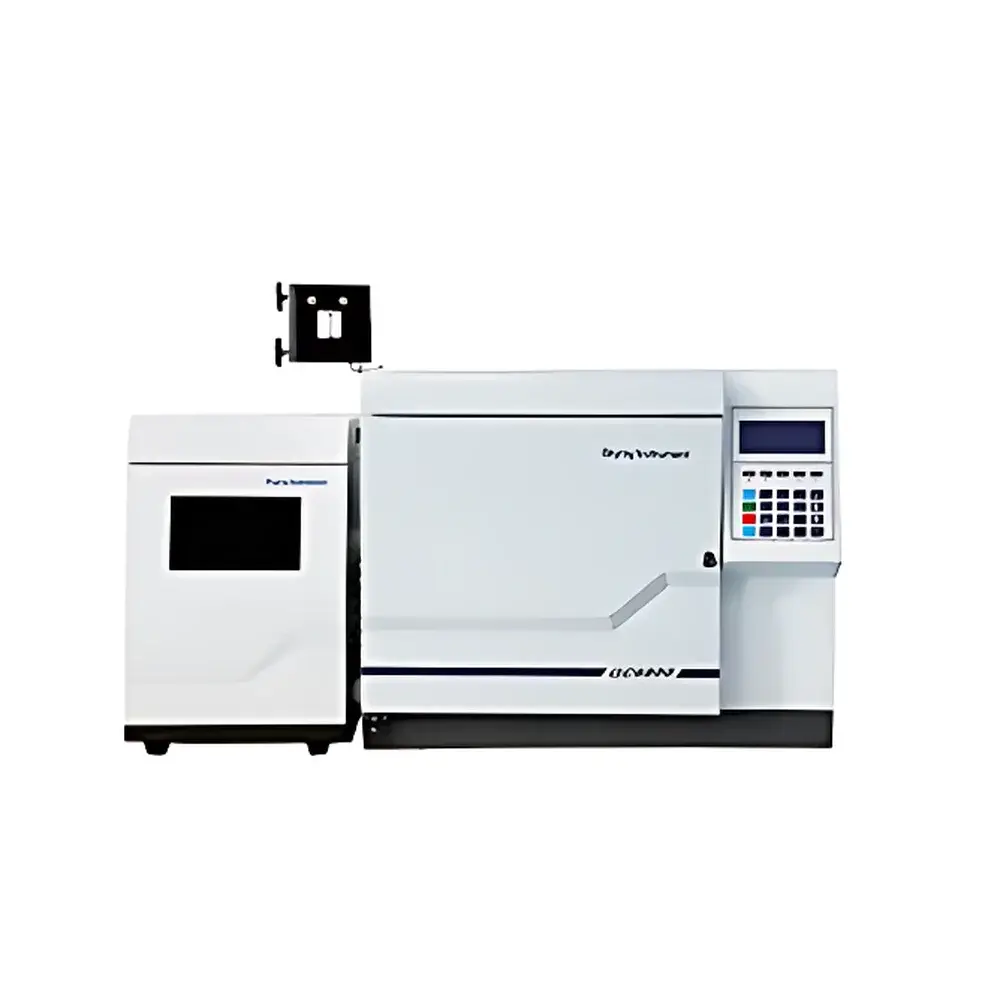
SkyRay UPY-100 Rapid Pyrolysis GC-FID System for RoHS 2.0 Phthalates Screening
| Brand | SkyRay Instrument |
|---|---|
| Origin | Jiangsu, China |
| Manufacturer Type | OEM Manufacturer |
| Regional Category | Domestic (PRC) |
| Model | UPY-100 |
| Instrument Type | Laboratory Gas Chromatograph |
| Application Scope | General-purpose RoHS Compliance Testing |
| Oven Temperature Range | Ambient +4 °C to 450 °C |
| Oven Ramp Rate | 0–120 °C/min |
| Oven Cooling Rate | <10 min from 350 °C to 50 °C |
| Carrier Gas Flow Range & Control | 0–1250 mL/min, Electronic Flow Control (EFC) |
| Carrier Gas Pressure Range & Control | 0–100 psi, Electronic Pressure Control (EPC) at Column Inlet |
| Injector Maximum Operating Temperature | 450 °C |
| Injector Pressure Setting Range | 0–100 psi |
| Injector Total Flow Setting Range | 0–1250 mL/min |
Overview
The SkyRay UPY-100 Rapid Pyrolysis GC-FID System is a purpose-engineered analytical platform designed for the compliant, high-throughput screening of phthalate esters—specifically DIBP, DBP, BBP, and DEHP—as mandated under the EU RoHS 2.0 Directive (2015/863) and aligned with IEC 62321-8:2017 for pyrolysis–gas chromatography–flame ionization detection (Py-GC-FID). Unlike conventional solvent-extraction-based workflows, this system integrates a thermally programmable pyrolyzer directly coupled to a fourth-generation laboratory gas chromatograph equipped with dual electronic pneumatic control (EPC/EFC), enabling direct thermal decomposition of solid or semi-solid polymer matrices without chemical pretreatment. The instrument operates on the principle of controlled flash pyrolysis: samples are rapidly heated to precise temperatures (up to 450 °C) in an inert atmosphere, generating volatile pyrolysates that are swept by carrier gas into a fused-silica capillary column for separation. Detection occurs via hydrogen flame ionization (FID), delivering robust quantification across the regulatory concentration range (10–1000 mg/kg) with demonstrated linearity (R² ≥ 0.999) and inter-day repeatability (RSD < 4.2% at 100 mg/kg level).
Key Features
- Integrated rapid pyrolysis module with programmable heating rates up to 120 °C/min and sub-10-minute cooling recovery, ensuring high sample throughput and thermal stability across consecutive runs.
- Direct solid-sample introduction via disposable ceramic sample cups—eliminates solvent extraction, acid digestion, or derivatization steps required by traditional GC-MS or LC-MS methods per IEC 62321-6.
- Fourth-generation GC architecture featuring dual-channel EPC (column inlet pressure) and EFC (split/splitless flow), calibrated traceably to NIST-traceable standards for long-term retention time stability (< 0.02 min RSD over 50 injections).
- High-temperature programmable split/splitless injector (max 450 °C) with pressure- and flow-independent operation, supporting both volatile and thermally labile pyrolysate introduction.
- 7-inch high-resolution capacitive touchscreen interface with embedded method editor, real-time chromatogram display, and audit-ready event logging—designed for ISO/IEC 17025-compliant laboratories.
Sample Compatibility & Compliance
The UPY-100 accepts heterogeneous solid samples including PVC cables, polyurethane foams, rubber gaskets, printed circuit board substrates, and injection-molded plastic housings—without size limitation beyond cup capacity (≤ 5 mg). It meets the technical validation criteria specified in IEC 62321-8 for qualitative identification and semi-quantitative screening of the four regulated phthalates. Method performance has been verified against certified reference materials (CRMs) such as BAM-P031 (PVC with DEHP) and NIST SRM 2878 (phthalate-spiked polypropylene). Data integrity complies with FDA 21 CFR Part 11 requirements through electronic signatures, immutable audit trails, and role-based user access control. The system supports GLP/GMP-aligned documentation protocols for regulatory submissions to EU Notified Bodies and China’s CCC certification authorities.
Software & Data Management
Control and analysis are executed via SkyRay ChromaVision™ v3.2 software—a Windows-based platform validated for IQ/OQ/PQ implementation. The software provides automated calibration curve generation using internal standard (di-n-butyl phthalate, DBP-d4) normalization, peak integration with baseline correction algorithms optimized for co-eluting pyrolytic fragments, and report templates pre-formatted to IEC 62321 Annex A. All raw data (.raw), method files (.mth), and audit logs (.log) are stored in encrypted SQLite databases with SHA-256 hashing. Export options include PDF analytical reports, CSV chromatographic tables, and XML files compatible with LIMS integration (ASTM E1482, ASTM E2887). Full 21 CFR Part 11 compliance includes electronic signature enforcement, session timeout, and automatic backup to network-attached storage (NAS).
Applications
- Routine screening of electrical/electronic equipment (EEE) components for RoHS 2.0 conformity prior to CE marking.
- Supplier qualification testing in automotive and medical device supply chains where phthalate migration risk must be assessed per ISO 10993-12.
- QC/QA release testing of incoming polymer resins and compound batches in manufacturing facilities operating under ISO 9001:2015.
- Failure analysis of non-compliant products during post-market surveillance investigations conducted by national market surveillance authorities.
- Method development and validation support for accredited testing laboratories seeking ISO/IEC 17025 accreditation for IEC 62321-8 testing scope.
FAQ
Does the UPY-100 require derivatization or solvent extraction prior to analysis?
No. The system is designed for direct thermal desorption and pyrolysis of untreated solid samples, eliminating all wet chemistry steps.
Is the instrument compliant with IEC 62321-8:2017 for phthalate screening?
Yes. Validation data—including specificity, LOD/LOQ, precision, and CRM recovery—demonstrate full alignment with Clause 7 and Annex A of IEC 62321-8.
Can the UPY-100 be used for other restricted substances beyond the RoHS 4P phthalates?
It is optimized for DIBP, DBP, BBP, and DEHP. While other volatile organics may be detected, quantitative accuracy for non-phthalate analytes requires method revalidation per ISO/IEC 17025 clause 7.2.
What maintenance intervals are recommended for the pyrolyzer and GC-FID modules?
Pyrolyzer quartz liner replacement every 200 injections; FID jet cleaning every 500 runs; GC column trimming every 1000 injections—documented in the included Preventive Maintenance Logbook.
Is remote diagnostics and software update capability supported?
Yes. ChromaVision™ supports secure TLS 1.2-based remote access via authenticated VPN, with over-the-air firmware and security patch deployment managed through SkyRay’s authorized service portal.




