
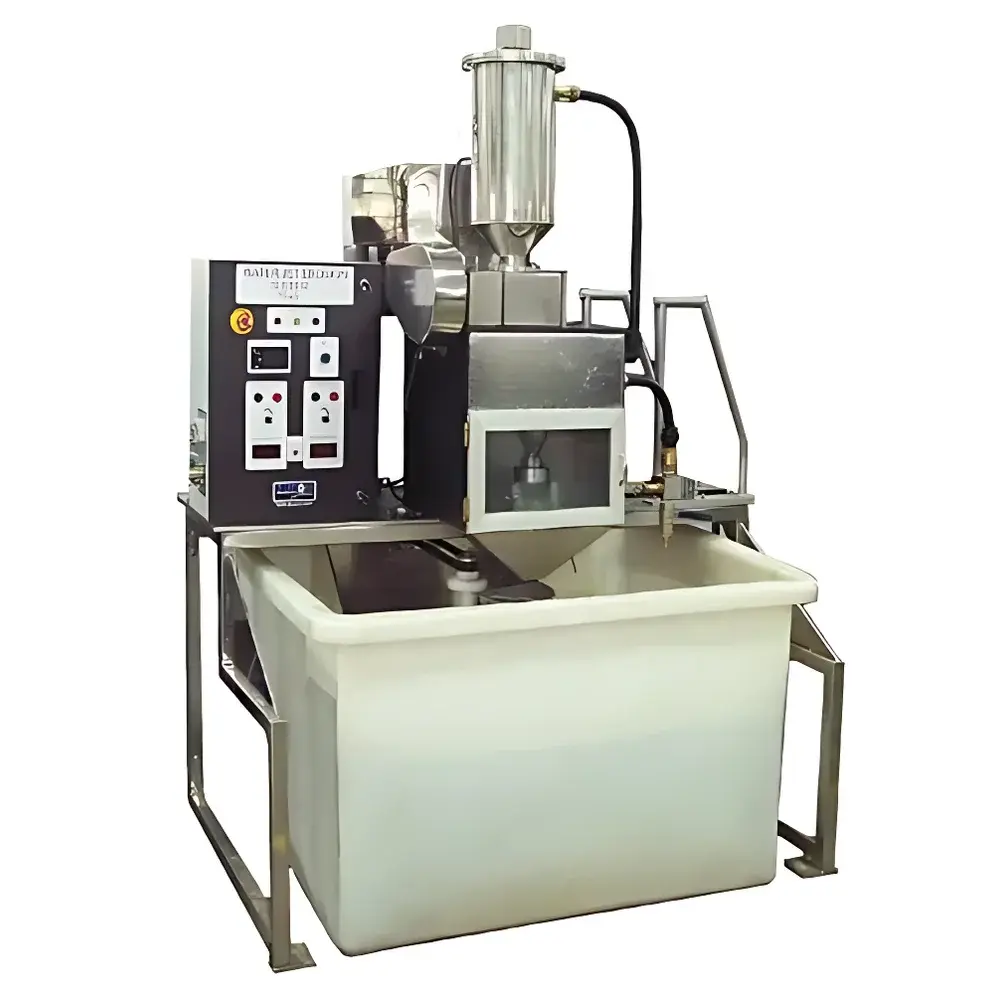
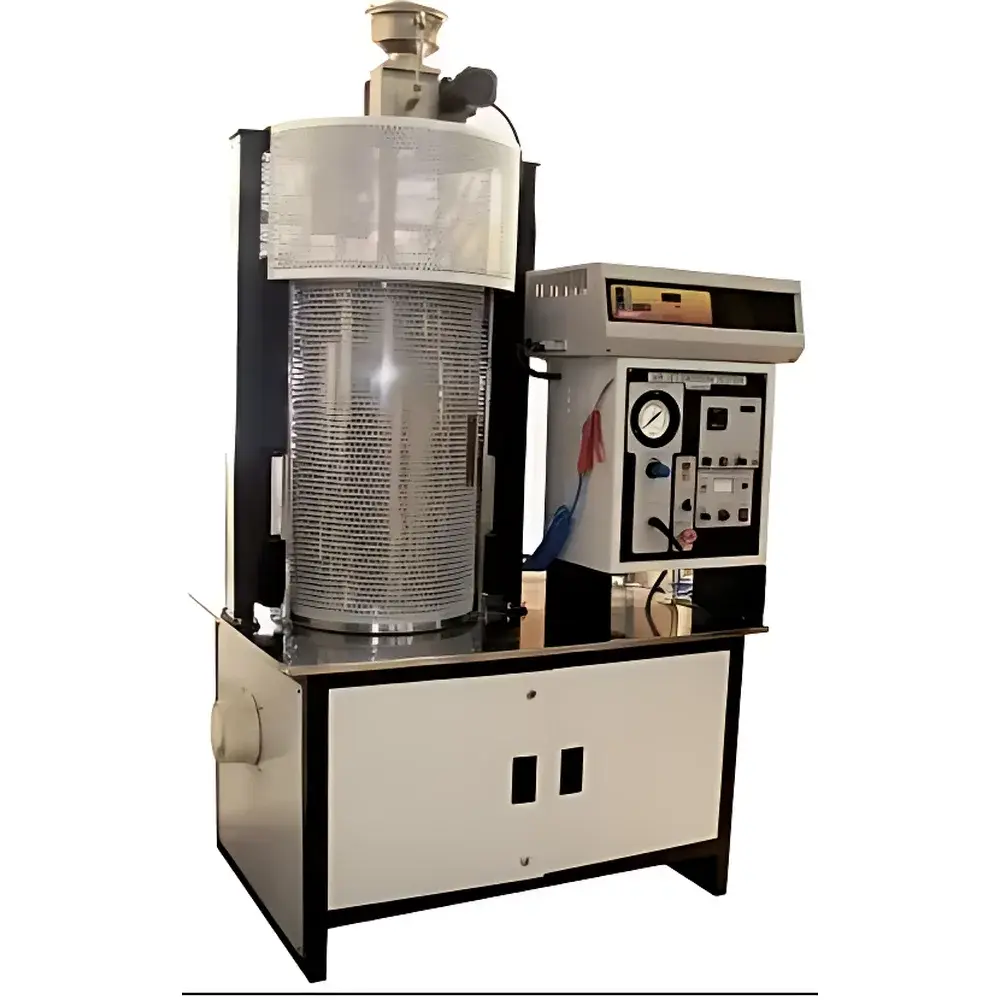
Slurry Jet Erosion Tester by JHT (Yi Cheng Heng Da)
| Brand | JHT (Yi Cheng Heng Da) |
|---|---|
| Origin | USA |
| Manufacturer Type | Authorized Distributor |
| Origin Category | Imported |
| Model | Slurry Jet |
| Pricing | Available Upon Request |
Overview
The JHT Slurry Jet Erosion Tester is an engineered benchtop system designed for quantitative assessment of solid-liquid slurry-induced erosion resistance in engineering materials under controlled hydrodynamic impact conditions. It operates on the principle of high-velocity, focused slurry jet impingement—where abrasive particles suspended in a carrier fluid are accelerated through a precision nozzle and directed at a stationary or angled test specimen. This method replicates service-relevant wear mechanisms observed in mining slurry lines, hydraulic transport systems, dredging equipment, and desalination plant components. Unlike generic abrasion testers, the Slurry Jet system enables precise decoupling of key erosion drivers—including particle velocity, impact angle, slurry concentration (by weight or volume), particle size distribution, and exposure duration—allowing for mechanistic correlation between operational parameters and material degradation kinetics.
Key Features
- Adjustable Impact Geometry: Specimen holder accommodates impact angles from 0° (normal incidence) to 90° (glancing), enabling systematic study of angular dependence—a critical factor in ductile vs. brittle erosion regimes per ASTM G76 and ISO 8502-12.
- Closed-Loop Slurry Circulation: Integrated pump, settling tank, and mesh filtration (down to 25 µm) maintain consistent particle suspension and minimize water consumption; flow rate and pressure are independently monitored via calibrated digital transducers.
- Modular Fixture Interface: Standardized mounting flange accepts custom adapters for testing real-world components (e.g., valve seats, pipe elbows, pump impeller segments) without requiring specimen machining into standardized coupons.
- High-Reproducibility Jet Nozzle Assembly: Tungsten carbide or sapphire orifice (nominal diameter: 3.0–6.0 mm) ensures stable jet profile and minimal wear-induced drift over extended test campaigns.
- Integrated Mass Loss Monitoring: High-resolution analytical balance (0.01 mg resolution) interfaced with data acquisition software records cumulative weight loss at user-defined intervals, synchronized with elapsed test time and flow parameters.
Sample Compatibility & Compliance
The system supports flat, curved, or contoured specimens up to 100 mm × 100 mm × 25 mm (L×W×T), including metals (carbon steel, stainless steels, Ni-alloys, titanium), ceramics (Al2O3, SiC), polymer composites, and thermal spray coatings. Specimens are secured using non-reactive clamping mechanisms to prevent mechanical interference during erosion. All test procedures align with internationally recognized erosion testing standards, including ASTM G119 (guidance for determining synergism between wear modes), ASTM G132 (standard test method for erosion by solid particle impingement), and ISO 8502-12 (assessment of coating erosion resistance). Data traceability meets GLP and GMP documentation requirements, with optional audit trail configuration compliant with FDA 21 CFR Part 11 when paired with validated software modules.
Software & Data Management
JHT ErosionControl™ software (v3.2+) provides real-time visualization of mass loss curves, flow dynamics, and pressure stability. Users define multi-step test protocols—including ramped velocity profiles, sequential angle sweeps, or concentration gradients—with automatic logging of all sensor inputs (mass, time, pressure, temperature, flow rate). Export formats include CSV, Excel, and PDF reports with embedded metadata (operator ID, calibration dates, environmental conditions). Raw datasets retain full timestamp resolution (100 Hz sampling) and support post-hoc statistical analysis (e.g., linear regression of mass loss vs. kinetic energy, ANOVA for factor significance ranking). Software validation documentation (IQ/OQ/PQ templates) is available upon request for regulated environments.
Applications
- Predictive life modeling of slurry-handling components in mineral processing plants
- Qualification of hardfacing alloys and ceramic overlays for dredge pump housings
- Comparative ranking of coating systems (HVOF, plasma-sprayed, electroplated) for offshore oil & gas flowlines
- Development and validation of erosion-resistant composite liners for coal-fired power plant ash handling systems
- Supporting ASTM/ISO round-robin interlaboratory studies on erosion standardization
- Academic research on erosion-corrosion synergy in chloride-rich slurries (e.g., seawater + sand)
FAQ
What slurry types can be tested?
Aqueous slurries containing silica sand, alumina, crushed ore, fly ash, or synthetic abrasives—within particle size ranges of 50 µm to 2 mm and concentrations up to 40 wt%. Non-aqueous carriers (e.g., glycol-based fluids) are supported with compatible wetted materials.
Is calibration certification included?
Yes—each system ships with NIST-traceable calibration certificates for the load cell, pressure transducer, and flow meter, valid for 12 months from shipment date.
Can the system operate continuously for >24 hours?
Yes—designed for unattended operation with thermal management, overflow protection, and automatic shutdown on pressure deviation exceeding ±5% of setpoint.
Does JHT supply reference materials for method validation?
Standardized reference specimens (SAE 1045 steel, 6061-T6 aluminum, and fused silica) are available with certified erosion rates under defined test conditions (e.g., 100 m/s, 30°, 20 wt% SiO₂, 250 µm median size).
What maintenance is required between tests?
Nozzle inspection every 10 hours of cumulative run time; filter cleaning after each test series; annual recalibration of transducers and balance recommended per ISO/IEC 17025 guidelines.



