
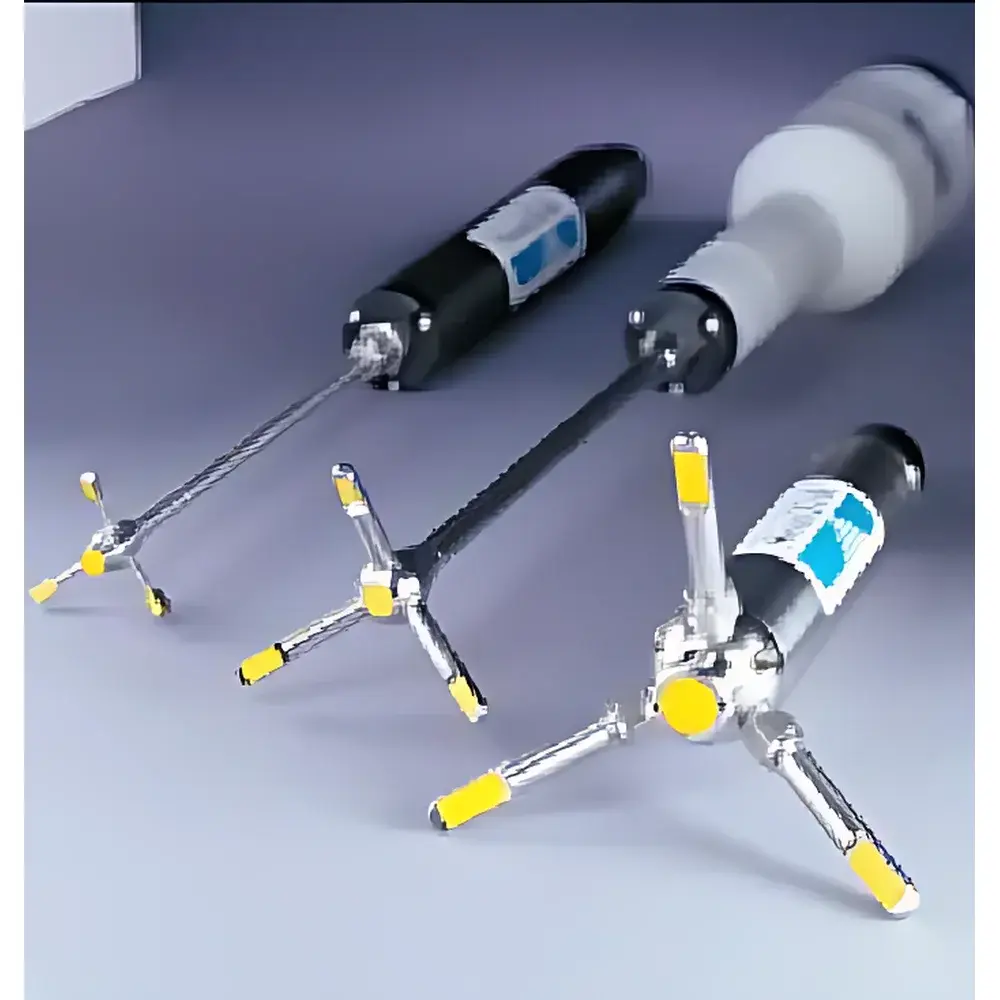
SonTek ADV Acoustic Doppler Velocimeter
| Origin | USA |
|---|---|
| Manufacturer Type | Authorized Distributor |
| Origin Category | Imported |
| Model | ADV |
| Pricing | Upon Request |
| Operating Frequencies | 16 MHz (MicroADV), 10 MHz (ADV), 5 MHz (ADVOcean) |
| Sampling Rates | 0.1–50 Hz (MicroADV), 0.1–25 Hz (ADV & ADVOcean) |
| Sample Volume | 0.09 cm³ (MicroADV), 0.25 cm³ (ADV), 2.0 cm³ (ADVOcean) |
| Transducer-to-Sample Distance | 5 cm (MicroADV & ADV), 18 cm (ADVOcean) |
| Velocity Resolution | 0.01 cm/s |
| Accuracy | ±1% of measured velocity or ±0.25 cm/s, whichever is greater |
Overview
The SonTek ADV (Acoustic Doppler Velocimeter) is a precision three-dimensional point-velocity measurement instrument engineered for high-fidelity hydrodynamic research in controlled laboratory environments, field deployments, and harsh marine settings. Based on the physical principle of acoustic Doppler shift—where ultrasonic pulses emitted from piezoelectric transducers are backscattered by suspended particles and subsequently analyzed for frequency shift—the ADV delivers non-intrusive, spatially localized velocity vectors with millimeter-scale positioning capability. Unlike profiling instruments such as ADCPs, the ADV operates in point-sampling mode, enabling quantitative analysis of turbulent fluctuations, Reynolds stress tensors, boundary layer dynamics, and wave-induced orbital velocities. Its remote-sensing architecture eliminates mechanical interference with the flow field, making it indispensable for low-velocity (<1 cm/s), high-turbulence, and near-wall (sub-millimeter proximity to boundaries) investigations governed by strict fluid mechanics protocols.
Key Features
- Non-invasive acoustic Doppler measurement with zero flow disturbance—critical for laminar and transitional flow studies
- Sub-millimeter spatial resolution: sampling volumes as small as 0.09 cm³ (MicroADV), enabling boundary-layer-resolving measurements within viscous sublayers
- High temporal fidelity: up to 50 Hz sampling rate (MicroADV) supports spectral analysis of turbulence energy cascades and wave–turbulence interactions
- Factory-calibrated transducer arrays with traceable NIST-certified velocity calibration—no user-performed recalibration required under standard operating conditions
- Modular probe–cable–processor architecture: pressure-balanced, water-tight connectors (IP68 rated) facilitate rapid probe replacement and system reconfiguration
- Integrated acoustic backscatter intensity output—quantitatively correlated with suspended sediment concentration (SSC) following site-specific acoustic calibration per ASTM D4084
- Multi-frequency platform: 16 MHz (MicroADV), 10 MHz (ADV), and 5 MHz (ADVOcean) variants optimized for resolution vs. penetration depth trade-offs across freshwater lab, riverine, and deep-ocean applications
Sample Compatibility & Compliance
The ADV series is validated for use in natural waters containing naturally occurring or seeded acoustic scatterers (e.g., suspended silt, clay, or calibrated polystyrene microspheres). It complies with ISO/IEC 17025:2017 requirements for measurement uncertainty reporting when used with certified calibration procedures. For regulatory monitoring contexts—including USACE, USGS, and EPA-funded projects—the system supports audit-ready data logging aligned with GLP principles. Optional pressure, tilt, compass, temperature/conductivity, and turbidity sensors enable synchronized multi-parameter acquisition compliant with IEC 61000-6-2 (EMC immunity) and MIL-STD-810G (shock/vibration) for offshore deployment. The ADVOcean variant meets IP68 and 500 m seawater immersion specifications; titanium-housed configurations extend operational depth to 2000 m (ISO 12217-3).
Software & Data Management
Data acquisition and real-time visualization are managed via SonTek’s proprietary ViewHydra software suite, which provides time-series export in ASCII and NetCDF formats, spectral analysis (FFT-based power spectral density), Reynolds stress tensor computation, and turbulence statistics (u′v′, u′w′, v′w′). All raw velocity time series include embedded metadata (timestamp, temperature, tilt, compass heading where equipped) and support post-processing traceability. Software-generated logs comply with FDA 21 CFR Part 11 requirements when configured with electronic signatures and audit trails—essential for QA/QC workflows in accredited environmental laboratories. Exported datasets are fully compatible with MATLAB, Python (via netCDF4 and pyADCP libraries), and R for advanced statistical modeling and machine learning–based turbulence classification.
Applications
- Boundary layer characterization in flume and towing tank experiments (ASTM D6322, ISO 14688-1)
- Turbulent kinetic energy (TKE) and Reynolds stress quantification in open-channel flows and estuarine mixing zones
- Wave–current interaction studies, including orbital velocity decomposition and near-bed sediment transport thresholds
- Validation of CFD models (e.g., OpenFOAM, ANSYS Fluent) requiring point-wise, phase-resolved velocity inputs
- Long-term deployment in coastal observatories for sediment resuspension event detection and SSC time-series correlation
- Calibration reference for larger-scale acoustic profilers (ADCPs) and electromagnetic current meters
FAQ
What distinguishes the MicroADV from the standard ADV and ADVOcean models?
The MicroADV operates at 16 MHz for ultra-high spatial resolution (0.09 cm³ sample volume) and 50 Hz sampling—optimized for low-velocity lab-scale turbulence. The ADV (10 MHz) balances resolution and range for riverine and flume work. The ADVOcean (5 MHz) prioritizes signal penetration in turbid, deep-water environments with robust 500 m (or optional 2000 m) pressure housing.
Is factory calibration sufficient for long-term field deployments?
Yes—SonTek’s factory calibration is stable over time and temperature. Field verification using static water tests or co-located reference sensors is recommended prior to critical campaigns but not required for routine operation per ISO/IEC 17025 Annex A.3.
Can multiple ADV units be synchronized for spatially distributed turbulence measurements?
Yes—using the optional Multi Port module, up to eight ADV systems can be triggered simultaneously with microsecond-level timing alignment, enabling Eulerian two-point correlation and spatial coherence analysis.
Does the system support real-time telemetry in remote locations?
With the RS-422 interface upgrade kit, cable length extends to 1500 m; integration with cellular or satellite telemetry gateways (e.g., Iridium Short Burst Data) enables near-real-time transmission of summary statistics—though full-rate velocity time series require local storage due to bandwidth constraints.
Are there documented case studies validating ADV performance against PIV or LDV?
Peer-reviewed validation exists in Journal of Hydraulic Engineering, Limnology and Oceanography: Methods, and Experiments in Fluids, confirming RMS velocity differences <0.3 cm/s against laser-based references under controlled laminar and turbulent conditions.
Related Products







