
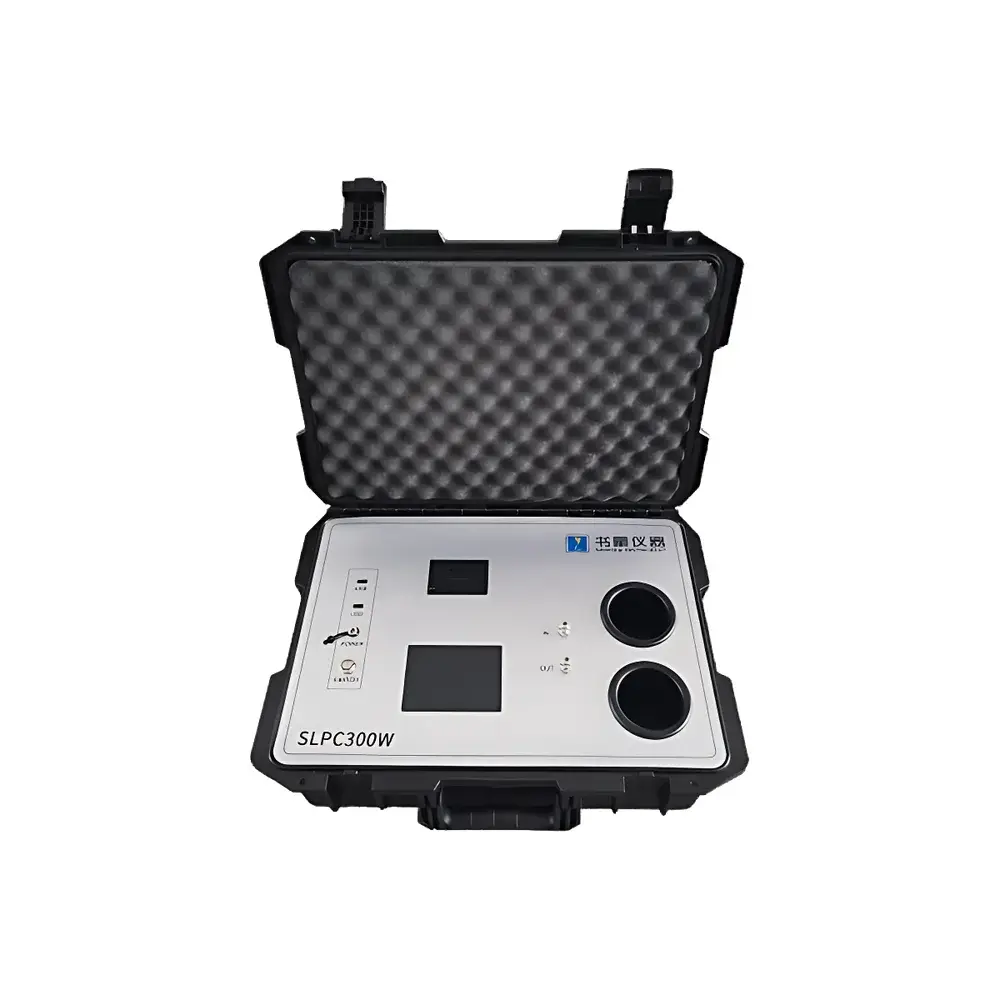
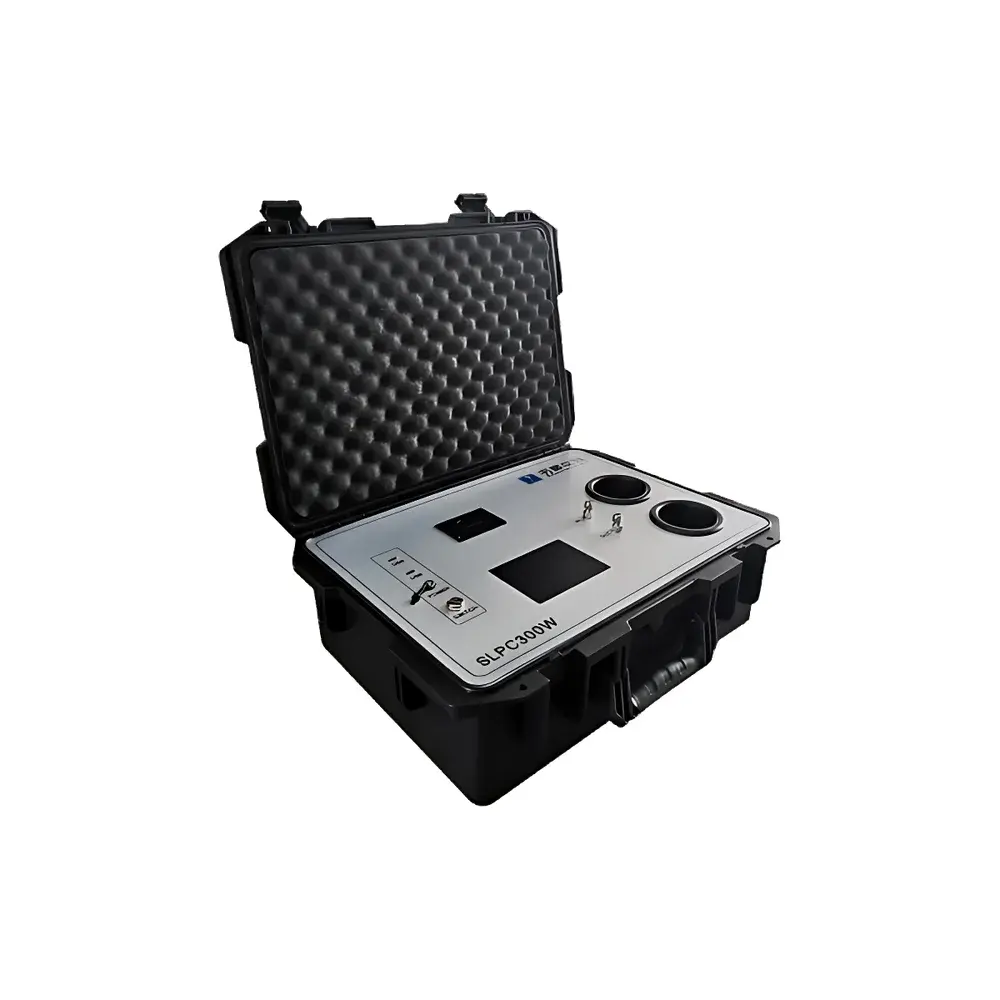
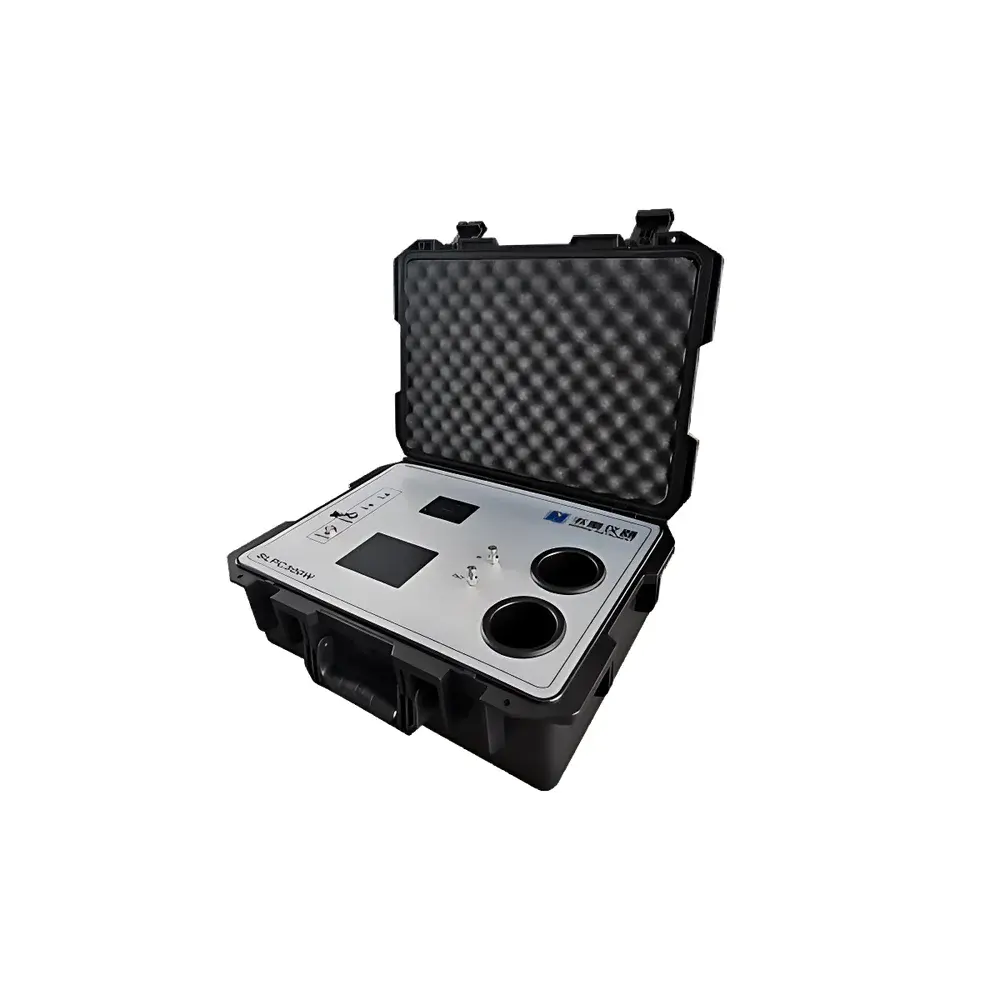
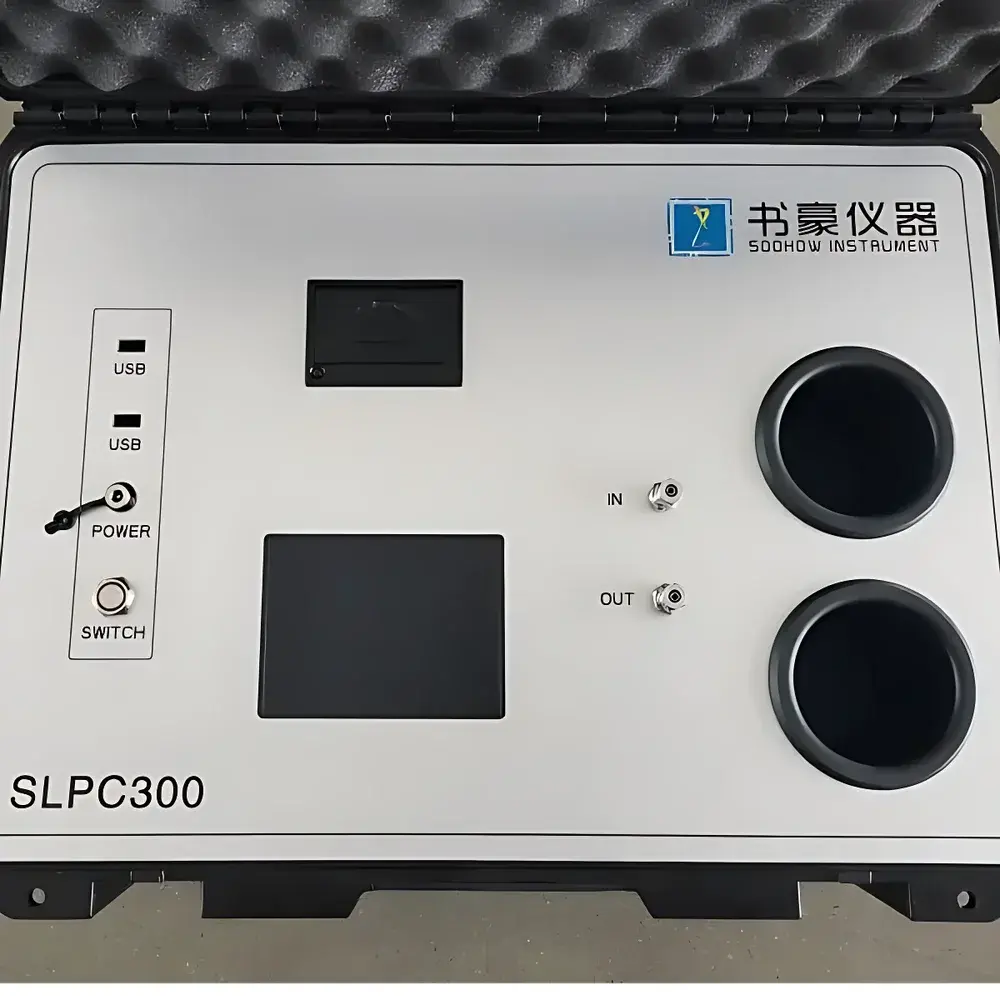
SOOHOW SLPC300W Optical Particle Counter with Integrated Water-in-Oil Measurement
| Brand | SOOHOW INSTRUMENT |
|---|---|
| Model | SLPC300W |
| Principle | Light Obscuration (LO) |
| Detection Range | 1–500 µm |
| Sensitivity | 1 µm (ISO 4402) / 4 µm(c) (ISO 11171, GB/T 18854) |
| Channels | 32 adjustable (0.1 µm intervals) |
| Sample Volume | 10–100 mL (±2% accuracy) |
| Flow Rate | 5–60 mL/min |
| Viscosity Limit (online) | <100 cSt (optional positive-pressure sampler for higher viscosity) |
| Pressure Range (online) | 0.1–0.6 MPa (up to 40 MPa with optional pressure reducer) |
| Temperature Range | 0–80 °C (sample), −20–60 °C (operating) |
| Water-in-Oil Range | 10–500 ppm (±5 ppm @ 10–100 ppm |
| Repeatability | RSD <2% |
| Counting Accuracy | ±10% |
| Resolution | >90% |
| Coincidence Limit | 12,000–40,000 particles/mL |
| Power | 110–240 V AC + internal Li-ion battery |
| Compliance | ISO 4402, ISO 11171, GB/T 18854, NAS1638, ISO 4406:2007, GJB420B-2015, AS4059F |
Overview
The SOOHOW SLPC300W Optical Particle Counter with Integrated Water-in-Oil Measurement is a dual-function laboratory and field-deployable instrument engineered for simultaneous quantitative analysis of particulate contamination and trace water content in liquid media—primarily lubricants, hydraulic fluids, insulating oils, turbine oils, and other hydrocarbon- or polymer-based liquids. Based on the light obscuration (LO) principle—also known as the light blockage or photoelectric blocking method—the system detects individual particles by measuring transient reductions in laser beam intensity as particles pass through a precisely defined sensing zone. A high-stability semiconductor laser source ensures consistent illumination, while a high-resolution photodetector captures pulse amplitude and duration to derive particle size and count per standardized calibration protocols. Complementing the particle counting module, the SLPC300W integrates a dedicated dielectric or near-infrared absorption-based moisture sensor calibrated for water-in-oil measurement across the 10–500 ppm range, enabling comprehensive fluid health assessment in a single analytical workflow. Designed for use in offline batch testing or continuous online monitoring (with optional flow cell and pressure interface), the instrument meets the metrological requirements of international standards governing fluid cleanliness and condition monitoring.
Key Features
- Light obscuration detection compliant with ISO 4402 (for ACFTD calibration) and ISO 11171 / GB/T 18854 (for ISOMTD and latex sphere traceability)
- Dual-parameter output: particle concentration (particles/mL) and water content (ppm) reported concurrently per sample
- 32-user-configurable detection channels with 0.1 µm resolution across 1–500 µm nominal range
- High-fidelity sampling control: volumetric accuracy better than ±2%, flow rate programmable from 5 to 60 mL/min
- Robust thermal design supporting sample temperatures from 0 °C to 80 °C and ambient operation from −20 °C to 60 °C
- Modular pressure handling: standard online operation at 0.1–0.6 MPa; extended range up to 40 MPa with certified pressure-reduction assembly
- Embedded industrial-grade Windows OS controller with touchscreen interface, local data processing, and real-time reporting
- Multi-standard compliance engine: automatic classification per NAS1638, ISO 4406:1999/2007/1987, GJB420A/B (2006 & 2015), AS4059E/F, SAE749D, and custom user-defined thresholds
- Calibration flexibility: supports ACFTD, ISOMTD, NIST-traceable latex spheres, and GOST-certified reference materials
- Triple data retention: embedded thermal printer, SQL-based local database, and USB export in CSV/Excel-compatible formats
Sample Compatibility & Compliance
The SLPC300W is validated for use with mineral oils, synthetic lubricants, phosphate ester fluids, polyalkylene glycols, transformer insulating oils, aviation fuels (Jet A-1, JP-8), and aqueous polymer solutions—provided kinematic viscosity remains below 100 cSt under standard online conditions. For higher-viscosity media (e.g., gear oils, greases after dilution), optional positive-pressure sampling modules ensure laminar flow and minimize particle settling bias. All optical and wetted-path components are constructed from chemically inert stainless steel (316L) and fused silica to prevent leaching or adsorption artifacts. The instrument’s firmware and data handling architecture support audit-ready operation in regulated environments: electronic records include timestamped metadata, operator ID, calibration status, and full chain-of-custody logs—fully compatible with GLP and GMP documentation workflows. It satisfies data integrity requirements aligned with FDA 21 CFR Part 11 when deployed with user authentication and electronic signature modules.
Software & Data Management
The embedded Windows-based software provides intuitive instrument control, real-time particle histogram visualization, and automated ISO 4406 code assignment. Raw pulse data are retained alongside processed counts, enabling retrospective re-analysis with updated channel definitions or correction algorithms. Database structures conform to relational schema principles, allowing direct ODBC connectivity for integration into enterprise LIMS or CMMS platforms. All measurement reports include full traceability: calibration certificate IDs, reference material lot numbers, environmental parameters (temperature, pressure), and uncertainty statements per ISO/IEC 17025 guidelines. Export functions support PDF (print-ready), CSV (for statistical post-processing), and XML (for automated ingestion into SAP or Maximo). Firmware updates are delivered via signed package files to ensure version control and cryptographic integrity.
Applications
- Condition monitoring of hydraulic systems in aerospace actuators and ground support equipment
- Acceptance testing of new oil batches prior to turbine or generator commissioning (per IEC 60296 and ASTM D6971)
- Root-cause analysis of bearing wear debris in wind turbine gearboxes
- Quality assurance of insulating oil in high-voltage transformers (IEEE C57.106)
- Military depot-level fluid reclamation verification (MIL-PRF-17331, MIL-STD-1246C)
- Pharmaceutical excipient suspension characterization where insoluble particulates impact sterility or stability
- R&D evaluation of filter efficiency using challenge tests with ISO MTD or ISO FCD test dusts
FAQ
Does the SLPC300W require annual recalibration?
Yes—annual recalibration against NIST-traceable reference materials is recommended to maintain compliance with ISO 11171 and internal quality management systems. Calibration certificates document sensitivity drift, channel linearity, and coincidence correction factors.
Can the instrument measure particles in water-glycol hydraulic fluids?
Yes, provided viscosity remains ≤100 cSt at operating temperature and conductivity is below 5 mS/cm to avoid electrostatic interference with the optical sensing zone.
Is the water-in-oil measurement validated per ASTM D6304 or ISO 12937?
The integrated moisture sensor is optimized for rapid screening (10–500 ppm); for regulatory submission, Karl Fischer titration (ASTM D6304) remains the primary reference method—but SLPC300W data correlate strongly (R² > 0.98) with coulometric KF results for routine trending.
What cybersecurity features are implemented in the Windows OS module?
The controller runs a locked-down Windows IoT Enterprise image with disabled remote desktop, automatic updates disabled by default, and configurable firewall rules. User access levels (operator, supervisor, administrator) enforce role-based permissions for method editing, calibration, and report deletion.
How is particle coincidence error corrected?
The firmware applies a dynamic coincidence correction algorithm based on measured pulse density and empirically derived correction curves per ISO 11171 Annex B. Users may enable or disable correction and view raw vs. corrected counts side-by-side.
Related Products



