
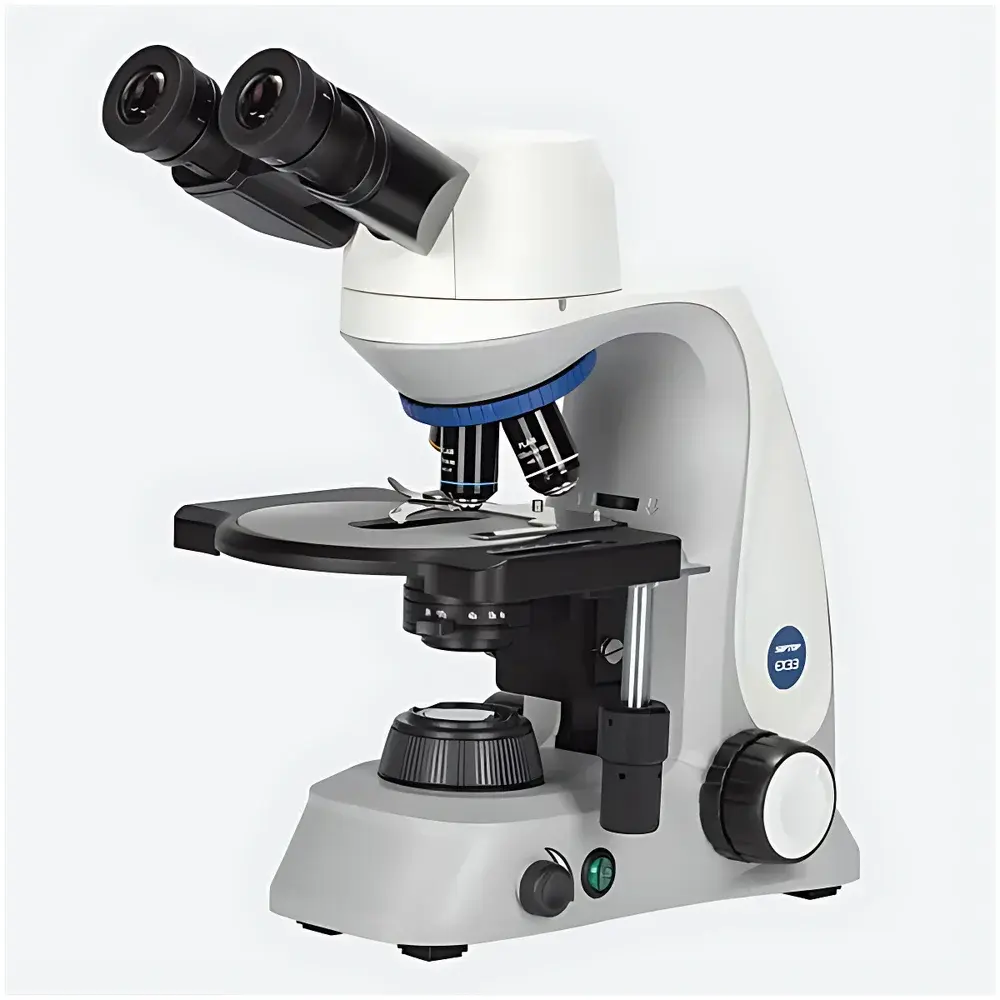
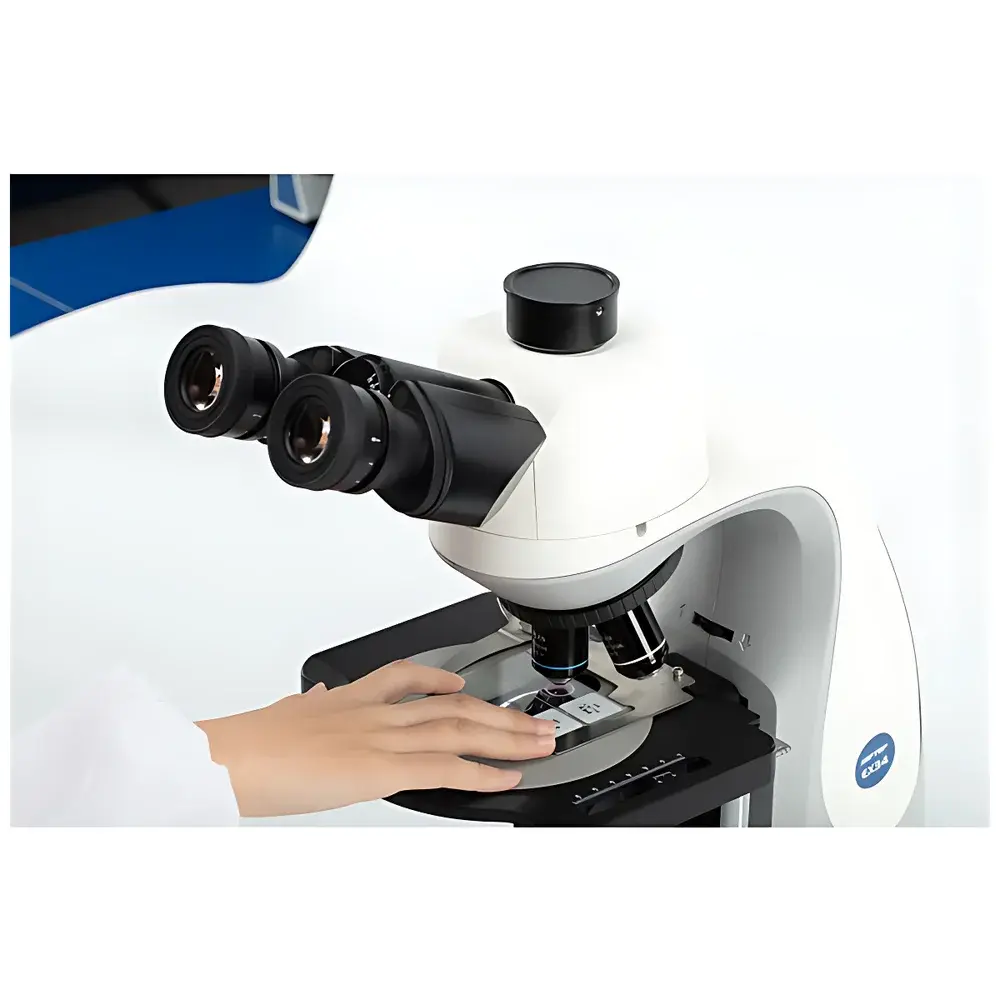
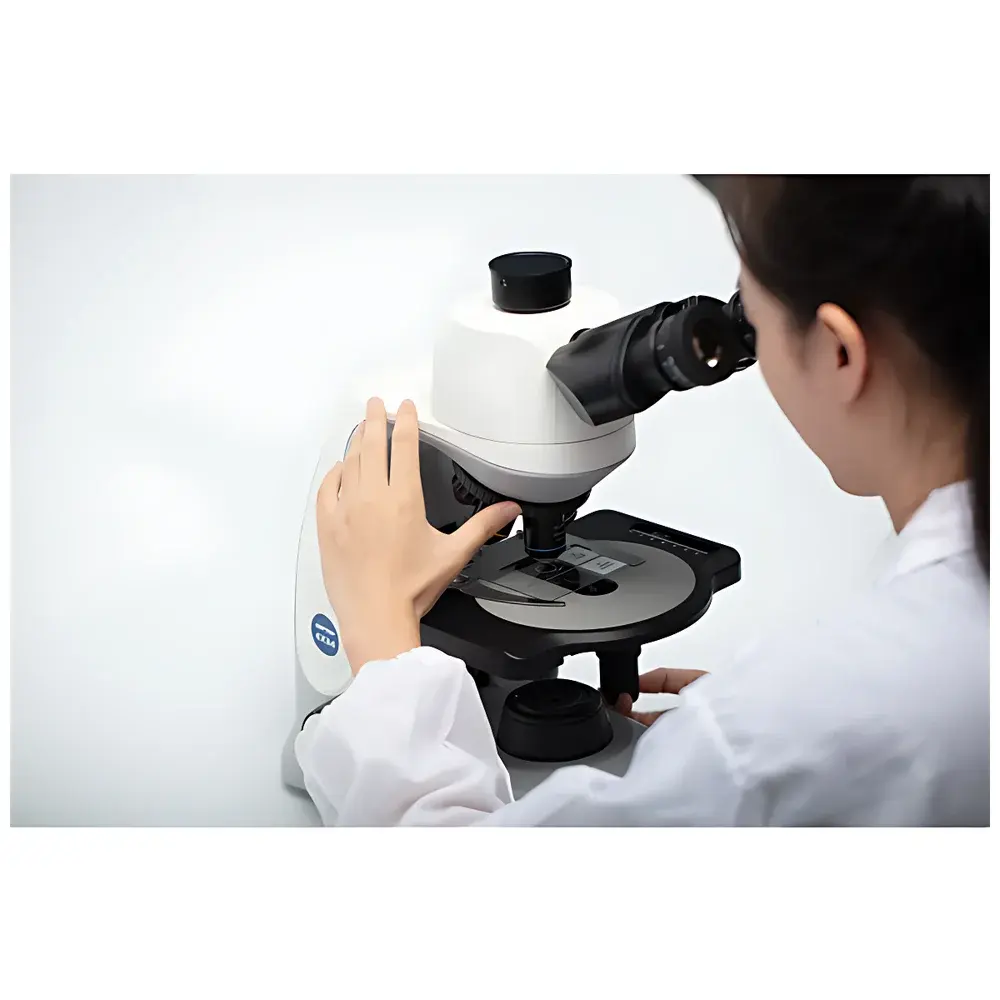

SOPTOP EX33 Upright Fluorescence Microscope
| Brand | SOPTOP |
|---|---|
| Origin | Zhejiang, China |
| Manufacturer Type | Original Equipment Manufacturer (OEM) |
| Product Category | Domestic |
| Model | EX33 |
| Price Range | USD 4,200 – 11,200 |
| Instrument Type | Upright Fluorescence Microscope |
| Excitation Source | High-Power Single-LED (3 W or 5 W) |
| Microscope Class | Conventional Epifluorescence Microscope |
| Eyepieces | Widefield Plan Eyepieces PL10X/20 mm and PL10X/22 mm with Adjustable Diopter and Optional Reticle |
| Objective Lenses | Infinity-Corrected Achromatic Objectives (2X, 4X, 10X, 20X, 40X, 60X, 100X) |
| Fluorescence Illumination | LED-Based Epi-Illumination with Single-Band Excitation |
| Illumination Control | Manual Intensity Adjustment |
| Focusing Mechanism | Coaxial Coarse/Fine Focus with Low-Position Knobs |
| Condenser | NA 1.25 Abbe Condenser with Köhler Illumination Capability |
| Observation Head | 30° Inclined Binocular Head with Interpupillary Adjustment |
| Stage | Dual-Layer Mechanical Stage with Ceramic-Coated Surface, Travel Range 78 mm × 51 mm, X-Axis Precision 0.1 mm (Single-Rail Drive), Dual-Slide Holder |
| Fluorescence Filter Sets | B4, B1, B2, G1, UV4 |
Overview
The SOPTOP EX33 Upright Fluorescence Microscope is an engineered solution for routine and advanced life science laboratories requiring reliable epifluorescence imaging without compromising optical fidelity or ergonomic usability. Designed around an infinity-corrected optical pathway, the EX33 integrates high-transmission achromatic and semi-apochromatic objective lenses to deliver consistent resolution, contrast, and color fidelity across brightfield, phase contrast, and fluorescence modalities. Its LED-based epi-illumination system employs thermally stabilized, single-band excitation sources—optimized for minimal photobleaching and stable intensity output over extended acquisition periods. The microscope conforms to ISO 10934-1 (Microscopes — Nomenclature of components) and supports Köhler illumination alignment per ISO 8578, ensuring reproducible illumination geometry critical for quantitative image analysis and inter-laboratory comparability.
Key Features
- Modular optical architecture supporting interchangeable objective turrets and filter cubes for multi-channel fluorescence workflows.
- Low-hand-position coaxial focusing mechanism with 10:1 fine-focus ratio (1 µm graduation) and backlash-free micrometer drive—designed for precise Z-stack acquisition in fixed-tissue or semi-thick specimen observation.
- Ceramic-coated mechanical stage with dual-slide holder and 0.1 mm X-axis positional repeatability; surface hardness ≥ 9H (ISO 1518-1), resistant to ethanol, xylene, and common histological solvents.
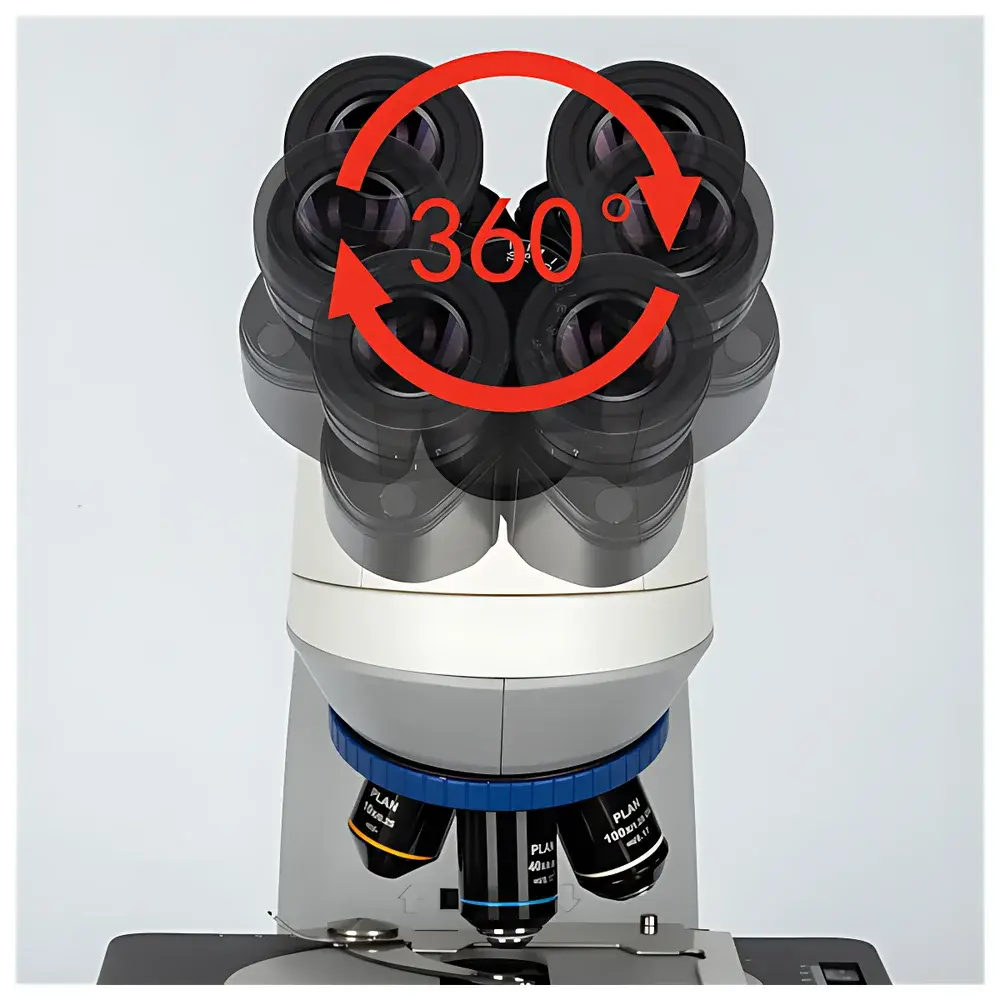
- 30° inclined binocular head with 55–75 mm interpupillary adjustment and 360° rotational hinge—enabling ergonomic adaptation for seated or standing operation, compliant with ISO 9241-5 ergonomics guidelines.
- Integrated LED power management: automatic ECO mode activates after 30 minutes of inactivity; wake-on-turn functionality via dimmer knob ensures seamless transition from standby without software reboot or recalibration.
- Optional front-panel LCD display showing real-time magnification, illumination intensity (%), correlated color temperature (CCT), and ECO status—facilitating experimental documentation and GLP-compliant recordkeeping.
Sample Compatibility & Compliance
The EX33 accommodates standard 1″ × 3″ glass slides (76 mm × 26 mm), coverslips (No. 1.5, 0.17 mm thickness), and Petri dishes up to 35 mm diameter when used with optional stage adapters. Its NA 1.25 Abbe condenser supports both dry and oil-immersion objectives (including 100X oil), enabling high-resolution imaging of stained tissue sections, cultured cells, and microorganisms. All fluorescence filter sets (B4/B1/B2/G1/UV4) meet ISO 10934-2 spectral transmission specifications and are certified for emission bandwidth control ±5 nm at peak transmission. The system complies with IEC 61000-6-3 (EMC emissions) and IEC 61000-6-2 (immunity), and its LED light engine satisfies IEC 62471 Photobiological Safety Classification (Risk Group 1 — Exempt).
Software & Data Management
While the EX33 operates as a standalone optical instrument, it is fully compatible with third-party digital imaging platforms including SOPTOP’s own MShot series cameras (USB 3.0, 5 MP to 20 MP), as well as industry-standard SDKs (TWAIN, DirectShow, GenICam). Image metadata—including objective ID (when encoded turret is installed), exposure time, gain, white balance, and filter position—is embedded into TIFF and JPEG headers per EXIF 2.31 and DICOM Supplement 142 conventions. For regulated environments, optional firmware enables audit-trail logging of illumination settings and focus position changes—supporting FDA 21 CFR Part 11 compliance when paired with validated LIMS or ELN systems.
Applications
The EX33 serves core applications in academic teaching laboratories (e.g., histology, microbiology, cell biology), clinical pathology departments (routine immunofluorescence screening), and pharmaceutical QC labs performing fluorescently labeled assay validation (e.g., ANA testing, FISH probe verification). Its semi-apochromatic fluorescence objectives minimize axial chromatic shift between excitation/emission bands—critical for co-localization studies using dual-label protocols (e.g., FITC/TRITC or DAPI/AF488). The ceramic stage and sealed optical path also support long-term time-lapse imaging of live specimens under controlled humidity when integrated with environmental chambers (not included).
FAQ
Does the EX33 support motorized objective changers or automated focus?
No—the EX33 is a manually operated platform optimized for cost-effective, high-reliability operation. Motorized accessories are not supported in this configuration.
Can the LED illumination be intensity-calibrated for quantitative fluorescence?
Yes—intensity linearity is verified across 0–100% range using NIST-traceable photodiode sensors; calibration reports are available upon request for ISO/IEC 17025-accredited labs.
Is the EX33 compatible with oil-immersion objectives and immersion oil cleanup protocols?
Yes—all 100X objectives are designed for Type A immersion oil (n = 1.518); the ceramic stage surface resists oil residue and can be cleaned with lint-free wipes and 70% isopropanol without degradation.
What is the maximum working distance for the 20X semi-apochromatic fluorescence objective?
3.5 mm—sufficient for imaging through standard #1.5 coverslips and thin-walled culture vessels.
Are replacement filter cubes available for custom fluorophore combinations?
Yes—SOPTOP offers OEM-compatible filter cube housings (32 mm round format) with customizable dichroic mirrors and bandpass filters, subject to minimum order quantity and lead time.
Related Products




