
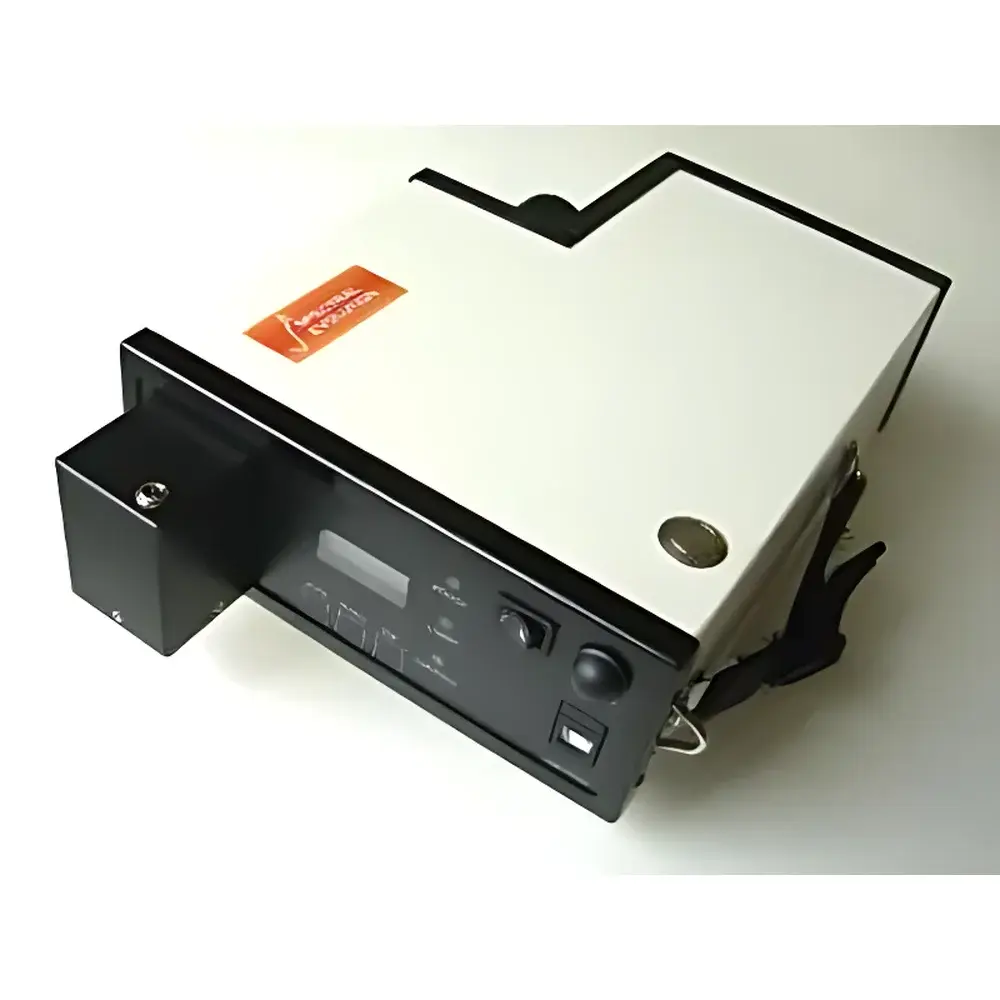
Spectral Evolution PSR-2500 Portable Field Spectroradiometer
| Brand | Spectral Evolution |
|---|---|
| Origin | USA |
| Model | PSR-2500 |
| Spectral Range | 350–2500 nm |
| Spectral Resolution | 3.5 nm (350–1000 nm), 10 nm @ 1500 nm, 7 nm @ 2100 nm |
| Spectral Bandwidth | 1.5 nm (350–1000 nm), 3.8 nm @ 1500 nm, 2.5 nm @ 2100 nm |
| Detector | 512-pixel Si array (350–1000 nm) + 256-pixel cooled InGaAs array (1900–2500 nm) |
| FOV Options | 4°, 8°, or 14° fore-optics |
| Integration Time | Adjustable from 1 ms to 10 s |
| Scan Speed | 10 spectra/s (100 ms full-spectrum acquisition) |
| Wavelength Accuracy | ±0.5 × spectral bandwidth |
| Wavelength Repeatability | ±0.1 nm |
| Radiometric Noise (0.5 s, 4° lens) | 1.0×10⁻⁹ W/cm²/nm/sr @ 400 nm, 2.2×10⁻⁹ W/cm²/nm/sr @ 2100 nm |
| Calibration Uncertainty | ±5% @ 400 nm, ±4% @ 700 nm, ±7% @ 2200 nm |
| Interface | USB 2.0 and Bluetooth v4.0 |
| Internal Memory | 500 spectra |
| Power | Dual Li-ion battery pack (7.4 V, ≥2 h field operation) |
| Dimensions | 21.6 × 29.2 × 8.3 cm |
| Weight | 3.3 kg (7.3 lbs) |
| Compliance | CE, FCC, RoHS |
Overview
The Spectral Evolution PSR-2500 Portable Field Spectroradiometer is a high-performance, NIST-traceably calibrated instrument engineered for precision radiometric, reflectance, and transmittance measurements across the ultraviolet–visible–near-infrared (UV-VIS-NIR) spectrum (350–2500 nm). Utilizing a fixed-holographic grating optical design with dual linear array detectors—silicon (Si) for 350–1000 nm and thermoelectrically cooled indium gallium arsenide (InGaAs) for 1900–2500 nm—the PSR-2500 eliminates moving optical components, ensuring long-term calibration stability and measurement reproducibility under variable field conditions. Its all-solid-state architecture avoids slit-based dispersion and mechanical scanning mechanisms common in scanning monochromators, thereby mitigating wavelength drift, alignment sensitivity, and photometric degradation over time. Designed explicitly for outdoor deployment, the PSR-2500 delivers laboratory-grade spectral fidelity in a ruggedized, handheld platform optimized for environmental monitoring, Earth observation validation, and material characterization where portability, speed, and traceable accuracy are critical.
Key Features
- Fixed-grating, full-spectrum acquisition architecture with no moving parts—enhances reliability and reduces recalibration frequency
- Dual-detector configuration: 512-pixel Si CCD (350–1000 nm) and 256-pixel TE-cooled InGaAs (1900–2500 nm) for optimal signal-to-noise across broad spectral regions
- Real-time spectral acquisition at up to 10 Hz (100 ms per full 350–2500 nm scan), enabling dynamic scene capture and rapid survey workflows
- Integrated shutter and drift-lock auto-calibration system for on-the-fly dark current compensation and baseline stabilization
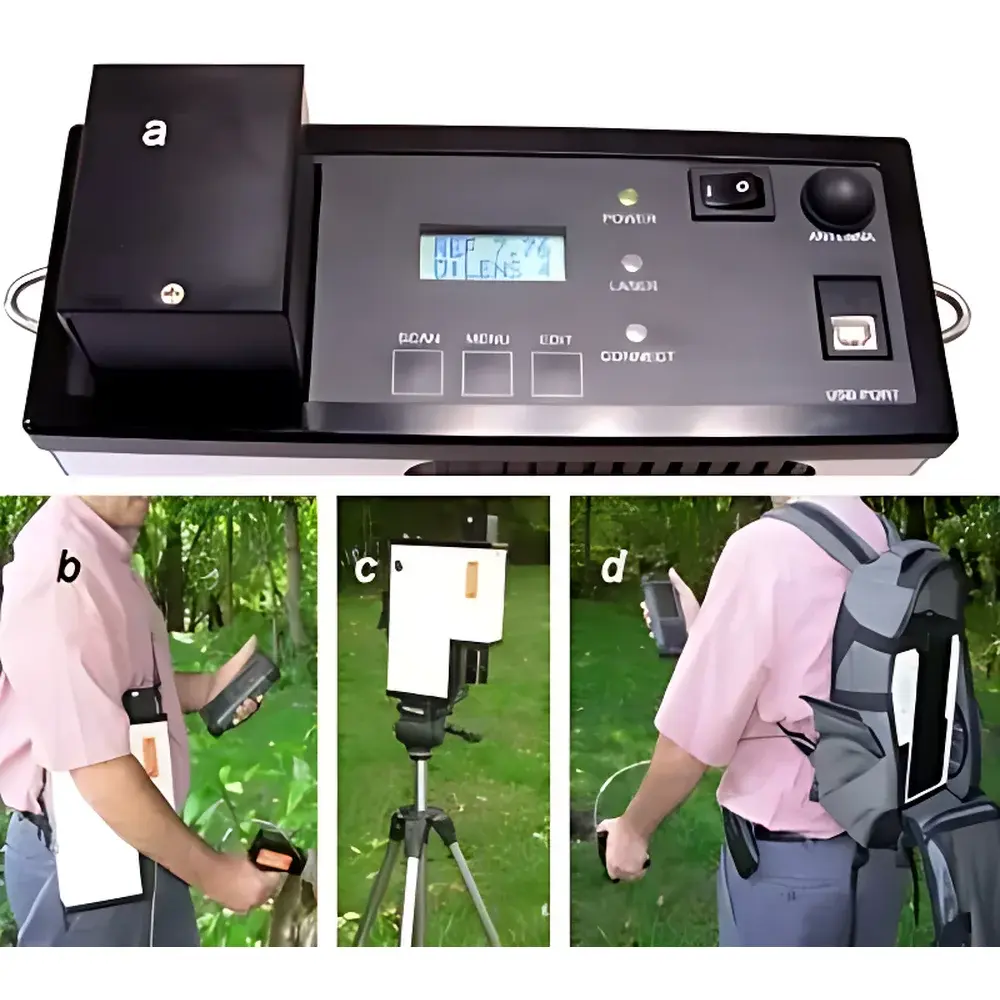
- Laser targeting module for precise spatial registration of measurement location relative to target geometry
- Modular optical interface: interchangeable fore-optics (4°, 8°, or 14° field-of-view lenses), fiber optic probes, cosine diffusers, and optional integrating spheres
- Rugged anodized aluminum housing with thermal mass design, providing mechanical durability and reduced temperature-induced spectral shift
- Bluetooth 4.0 and USB 2.0 connectivity for wireless instrument control and real-time data streaming to Windows PCs or compatible PDAs
- Onboard memory stores up to 500 spectra independently—enabling fully autonomous field operation without external computing hardware
- Ergonomic nylon shoulder strap and hand grip, tripod-compatible (dual ¼-20 threads), and optional field backpack or wheeled transport case
Sample Compatibility & Compliance
The PSR-2500 supports direct radiance, irradiance, reflectance, and transmittance measurements of natural and engineered surfaces—including vegetation canopies, soil profiles, mineral outcrops, water bodies, solar panels, coatings, and pharmaceutical tablets—without sample preparation. Its modular optical path accommodates both contact and non-contact configurations, facilitating compliance with ASTM E275, ISO 9050, USP , and EN 13032-4 standards for spectral radiometry and reflectance characterization. Factory calibration is traceable to NIST Standard Reference Materials (SRMs), with documented uncertainty budgets meeting ISO/IEC 17025 requirements for accredited laboratories. The instrument’s firmware and data acquisition software support audit trails, user authentication, and electronic signatures—aligning with FDA 21 CFR Part 11 and GLP/GMP data integrity principles when deployed in regulated environments.
Software & Data Management
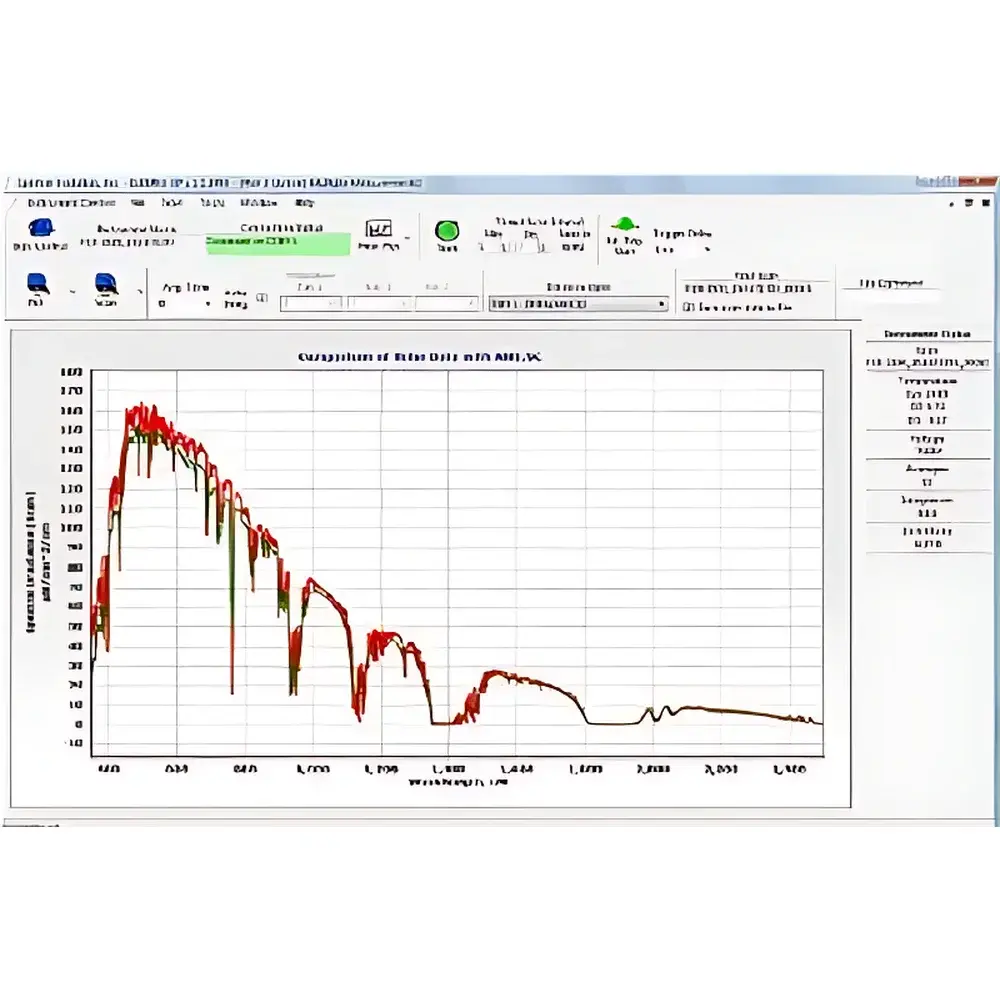
Data acquisition is managed via DARWin SP (Windows) and DARWin CE Mobile (for Getac PS236 PDA), offering intuitive GUI-driven control, real-time spectral visualization, automatic exposure optimization, and one-button measurement routines. Both platforms log GPS-tagged metadata (latitude, longitude, altitude, timestamp, instrument orientation), camera images, and environmental parameters when paired with compatible peripherals. Raw spectral data are exported in ASCII (.txt), CSV, and ENVI-compatible BIL formats, supporting seamless integration into ENVI, MATLAB, Python (NumPy/SciPy), and R for advanced spectral analysis, endmember extraction, and machine learning modeling. LabVIEW drivers are available upon request for custom automation and OEM integration. All software modules enforce version-controlled firmware updates and maintain immutable acquisition logs compliant with ALCOA+ (Attributable, Legible, Contemporaneous, Original, Accurate, Complete, Consistent, Enduring, Available) data governance frameworks.
Applications
- Remote sensing ground truthing and sensor validation (e.g., Landsat, Sentinel-2, PRISMA, AVIRIS-NG)
- Crop health assessment via NDVI, PRI, and other vegetation indices derived from high-fidelity leaf and canopy reflectance
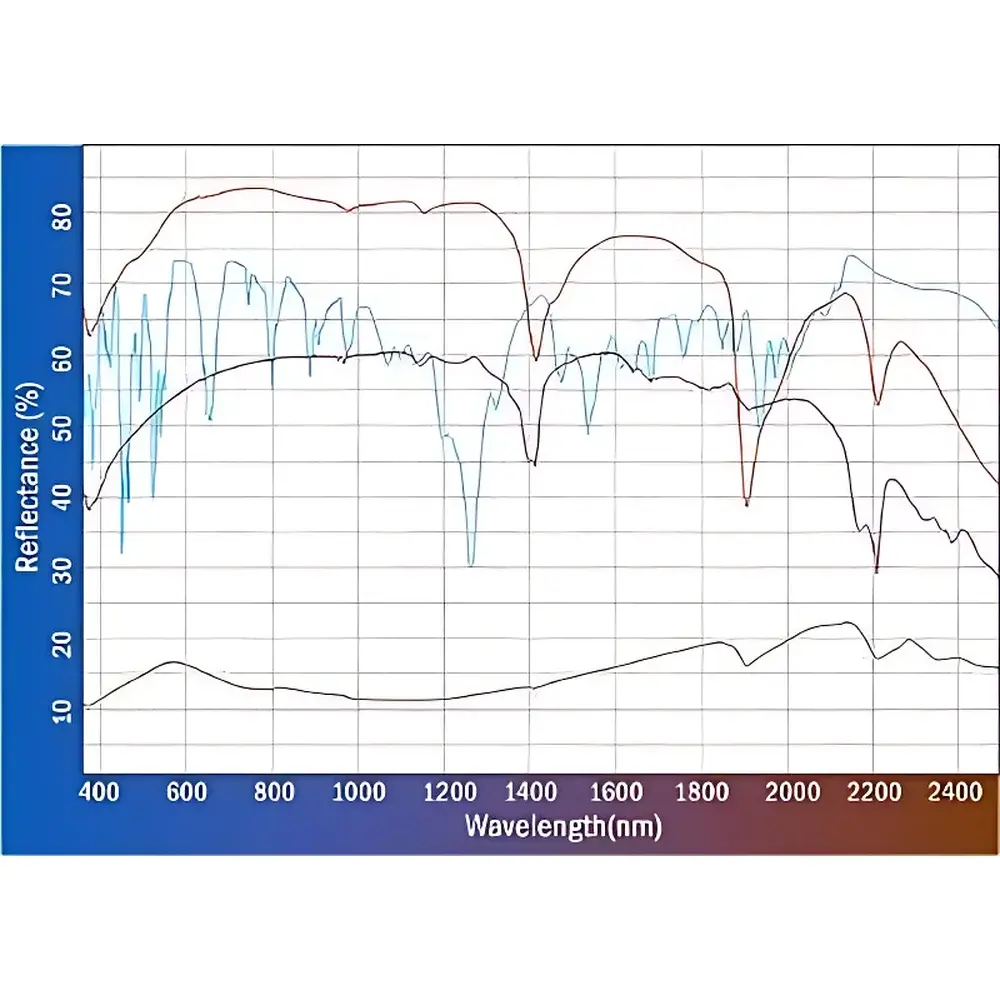
- Soil organic carbon and moisture estimation using diagnostic absorption features near 1400 nm, 1900 nm, and 2200 nm
- Mineral identification and lithological mapping through characteristic OH, Al-OH, Fe-OH, and carbonate absorption bands
- Water quality monitoring—including chlorophyll-a, suspended sediment, and CDOM quantification via in situ water-leaving radiance
- Solar irradiance characterization and PV module spectral response testing under natural illumination
- Forensic material analysis, pigment identification, and heritage conservation documentation
- LED and display spectral power distribution (SPD) verification in lighting R&D and quality assurance
- Pharmaceutical tablet coating uniformity and API concentration profiling via diffuse reflectance spectroscopy
FAQ
Is the PSR-2500 suitable for use in extreme ambient temperatures?
Yes—the aluminum chassis provides passive thermal stabilization, and operational specifications are validated from –10 °C to +50 °C. Battery performance and detector dark current are compensated in firmware.
Can the PSR-2500 be used for absolute irradiance measurements?
Yes—when equipped with a calibrated cosine-corrected diffuser and operated within its specified dynamic range, it meets ASTM E892 and ISO 9050 requirements for spectral irradiance quantification.
Does the instrument support automated dark/light reference collection during field surveys?
Yes—integrated shutter and drift-lock functionality enables automatic dark current subtraction and reference normalization without manual intervention.
What spectral resolution is achieved across the full 350–2500 nm range?
Resolution is 3.5 nm FWHM from 350–1000 nm, 10 nm at 1500 nm, and 7 nm at 2100 nm—optimized for detection of narrow absorption features in minerals, pigments, and atmospheric gases.
Is NIST traceability provided with each unit?
Yes—each PSR-2500 ships with a certificate of calibration referencing NIST SRM 2035 (diffuse reflectance) and SRM 1930 (irradiance), including full uncertainty analysis per ISO/IEC 17025.




