
SpectraPen mini Handheld Spectroradiometer and Quantum Sensor
| Brand | PSI (Czech Republic) |
|---|---|
| Origin | Czech Republic |
| Model | SpectraPen mini |
| Spectral Range | 340–850 nm |
| Spectral Resolution (FWHM) | 15 nm |
| Wavelength Repeatability | ±0.5 nm |
| Integration Time | 1 ms – 5 s |
| ADC Resolution | 16-bit |
| Connectivity | Bluetooth 4.2 |
| Operating System | Android 5.0+ |
| Dimensions | 50 × 70 × 28 mm |
| Weight | 60 g |
| IP Rating | Splash-resistant housing |
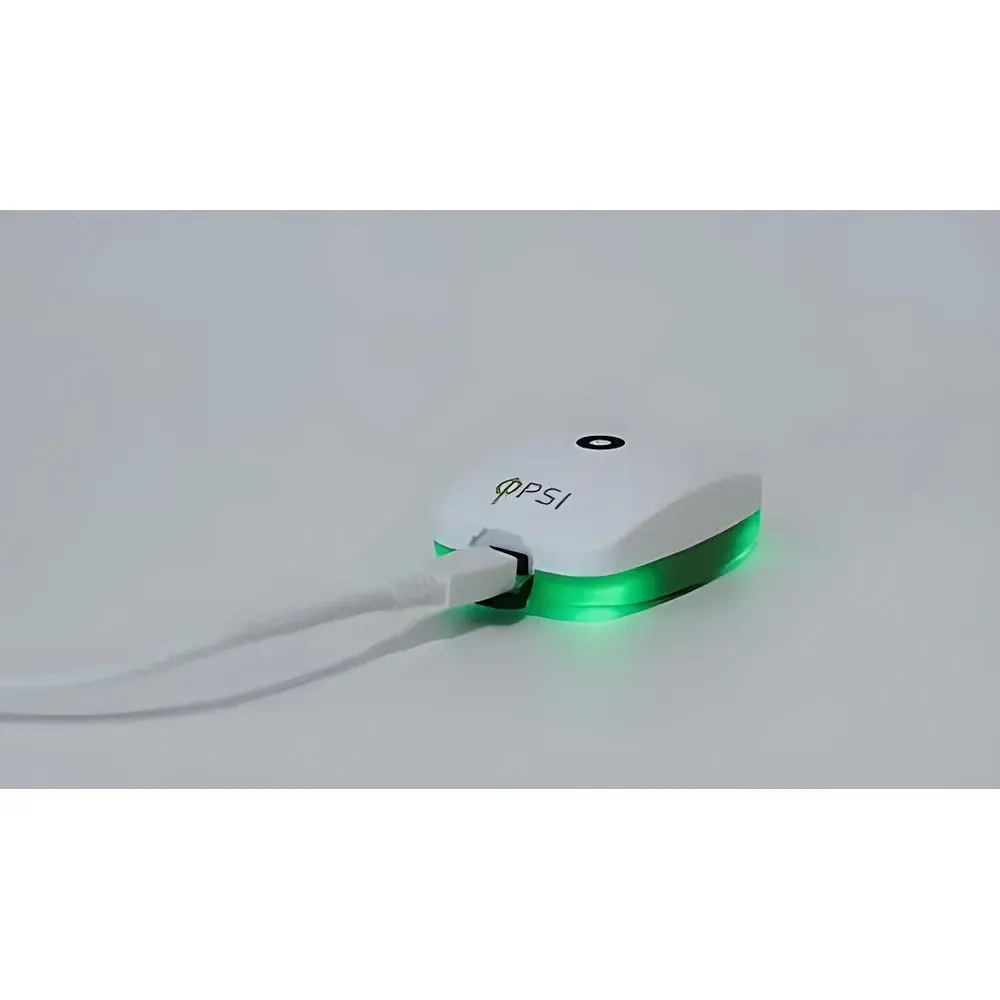
| Battery | 650 mAh Li-ion, USB-rechargeable |
| Operating Temperature | 5–55 °C |
| Storage Temperature | −20–70 °C |
Overview
The SpectraPen mini Handheld Spectroradiometer and Quantum Sensor is a compact, field-deployable optical measurement instrument engineered for high-fidelity spectral characterization of photosynthetically active radiation (PAR) and broadband irradiance. Based on a miniature Czerny–Turner optical architecture with a linear CMOS array detector, it delivers calibrated spectral radiance and irradiance data across the biologically critical 340–850 nm range—spanning UV-A, visible, and near-infrared wavelengths relevant to plant photobiology, material reflectance analysis, and environmental light monitoring. Unlike conventional lux meters or single-channel quantum sensors, the SpectraPen mini captures full spectral profiles in real time, enabling quantitative assessment of spectral composition (e.g., R:FR ratio, blue:red photon flux), spectral irradiance (W·m⁻²·nm⁻¹), photosynthetic photon flux density (PPFD, µmol·m⁻²·s⁻¹), and photon flux per wavelength bin. Its design prioritizes metrological traceability, with factory calibration against NIST-traceable standards and cosine-corrected optical input ensuring angular response compliance per ISO/CIE guidelines for irradiance measurement.
Key Features
- Compact form factor (50 × 70 × 28 mm; 60 g) optimized for handheld operation and integration into UAV-mounted or robotic platforms
- Cosine-corrected optical entrance for compliant irradiance measurements under non-normal incidence conditions
- 16-bit analog-to-digital conversion supporting dynamic range >5000:1 and low-noise spectral acquisition at millisecond integration times
- Bluetooth 4.2 wireless interface enabling seamless pairing with Android 5.0+ tablets and smartphones
- Splash-resistant enclosure (IPX4-equivalent) suitable for outdoor agricultural, greenhouse, and industrial ambient use
- Onboard rechargeable 650 mAh lithium-ion battery providing up to 8 hours of continuous operation per charge
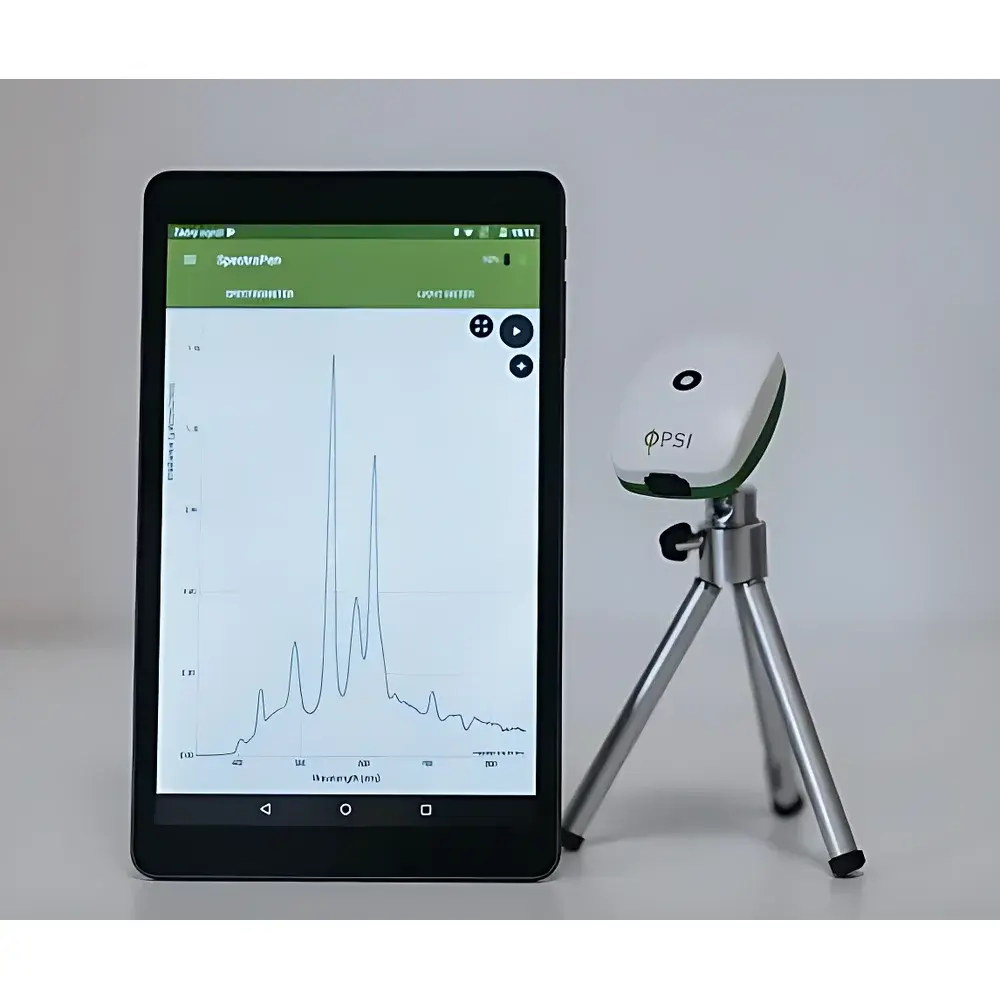
- Real-time spectral visualization and parameter calculation (PPFD, YPF, irradiance integrals) via proprietary Android application
Sample Compatibility & Compliance
The SpectraPen mini is designed for non-contact, non-destructive measurement of planar and diffuse light sources—including LED grow lights, fluorescent lamps, sunlight, skylight, and reflected light from vegetation canopies or material surfaces. It complies with fundamental photometric and radiometric measurement principles defined in CIE S 025/E:2015 (for LED testing) and ISO 17166:2019 (CIE S 002:2012) for photobiological safety assessments. While not certified for regulatory-grade metrology (e.g., ISO/IEC 17025), its factory calibration protocol adheres to traceable reference standards and includes documented uncertainty budgets for spectral responsivity and irradiance scale. Data export formats (CSV, PNG, JSON) support integration into GLP-compliant laboratory workflows when paired with timestamped metadata and user-defined measurement annotations.
Software & Data Management
The dedicated Android application provides full instrument control, real-time spectral display, and on-device computation of derived metrics including PPFD (400–700 nm), YPF (400–750 nm), UV-A dose (315–400 nm), and normalized spectral power distribution. Raw spectra are stored locally with embedded GPS coordinates (if enabled), device orientation, date/time stamp, and user-defined sample ID. Export options include direct email attachment, cloud upload (via Google Drive or Dropbox), or local transfer via USB OTG to Windows/macOS systems. All exported CSV files contain wavelength (nm) and absolute irradiance (µW·cm⁻²·nm⁻¹) columns, fully compatible with third-party analysis tools such as MATLAB, Python (NumPy/Pandas), or R. The software architecture supports audit-ready logging and does not require internet connectivity during measurement—ensuring data integrity in remote or offline environments.
Applications
- Agricultural phenotyping: Quantifying light quality effects on stomatal conductance, anthocyanin synthesis, and photomorphogenesis in controlled-environment agriculture
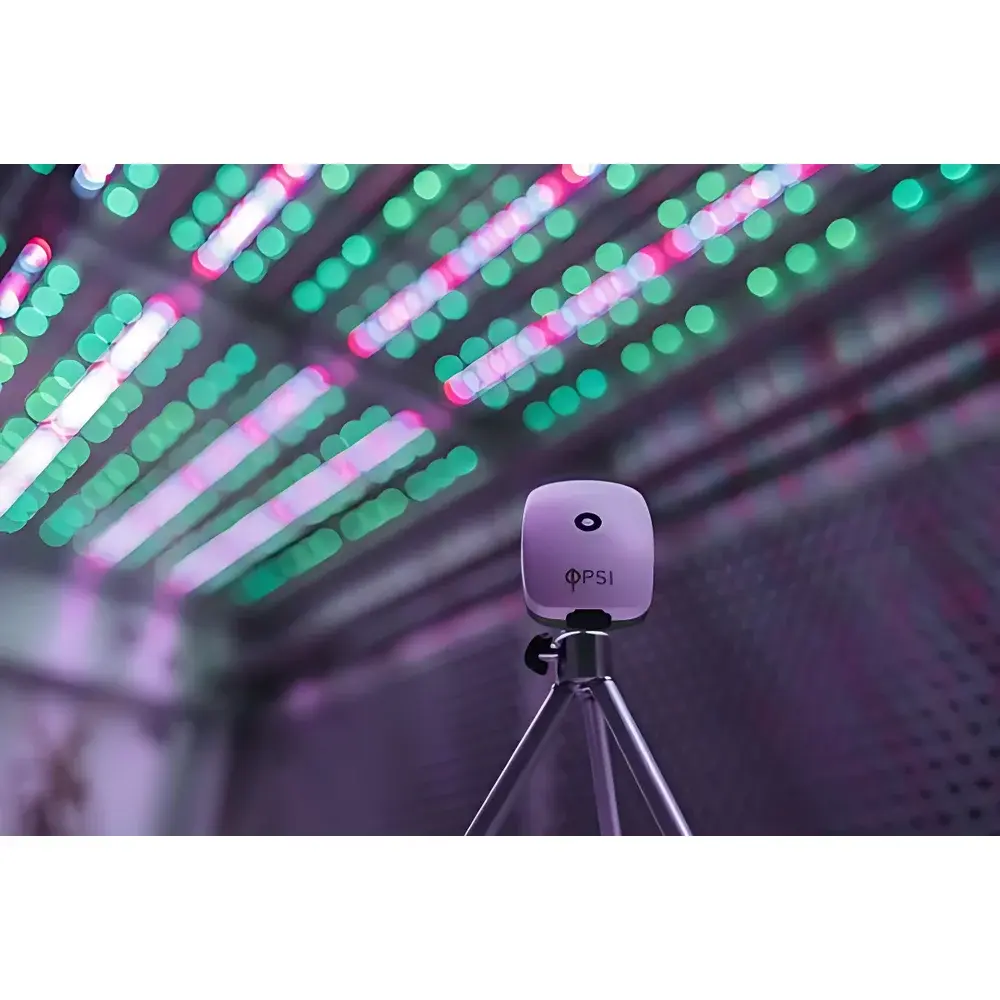
- Horticultural lighting validation: Verifying spectral output consistency of LED fixtures across production batches and aging cycles
- Material science: Assessing spectral reflectance of coatings, films, and photovoltaic absorbers under natural or artificial illumination
- Environmental monitoring: Characterizing urban skyglow spectra and evaluating ecological light pollution impacts on nocturnal species
- Educational laboratories: Teaching core concepts in spectroscopy, radiometry, and quantum biology through hands-on spectral acquisition
<liEcophysiology field studies: Measuring canopy-transmitted and reflected spectra to estimate leaf chlorophyll content and nitrogen status
FAQ
Is the SpectraPen mini calibrated against NIST-traceable standards?
Yes—each unit undergoes individual spectral responsivity calibration using NIST-traceable tungsten halogen and deuterium lamp sources. Calibration certificates list expanded uncertainties (k=2) for irradiance and wavelength axes.
Can it measure underwater or in high-humidity greenhouses?
The splash-resistant housing protects against incidental water exposure (e.g., condensation, light rain), but submersion or prolonged high-humidity operation (>95% RH) is not supported.
Does the Android app support batch data collection across multiple locations?
Yes—the app enables predefined measurement protocols with auto-generated filenames, geotagging, and sequential session logging ideal for multi-site field campaigns.
What is the minimum measurable irradiance level?
At 1 s integration time, the noise-equivalent irradiance is approximately 0.05 µW·cm⁻²·nm⁻¹ across the 400–700 nm band, corresponding to ~0.5 µmol·m⁻²·s⁻¹ PPFD.
Is firmware update capability available?
Firmware updates are delivered via the Android app and require no external programming hardware—ensuring long-term compatibility with evolving sensor performance models and spectral algorithms.





