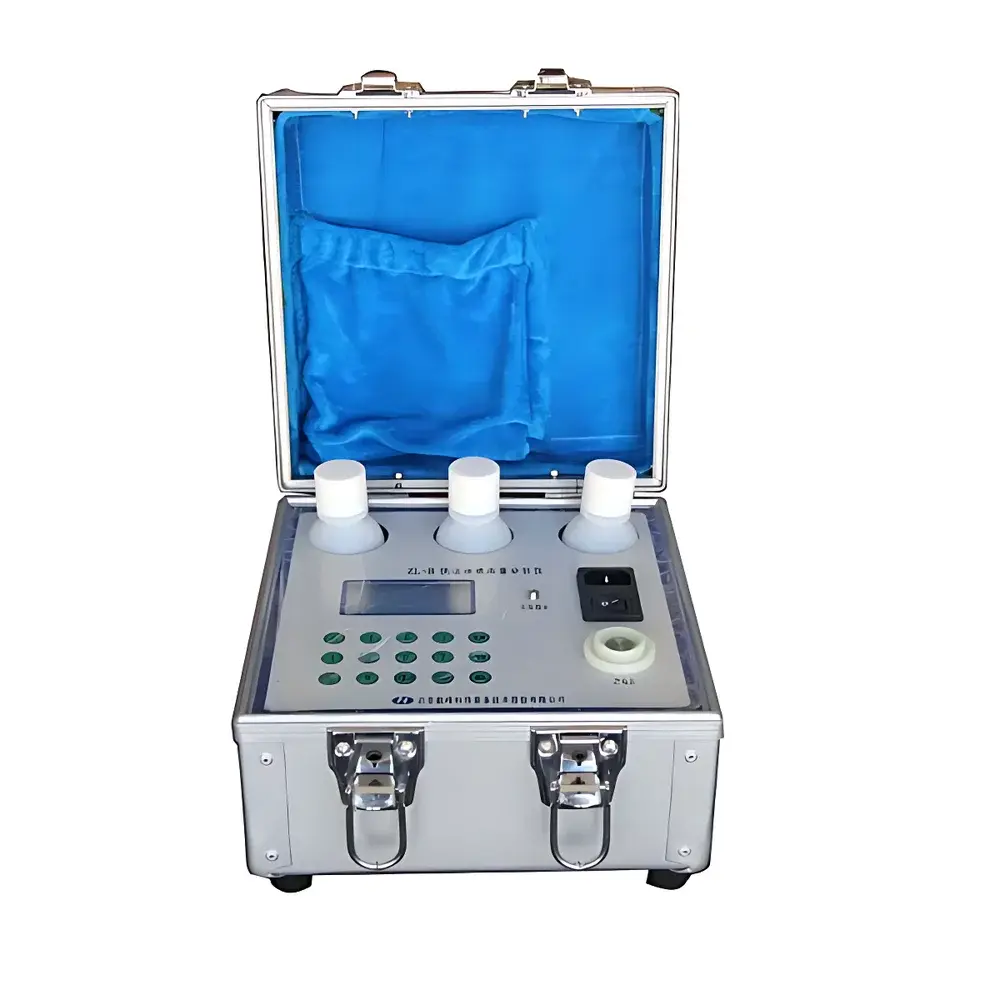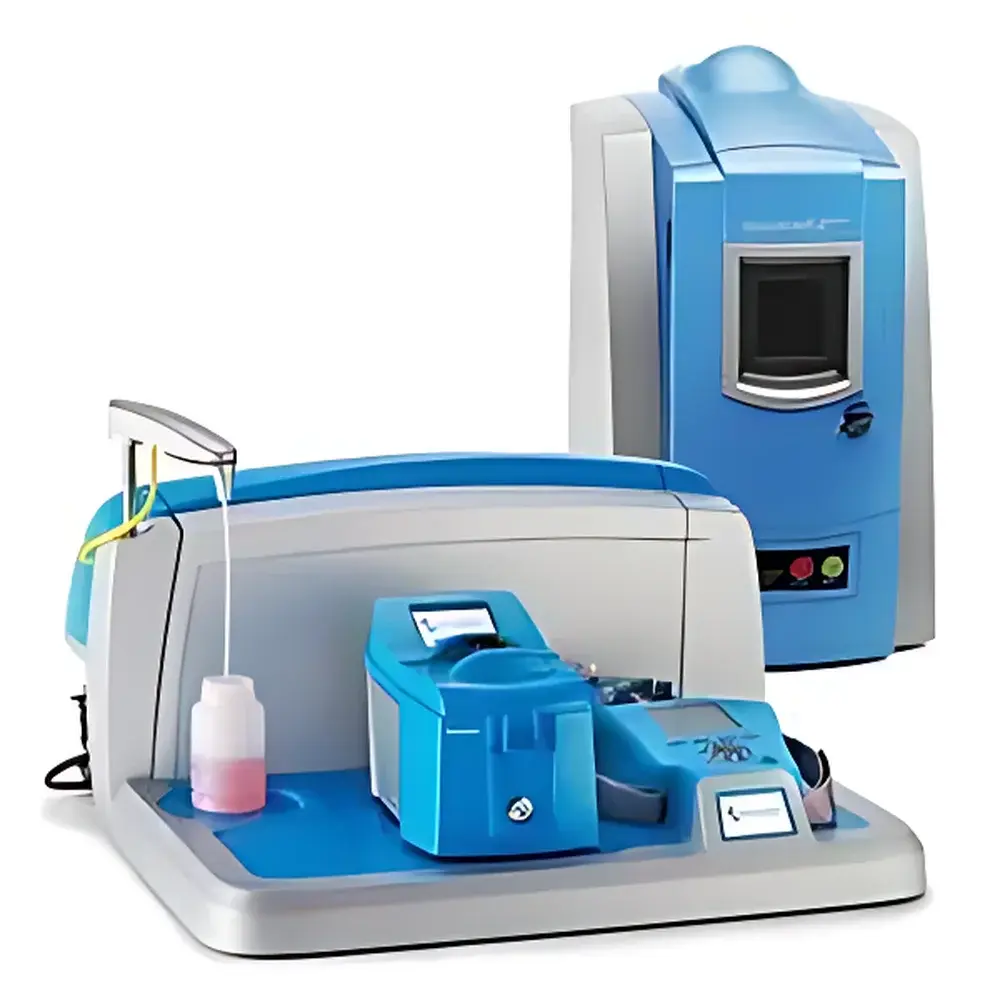
Spectro Scientific Minilab 153 On-Site Industrial Oil Condition Monitoring System
| Brand | Spectro Scientific |
|---|---|
| Origin | USA |
| Model | Minilab 153 |
| Detection Capabilities | Elemental Analysis (24 elements standard, up to 31), Particle Counting, Ferrous Particle Quantification (ppm) & Size Distribution, Kinematic Viscosity at 40 °C, TAN/TBN, Oxidation/Sulfation/Nitration, Water Content, Glycol, Soot |
| Software Platform | TruVu 360 Oil Intelligence Platform |
| Compliance | Designed for ASTM D6595 (rotary disc electrode emission spectroscopy), ISO 4406 (particle contamination), ASTM D2440 (TAN), ASTM D974 (TBN), ASTM D2896 (TBN), ASTM D7945 (viscosity), and supports GLP/GMP audit trails per FDA 21 CFR Part 11 requirements |
Overview
The Spectro Scientific Minilab 153 is a fully integrated, on-site oil condition monitoring system engineered for real-time, laboratory-grade analysis in industrial environments. It employs a multi-technology architecture combining rotary disc electrode (RDE) atomic emission spectroscopy for elemental quantification, laser-based particle counting and sizing, ferrographic imaging with AI-assisted wear debris classification, and infrared (FTIR) spectroscopy for molecular degradation assessment. This platform enables predictive maintenance by simultaneously evaluating three critical vectors—machine wear, fluid contamination, and lubricant degradation—within a single 15-minute workflow. Unlike traditional off-site lab testing, the Minilab 153 delivers actionable data at the point of use, reducing turnaround time from days to minutes while maintaining analytical traceability to ASTM and ISO reference methods.
Key Features
- Complete on-site analysis: Performs 24 elemental concentrations (Fe, Cu, Al, Si, Cr, Pb, Sn, Na, Mg, Ca, Ni, Ti, V, Mo, Zn, Ag, Cd, Ba, P, B, K, Li, As, Mn) as standard; expandable to 31 elements via software license.
- Automated particle counting per ISO 4406 and NAS 1638 standards, with ≥4 µm(c) and ≥6 µm(c) channel reporting.
- Ferrographic module quantifies ferrous density (ppm) and size distribution (1–100 µm) using high-resolution magnetic deposition imaging.
- Integrated kinematic viscosity measurement at 40 °C compliant with ASTM D7945, eliminating need for external viscometers.
- FTIR-based molecular analysis for oxidation, sulfation, nitration, water (% v/v), glycol contamination, and soot loading—calibrated against NIST-traceable reference oils.
- Intelligent wear debris recognition engine classifies particles into six categories: cutting, sliding/rolling, fatigue, non-metallic, fiber, and fluid artifacts (water droplets, air bubbles).
- TruVu 360 software provides automated trend tracking, alarm thresholds, and diagnostic logic based on OEM-specific failure modes and historical fleet data.
Sample Compatibility & Compliance
The Minilab 153 is validated for use with mineral, synthetic, and semi-synthetic lubricants across turbine, hydraulic, gear, engine, and compressor applications. Sample volume requirement is ≤3 mL per test. All analytical modules meet or exceed performance criteria defined in ASTM D6595 (elemental spectroscopy), ASTM D7690 (particle counting), ASTM D5185 (multi-element ICP validation basis), and ISO 17359 (condition monitoring framework). The system supports full electronic record retention, user access control, and audit trail generation in accordance with FDA 21 CFR Part 11 and EU Annex 11 for regulated industries. Calibration verification is performed using Spectro-certified reference oils traceable to NIST SRMs.
Software & Data Management
TruVu 360 serves as the central intelligence layer for the Minilab 153, integrating asset hierarchy, historical baseline libraries, and cross-platform diagnostics. It maintains a relational database supporting unlimited equipment records, sampling locations, and maintenance events. Trend reports auto-generate weekly/monthly summaries with statistical process control (SPC) charts for key parameters. Diagnostic outputs include severity scoring per ISO 13374-1, root cause hypotheses ranked by probability, and maintenance recommendations aligned with OEM service intervals. Email alerts and API-driven integration with Emerson AMS Machinery Health Manager, SAP PM, and Maximo enable closed-loop reliability workflows. All data exports comply with CSV, PDF/A-1b, and XML formats for third-party analytics platforms.
Applications
The Minilab 153 is deployed across power generation (gas/steam turbines, transformers), mining (hydraulic shovels, haul trucks), marine propulsion systems, wind turbine gearboxes, and manufacturing CNC fleets. It supports oil reclamation decisions, remaining useful life (RUL) estimation, and root cause analysis of catastrophic failures. In wind energy, it correlates iron concentration trends with pitch bearing wear modes; in mining, it identifies coolant ingress via glycol detection and maps abrasive silicon levels to filter efficiency loss. Its portability and battery operation (optional) allow deployment in remote substations, offshore platforms, and mobile maintenance units without AC infrastructure.
FAQ
Does the Minilab 153 require consumables or chemical reagents?
No—analysis is reagent-free. RDE electrodes are reusable for >1,000 tests; FTIR cells are cleaned with solvent wipes; particle sensors require only periodic air purge calibration.
How is data integrity ensured during field operation?
All measurements embed digital signatures, timestamped GPS coordinates (optional), and operator ID. Audit logs record every parameter change, calibration event, and report export in immutable format.
Can TruVu 360 integrate with existing CMMS or SCADA systems?
Yes—via RESTful API, OPC UA, or ODBC connectors. Pre-built adapters exist for Emerson DeltaV, GE Proficy, and Honeywell Experion.
What training is required for plant personnel?
A two-day certified operator course covers sample handling, instrument startup, anomaly verification, and basic trend interpretation. No chemistry or spectroscopy background is assumed.
Is method validation documentation available for regulatory audits?
Yes—Spectro provides IQ/OQ/PQ protocols, ASTM correlation studies, and ISO/IEC 17025-compliant uncertainty budgets upon request.