
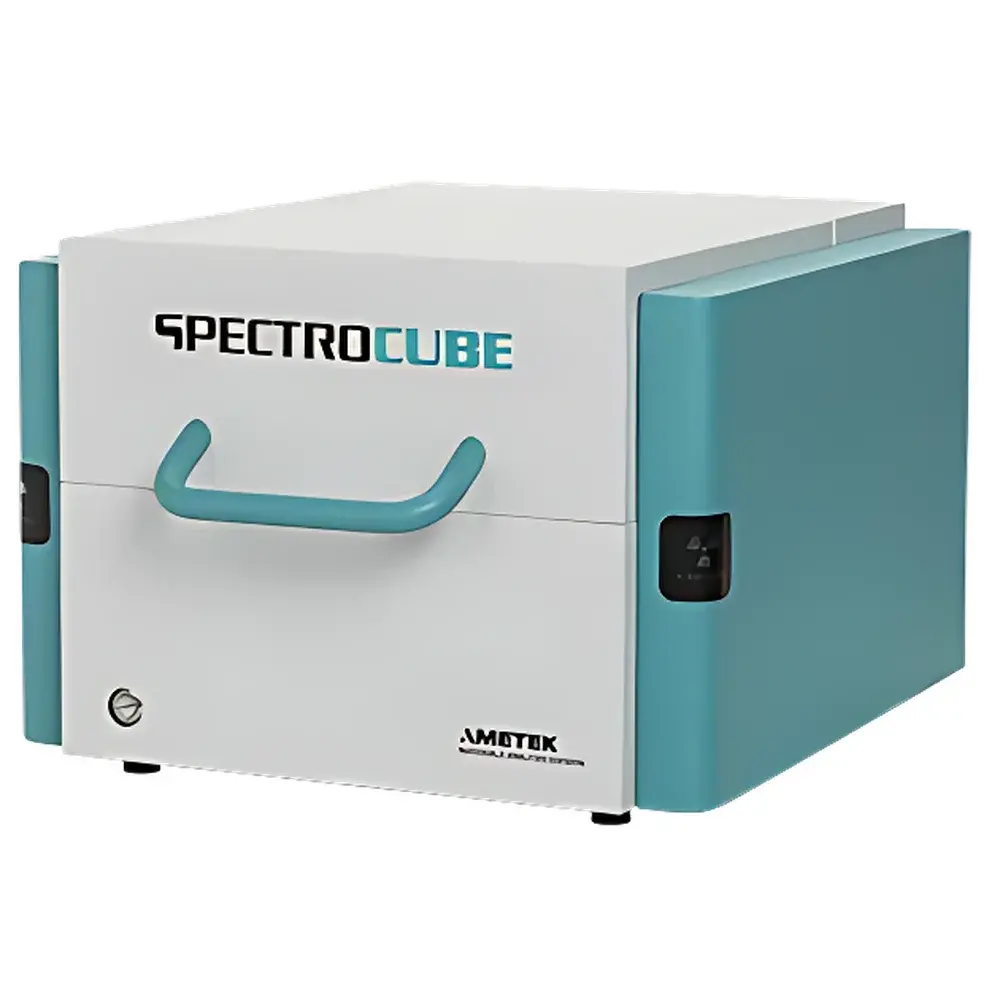
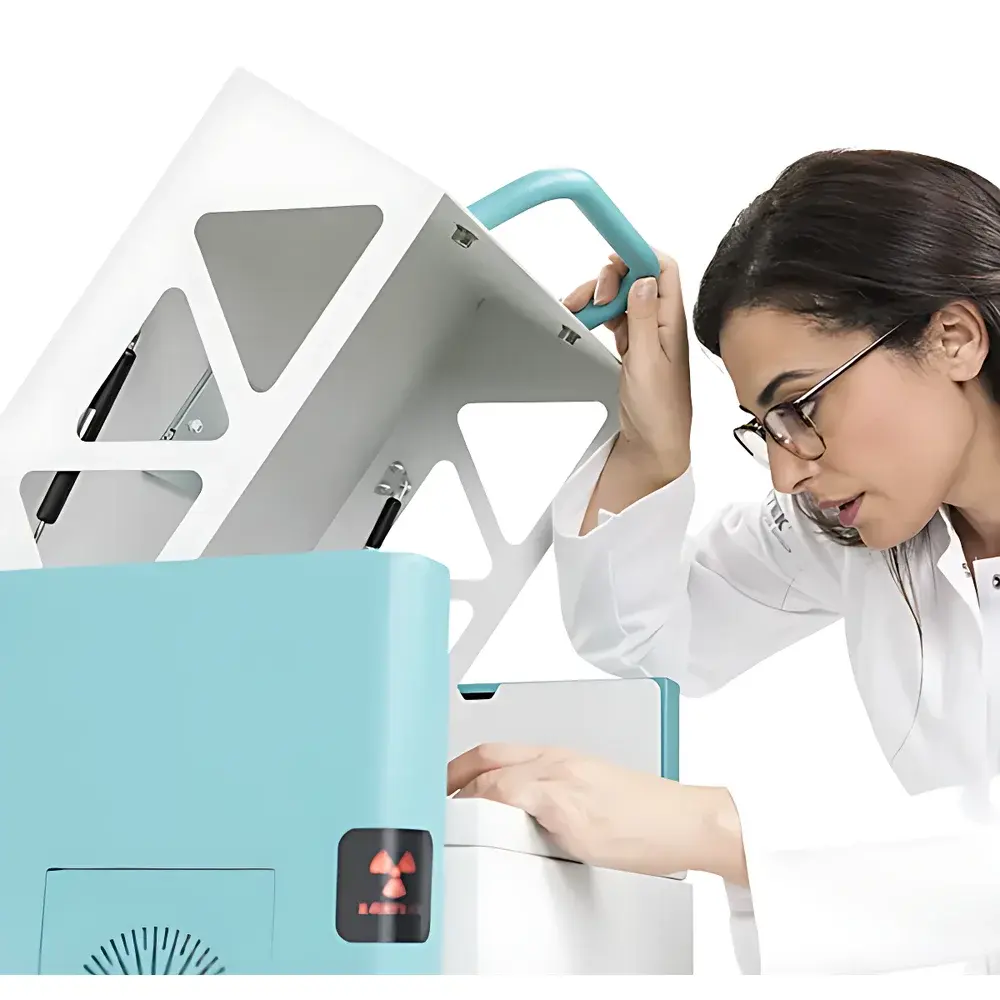
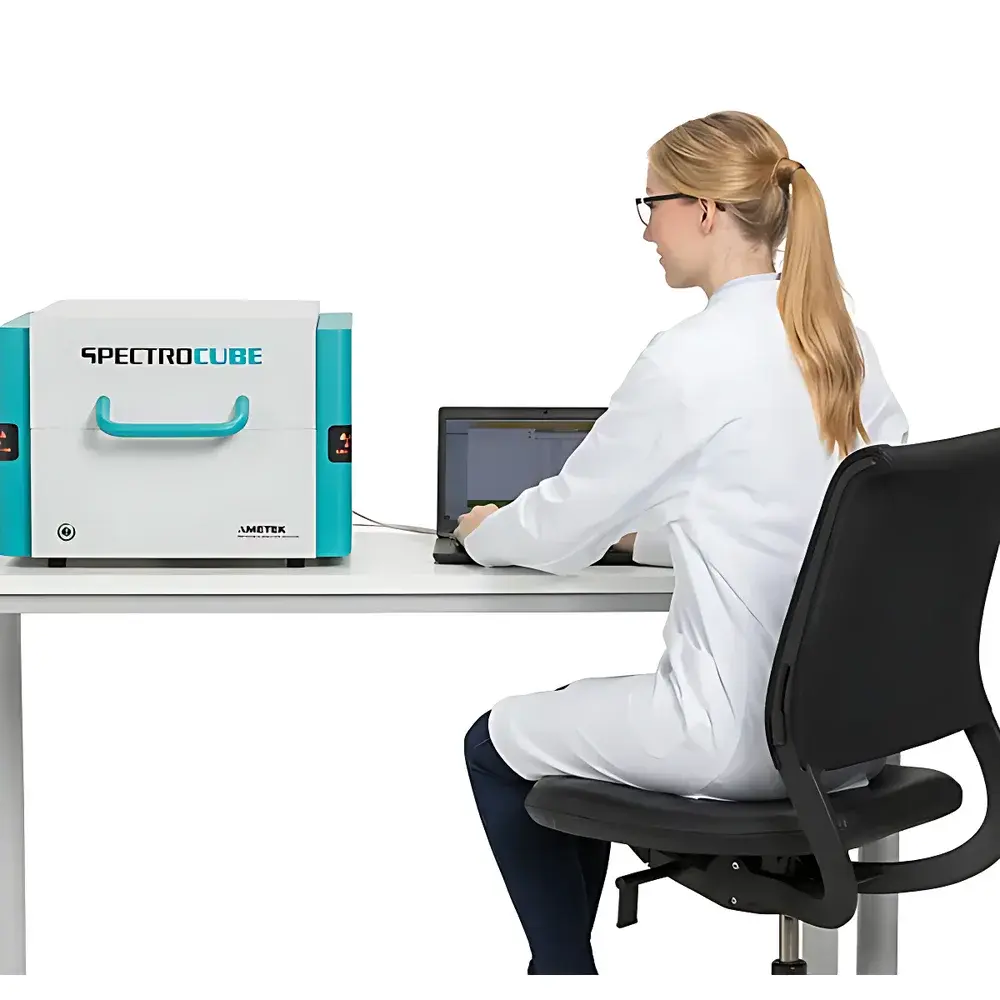
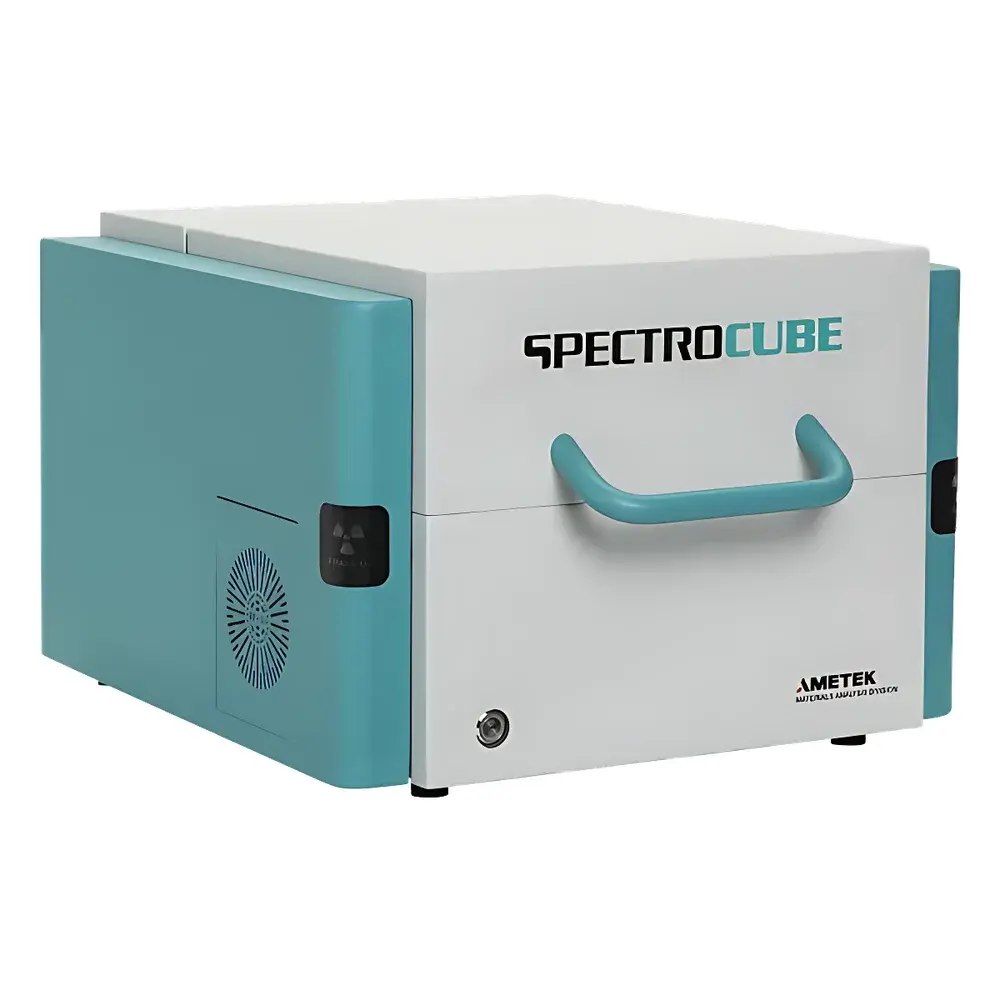
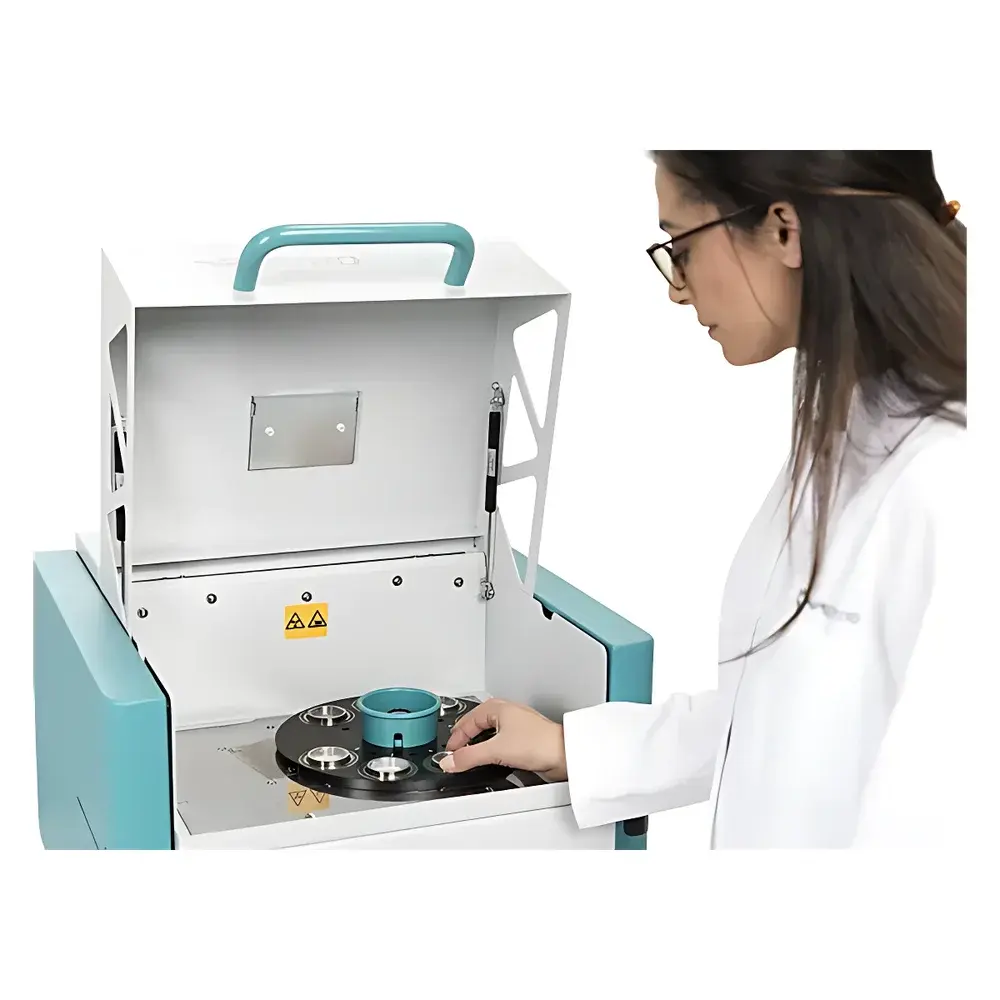
SPECTRO SPECTROCUBE RoHS-Optimized Energy Dispersive X-Ray Fluorescence Spectrometer
| Brand | SPECTRO |
|---|---|
| Origin | Germany |
| Model | SPECTROCUBE (RoHS-Optimized) |
| Configuration | Benchtop/Free-Standing |
| Detector Type | High-Resolution Silicon Drift Detector (SDD) |
| Count Rate Capability | Up to 100,000 cps |
| Elemental Range | Na (11) to U (92) |
| Minimum Detection Limits (MDL) | Sub-ppm to low-ppm range for regulated elements (Pb, Cd, Hg, Cr, Br, Cl, etc.) |
| Compliance Standards | IEC 62321-5:2013, EN 62321-5:2014, ASTM F2853-21, USP <232>/<233>, ISO 17025-accredited operation support |
| Software | SPECTRO XRF Suite with RoHS-specific method templates, audit trail, and 21 CFR Part 11-compliant user management |
Overview
The SPECTRO SPECTROCUBE RoHS-Optimized Energy Dispersive X-Ray Fluorescence (ED-XRF) Spectrometer is an engineered solution for regulatory compliance testing in electronics, plastics, coatings, and consumer goods manufacturing. Operating on the fundamental principle of energy-dispersive X-ray fluorescence, the instrument irradiates solid or powdered samples with a high-stability X-ray tube, inducing characteristic secondary X-ray emission from constituent elements. These emitted photons are resolved by a silicon drift detector (SDD), enabling simultaneous multi-element quantification without mechanical scanning. Designed specifically for RoHS Directive (2011/65/EU) enforcement, the SPECTROCUBE delivers trace-level detection of restricted substances—Pb, Cd, Hg, Cr(VI) surrogate (total Cr), Br (as PBB/PBDE indicator), and Cl (as PVC indicator)—with metrological rigor aligned with IEC 62321-5:2013 and EN 62321-5:2014 test protocols. Its benchtop or free-standing configuration supports both laboratory QA/QC environments and production-floor screening workflows, offering a balance of analytical fidelity, throughput efficiency, and operational simplicity.
Key Features
- RoHS-optimized hardware configuration: Fixed-anode X-ray tube with optimized excitation spectrum and high-throughput SDD detector delivering ≥80 eV resolution at Mn Kα (5.9 keV), enabling robust separation of overlapping peaks (e.g., Pb Lα/Cr Kα, Br Kα/Pb Mα)
- High-count-rate capability: Real-time processing up to 100,000 counts per second ensures sub-60-second measurement cycles for routine screening without compromising precision
- Single universal calibration architecture: Factory-preloaded RoHS calibration set validated against NIST SRM 2582, SRM 2583, and BAM reference materials eliminates need for matrix-matched standards in most homogeneous polymer, metal, and ceramic samples
- Compact footprint (<600 × 500 × 450 mm) with motorized sample stage accommodating specimens up to Ø100 mm × 50 mm height, supporting irregular geometries via programmable Z-axis auto-focus
- Ruggedized industrial design: Sealed optical path, thermoelectrically cooled detector, and vibration-damped base ensure stable performance across ambient temperature fluctuations (15–30 °C) and non-laboratory settings
Sample Compatibility & Compliance
The SPECTROCUBE accepts solids, powders, thin films, and pressed pellets without destructive preparation. Its large chamber accommodates PCBs, molded plastic housings, wire harnesses, and metallic components up to 1 kg mass. Sample presentation modes include direct placement, custom holders for small parts, and optional helium purge for light-element enhancement (Na–Cl). Method validation follows ISO/IEC 17025 requirements, with built-in uncertainty estimation per ISO 11843-7. All RoHS-specific applications comply with EU Commission Decision 2002/765/EC and harmonized standards referenced in the Official Journal of the European Union. Instrument qualification includes factory-provided IQ/OQ documentation and traceable calibration certificates compliant with EURAMET cg-18 guidelines.
Software & Data Management
SPECTRO XRF Suite v5.2 provides role-based access control, electronic signatures, and full 21 CFR Part 11 compliance—including audit trail with immutable timestamps, user action logging, and secure data archiving. Preconfigured RoHS workflows guide operators through sample registration, measurement, result interpretation, and PASS/FAIL reporting per material declaration thresholds (1000 ppm for Pb, Cd, Hg, Br; 100 ppm for Cr(VI) surrogate). Data export supports CSV, XML, and PDF formats compatible with ERP and PLM systems. Optional GLP/GMP modules enable instrument usage logs, calibration history tracking, and deviation reporting for internal audits.
Applications
- Routine screening of electronic components and assemblies for RoHS compliance prior to shipment or customs clearance
- Verification of incoming raw materials (plastics, pigments, solder alloys, plating baths) against supplier declarations
- Failure analysis of non-conforming lots through elemental mapping and depth profiling (with optional multi-layer mode)
- Support for WEEE, POPs, and China RoHS II regulatory submissions requiring certified test reports
- Quality assurance in automotive, medical device, and aerospace supply chains where restricted substance control is contractually mandated
FAQ
Does the SPECTROCUBE require annual recalibration by the manufacturer?
No—routine calibration verification using certified reference materials (e.g., BAM BCR-681) is performed by the user per ISO/IEC 17025 internal quality control procedures; full recalibration is recommended only after major hardware service or every 24 months.
Can it quantify chromium(VI) directly?
No—ED-XRF measures total chromium; Cr(VI) assessment requires complementary wet-chemical extraction per IEC 62321-7-1, with SPECTROCUBE providing total Cr quantification as part of the full test sequence.
Is helium purging mandatory for chlorine detection?
Helium atmosphere improves Cl Kα peak intensity and signal-to-noise ratio; however, air-mode analysis achieves ≤50 ppm MDL for Cl in polymers, sufficient for most RoHS screening applications.
What training is required for operator certification?
A two-day hands-on workshop covers safety protocols, method selection, result validation, and basic troubleshooting; competency assessment is documented per ISO/IEC 17025 personnel qualification requirements.
Related Products





