
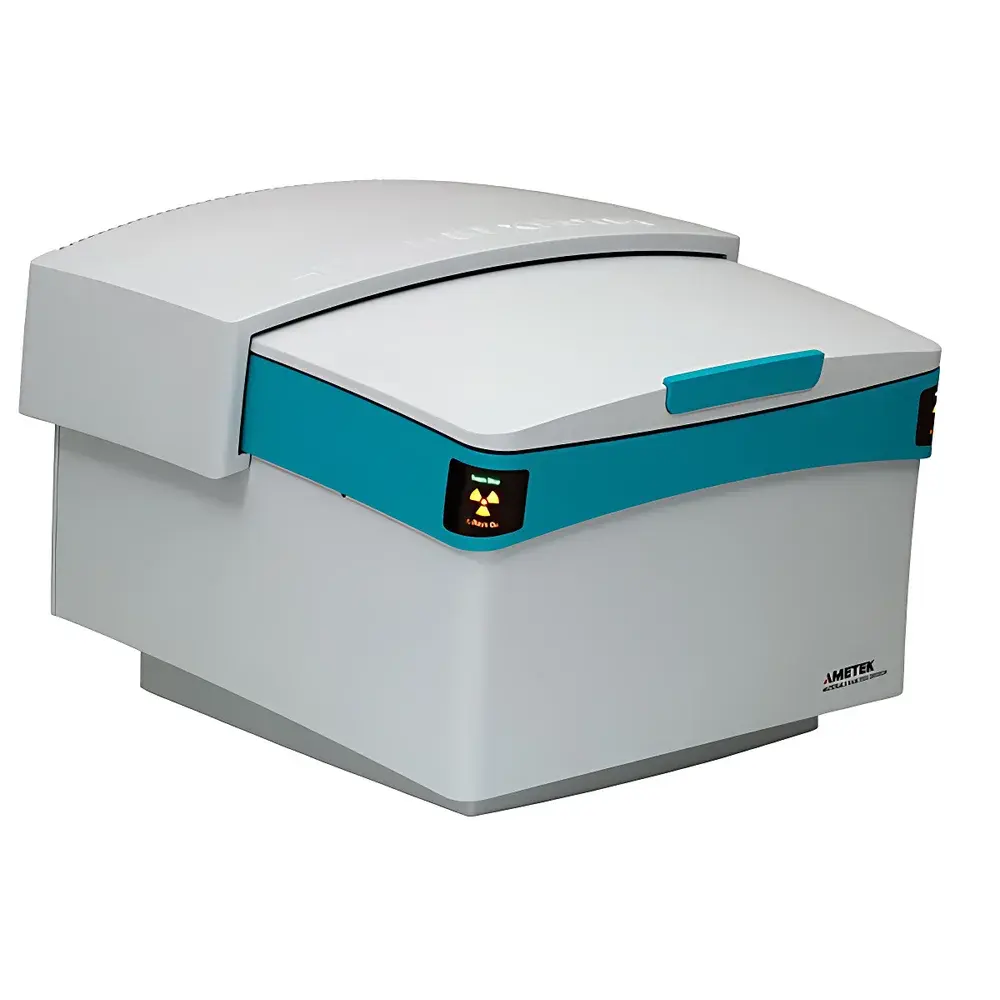
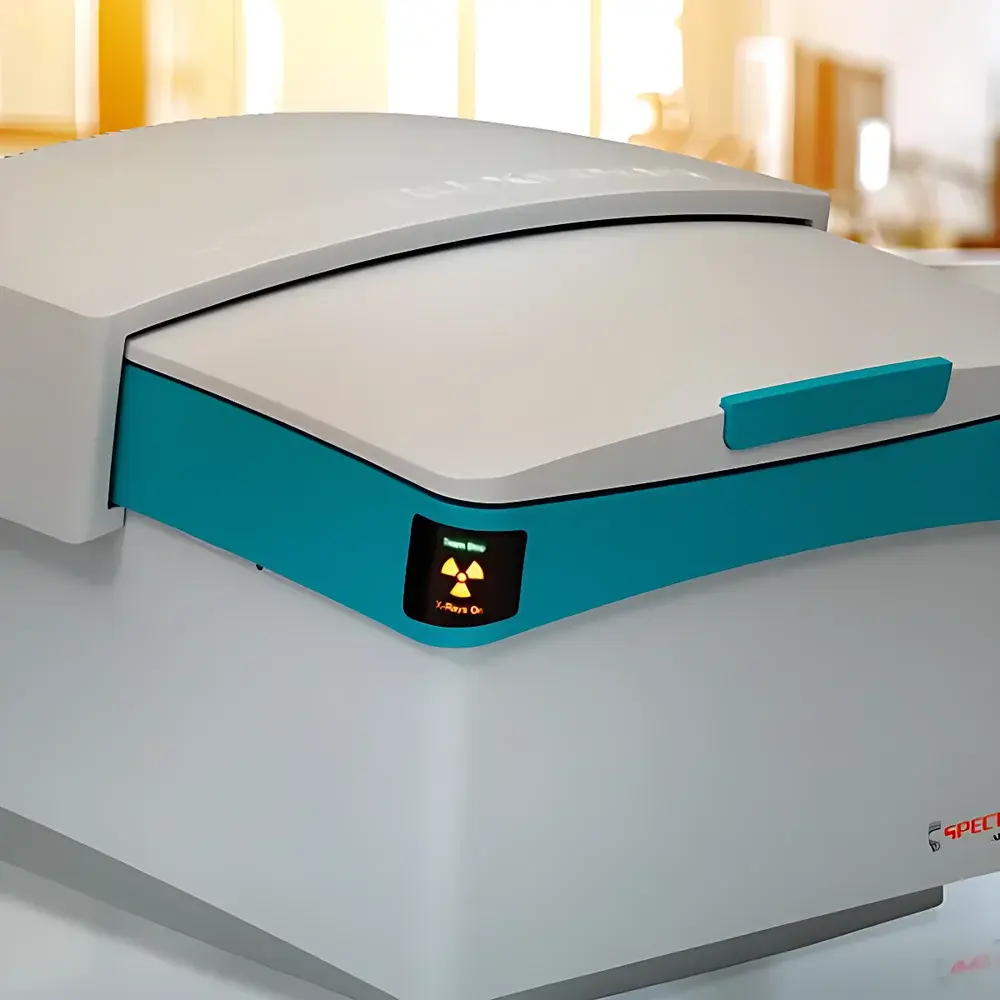
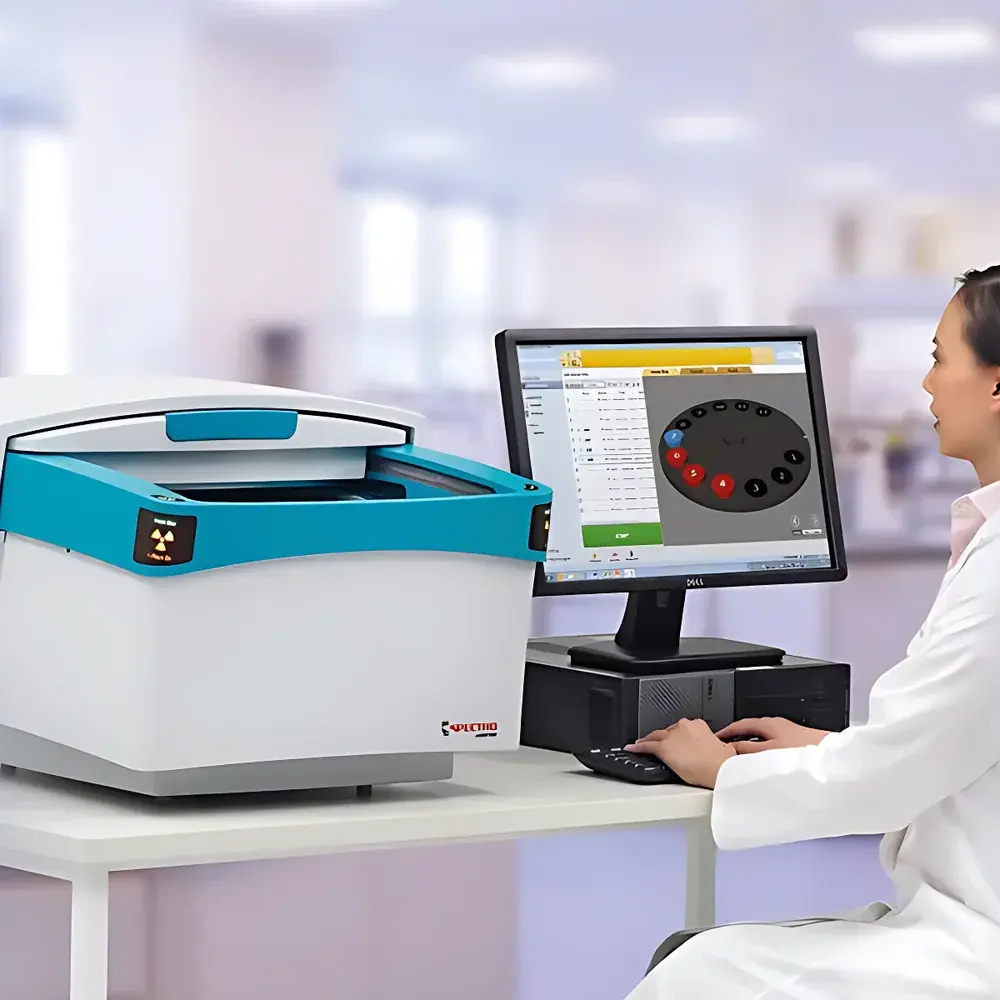
SPECTRO XEPOS Polarized Energy Dispersive X-Ray Fluorescence Spectrometer
| Brand | SPECTRO |
|---|---|
| Origin | Germany |
| Model | XEPOS Polarized |
| Instrument Type | Polarized ED-XRF |
| Configuration | Benchtop/Floor-standing |
| Regulatory Compliance | CE, RoHS, ISO/IEC 17025 compatible (when operated under GLP/GMP conditions) |
| Software | TurboQuant II with ASTM E1621, ISO 21043, and USP <233> method support |
| Detector | High-resolution silicon drift detector (SDD), >140 eV Mn Kα resolution |
| Excitation Source | Dual-target polarized X-ray tube (Mo/Rh), variable kV/mA control |
| Multi-layer Analysis Capability | Up to 8 layers, 55 elements simultaneously quantifiable |
| Detection Limits | Sub-ppm for heavy metals in polymer matrices |
| Sample Forms | Solids (flat, irregular, coated), powders (pressed pellets), liquids (in sealed cells) |
| Data Security | FDA 21 CFR Part 11 compliant audit trail, electronic signature, role-based access control |
Overview
The SPECTRO XEPOS Polarized Energy Dispersive X-Ray Fluorescence Spectrometer is an advanced benchtop or floor-standing ED-XRF instrument engineered for high-precision, multi-element elemental analysis across diverse sample matrices. Unlike conventional ED-XRF systems, the XEPOS integrates polarization optics with a dual-target, variable-power X-ray tube to suppress background scatter—significantly enhancing peak-to-background ratios and lowering detection limits. Its core measurement principle relies on polarized primary X-ray excitation, which minimizes Bremsstrahlung continuum and Compton scattering, thereby improving spectral fidelity for both light (Na–F) and heavy (U–Pb) elements. Designed for laboratories requiring regulatory-grade data integrity, the system meets foundational requirements for ISO/IEC 17025 accreditation and supports method validation frameworks aligned with ASTM E1621 (for soil and waste), ISO 21043 (for plastics), and USP (for pharmaceutical elemental impurities).
Key Features
- Polarized excitation architecture using Mo/Rh dual-anode X-ray tube with real-time kV/mA optimization per element group
- High-throughput silicon drift detector (SDD) with energy resolution ≤140 eV at Mn Kα, enabling robust separation of overlapping peaks (e.g., S Kα/Pb Mα, Zn Kα/As Kα)
- Adaptive excitation algorithm that dynamically selects optimal tube voltage, current, and filter configuration based on sample composition and target analytes
- Multi-layer thin-film analysis module supporting quantitative depth profiling of up to eight discrete layers and simultaneous quantification of 55 elements
- Robust mechanical design with motorized sample stage, auto-alignment optics, and helium flush option for light-element analysis (Na–Mg)
- Integrated thermal stabilization and vibration-damping chassis to ensure long-term spectral stability and reproducibility (RSD <1.5% for Cr in stainless steel over 8-hour operation)
Sample Compatibility & Compliance
The XEPOS accepts a broad spectrum of physical forms without digestion or fusion: flat solids (metals, glass, ceramics), irregular geometries (scrap, ores, electronic components), pressed powder pellets (soils, catalysts), and sealed liquid cells (lubricants, fuels, electrolytes). Its compliance framework includes full traceability for GLP and GMP environments: electronic signatures, time-stamped audit trails, user privilege management, and locked method files—all conforming to FDA 21 CFR Part 11 requirements. Routine performance verification follows ISO 8596 and ASTM E1361 protocols, while calibration verification standards are certified to NIST-traceable reference materials (e.g., SRM 2783, 2711a, 1577c).
Software & Data Management
TurboQuant II—the proprietary application suite for SPECTRO XEPOS—provides fully automated qualitative screening and semi-quantitative or quantitative analysis without prior knowledge of sample type. It incorporates matrix-matched fundamental parameters, empirical correction libraries, and iterative deconvolution algorithms for complex spectra. All data—including raw spectra, processing logs, calibration histories, and QC reports—are stored in a secure, encrypted SQLite database with configurable backup intervals and export to CSV, PDF, or LIMS-compatible XML formats. Method templates can be version-controlled, digitally signed, and deployed across networked instruments via centralized server administration.
Applications
The XEPOS delivers validated performance in regulated and research-intensive settings: RoHS/ELV screening of electronics; coating thickness and composition analysis in automotive and aerospace supply chains; elemental mapping of geological drill cores; heavy metal speciation in contaminated soils (Pb, As, Cd, Hg); additive quantification in polymers and composites; catalyst composition monitoring in petrochemical QA; and nutritional mineral profiling in agricultural biomass. Its ability to resolve low-Z elements in organic matrices makes it especially suitable for environmental forensics and battery material R&D (e.g., Ni, Co, Mn in cathode slurries).
FAQ
Does the XEPOS require liquid nitrogen cooling?
No. The silicon drift detector operates at Peltier-cooled temperatures (−20 °C), eliminating cryogenic dependencies and enabling continuous unattended operation.
Can it analyze volatile or hazardous liquids?
Yes—when used with optional hermetically sealed sample cells and inert gas purging, it safely handles halogenated solvents, acids, and organometallic compounds.
Is method transfer possible between different XEPOS units?
Yes. TurboQuant II supports cross-instrument method portability via standardized calibration packages, including embedded uncertainty propagation and bias correction factors.
What maintenance is required beyond routine cleaning?
Annual source output verification and detector resolution check are recommended; no user-serviceable vacuum components or consumable X-ray tubes are present.
How does polarized excitation improve detection limits compared to standard ED-XRF?
Polarization reduces scattered background by up to 90%, directly improving signal-to-noise ratio—particularly critical for trace-level analysis of light elements in high-Z matrices like steel or glass.





