
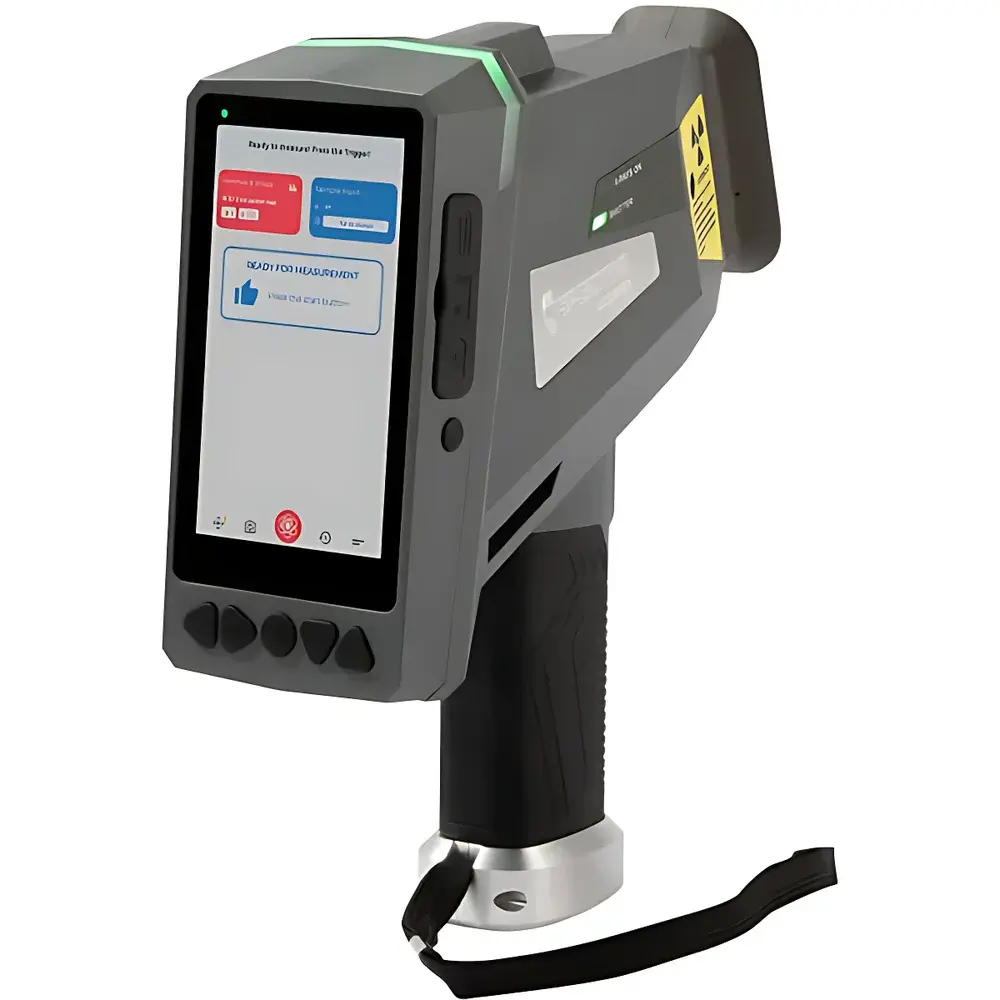
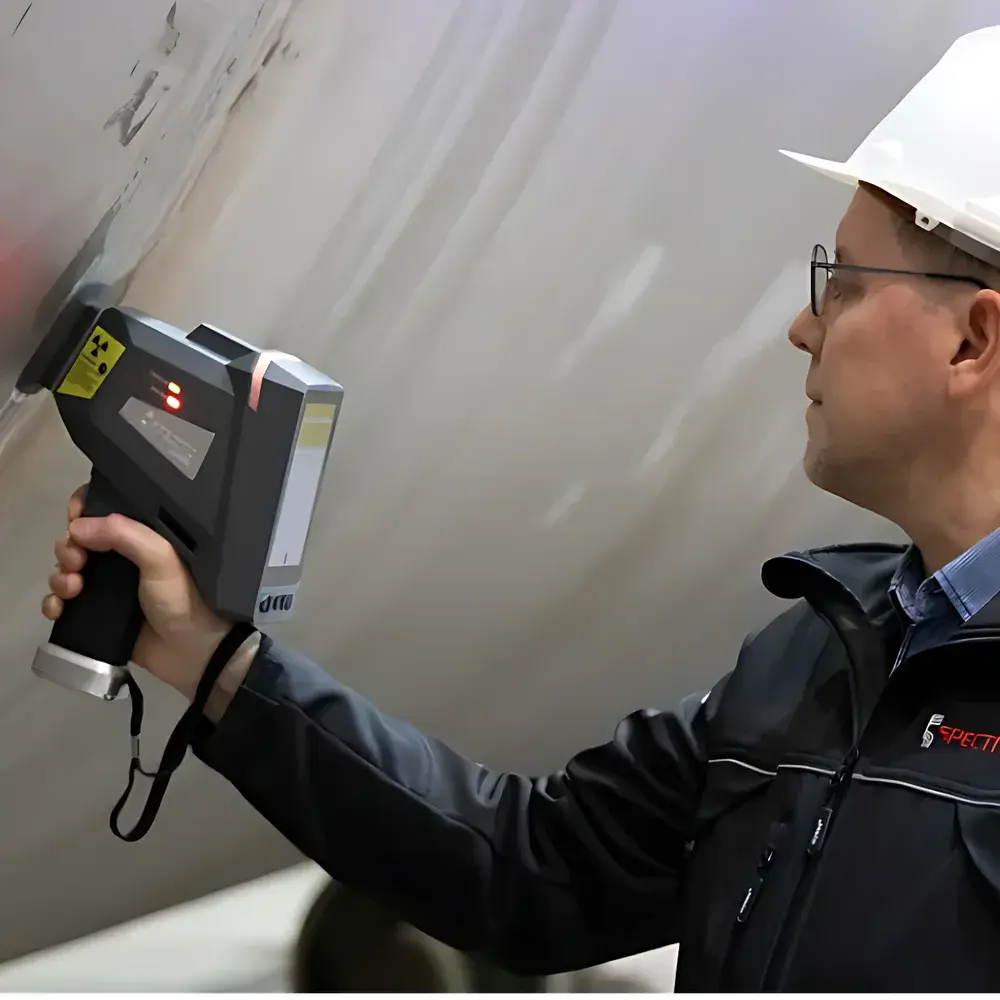
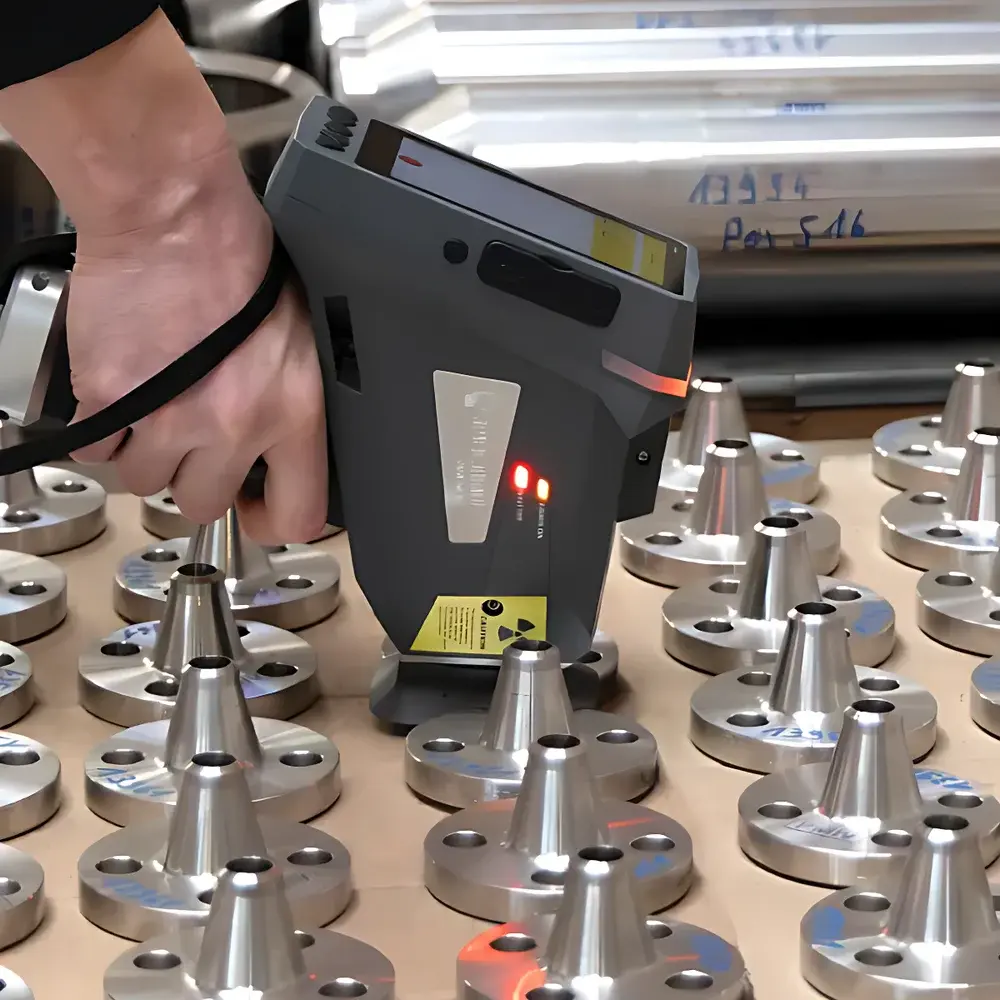
SPECTRO xSORT XHH04 Handheld Energy Dispersive X-Ray Fluorescence Spectrometer
| Brand | SPECTRO |
|---|---|
| Origin | Germany |
| Model | SPECTRO xSORT XHH04 |
| Application | Field-Portable Elemental Analysis |
| Element Range | Na (11) to U (92) |
| Detector | High-Performance Silicon Drift Detector (SDD) |
| Operating System | Android-based Custom Firmware |
| Display | 5-inch Wide-Angle HD Touchscreen |
| Connectivity | Wi-Fi, Bluetooth 5.0, USB-C, microSD Slot |
| Optional Modules | Integrated GPS, Dual-Camera Imaging System (Sample Positioning + Test Area Documentation), Docking Station for Lab-Grade Expansion |
Overview
The SPECTRO xSORT XHH04 is a field-deployable energy dispersive X-ray fluorescence (EDXRF) spectrometer engineered for rapid, non-destructive elemental analysis of metallic materials in real-world industrial environments. Based on fundamental XRF physics—where primary X-rays excite characteristic secondary (fluorescent) X-ray emissions from sample atoms—the instrument quantifies elemental composition by measuring the energy and intensity distribution of emitted photons using a high-resolution silicon drift detector (SDD). Designed specifically for metal identification, alloy verification, scrap sorting, and positive material identification (PMI), the xSORT XHH04 delivers laboratory-grade analytical performance in a ruggedized handheld platform. Its optimized excitation geometry, adaptive collimation, and intelligent matrix-matched calibration algorithms enable reliable detection and quantification across 46 elements—from sodium (Na) to uranium (U)—within seconds, without requiring vacuum or helium purge even for light elements such as Al, Mg, Si, P, and S.
Key Features
- Sub-2-second analysis time for >90% of common alloys (e.g., stainless steels, aluminum alloys, copper-based materials); 7-second acquisition for light-element–containing matrices.
- Ergonomic single-hand operation with balanced weight distribution, tactile physical buttons compatible with industrial gloves, and a 5-inch wide-angle HD touchscreen optimized for outdoor readability.
- Intelligent automatic selection of collimators and filter sets based on sample geometry and target element range—no manual configuration required.
- Android-based firmware with intuitive touch interface, preloaded spectral libraries (including ASTM E2865, ISO 17025-compliant grade databases), and real-time spectrum visualization.
- Rugged IP54-rated housing with MIL-STD-810G compliance for shock, vibration, dust, and humidity resistance in demanding field conditions.
- Expandable architecture: optional docking station enables integration with larger sample chambers, automated sample positioning, and lab-style data export workflows.
Sample Compatibility & Compliance
The xSORT XSSF XHH04 is validated for direct analysis of solid metallic samples—including castings, forgings, welds, pipes, fasteners, and scrap fragments—without surface preparation beyond standard cleaning. It supports analysis of coated, plated, and multi-layered metals through depth-resolved mode (with appropriate calibration). The system complies with IEC 62471 (photobiological safety), EN 61000-6-3 (EMC), and meets EU RoHS Directive requirements for restricted substances screening. All measurement protocols are traceable to NIST SRM reference materials, and full audit trails—including operator ID, GPS coordinates (when enabled), timestamp, environmental sensor logs (temperature/humidity), and raw spectral files—are retained per GLP/GMP principles. Data integrity adheres to FDA 21 CFR Part 11 requirements when used with optional secure login and electronic signature modules.
Software & Data Management
The onboard software provides full spectral acquisition, qualitative phase identification, quantitative calibration (fundamental parameters and empirical methods), and PMI matching against over 1,200 alloy standards. All results are stored locally in encrypted SQLite databases and can be exported in CSV, PDF, or SPC formats via Wi-Fi, Bluetooth, or USB-C. MicroSD support allows offline storage of >100,000 test records. Optional cloud synchronization enables centralized fleet management, remote calibration updates, and cross-site reporting dashboards. The dual-camera system (optional) captures synchronized optical images of both sample macro-context and micro-test spot, enabling spatial correlation of chemistry and morphology—a critical capability for QA/QC documentation and root-cause failure analysis.
Applications
- Positive Material Identification (PMI) in petrochemical, power generation, and pharmaceutical piping systems per ASME B31.3 and API RP 578 requirements.
- Scrap metal sorting and recycling quality control, including Zn/Al/Pb/Cu separation and rare-earth content estimation.
- Incoming raw material inspection for foundries, forging shops, and additive manufacturing feedstock suppliers.
- Weld overlay verification, heat-affected zone (HAZ) analysis, and coating thickness estimation (with FP-based modeling).
- Archaeometallurgical field studies and cultural heritage object authentication.
- Environmental screening of heavy metals (e.g., Pb, Cd, Hg, Cr) in soils and slags under EPA Method 6200.
FAQ
What is the minimum detectable limit (MDL) for key alloying elements like Cr, Ni, and Mo?
MDLs are matrix-dependent and calibrated per application; typical values range from 20–100 ppm for Cr/Ni/Mo in stainless steel matrices under standard 2-second acquisition.
Does the instrument require annual recalibration or certified reference standards?
While factory calibration remains stable for 12+ months under normal use, daily verification with check standards (e.g., SPECTRO-certified alloy cubes) is recommended per ISO/IEC 17025 clause 7.7. Full recalibration is performed at authorized service centers using NIST-traceable standards.
Can the xSORT XHH04 analyze non-metallic samples such as ceramics or polymers?
Yes—though sensitivity and precision are optimized for conductive metals; non-conductive or low-Z matrices require surface coating (e.g., graphite) and extended counting times for reliable light-element quantification.
Is spectral data export compliant with LIMS integration protocols?
Yes—CSV and XML exports include full metadata (instrument ID, operator, location, spectrum hash, calibration version), supporting direct ingestion into major LIMS platforms via REST API or SFTP.
How does the dual-camera system enhance analytical traceability?
It generates geotagged, time-synchronized image pairs: one wide-field view for contextual orientation and one magnified view centered on the X-ray beam footprint—enabling forensic reconstruction of measurement location relative to weld seams, corrosion pits, or inclusion clusters.





