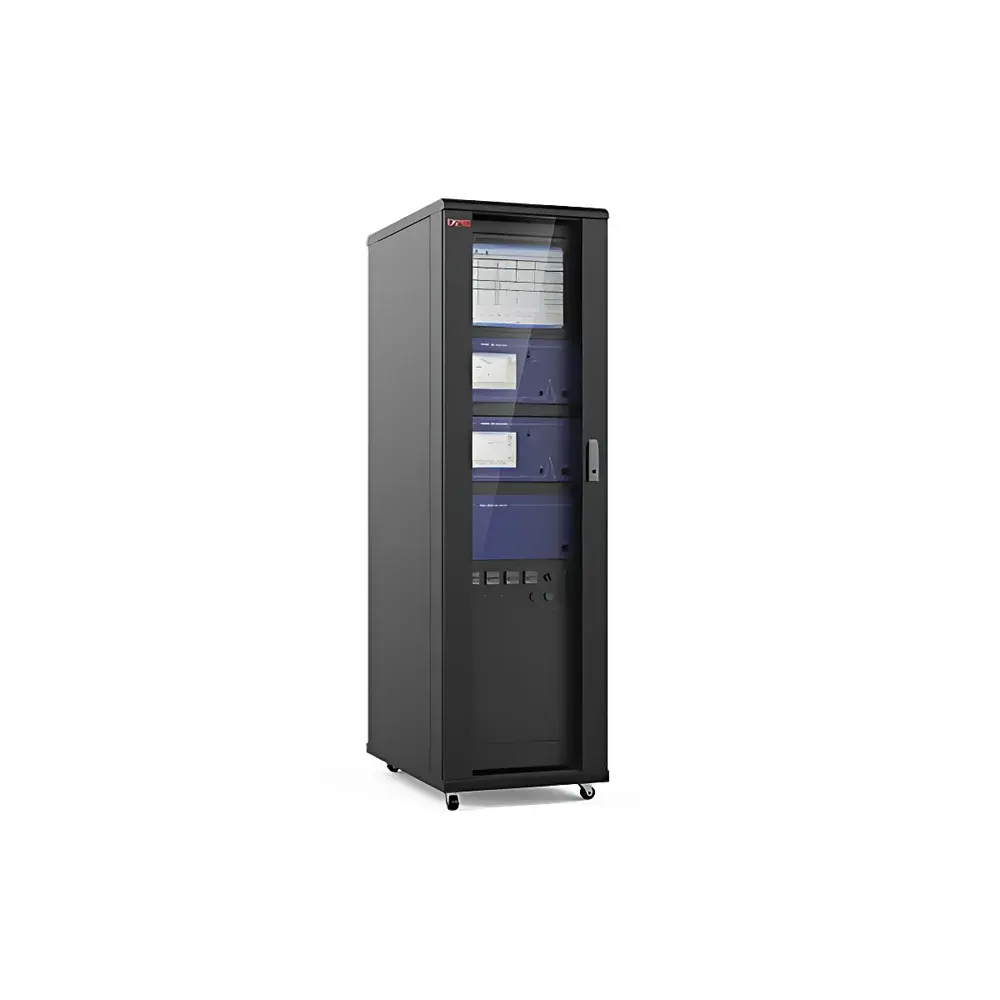
SpectrUM EXPEC 2000 Online Gas Chromatograph System for Continuous VOC Monitoring in Flue Gas
| Brand | SpectrUM / EXPEC |
|---|---|
| Origin | Zhejiang, China |
| Manufacturer Type | Original Equipment Manufacturer (OEM) |
| Product Origin | Domestic (China) |
| Model | EXPEC 2000 VOC Continuous Emission Monitoring System (CEMS) |
| Pricing | Upon Request |
| Repeatability | Not Specified |
| Detection Limit | Not Specified |
| Detector Type | Flame Ionization Detector (FID) |
| Column Oven Temperature Range | Ambient to 220 °C |
| Carrier Gas Requirement | High-Purity Nitrogen (≥99.999%) |
| Hydrogen & Zero Air Supply | Integrated Onboard Generators |
Overview
The SpectrUM EXPEC 2000 is an industrial-grade online gas chromatograph (GC) system engineered for continuous, unattended measurement of volatile organic compounds (VOCs) in flue gas streams from stationary emission sources. It operates on the principle of gas-phase separation followed by quantitative detection using a flame ionization detector (FID), delivering high selectivity and robust response across C2–C12 hydrocarbons and oxygenated VOCs—including alkanes, alkenes, aromatics, ketones, and esters. Designed for regulatory compliance and process optimization, the system integrates full-thermal sampling architecture—maintaining all wetted components at elevated temperatures (typically ≥180 °C) to prevent condensation, adsorption, or catalytic loss of semi-volatile and high-boiling-point analytes. This eliminates cold spots and ensures representative sample transfer from stack to detector, a critical requirement for accurate CEMS operation under EPA Method 25A, HJ 1012–2018, and ISO 16000-6 frameworks.
Key Features
- Full-thermal sampling path: Heated probe (≥180 °C), heated sampling line (PTFE-lined or passivated stainless steel), and temperature-controlled pre-concentration/focusing module to preserve labile and high-molecular-weight VOCs
- Integrated onboard hydrogen generator and zero-air generator—eliminating external cylinder dependency and enhancing operational safety in hazardous areas
- Modular pre-treatment unit with automated particulate filtration, moisture removal via Nafion® membrane or chilled trap, and self-cleaning cycle to minimize maintenance intervals
- Explosion-proof (Ex d IIB T4) and standard configurations available—certified to GB 3836.1–2021 and compatible with ATEX Zone 1/2 environments upon optional certification
- Robust column oven with PID-controlled heating (ambient to 220 °C, ±0.1 °C stability) and rapid cool-down capability for high-throughput analysis (typical cycle time: 12–20 min)
- Embedded industrial PC with real-time GC control, peak integration, and dual-data routing: local HMI display + simultaneous Modbus TCP/OPC UA output to DCS or environmental monitoring platforms
Sample Compatibility & Compliance
The EXPEC 2000 is validated for use with flue gases containing up to 20% O₂, ≤1000 mg/m³ particulate loading, and dew points ranging from −20 °C to 120 °C (post-heating). Its pre-treatment methodology aligns with U.S. EPA Reference Method 25A for total gaseous organic emissions and Chinese standard HJ 1012–2018 for fixed-source VOC monitoring. All materials contacting sample gas—including Swagelok fittings, SilcoNert®-treated valves, and fused-silica capillary columns—are selected for minimal surface activity and long-term chemical inertness. The system supports audit-ready data integrity per GLP and GMP requirements, including electronic signatures, user access levels, and 21 CFR Part 11–compliant audit trails when deployed with optional SpectrUM CEMS Manager software.
Software & Data Management
The embedded SpectrUM ChromoView™ software provides intuitive sequence programming, real-time chromatogram visualization, automatic retention time locking, and customizable calibration curves (linear, quadratic, or multi-point non-linear). Raw chromatographic data (time-stamped .CDF files) and processed results (CSV/Excel export) are stored locally on a redundant SSD array with ≥180 days of buffer capacity. Data transmission complies with national environmental monitoring protocols: native support for HJ 212–2017 communication protocol ensures seamless integration with provincial-level EPAs’ data acquisition systems (DAS), while optional MQTT/HTTPS modules enable cloud-based dashboards and predictive maintenance alerts.
Applications
The EXPEC 2000 serves as a reference-grade CEMS solution across industries subject to stringent VOC emission limits. It is routinely deployed in catalytic cracking units and flare stacks within petrochemical refineries; solvent recovery lines in pharmaceutical manufacturing; exhaust ducts of conformal coating ovens in electronics assembly; drying tunnels in rubber compounding plants; and paint-bake booths in automotive OEM facilities. Its adaptability extends to municipal waste incineration, biomass combustion, and semiconductor fab abatement systems—where real-time speciation (e.g., benzene vs. toluene vs. xylene ratios) informs abatement efficiency assessment and regulatory reporting under China’s “Blue Sky Defense Campaign” and EU Industrial Emissions Directive (IED) Annex VI.
FAQ
Does the EXPEC 2000 meet U.S. EPA or EU MCERTS certification requirements?
The system adheres to the technical principles of EPA Method 25A and EN 15267–3 for performance evaluation; formal MCERTS or TÜV certification requires site-specific validation per EN 14181 QAL1/QAL2 protocols.
Can it quantify individual VOCs, or only total hydrocarbon equivalents?
It delivers compound-specific quantification for ≥32 priority VOCs (including BTEX, C2–C5 aliphatics, chlorinated solvents) using calibrated multi-component standards and retention time indexing.
What maintenance frequency is recommended for routine operation?
Filter replacement every 30 days; FID nozzle cleaning and detector tuning every 90 days; annual column reconditioning and system performance verification per HJ 1012–2018 Appendix B.
Is remote diagnostics and firmware update supported?
Yes—via secure SSH/VNC access and over-the-air (OTA) firmware updates through the integrated Ethernet port, with role-based authentication and TLS 1.2 encryption.
How is data security ensured during transmission to regulatory authorities?
All outbound communications employ AES-256 encryption and digital certificate authentication; local data storage is write-protected and tamper-evident per HJ 212–2017 security annexes.
Related Products