
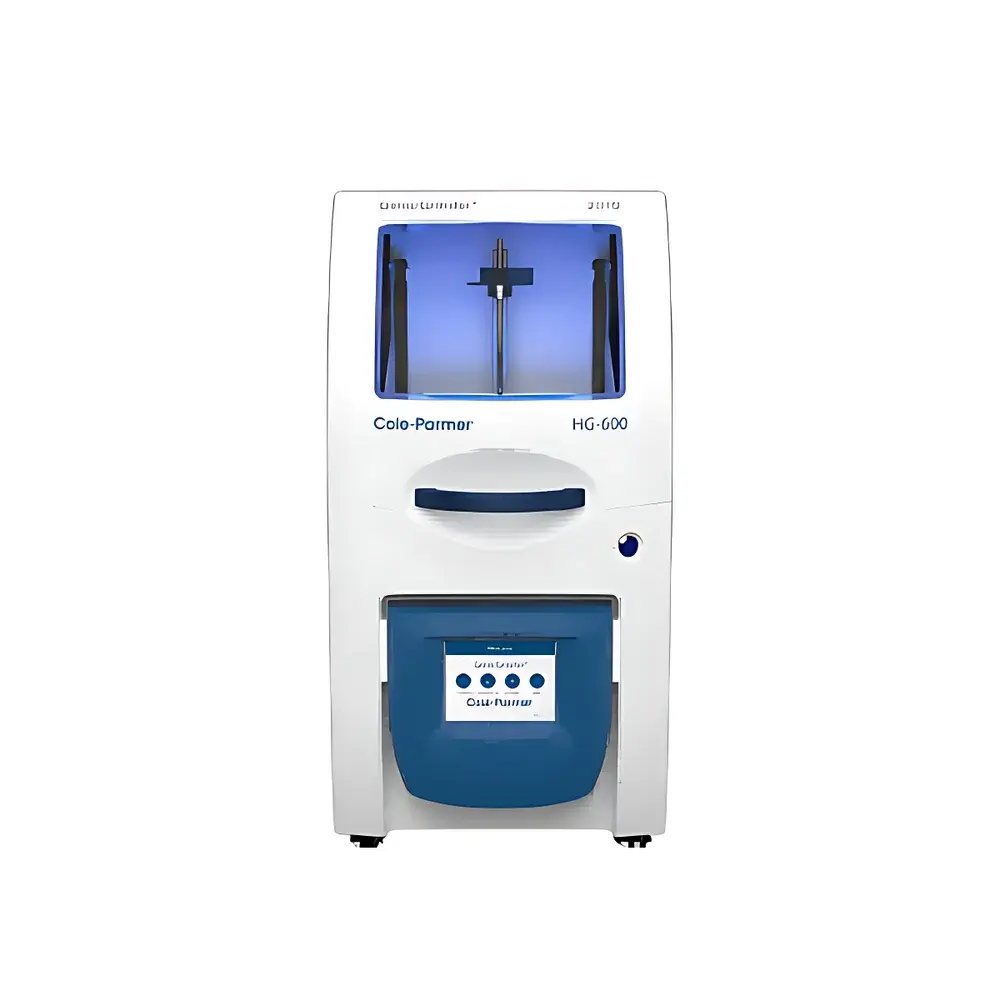
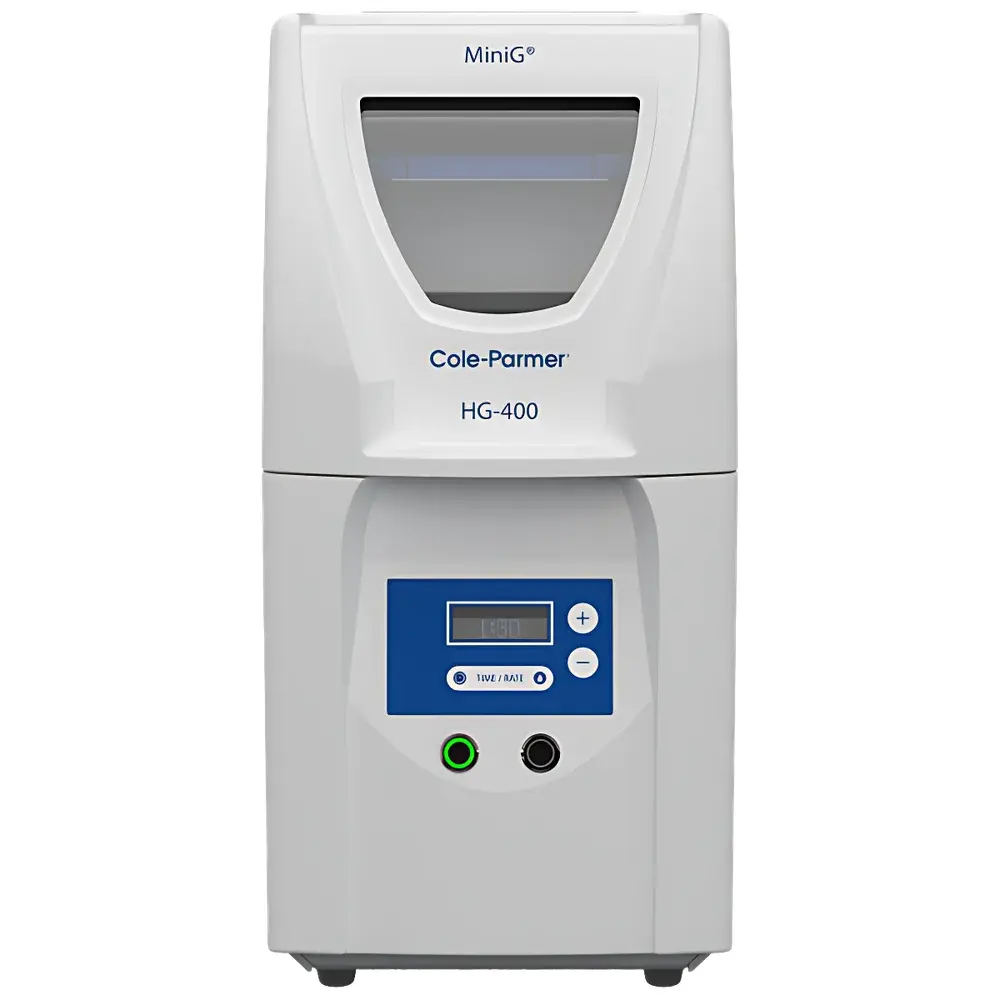
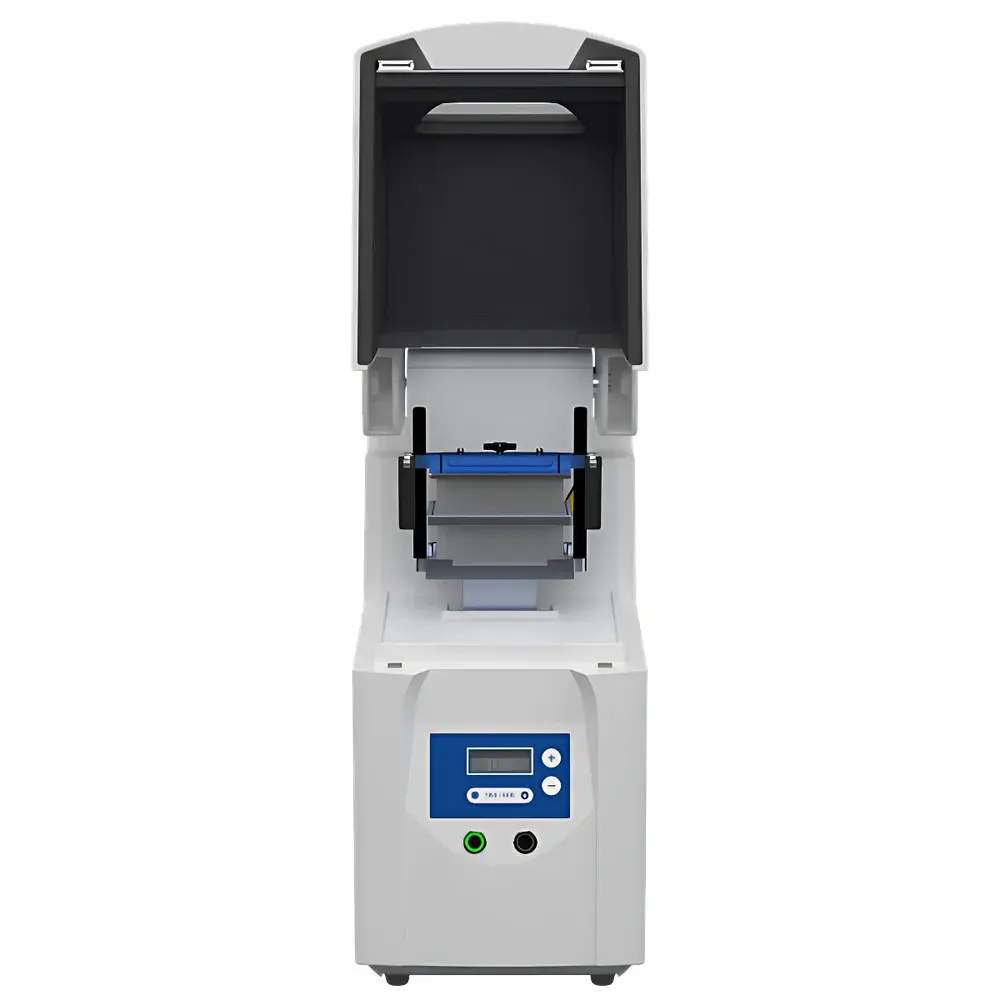
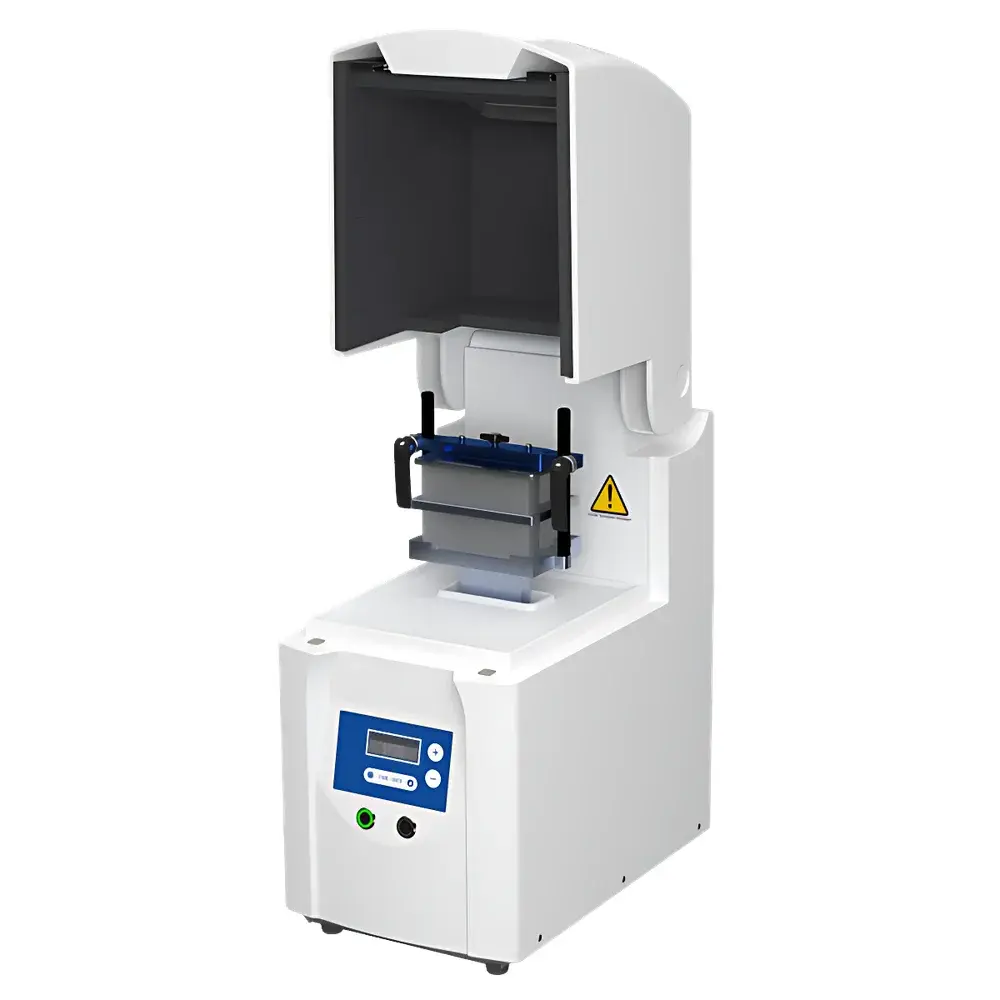
SPEX SamplePrep HG-400 MiniG High-Throughput Vertical Vibration Tissue Grinder
| Brand | SPEX SamplePrep |
|---|---|
| Origin | USA |
| Model | HG-400 MiniG |
| Throughput | Up to 192 samples per run |
| Compatible Formats | Dual 96-well deep-well plates, 48 × 2–5 mL tubes, 12 × 15 mL tubes, or 6 × 50 mL tubes |
| Optional Cryogenic Operation | Kryo-Tech® accessory supported |
| Safety | Dual mechanical latches + interlocked chamber lid |
| Control | Programmable time, frequency, and cycle count |
Overview
The SPEX SamplePrep HG-400 MiniG is a vertically oscillating high-throughput tissue grinder engineered for reproducible, cross-contamination-free homogenization of biological matrices under controlled mechanical stress. Unlike horizontal bead-beating systems that rely on orbital shaking or rotary motion, the MiniG employs a patented vertical reciprocating motion—generating consistent kinetic energy transfer across all sample positions simultaneously. This architecture ensures uniform shear force distribution, critical for applications demanding high inter-sample reproducibility, such as nucleic acid yield optimization, protein integrity preservation, and metabolite stability during QuEChERS-based extractions. Designed in collaboration with Pioneer Hi-Bred (now Corteva Agriscience), the instrument targets agricultural and life science laboratories requiring scalable, GLP-aligned sample preparation prior to downstream molecular analysis—including qPCR, NGS library prep, LC-MS/MS residue screening, and functional proteomics.
Key Features
- Vertical vibration mechanism delivering uniform energy input across all wells or tubes—eliminating positional bias inherent in rotary or orbital grinders.
- Programmable operation: Precise control over grinding duration (1 sec–99 min), oscillation frequency (10–1,750 rpm), and number of cycles enables method standardization across users and shifts.
- Modular clamping system accommodates dual 96-well deep-well plates (max. 192 samples), 48 × 2–5 mL microcentrifuge tubes, 12 × 15 mL conical tubes, or 6 × 50 mL tubes—without hardware modification.
- Integrated safety architecture: Dual stainless-steel mechanical latches and an electrically interlocked chamber lid prevent operation unless fully sealed—compliant with IEC 61000-4-2 and UL 61010-1 requirements.
- Optically transparent polycarbonate lid allows real-time visual monitoring of sample integrity and bead movement without interrupting the process.
- Kryo-Tech® compatibility: Enables direct integration with pre-chilled Cryo-Blocks™ for sub-zero grinding—critical for RNA stabilization, thermolabile enzyme preservation, and volatile metabolite retention.
Sample Compatibility & Compliance
The HG-400 MiniG processes diverse biological materials—including plant tissues (roots, leaves, seeds, fruits), animal soft tissues (liver, muscle, brain), cultured mammalian cells, yeast (e.g., Saccharomyces cerevisiae, Pichia pastoris), Gram-positive (Bacillus) and Gram-negative (Halomonas elongata) bacteria, and environmental matrices (soil, compost). Its design supports compliance with multiple regulatory frameworks: EPA Method 548.3 and FDA’s Multi-Residue Pesticide Analytical Method (MRAM) both specify Geno/Grinder-type vertical vibration homogenizers for QuEChERS sample prep; ISO 22174:2017 (DNA extraction from plants) and USP (dissolution testing of botanicals) recognize mechanical homogenization as a validated alternative to enzymatic lysis. The instrument’s programmability and audit-trail-capable software (via optional PC interface) align with 21 CFR Part 11 requirements when used in GMP-regulated API extraction or food safety testing environments.
Software & Data Management
While the HG-400 MiniG operates via intuitive front-panel controls, its digital interface supports RS-232 or USB connectivity for external logging and protocol synchronization. When integrated with SPEX’s optional LabManager™ software suite, users can archive complete run metadata—including timestamp, operator ID, parameter set, and chamber temperature (when paired with Kryo-Tech sensors)—enabling full traceability per GLP and ISO/IEC 17025 documentation standards. All methods are exportable as CSV or XML files for LIMS ingestion, and password-protected user profiles restrict access to validated SOPs. No cloud dependency or proprietary firmware updates are required—ensuring long-term method stability and cybersecurity compliance in regulated labs.
Applications
- Molecular biology: High-yield DNA/RNA isolation from recalcitrant seeds (e.g., soybean, rice) and fibrous leaves (e.g., beet, basil), with demonstrated >95% recovery consistency across 96-well plates (SP011, SP019, SP021).
- Proteomics & metabolomics: Intact protein extraction from plant tissues without thermal denaturation; compatible with TCA/acetone precipitation and iTRAQ labeling workflows.
- Food safety & residue analysis: Standardized homogenization for LC-MS/MS pesticide screening per USDA AMS and FDA BAM protocols—reducing sample prep time by 67% versus manual mortar-and-pestle methods (SP022, SP024).
- Microbial genomics: Rapid lysis of yeast and bacterial pellets in 2 mL tubes for whole-genome sequencing library construction—avoiding RNase contamination risks associated with lytic enzymes (SP018, SP020).
- Pharmaceutical botany: API extraction from medicinal herbs (e.g., ginseng, turmeric) with minimal degradation of heat-sensitive terpenoids and alkaloids when used with Kryo-Tech cooling.
FAQ
What distinguishes the HG-400 MiniG from other high-throughput grinders?
Its vertically oriented oscillation—rather than horizontal shaking or rotational motion—delivers uniform energy distribution across all sample positions, minimizing well-to-well variability and eliminating the need for post-grind vortexing or pipetting steps.
Can the MiniG be validated for regulated environments?
Yes. Its programmable parameters, mechanical safety interlocks, and optional software logging meet core requirements for FDA 21 CFR Part 11, ISO/IEC 17025, and GLP-compliant workflows—particularly in food testing and pharmaceutical QC labs.
Is cryogenic grinding possible without liquid nitrogen handling?
Yes. The Kryo-Tech® system uses pre-chilled aluminum Cryo-Blocks™ inserted directly into the chamber—enabling sub-20°C grinding without LN₂ exposure, dewar logistics, or operator cryo-hazard training.
How is cross-contamination prevented between runs?
The instrument requires full disassembly and cleaning of the clamp assembly and chamber liner between batches; additionally, its vertical motion eliminates lateral bead migration, and SPEX recommends single-use consumables (e.g., pre-filled 2 mL tubes) for highest-integrity applications like clinical diagnostics.
What validation data exists for nucleic acid yield and integrity?
Peer-reviewed application notes (SP011, SP016, SP019, SP021) document A260/A280 ratios >1.8, RIN scores >8.5 for plant RNA, and qPCR amplification efficiency >92% following MiniG homogenization—comparable to or exceeding commercial column-based kits.
Related Products



