
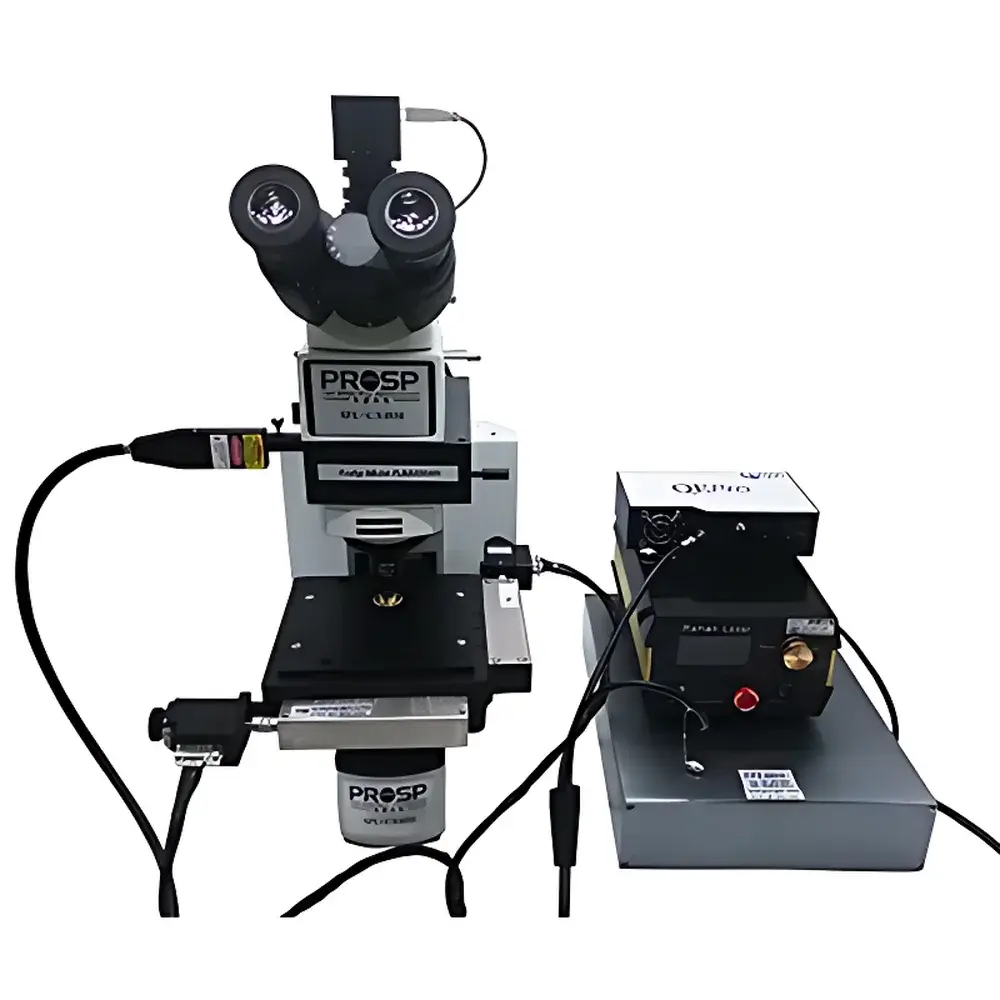
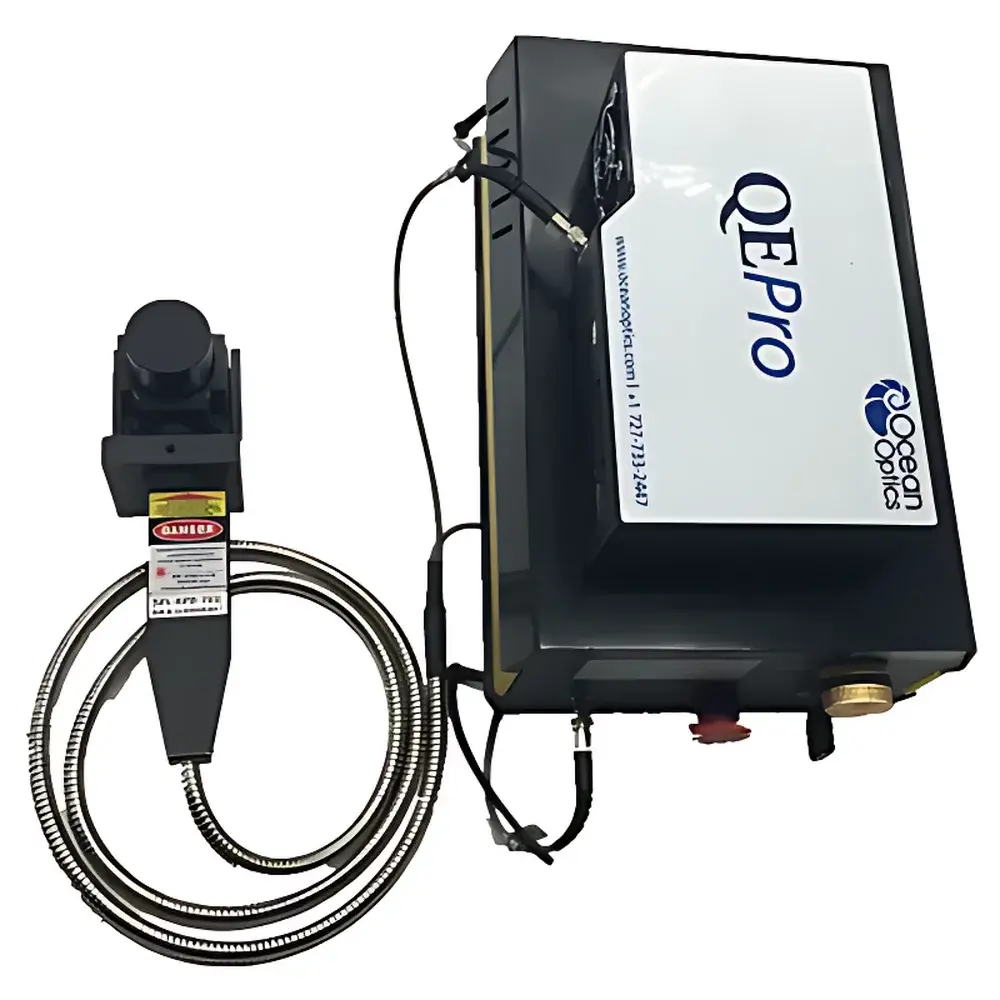
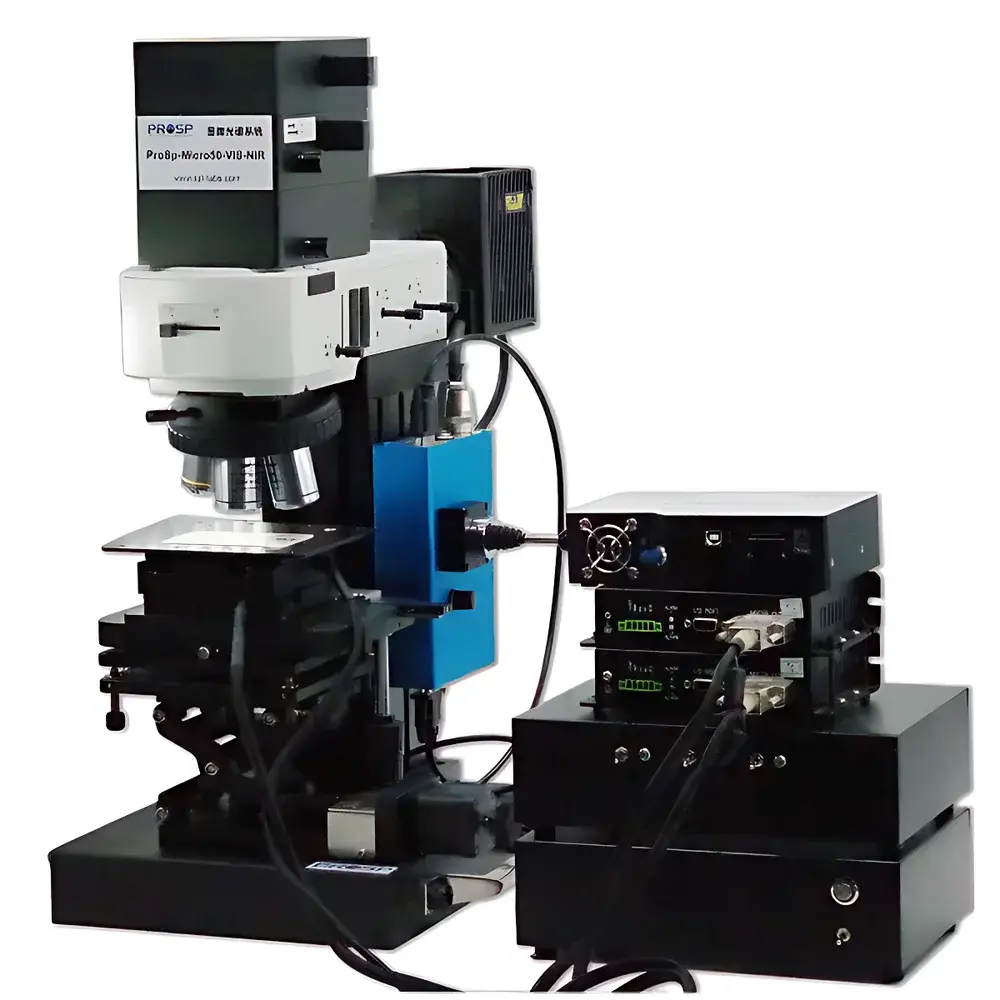
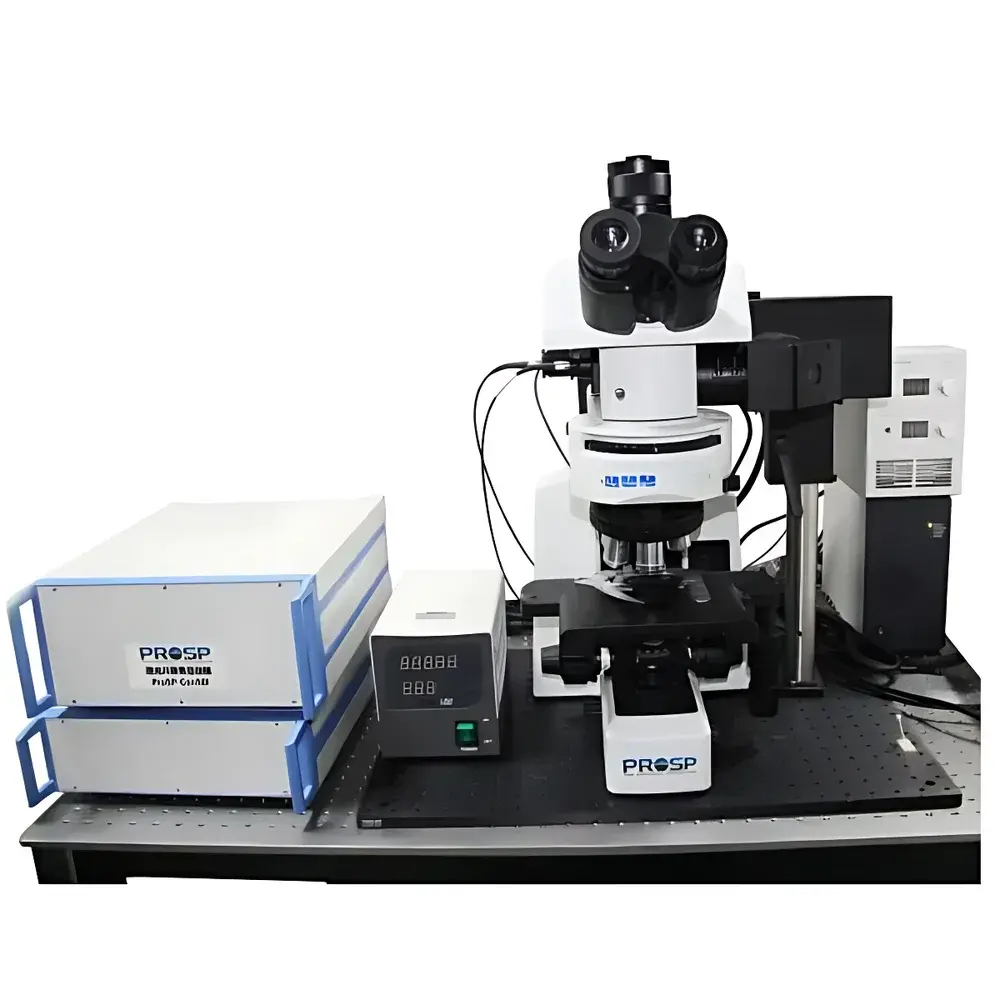
SPL ProSp-Micro-MVIS & ProSp-Micro-MVIS-NIR Microscopic Spectroscopy System
| Brand | SPL |
|---|---|
| Origin | Zhejiang, China |
| Manufacturer Type | Authorized Distributor |
| Product Category | Domestic |
| Models | ProSp-Micro-MVIS, ProSp-Micro-MVIS-NIR |
| Price Range | USD 14,000 – 28,000 |
| Spectral Range | 380–2500 nm |
| Optical Architecture | Confocal Modular Design |
| Excitation Flexibility | Interchangeable Filter Slots (Excitation + Emission/Attenuation) |
| Integration Compatibility | Standard Upright Microscopes (Olympus, Nikon, Zeiss, Leica,舜宇, 永新) |
| Mapping Capability | Motorized XY Stage with Spectral Point Scanning |
| Software Suite | Dual-Module — Real-Time Imaging + Spectral Acquisition & Mapping |
Overview
The SPL ProSp-Micro-MVIS and ProSp-Micro-MVIS-NIR are modular, confocal-capable microscopic spectroscopy systems engineered for spatially resolved optical characterization at the microscale. These systems integrate fluorescence, Raman, and reflectance spectroscopy into a single platform—leveraging a shared optical path architecture that maintains alignment stability while enabling rapid functional reconfiguration via mechanical filter and beam routing selectors. The core measurement principle relies on point-scanned spectral acquisition: incident light (from tunable lasers or broadband sources) is focused through a high-NA microscope objective onto a diffraction-limited spot; backscattered, emitted, or reflected photons are collected collinearly and routed via fiber-optic coupling to high-sensitivity spectrometers covering the UV-VIS-NIR range (380–2500 nm). This design ensures consistent spatial registration across modalities—critical for correlative analysis of heterogeneous samples such as photonic crystals, semiconductor heterostructures, biological tissue sections, or agricultural specimens.
Key Features
- Confocal optical architecture with adjustable pinhole alignment for depth discrimination and improved signal-to-background ratio in fluorescence and Raman measurements.
- Tri-mode modular head: A single mechanical selector lever switches between three operational states—microscopic imaging only, micro-fluorescence/micro-reflectance spectroscopy, and micro-Raman spectroscopy—without realignment.
- Dual-filter wheel integration: Two independent filter slots accommodate excitation filters (e.g., 405 nm, 488 nm, 532 nm, 640 nm), emission filters, neutral density attenuators, or custom dichroics—enabling quantitative fluorescence intensity calibration and rejection of Rayleigh scatter.
- Expandable spectral channel architecture: Base configuration supports one spectrometer input; optional dual-spectrometer modules allow simultaneous acquisition of fluorescence and Raman signals—or parallel VIS/NIR detection—scalable to 4-, 6-, or 8-channel configurations via stacking.
- Fiber-coupled modularity: All optical interfaces use SMA905 or FC/PC connectors, permitting hot-swapping of light sources (CW/pulsed lasers, halogen/deuterium lamps) and spectrometers without recalibration.
- Motorized XY scanning stage (100 × 100 mm travel, 100 nm step resolution) synchronized with spectral acquisition for high-fidelity spectral mapping (hyperspectral imaging) and LBIC (Light Beam Induced Current) profiling.
Sample Compatibility & Compliance
The ProSp-Micro system accommodates standard microscope slides, silicon wafers, thin-film substrates, plant epidermal layers, microfluidic chips, and optically transparent polymers. Sample height tolerance extends up to 30 mm under standard objectives (10×–100×, NA 0.25–0.95). All hardware and software components comply with CE marking requirements for laboratory instrumentation. Data acquisition workflows support audit-trail generation and user-access logging—facilitating alignment with GLP-compliant documentation practices. While not certified for clinical diagnostics, the system meets ASTM E275 (UV-Vis-NIR spectrophotometer terminology), ISO 17025 (calibration traceability for spectral radiance), and USP (spectrophotometric system suitability) foundational criteria when operated with NIST-traceable reference standards.
Software & Data Management
The system operates two independent yet interoperable software modules: Imaging Control Suite and Spectral Acquisition Engine. The Imaging Control Suite provides real-time camera feed visualization (USB3.0 CMOS/CCD), exposure/gain adjustment, time-lapse recording, and post-acquisition contrast enhancement (histogram equalization, deconvolution-ready TIFF export). The Spectral Acquisition Engine enables synchronized spectral capture at user-defined XY coordinates, supports live baseline correction (dark current + ambient subtraction), and exports spectra in vendor-neutral formats (.csv, .jdx, .spc). Mapping datasets are stored as 3D arrays (x, y, λ) with embedded metadata (timestamp, laser power, grating position, slit width). All data files include MD5 checksums and optional encryption (AES-256) for secure archiving. Exported maps are compatible with MATLAB, Python (NumPy/Hyperspy), and ENVI for multivariate analysis (PCA, cluster segmentation).
Applications
- Microfluidics: Spatially resolved Raman fingerprinting of droplet composition and fluorescence-based pH or ion concentration mapping within PDMS channels.
- Agricultural science: Quantitative chlorophyll fluorescence lifetime-independent stress indexing (Fv/Fm analogs) and cellulose/lignin Raman band ratios across leaf cross-sections.
- Photonic materials: Pixel-level CIE L*a*b* color space reconstruction from reflectance spectra across textile-patterned photonic crystal arrays.
- Laser gain media: Site-specific Nd:YAG or Yb:KYW fluorescence quantum yield estimation via absolute photon counting calibrated against NIST SRM 2036.
- 2D materials: Strain and layer-count mapping in MoS₂ or graphene via Raman G/2D peak shifts and intensity ratios, correlated with topographic AFM data.
FAQ
Can the ProSp-Micro be integrated with an existing upright microscope?
Yes—the modular optical head mounts directly onto standard trinocular ports (C-mount or F-mount adapters included) and maintains parfocality with OEM eyepieces and cameras.
Is NIR Raman supported with the ProSp-Micro-MVIS-NIR model?
Yes—this variant includes a thermoelectrically cooled InGaAs array spectrometer (900–2500 nm) and 785 nm/1064 nm laser compatibility with notch filters optimized for low-frequency Raman modes.
Does the software support automated spectral library matching?
Basic peak identification (wavenumber ±2 cm⁻¹) against user-loaded libraries is available; full chemometric modeling (e.g., PLS-DA) requires export to third-party tools.
What calibration standards are recommended for reflectance measurements?
SPL recommends NIST-traceable diffuse reflectance standards (e.g., Labsphere Spectralon® SRM-990) for VIS-NIR and ceramic tiles (e.g., Macbeth ColorChecker) for relative colorimetric validation.
Are firmware updates provided post-purchase?
Yes—registered users receive biannual firmware and software releases via secure portal download, including bug fixes, new driver support (e.g., newer Thorlabs stages), and enhanced spectral stitching algorithms.





