
Spontaneous Ignition Tester for Solids – Young Instruments HWP15-10S
| Brand | Young Instruments |
|---|---|
| Origin | Zhejiang, China |
| Manufacturer Type | Manufacturer |
| Origin Category | Domestic |
| Model | HWP15-10S |
| Quotation | Upon Request |
| Operating Environment | (-5 to 45) °C, <95% RH |
| Timing Range | 0–30 min |
| Timing Accuracy | ±0.01 s |
| Time Display Resolution | 1 s |
| Sample Volume | 2 mL |
| Drop Height | 1 m |
| Flame Detection Response Time | ≤6 ms |
Overview
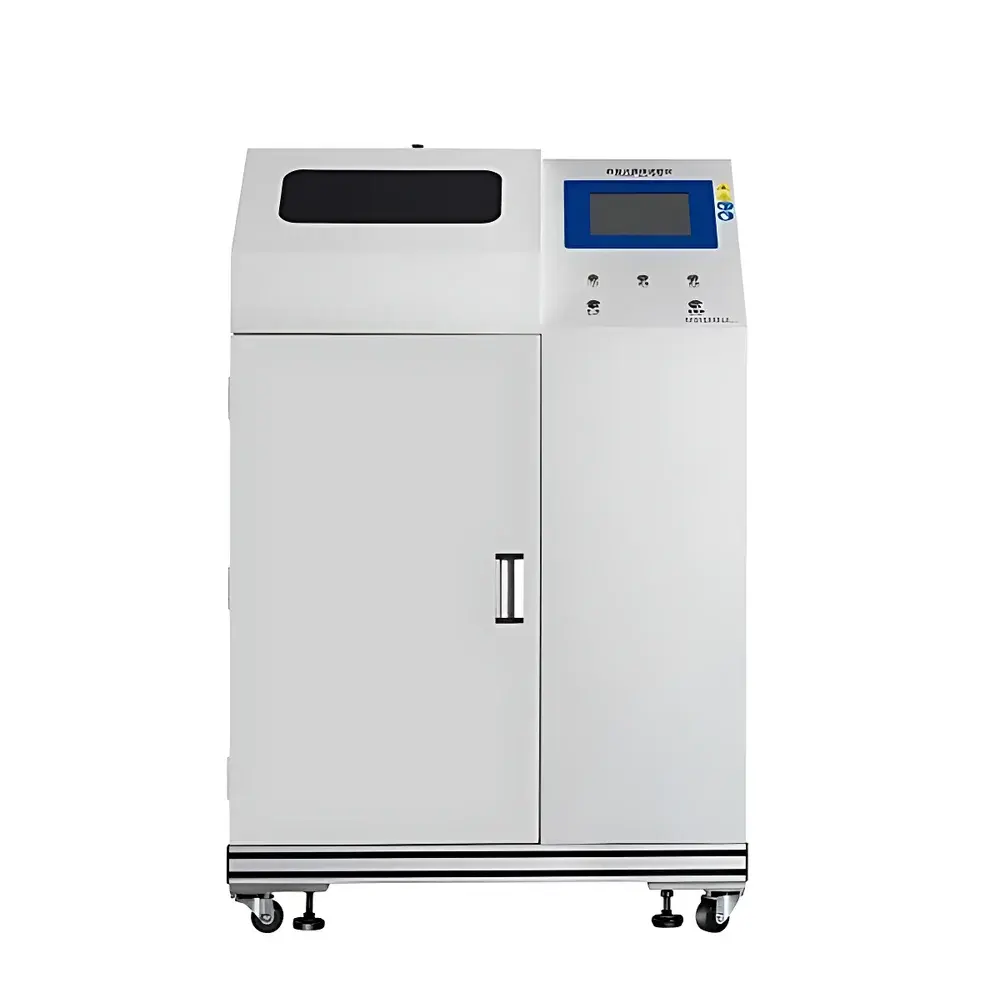
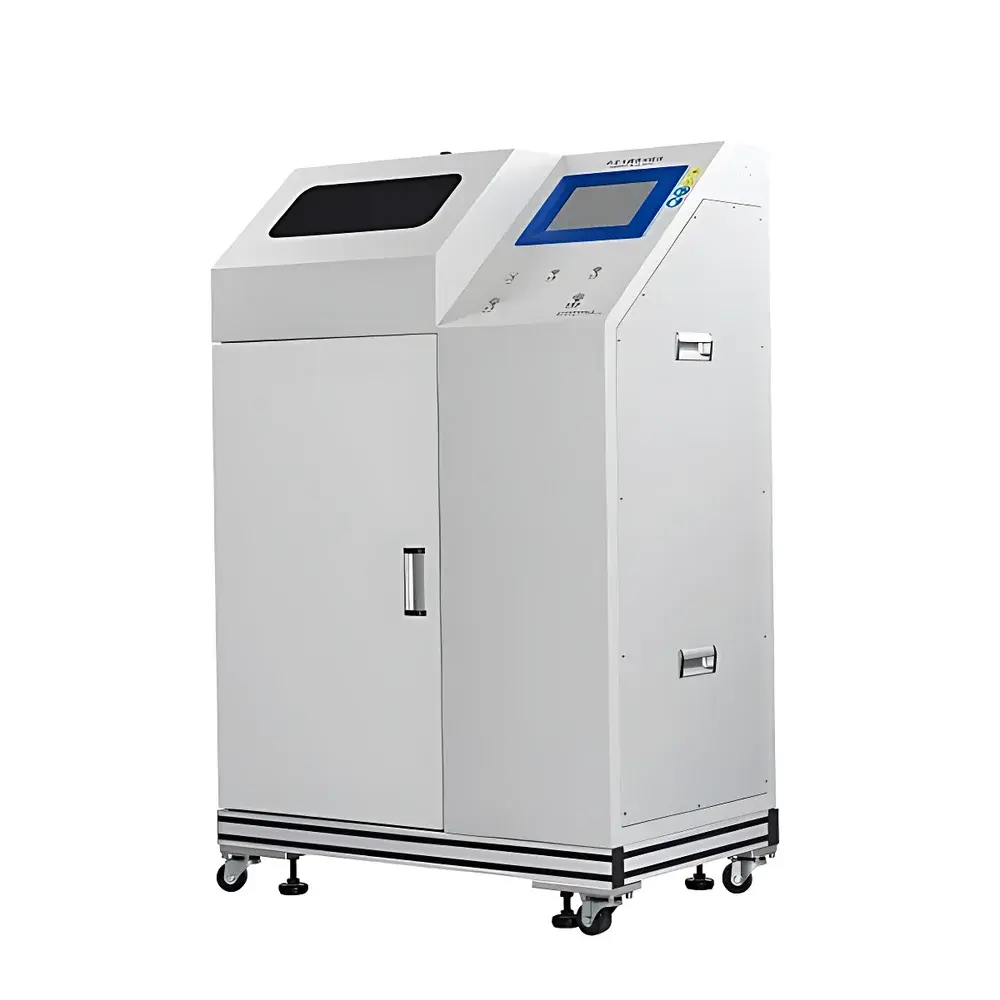
The Young Instruments HWP15-10S Spontaneous Ignition Tester for Solids is a fully automated benchtop instrument engineered to determine whether a solid substance undergoes spontaneous ignition upon contact with ambient air under standardized test conditions. It implements the fundamental principle of thermal auto-oxidation kinetics: when finely divided or porous solids are exposed to oxygen at ambient temperature and pressure, exothermic surface oxidation may initiate self-heating, leading to smoldering or open flame if heat dissipation is insufficient. This device replicates the controlled drop-and-exposure protocol defined in UN Manual of Tests and Criteria, Part III, subsection 33.3.1.4 (Test N.2) and aligned with GB/T 21611–2008, “Dangerous Goods – Test Method for Spontaneous Ignition of Flammable Solids.” The system operates within a light-tight measurement chamber to eliminate extraneous optical interference, enabling reliable detection of incipient combustion—down to faint, localized glowing or micro-flame events—via high-speed photodetection.
Key Features
- Embedded Windows CE control architecture with real-time process monitoring via an 8-inch capacitive touchscreen interface
- Nanosecond-grade optical sensor module optimized for rapid detection of luminance transients (response time ≤6 ms), capable of identifying sub-millimeter ignition points in dark-chamber conditions
- Automated sample delivery mechanism featuring precision-controlled 1-meter free-fall onto a low-thermal-conductivity marble base plate—ensuring consistent mechanical dispersion and minimizing thermal mass interference
- Integrated timing subsystem with ±0.01 s accuracy over 0–30 minute range and 1-second display resolution, compliant with regulatory traceability requirements
- Self-contained decision logic that autonomously classifies test outcomes: “ignition observed” (with timestamped event capture) or “no ignition within prescribed duration,” triggering audible/visual alerts
- Robust mechanical design with corrosion-resistant structural components and maintenance-free optical path alignment
- Full automation of sequence execution—including sample loading, drop initiation, illumination monitoring, thermal stabilization verification, and result logging—eliminating operator-dependent variability
Sample Compatibility & Compliance
The HWP15-10S accommodates powdered, granular, fibrous, or flake-like solid samples up to 2 mL volume, supporting materials ranging from metal powders (e.g., aluminum, magnesium alloys) and organic peroxides to sulfur-based compounds and nitrocellulose derivatives. It strictly adheres to the sample preparation, environmental conditioning, and pass/fail criteria outlined in UN Test N.2 and GB/T 21611–2008. Instrument validation includes documented calibration of timing circuitry, photometric threshold verification, and mechanical drop-height certification. Data outputs meet audit readiness standards for GLP-compliant laboratories and support integration into enterprise-level hazardous material classification workflows required under GHS (UN GHS Rev.10) and CLP Regulation (EC No 1272/2008).
Software & Data Management
The embedded software provides parameter configuration (test duration, sensitivity thresholds), real-time status visualization (elapsed time, sensor output waveform preview), and structured data export in CSV format. All test records include immutable metadata: date/time stamp, operator ID (optional), ambient temperature/RH reading, sample ID, and binary ignition verdict. Audit trails record user actions (e.g., parameter modification, report generation) with timestamps, satisfying basic requirements for 21 CFR Part 11–aligned environments where electronic records are retained for regulatory submission. Exported datasets are compatible with LIMS platforms and statistical analysis tools for trend evaluation across batch testing programs.
Applications
- Determination of spontaneous ignition propensity for R&D screening of novel energetic materials and battery cathode precursors
- Classification testing of industrial intermediates prior to transport under ADR/RID/IMDG Code provisions
- Quality control verification for pharmaceutical excipients prone to oxidative degradation (e.g., reduced iron, ascorbic acid derivatives)
- Regulatory dossier preparation for REACH registration and SDS authoring under EU Annex VI
- Failure analysis of thermal runaway incidents involving stored bulk solids in warehousing or process hoppers
FAQ
What safety interlocks does the HWP15-10S incorporate during operation?
The instrument features a motorized shutter that seals the observation chamber during drop initiation and remains closed until post-test cooldown confirmation; access doors are equipped with dual-channel limit switches that halt all actuation if opened mid-cycle.
Is external exhaust ventilation required?
Yes—operation must occur inside a certified fume hood or ventilated enclosure rated for combustible particulate handling, as specified in IEC 61000-6-4 and local fire codes.
Can test parameters be modified beyond the default N.2 protocol?
Only timing duration and optical sensitivity thresholds are user-adjustable; core test geometry (drop height, sample volume, chamber dimensions) is fixed per regulatory compliance requirements.
How is calibration verified for regulatory audits?
Calibration certificates for the timing module and photodetector response curve are provided at shipment; annual recalibration is recommended using NIST-traceable reference sources and documented in the instrument’s maintenance log.
Does the system support network connectivity for remote monitoring?
No—data transfer occurs exclusively via USB host port; Ethernet or Wi-Fi interfaces are omitted to maintain electromagnetic compatibility and prevent cybersecurity vulnerabilities in classified laboratory zones.





