
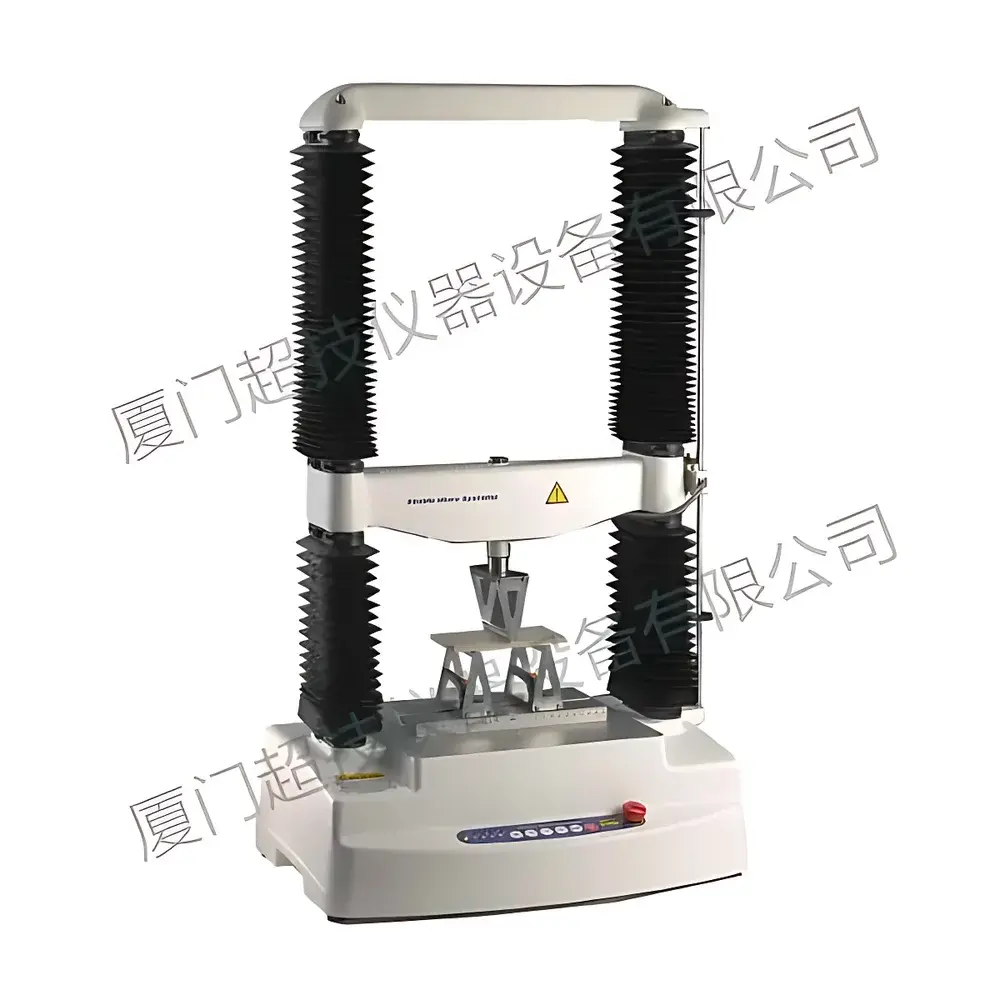
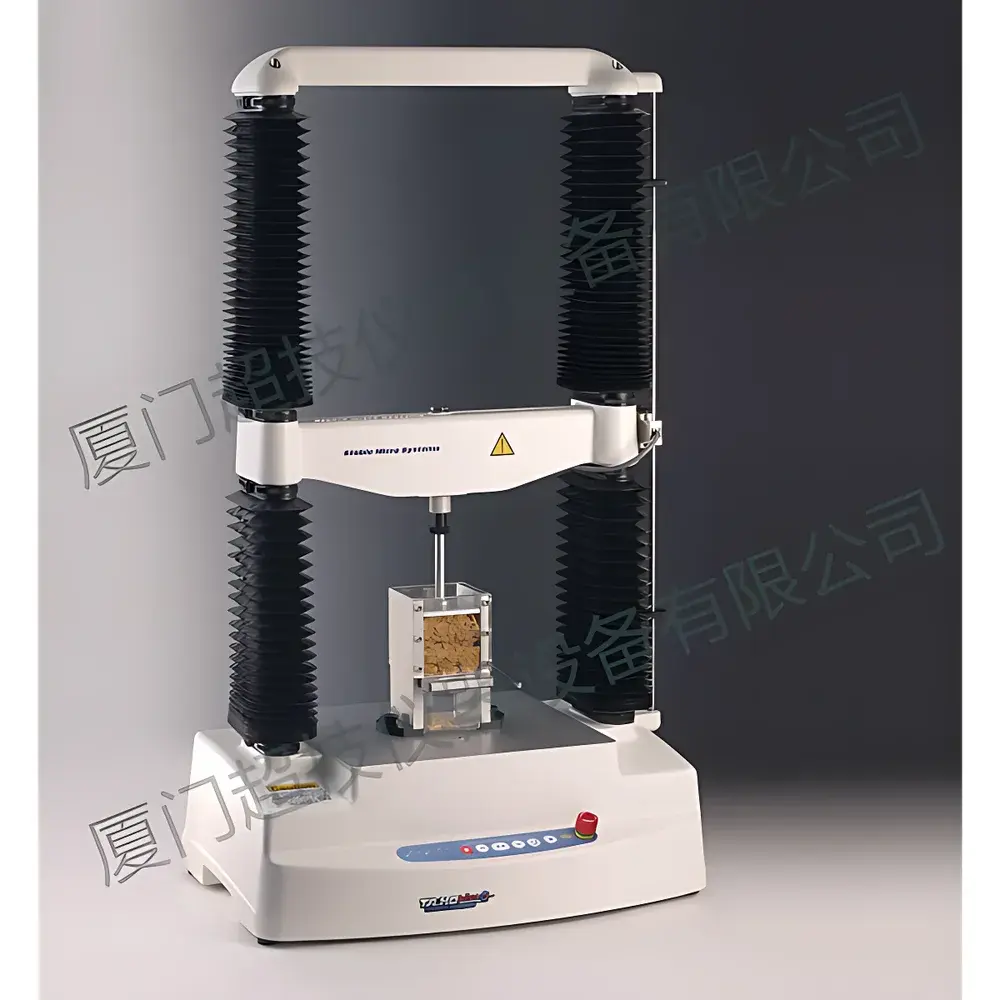
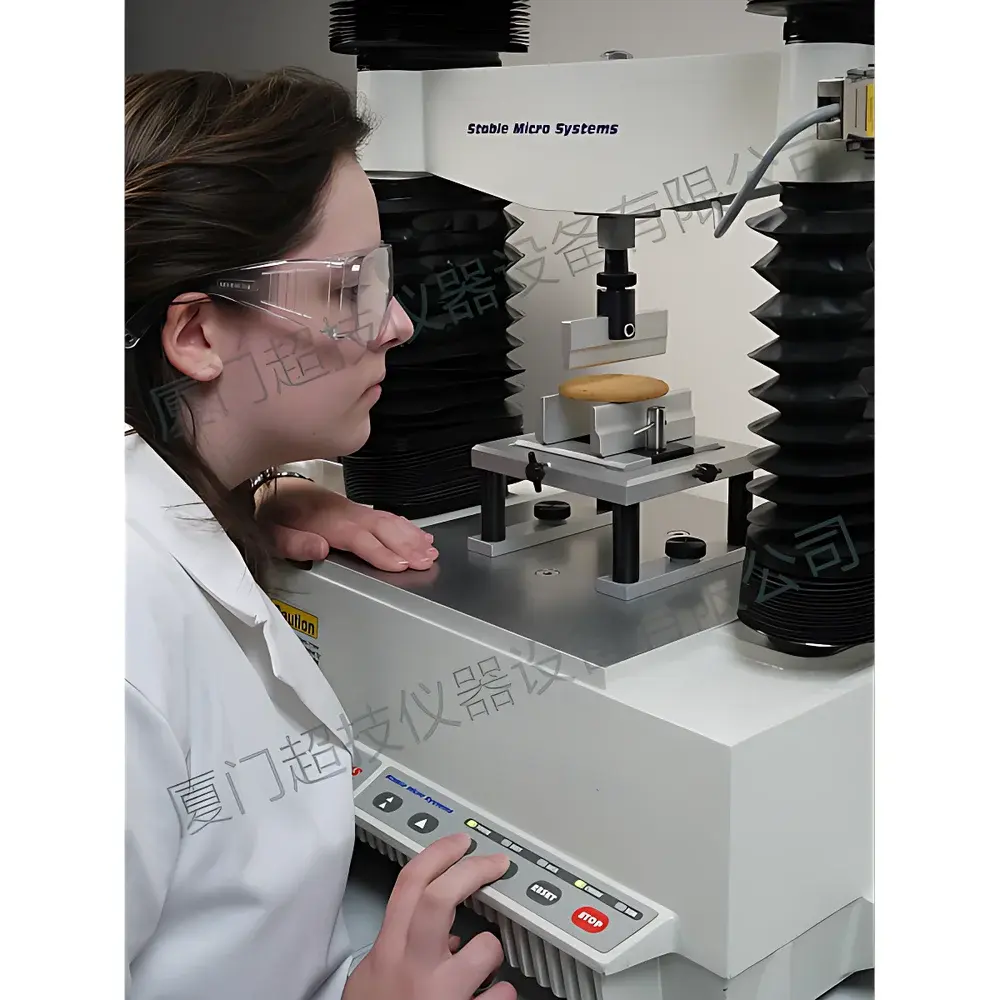
Stable Micro Systems TA.HD PlusC Heavy-Duty Dual-Arm Texture Analyzer
| Brand | Stable Micro Systems |
|---|---|
| Origin | United Kingdom |
| Model | TA.HD PlusC |
| Force Range | 0.5–750 kgf (7.5 kN) |
| Force Resolution | 0.1 g |
| Speed Range | 0.01–20 mm/s |
| Travel Distance | 0.001–550 mm |
| Distance Resolution | 0.001 mm |
| Data Acquisition Rate | 0.1–2000 pps (Exponent Connect) |
| Compliance | ASTM, AACC, AOAC, ISO, AEN/ISO, AFERA, PSTC, FINAT, GMIA |
| Sensor Options | 0.5, 5, 30, 50, 100, 250, 500, 750 kgf |
Overview
The Stable Micro Systems TA.HD PlusC is a heavy-duty dual-arm texture analyzer engineered for high-force mechanical property characterization across diverse material classes—from soft gels and dairy matrices to rigid industrial polymers and structural food products. Based on controlled-force or controlled-distance compression, tension, bending, extrusion, and shear testing, the instrument operates on fundamental principles of material mechanics: quantifying force–displacement relationships under programmable loading profiles. Its dual-column rigid frame architecture ensures minimal deflection during high-load testing (up to 750 kgf / 7.5 kN), while maintaining sub-milligram resolution for low-force applications—enabling trace-level precision in brittle fracture or surface adhesion measurements. Unlike single-arm systems constrained by structural compliance, the TA.HD PlusC’s symmetrical load path and thermally stable aluminum alloy frame deliver high reproducibility (<0.5% RSD over repeated cycles) across its full operational envelope.
Key Features
- Modular force sensing: Interchangeable calibrated load cells (0.5, 5, 30, 50, 100, 250, 500, and 750 kgf) allow optimal signal-to-noise ratio across test regimes—eliminating range-switching artifacts and enabling seamless transition from delicate gel rupture to structural meat toughness evaluation.
- Precision motion control: Stepper-motor-driven crosshead with closed-loop feedback delivers speed accuracy ±0.1% over 0.01–20 mm/s; programmable acceleration/deceleration profiles support dynamic tests such as stress relaxation, creep, and cyclic fatigue.
- Extended travel envelope: 550 mm maximum vertical travel and large sample chamber accommodate oversized specimens—including whole loaves, packaged snacks, or composite material panels—without reconfiguration.
- High-fidelity data acquisition: 16,000 Hz oversampling with real-time decimation yields true 2000 pps net acquisition rate per analog channel (excluding RS485), capturing transient events such as snap points, stick-slip transitions, and viscoelastic recovery onset.
- Multi-platform operability: Native Exponent Connect software runs on Windows desktops, embedded touchscreen interfaces, and browser-based clients (Chrome, Edge, Safari) on tablets and smartphones—enabling remote monitoring, protocol sharing, and audit-ready session logging.
Sample Compatibility & Compliance
The TA.HD PlusC accommodates heterogeneous samples ranging from micrometer-thin films to 300 mm-diameter bulk foods, thanks to its open-frame design and 400+ application-specific probes—including Kramer shear cells, Warner-Bratzler blades, spherical indenters, extrusion dies, and custom-engineered fixtures for pet food kibble or cosmetic creams. All hardware and software modules comply with international standardization frameworks essential for regulated environments: ASTM F3165 (food texture), AACC 74-09 (dough extensibility), AOAC 985.29 (cheese firmness), ISO 11357-3 (polymer thermal-mechanical behavior), and EN/ISO 17025:2017 (testing laboratory competence). Instrument validation protocols—including force calibration traceability to UKAS-accredited standards—and full 21 CFR Part 11-compliant electronic records (audit trail, user authentication, e-signature) are supported via Exponent Connect Enterprise licensing.
Software & Data Management
Exponent Connect serves as both acquisition engine and analytical platform. The software provides preconfigured test methods aligned with AACC, AOAC, and ISO guidelines—including TPA (Texture Profile Analysis), puncture, compression, and tensile break tests—with automatic parameter derivation (hardness, cohesiveness, springiness, chewiness, gumminess, resilience). Raw force–distance curves are stored in vendor-neutral CSV and HDF5 formats; metadata (operator ID, timestamp, environmental conditions, probe ID) is embedded per test. Batch processing, statistical comparison (ANOVA, Tukey HSD), and GLP/GMP-compliant report generation—including PDF export with digital signature fields—are fully scriptable. Data integrity safeguards include write-once storage mode, encrypted database backups, and configurable retention policies aligned with FDA and EFSA documentation requirements.
Applications
Validated use cases span regulated and research-intensive domains: quantification of starch gelatinization kinetics in rice noodles (AACC 61-02); measurement of myofibrillar fragmentation index in processed meats; evaluation of chocolate snap force and temper stability per ISO 8586; characterization of hydrogel swelling pressure in wound dressings; assessment of tablet friability and disintegration under USP ; and mechanical screening of biodegradable packaging films per ASTM D882. Academic users leverage the system for rheo-mechanical modeling of plant cell wall deformation, while industrial QC labs deploy it for shelf-life monitoring of yogurt syneresis and baked good staling—using time-series hardness tracking against reference batches.
FAQ
What force ranges does the TA.HD PlusC support without sensor swapping?
The instrument supports continuous operation across 0.5–750 kgf only when equipped with the 750 kgf load cell—but optimal resolution below 10 kgf requires switching to lower-capacity sensors (e.g., 5 kgf or 0.5 kgf) to maintain ≤0.1 g effective resolution.
Is the system compatible with third-party environmental chambers?
Yes—standardized mounting interfaces and analog/digital I/O ports (0–10 V, TTL, RS232) enable synchronized temperature/humidity control with commercial chambers (e.g., Binder, Memmert), with environmental parameters logged alongside mechanical data.
How is calibration traceability maintained?
Each load cell ships with UKAS-accredited calibration certificate (ISO/IEC 17025); field recalibration is performed using NIST-traceable deadweight standards, with calibration history archived in Exponent Connect’s secure database.
Can the system perform multi-cycle fatigue testing?
Yes—programmable sequence logic allows up to 999 repeat cycles per test method, with inter-cycle dwell times, variable amplitude ramping, and conditional termination (e.g., failure detection via slope threshold).
Does Exponent Connect support automated pass/fail decision logic?
Yes—user-defined acceptance criteria (e.g., “fracture force > 12.5 N ± 0.3 N”) can trigger visual alerts, email notifications, and auto-flagging in batch summary reports, supporting integration into MES/QMS workflows.





