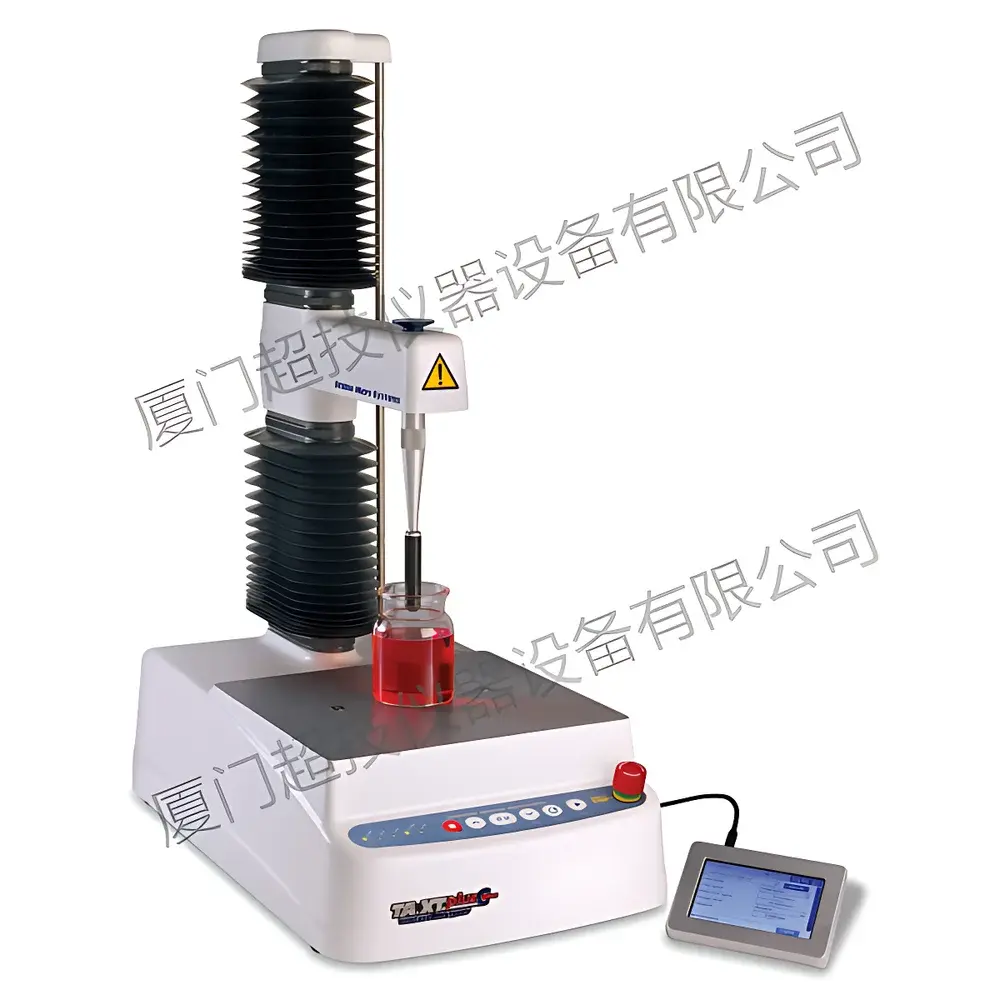
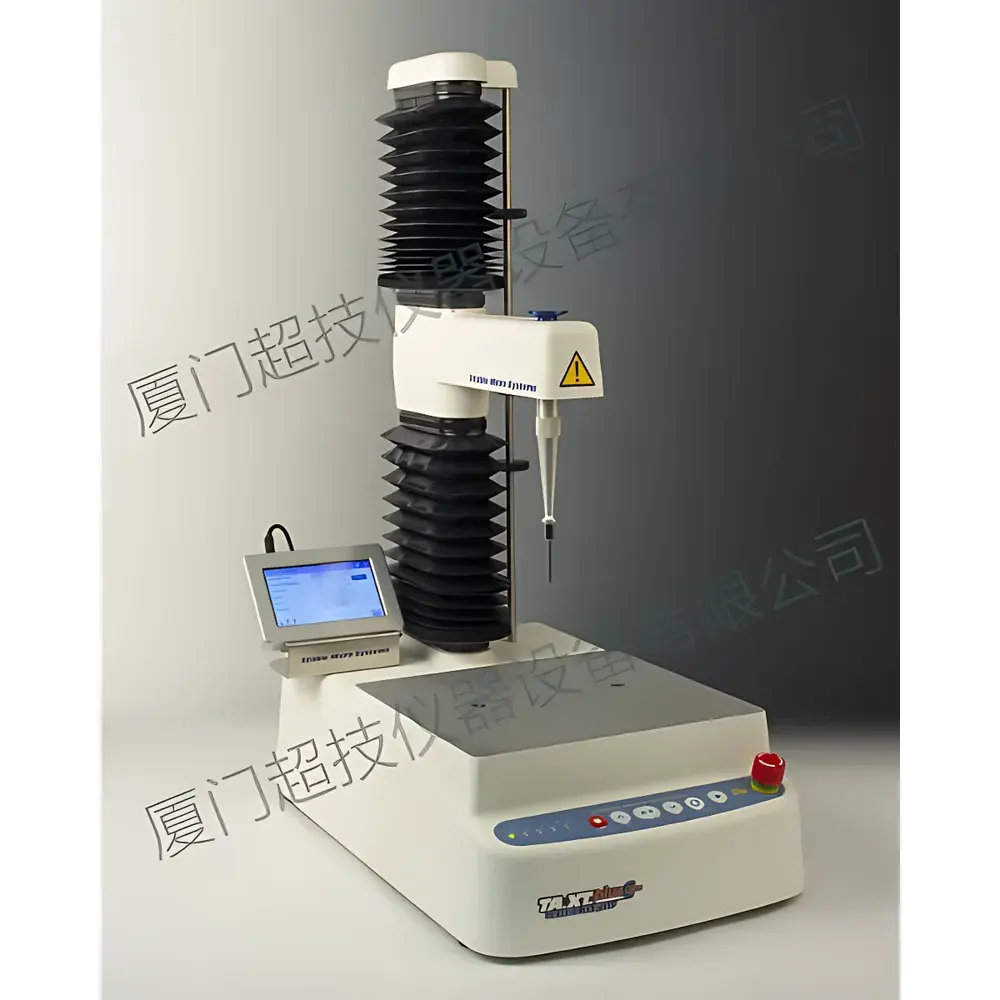
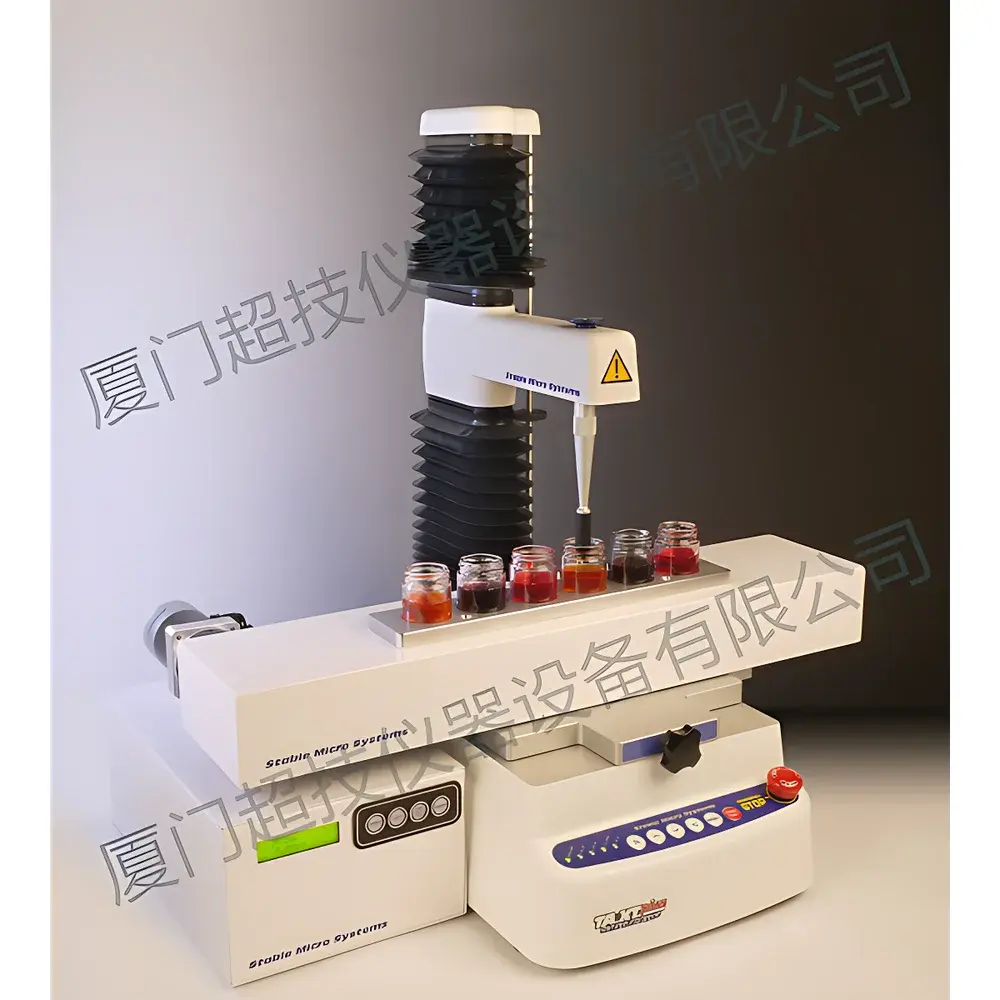
Stable Micro Systems TA.XT PlusC Texture Analyzer
| Brand | Stable Micro Systems |
|---|---|
| Origin | United Kingdom |
| Model | TA.XT PlusC |
| Force Range | 0.5–50 kg |
| Force Resolution | 0.1 g |
| Speed Range | 0.01–40 mm/s |
| Travel Distance | 0.001–370 mm |
| Position Resolution | 0.001 mm |
| Data Acquisition Rate | >2,000 samples/sec (4 channels simultaneously) |
Overview
The Stable Micro Systems TA.XT PlusC Texture Analyzer is a single-column, benchtop mechanical testing instrument engineered for high-precision texture and physical property analysis of solid, semi-solid, viscoelastic, and particulate materials. Operating on the fundamental principles of controlled-force compression, tension, penetration, extrusion, and shear deformation, the TA.XT PlusC quantifies mechanical responses—including hardness, fracturability, adhesiveness, cohesiveness, springiness, chewiness, gumminess, and resilience—according to standardized instrumental texture profiling (e.g., TPA – Texture Profile Analysis). Its modular architecture supports both routine quality control and advanced research applications across food science, pharmaceuticals, cosmetics, biomaterials, and industrial polymers. Designed and manufactured in the UK, the instrument complies with international metrological requirements for force, displacement, and timing accuracy, making it suitable for GLP-compliant laboratories and regulatory submissions.
Key Features
- High-resolution load cell with ±0.1 g force resolution and selectable full-scale ranges (0.5, 5, 10, 30, and 50 kg) to ensure optimal signal-to-noise ratio across diverse sample stiffnesses.
- Programmable crosshead speed from 0.01 to 40 mm/s, enabling precise replication of physiological or process-relevant deformation rates—from slow creep relaxation to rapid snap fracture.
- Sub-micron positional fidelity: 0.001 mm travel resolution over a 370 mm maximum stroke, supporting both standard and extended-height configurations (up to 590 mm optional).
- Real-time multi-channel data acquisition at >2,000 Hz per channel (4 synchronized analog inputs), capturing transient events such as brittle failure onset or viscoelastic recovery with temporal integrity.
- Integrated environmental monitoring: simultaneous logging of ambient temperature and humidity alongside mechanical parameters, critical for hygroscopic or thermosensitive samples.
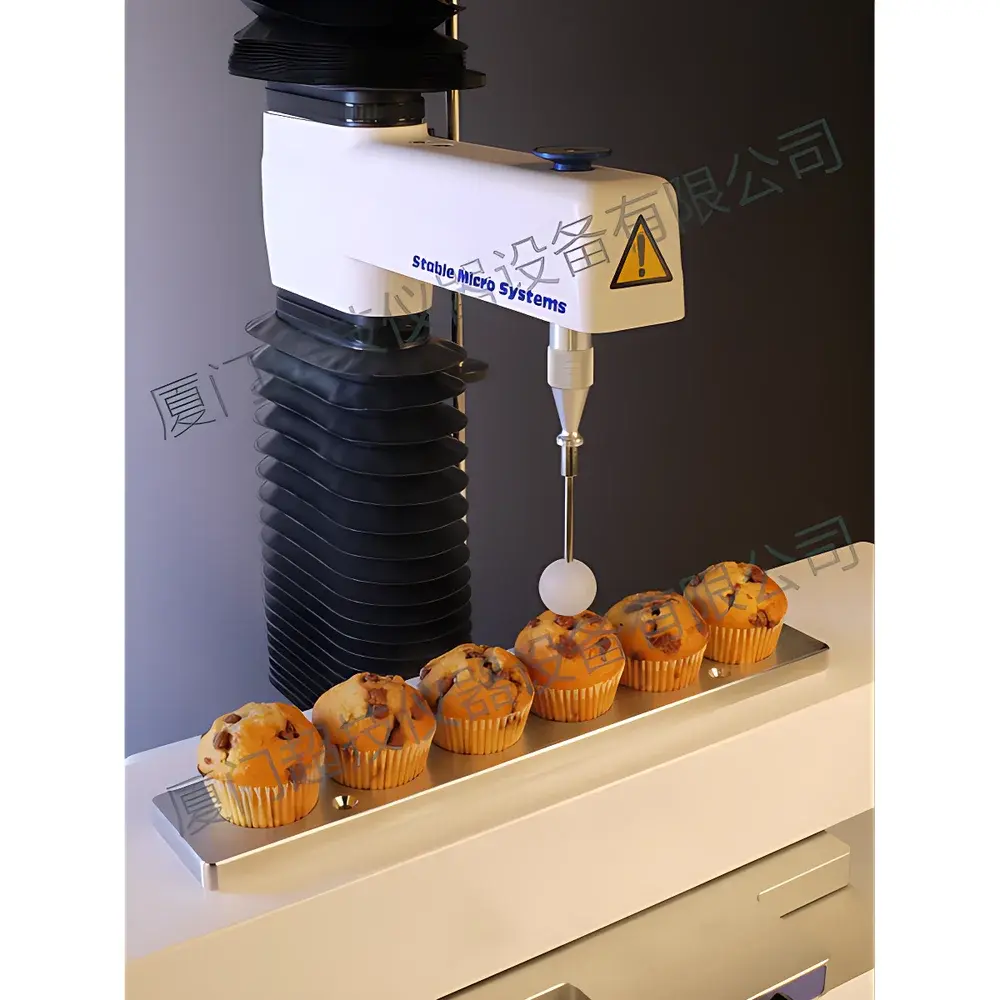
- Comprehensive probe and fixture library: over 400 application-specific attachments—including Warner-Bratzler blades, Kramer shear cells, spherical probes, dough extensibility rigs, and capsule puncture fixtures—validated against AACC, AOAC, ASTM, ISO, and PSTC methods.
- Self-calibrating force system: automated verification using NIST-traceable external weights, generating audit-ready calibration reports compliant with ISO/IEC 17025 and FDA 21 CFR Part 11 requirements.
Sample Compatibility & Compliance
The TA.XT PlusC accommodates heterogeneous matrices ranging from low-viscosity gels and dairy emulsions to dense meat analogs, baked goods, confectionery, pharmaceutical tablets, cosmetic creams, and adhesive films. Its open-frame design permits easy insertion of large or irregularly shaped specimens (e.g., whole fruits, loaves, or packaged products). The instrument meets essential compliance benchmarks for analytical instrumentation: ISO 11357 (plastics—thermal analysis), ISO 6673 (food—determination of moisture), ASTM E384 (microhardness), and AACC 74-09 (TPA of bakery products). All firmware and software modules support electronic signatures, audit trails, and user-access controls required under GMP/GLP environments.
Software & Data Management
Exponent Connect software—available in English, Chinese, Spanish, French, German, and Japanese—provides a unified interface for method development, real-time visualization, statistical analysis, and report generation. It includes pre-loaded, peer-reviewed test protocols (e.g., AACC 74-09, ISO 11357-3, AOAC 985.29), animated procedural guidance, contextual glossaries, and citation-ready export formats (CSV, PDF, XML). Raw data streams are stored with metadata tags (operator ID, timestamp, environmental conditions, calibration status), ensuring traceability. Data security conforms to GDPR and HIPAA-aligned encryption standards; local network deployment eliminates cloud dependency for sensitive R&D datasets.
Applications
- Food Science: Quantification of dough extensibility, crumb firmness, fruit softening kinetics, cheese melt behavior, candy snap force, and pet food kibble durability.
- Pharmaceuticals: Tablet friability, capsule shell rupture strength, hydrogel swelling resistance, and transdermal patch tack measurement.
- Cosmetics: Cream spreadability, lipstick breakage torque, mascara film flexibility, and sunscreen film cohesion.
- Materials Research: Adhesive peel strength, polymer film puncture resistance, aerogel compressive modulus, and 3D-printed scaffold deformation thresholds.
- Academic & Regulatory Labs: Method validation studies, inter-laboratory proficiency testing, and development of novel texture descriptors aligned with ISO/TC 34 and Codex Alimentarius frameworks.
FAQ
What standards does the TA.XT PlusC comply with?
It supports method execution and reporting aligned with AACC, AOAC, ASTM, ISO, PSTC, AFERA, and FINAT standards; its calibration protocol satisfies ISO/IEC 17025 and national metrology requirements.
Can the instrument perform dynamic or cyclic testing?
Yes—via Exponent Connect’s programmable waveform engine, users can define multi-stage tests including oscillatory compression, stress-relaxation, creep-recovery, and sinusoidal loading profiles.
Is remote operation supported?
The instrument features browser-based control (HTML5) accessible via LAN/Wi-Fi from tablets, smartphones, or desktops—no proprietary client software required.
How is force accuracy maintained over time?
Through periodic self-validation using certified external weights; the software records each verification event with date/time stamp, deviation values, and pass/fail status in an immutable log.
What sample types require environmental conditioning?
Hygroscopic foods (e.g., crackers, dried fruits), temperature-sensitive gels (e.g., pectin, gelatin), and pharmaceutical dosage forms benefit from concurrent temperature/humidity logging during texture measurement.