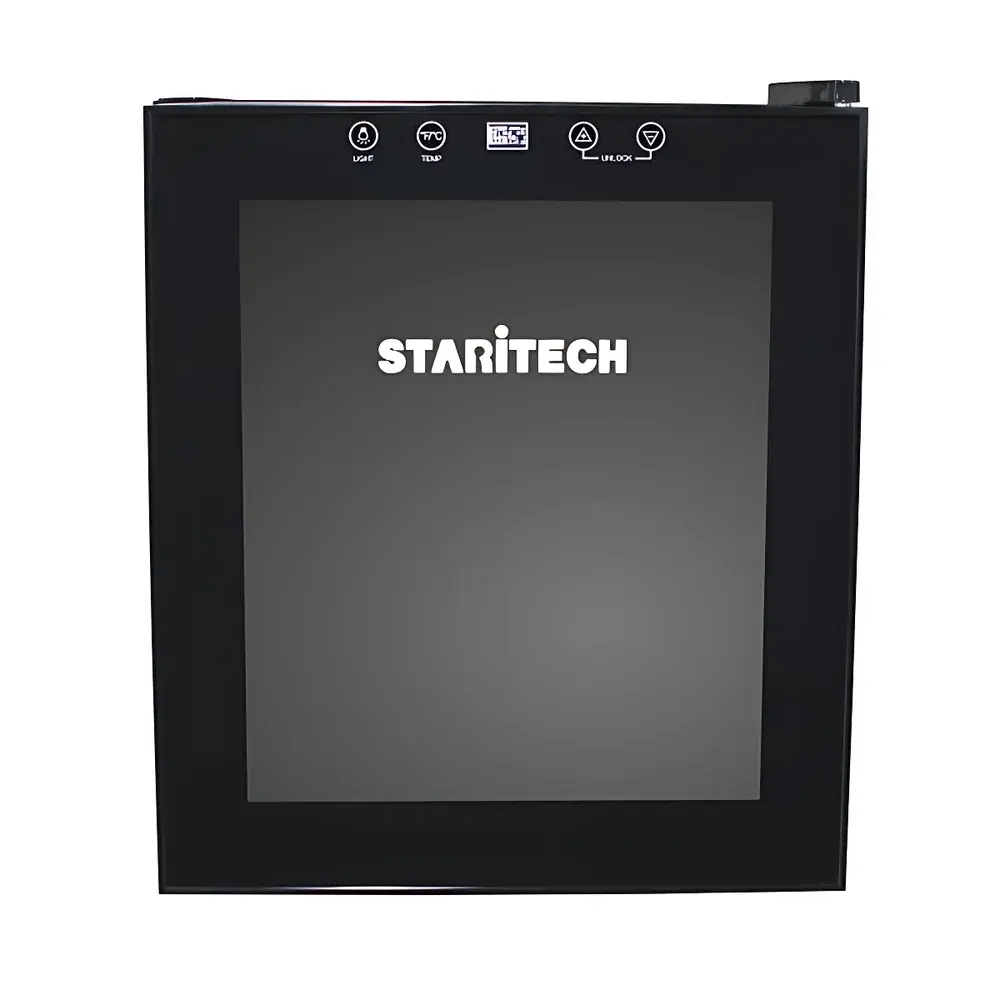
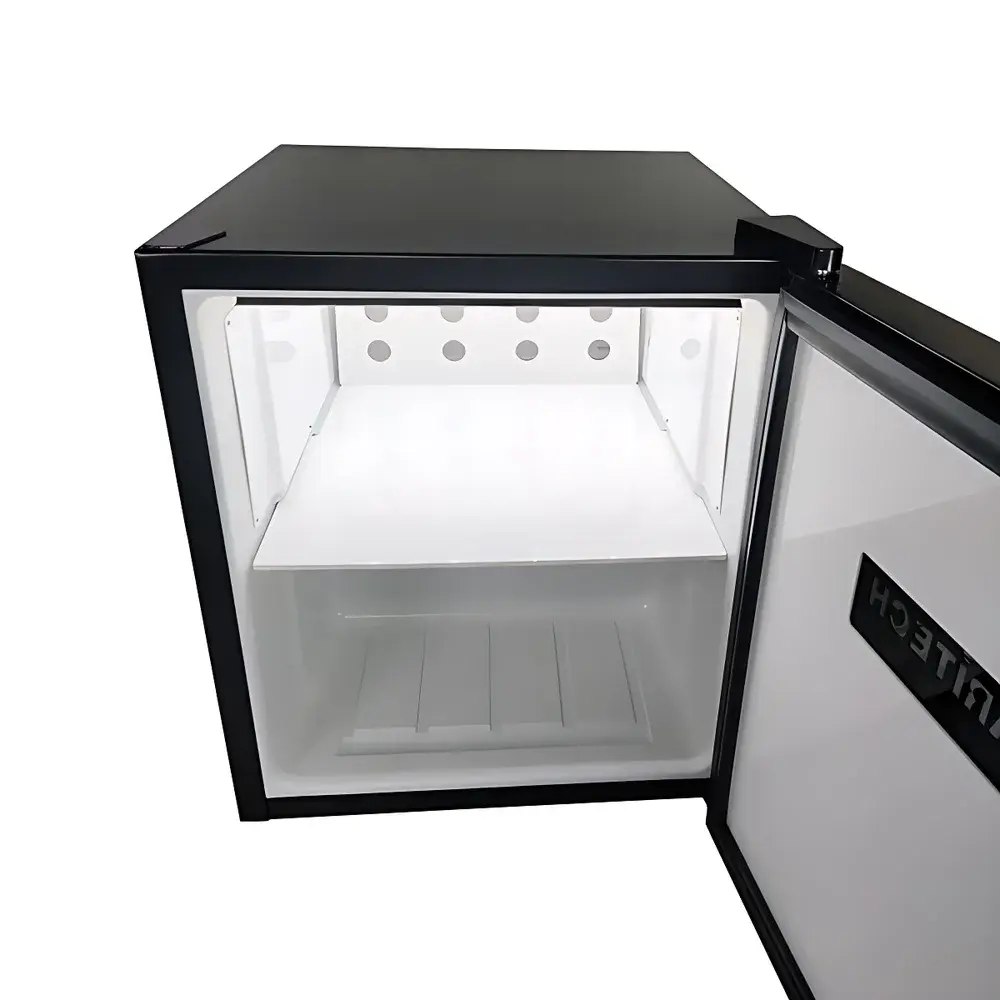
STARiTECH LS-4000UV Photostability Testing Chamber
| Brand | STARiTECH |
|---|---|
| Model | LS-4000UV |
| Chamber Volume | 46 L |
| Light Source Lifetime | >20,000 h |
| Compliance | Chinese Pharmacopoeia (ChP) General Chapter 9001, ICH Q1B |
| Printer | External Real-time Thermal Recorder |
| Viewing Window | Integrated Optical Glass Port |
| Power Supply | 220 V AC, 50 Hz |
Overview
The STARiTECH LS-4000UV Photostability Testing Chamber is an engineered environmental simulation system designed specifically for regulatory-compliant photostability assessment of pharmaceuticals, cosmetics, and advanced functional materials. It operates on the principle of controlled ultraviolet (UV) and visible light exposure under standardized temperature and humidity conditions—aligned with the core requirements of ICH Q1B “Photostability Testing of New Drug Substances and Products” and ChP General Chapter 9001 “Stability Testing of Drug Products.” Unlike general-purpose climate chambers, the LS-4000UV integrates a spectrally stable UV-A (320–400 nm) dominant fluorescent lamp array with calibrated irradiance output, enabling reproducible light stress profiles across test cycles. Its 46 L single-chamber architecture ensures uniform photon flux distribution (±5% spatial variation per ICH Q1B Annex 1), while maintaining thermal stability within ±0.5 °C at setpoints between 20–30 °C—critical for decoupling photolytic degradation from thermally accelerated pathways.
Key Features
- Regulatory-grade UV illumination system compliant with ICH Q1B Option 1 (UV/visible light source) and Option 2 (cool white fluorescent + near-UV lamps), delivering defined irradiance levels (e.g., ≥1.2 × 10⁶ lux·h visible; ≥200 W·h/m² UV) across the sample plane.
- Dual-sensor irradiance monitoring with real-time feedback control to maintain consistent photon dose throughout extended exposure periods (up to 1,000 hours).
- Integrated optical-grade borosilicate viewing window (transmittance >90% in 300–400 nm range) enabling non-invasive visual inspection without chamber interruption or environmental perturbation.
- Externally mounted thermal line printer providing time-stamped, tamper-evident hardcopy records of chamber temperature, relative humidity, and cumulative irradiance—supporting ALCOA+ data integrity principles.
- Robust stainless-steel interior with rounded corners and seamless welds, facilitating cleaning validation and minimizing particle retention in GMP-aligned environments.
- Microprocessor-based controller with password-protected parameter locking, event logging, and configurable alarm thresholds for temperature, humidity, and lamp operational status.
Sample Compatibility & Compliance
The LS-4000UV accommodates standard pharmaceutical packaging formats—including open Petri dishes, amber vials, blister packs, and loose powder trays—within its uniformly illuminated workspace. Sample trays are removable and autoclavable. The chamber meets essential design criteria for GLP and GMP-regulated laboratories: it supports full traceability via unique run IDs, provides audit-ready electronic logs (exportable as CSV), and enables user role-based access control. While not pre-certified to ISO/IEC 17025, its performance verification protocol aligns with ASTM E2473-22 “Standard Practice for Validation of Photostability Chambers,” and routine qualification can be executed per USP and FDA Guidance for Industry (2022) on Analytical Procedure Development and Validation.
Software & Data Management
The embedded control firmware stores all operational parameters, sensor readings, and alarm events in non-volatile memory with timestamp resolution of 1 second. Data export is supported via USB flash drive (FAT32 format) in comma-separated values (CSV), compatible with LIMS integration and statistical process analysis tools (e.g., JMP, Minitab). The system adheres to FDA 21 CFR Part 11 requirements through electronic signature capability, audit trail activation (including user ID, action type, timestamp, and pre-/post-change values), and data immutability after finalization. No cloud connectivity or remote access is implemented—ensuring data sovereignty and eliminating cybersecurity vulnerabilities associated with networked instrumentation.
Applications
- ICH Q1B photostability screening of drug substances and products under Option 1 (broad-spectrum UV/vis) and Option 2 (fluorescent + UV-A) protocols.
- Forced degradation studies to identify photolytic impurities per ICH Q5C and support specification setting.
- Light-induced stability testing of topical formulations (creams, gels, sunscreens) and ophthalmic solutions per regional pharmacopoeial monographs.
- Accelerated aging of polymer-based medical device packaging and photoactive biomaterials under controlled UV exposure.
- Comparative photodegradation kinetics of cosmetic actives (e.g., retinoids, vitamin C derivatives) under standardized irradiance conditions.
FAQ
Does the LS-4000UV meet ICH Q1B Option 2 requirements for cool white fluorescent + near-UV lamps?
Yes—the dual-lamp configuration includes T8 cool white fluorescent tubes (6500 K CCT) and UV-A fluorescent lamps (peak emission ~365 nm), calibrated to deliver minimum irradiance thresholds specified in ICH Q1B Annex 1.
Can the chamber operate without humidity control?
Yes—humidity control is optional and can be disabled; the system defaults to ambient RH tracking mode with no active humidification or dehumidification when not enabled.
Is lamp spectral output validated and documented per batch?
Each lamp batch is supplied with manufacturer-provided spectral power distribution (SPD) curves and integrated irradiance certificates traceable to NIM (National Institute of Metrology, China).
What is the recommended calibration frequency for irradiance sensors?
Annual recalibration against a NIST-traceable reference radiometer is recommended; internal zero-point verification should be performed before each test campaign.
Does the external printer support continuous real-time logging during power interruption?
No—the thermal printer operates only when the chamber is powered and actively recording; however, internal memory retains all data uninterrupted during brief outages (<5 min).