
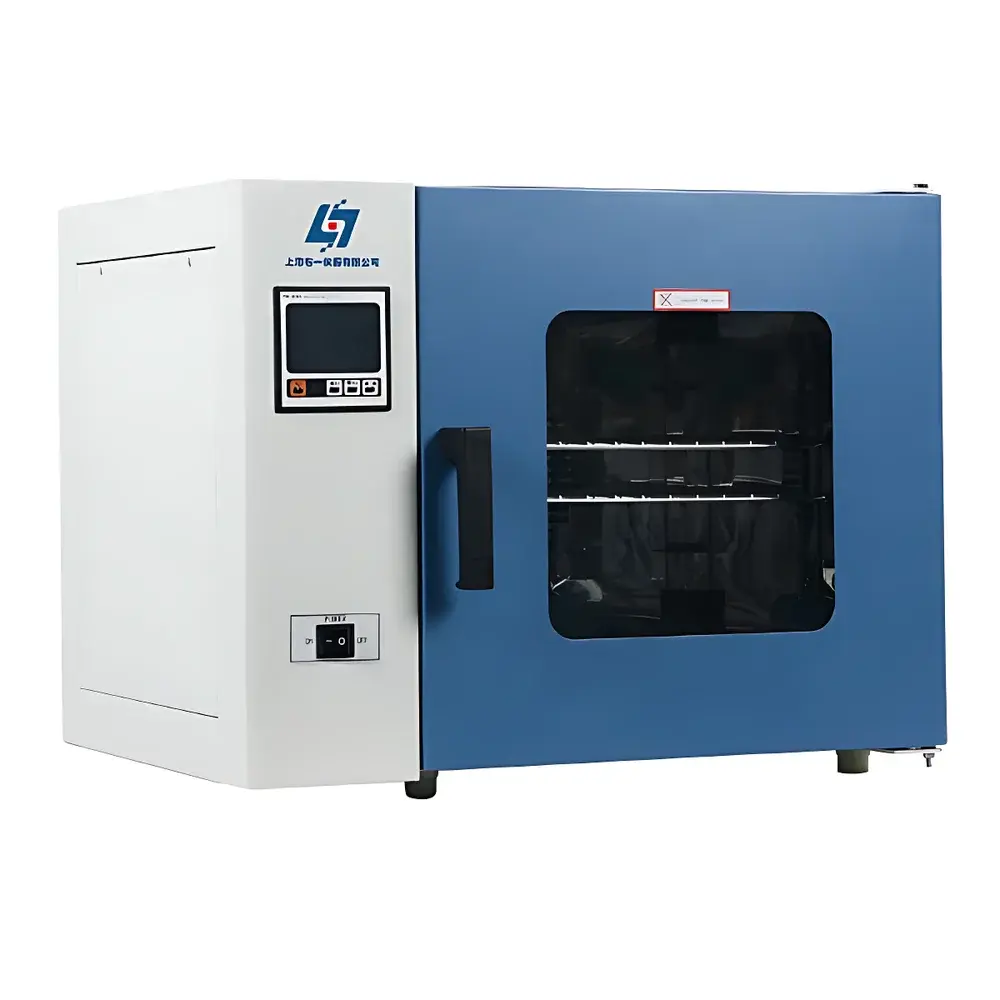
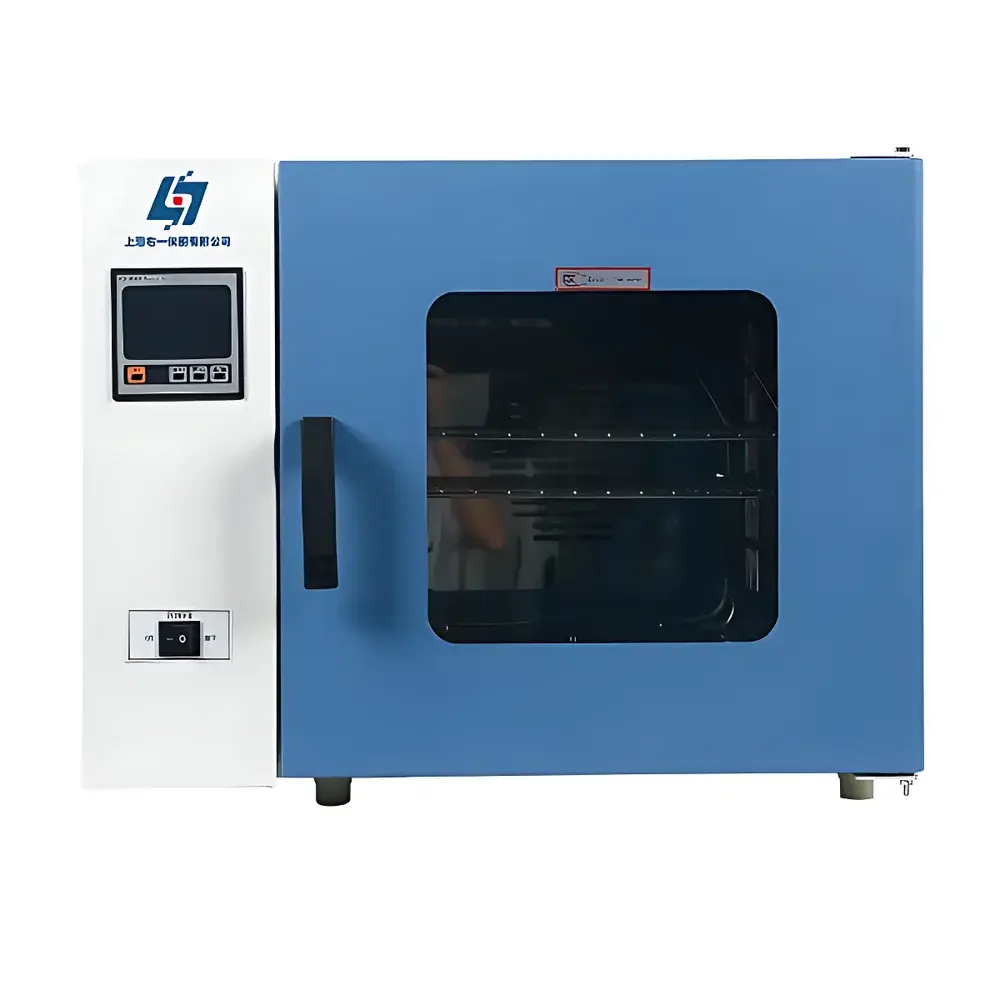
Yoyi DHG-9260C Benchtop Nitrogen-Purged Forced-Air Constant-Temperature Drying Oven
| Brand | Yoyi |
|---|---|
| Origin | Shanghai, China |
| Manufacturer Type | Direct Manufacturer |
| Product Category | Domestic |
| Model | DHG-9260C |
| Instrument Type | Precision Drying Oven |
| Temperature Fluctuation | ±1℃ |
| External Dimensions | 880×800×930 mm |
| Temperature Control Range | RT+10℃ to 250℃ |
| Internal Chamber Dimensions | 600×595×750 mm |
| Temperature Resolution | 0.1℃ |
| Interior Material | Mirror-Finish Stainless Steel (SUS304) |
| Heating Method | Electric Resistive Heating |
| Temperature Uniformity | ±2.5% (measured at 100℃, non-purged condition) |
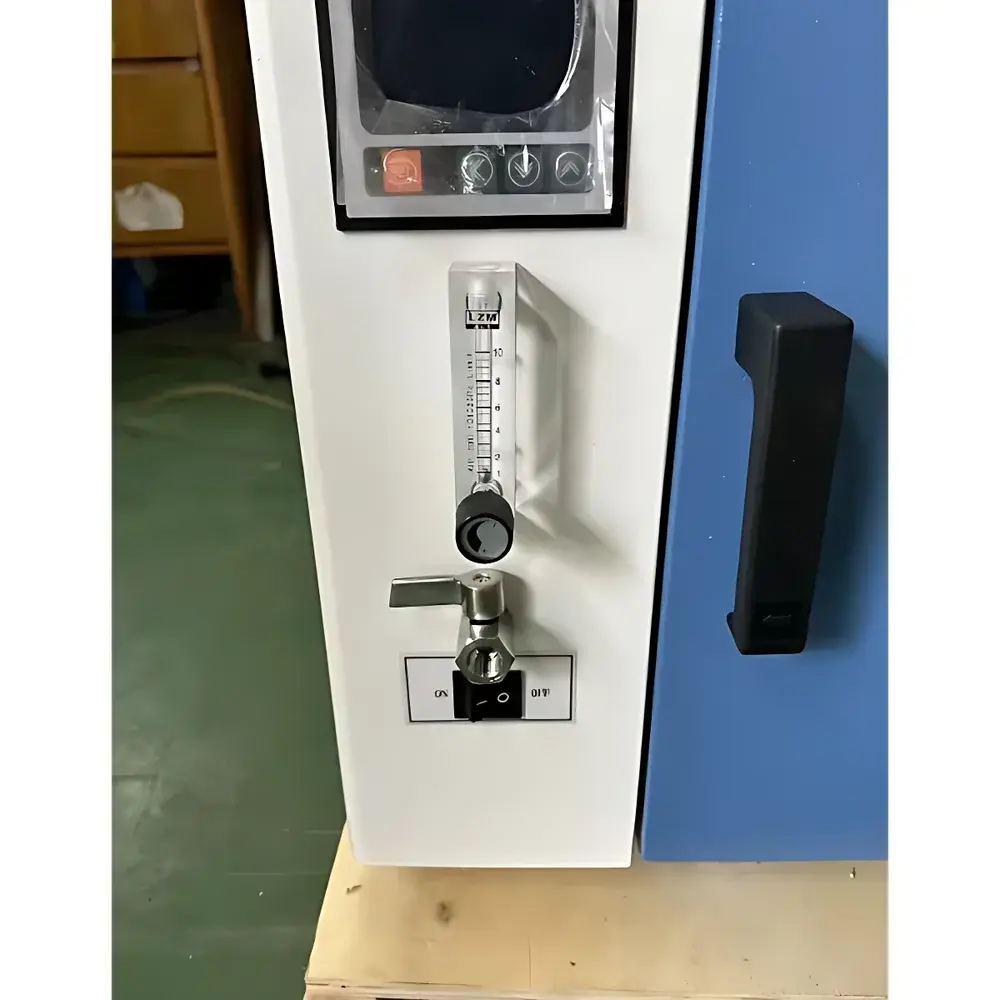
| Inert Gas Inlet | Φ10 mm |
| Nitrogen Flow Rate | 0–10 L/min |
| Control Interface | 4.3-inch LCD with Microcomputer PID Algorithm |
| Power Input | 2550 W |
| Ambient Operating Temperature | RT+5℃ to 40℃ |
| Chamber Volume | 270 L |
| Shelf Capacity | 2 adjustable stainless steel shelves |
| Timer Range | 1–9999 minutes |
| Compliance | Designed for GLP-compliant environments |
Overview
The Yoyi DHG-9260C is a benchtop nitrogen-purged forced-air drying oven engineered for precision thermal processing in regulated laboratory and industrial settings. It operates on the principle of convective heat transfer enhanced by inert gas displacement—specifically nitrogen—to suppress oxidation, moisture retention, and volatile decomposition during drying, curing, sterilization, or thermal stabilization of sensitive materials. Unlike standard convection ovens, the DHG-9260C integrates a dedicated inert gas inlet port (Φ10 mm), calibrated float-type flowmeter (0–10 L/min), and automated exhaust ducting to maintain a continuously refreshed, low-oxygen chamber atmosphere. This architecture ensures reproducible thermal profiles across the full working volume (270 L), particularly critical for applications involving thermolabile pharmaceutical actives, polymer precursors, electronic components, and biological reference standards.
Key Features
- Microprocessor-based PID temperature control system with 0.1℃ resolution and ±1℃ stability (at setpoint), validated under no-load conditions per IEC 61000-4-3 electromagnetic compatibility standards.
- Forced-air circulation via rear-mounted axial fan and optimized baffle-guided wind tunnel design, achieving ±2.5% temperature uniformity at 100℃ (non-purged baseline); uniformity improves under continuous N₂ purge due to reduced thermal stratification.
- Double-layer tempered glass observation window with high-seal silicone gasket (rated to 250℃), enabling real-time visual monitoring without compromising chamber integrity or thermal efficiency.
- Chamber constructed from mirror-finish SUS304 stainless steel with seamless welding and electropolished interior surfaces—minimizing particle shedding and facilitating cleaning validation per FDA 21 CFR Part 11 Annex 11 requirements.
- Robust cold-rolled steel exterior with epoxy-polyester powder coating, corrosion-resistant and compliant with ISO 9227 salt-spray testing for long-term durability in multi-user lab environments.
- Intelligent power recovery function: automatically restores pre-interruption setpoints and timer values after power loss or controller reset, eliminating manual reconfiguration and reducing procedural deviation risk.
- Front-panel 4.3-inch TFT-LCD interface with intuitive menu navigation—displays set temperature, actual chamber temperature, elapsed time, remaining time, and alarm status simultaneously.
Sample Compatibility & Compliance
The DHG-9260C accommodates diverse sample formats—including Petri dishes, glass vials, aluminum trays, and PCB substrates—within its 600×595×750 mm stainless steel chamber. Its inert gas compatibility makes it suitable for oxygen-sensitive processes such as lyophilization pre-drying, catalyst activation, anhydrous solvent removal, and accelerated aging of elastomers per ASTM D573. The unit meets mechanical safety requirements per EN 61010-1 and thermal safety classification Class II (double-insulated). While not certified as explosion-proof, its nitrogen purging capability aligns with OSHA 1910.1200 hazard communication guidelines for handling flammable solvents in controlled atmospheres. Documentation packages support IQ/OQ/PQ execution per GMP Annex 15 and ISO/IEC 17025 clause 5.4.2.
Software & Data Management
The embedded controller logs timestamped temperature data at user-defined intervals (1–60 sec), storing up to 10,000 records internally. Optional RS485 interface (available as add-on) enables Modbus RTU communication with LIMS or SCADA systems for centralized monitoring and CSV export. When paired with the optional embedded thermal printer (1500 RMB), hard-copy traceability of each run—including start/stop times, max/min temperatures, and alarm events—is generated automatically. All digital records include operator ID fields and tamper-evident timestamps, satisfying ALCOA+ principles (Attributable, Legible, Contemporaneous, Original, Accurate, Complete, Consistent, Enduring, Available) for regulatory submissions.
Applications
- Pharmaceutical: Residual solvent removal from APIs under inert atmosphere per ICH Q5C; dry-heat sterilization of glassware and stainless tools (180℃/120 min).
- Materials Science: Curing of epoxy resins and polyimide films where oxidative crosslinking must be suppressed.
- Electronics: Pre-baking of PCB assemblies prior to conformal coating to eliminate moisture-induced delamination.
- Food & Agriculture: Moisture content determination of herbs, spices, and feedstock per AOAC 950.46, minimizing Maillard reaction artifacts.
- Academic Research: Controlled pyrolysis studies, catalyst calcination, and thermal gravimetric method development.
FAQ
What inert gases are compatible with the DHG-9260C?
Nitrogen (N₂) is the primary recommended gas; argon may also be used. Compressed air or oxygen-rich mixtures are strictly prohibited.
Is calibration certification included with shipment?
A factory-issued temperature uniformity report (per ISO 17025-accredited internal protocol) is provided. NIST-traceable third-party calibration is available upon request.
Can the oven operate continuously at 250℃?
Yes—the heating elements, insulation, and door seal are rated for uninterrupted operation at maximum setpoint (250℃) for ≥72 hours.
How is temperature uniformity verified during qualification?
Using nine calibrated PT100 sensors per ISO 22196 Annex B, placed at geometric center and six cardinal points plus top/bottom corners.
Does the unit comply with FDA 21 CFR Part 11 for electronic records?
The base model supports audit trail generation; full Part 11 compliance requires optional software module and electronic signature configuration.



