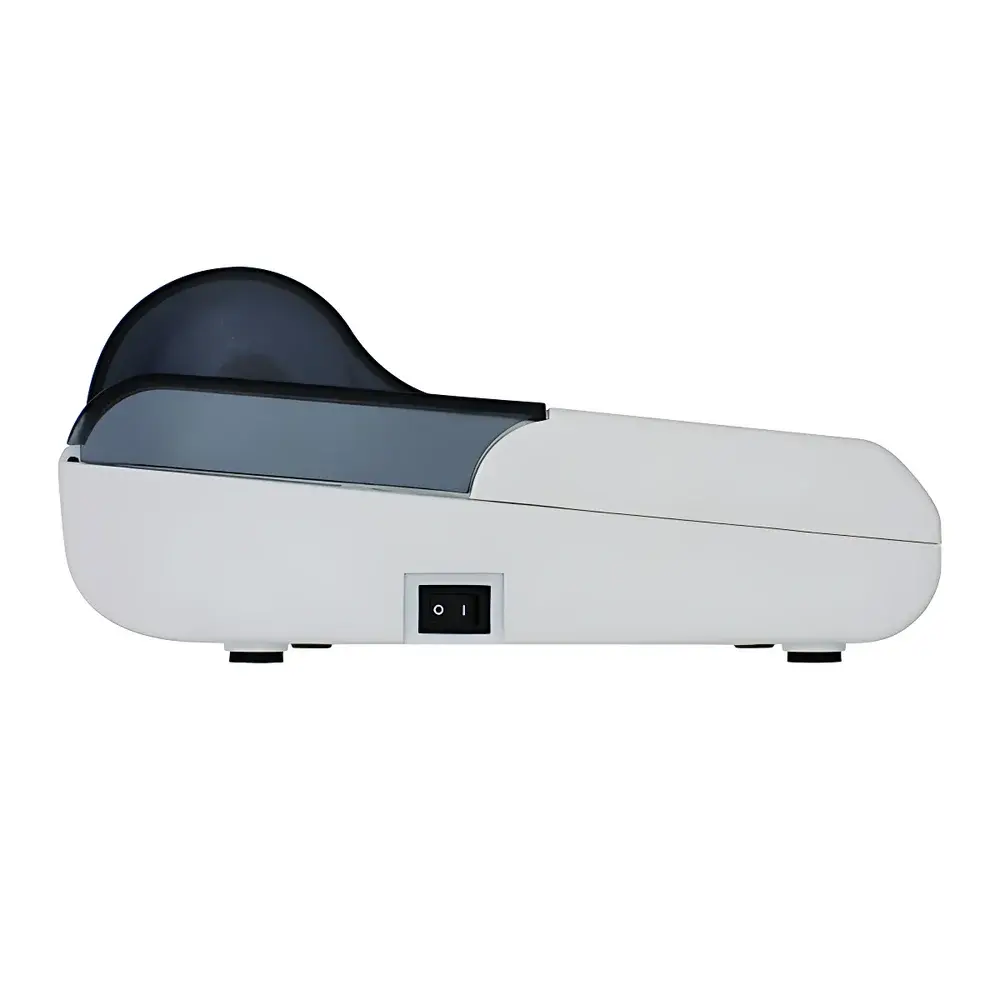
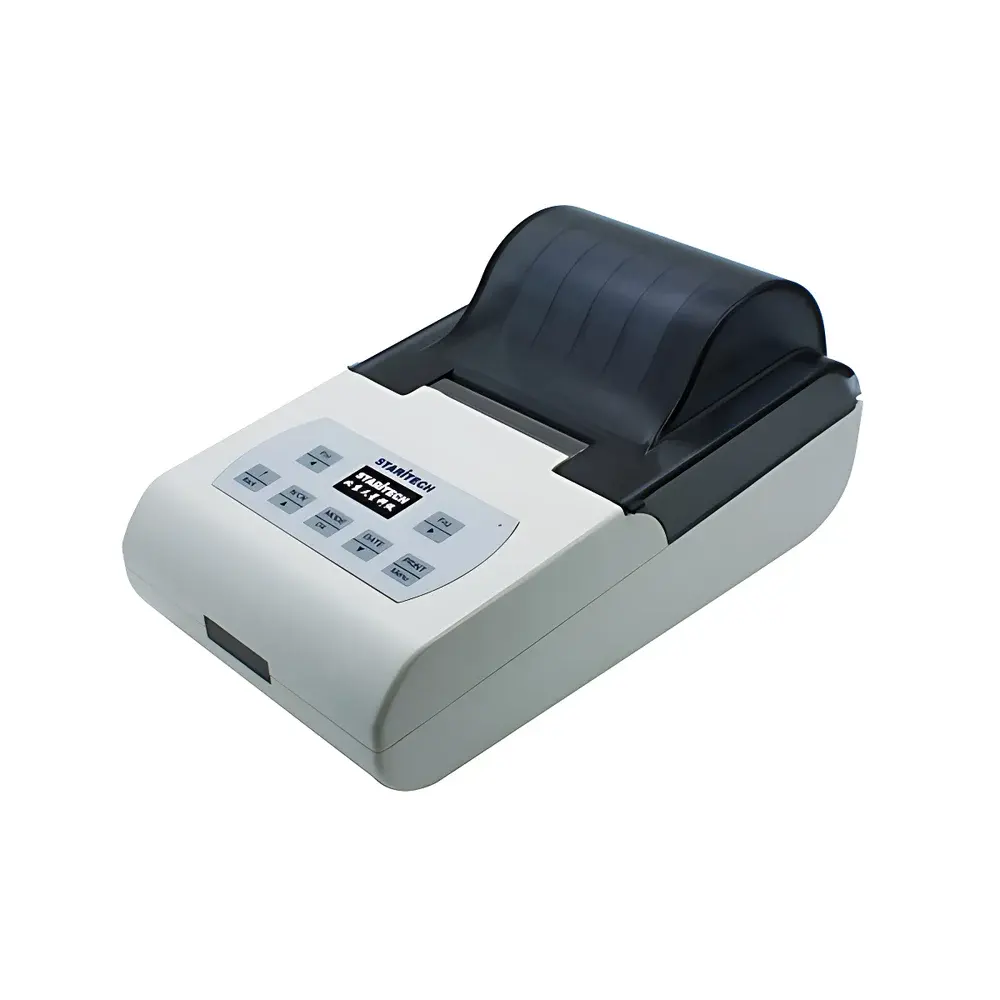
STARiTECH TX-100/110/120 Series Balance Data Printer
| Brand | STARiTECH |
|---|---|
| Origin | Beijing, China |
| Manufacturer Type | Authorized Distributor |
| Country of Origin | China |
| Model | TX-100 / TX-110 / TX-120 |
| Printing Method | Impact Dot-Matrix & Thermal |
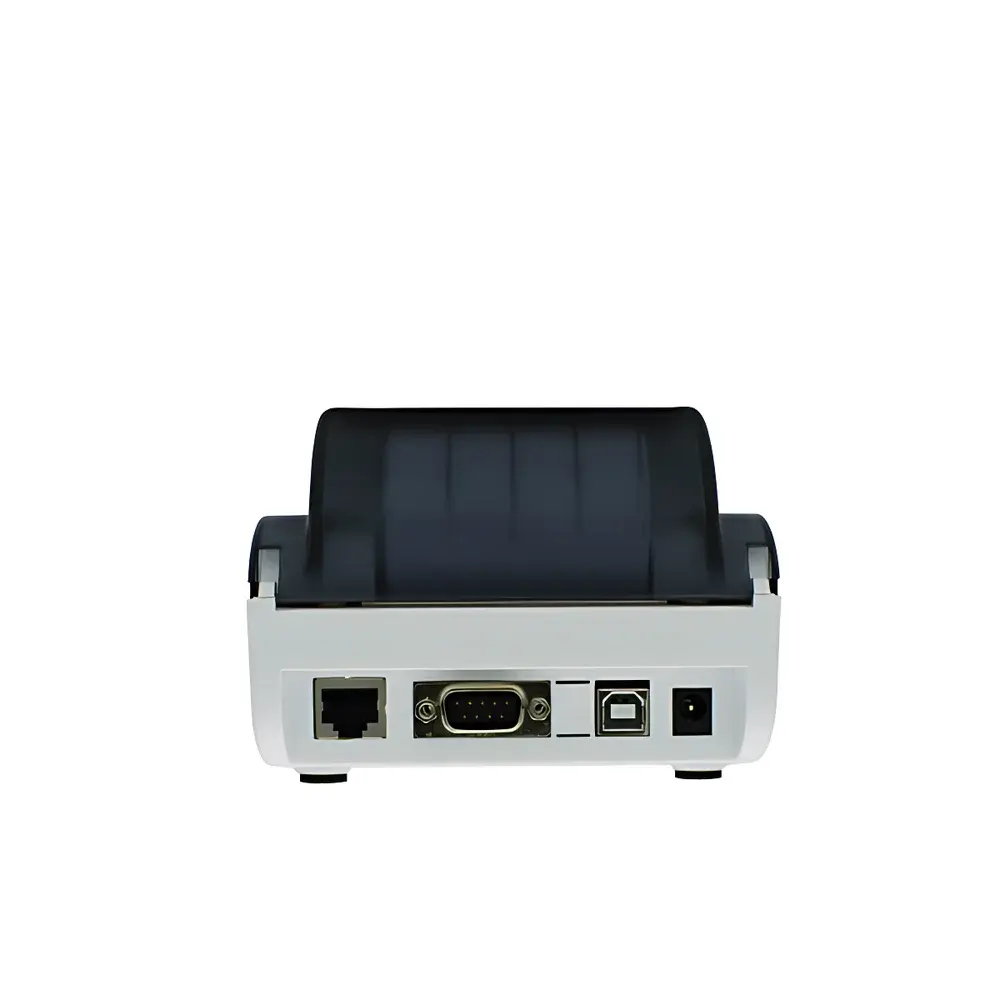
| Data Interfaces | RS-232, USB 2.0, RS-485 |
| Supported Functions | Weighing Output, Statistical Analysis (Sum, Mean), Tare/Net Weight Reporting, Pipette & Volumetric Flask Calibration, Moisture Content Calculation |
| Characters per Line | 24 or 40 |
| Paper Width | 57 mm thermal or plain paper (with ribbon) |
| Dimensions (W×H×L) | 114.6 × 86.6 × 188.2 mm |
| Minimum Sample Weight Tracking | Supported |
Overview
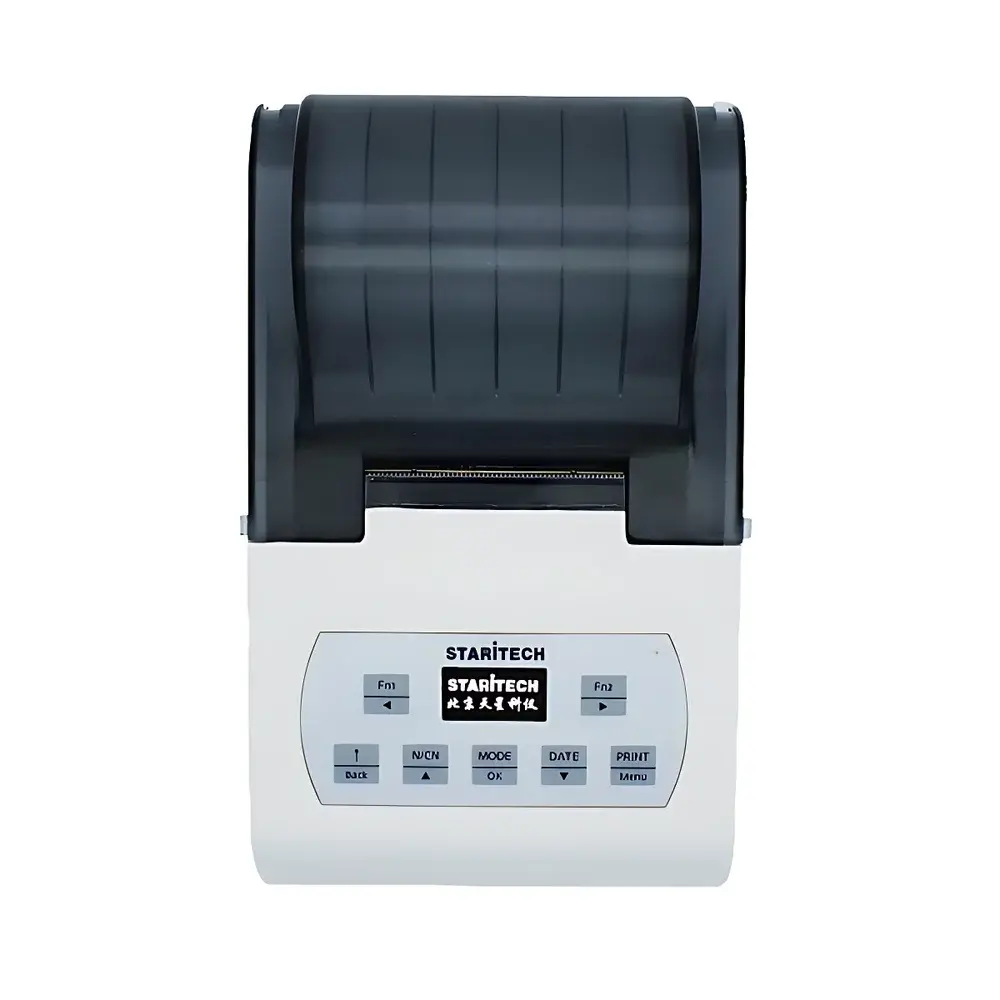
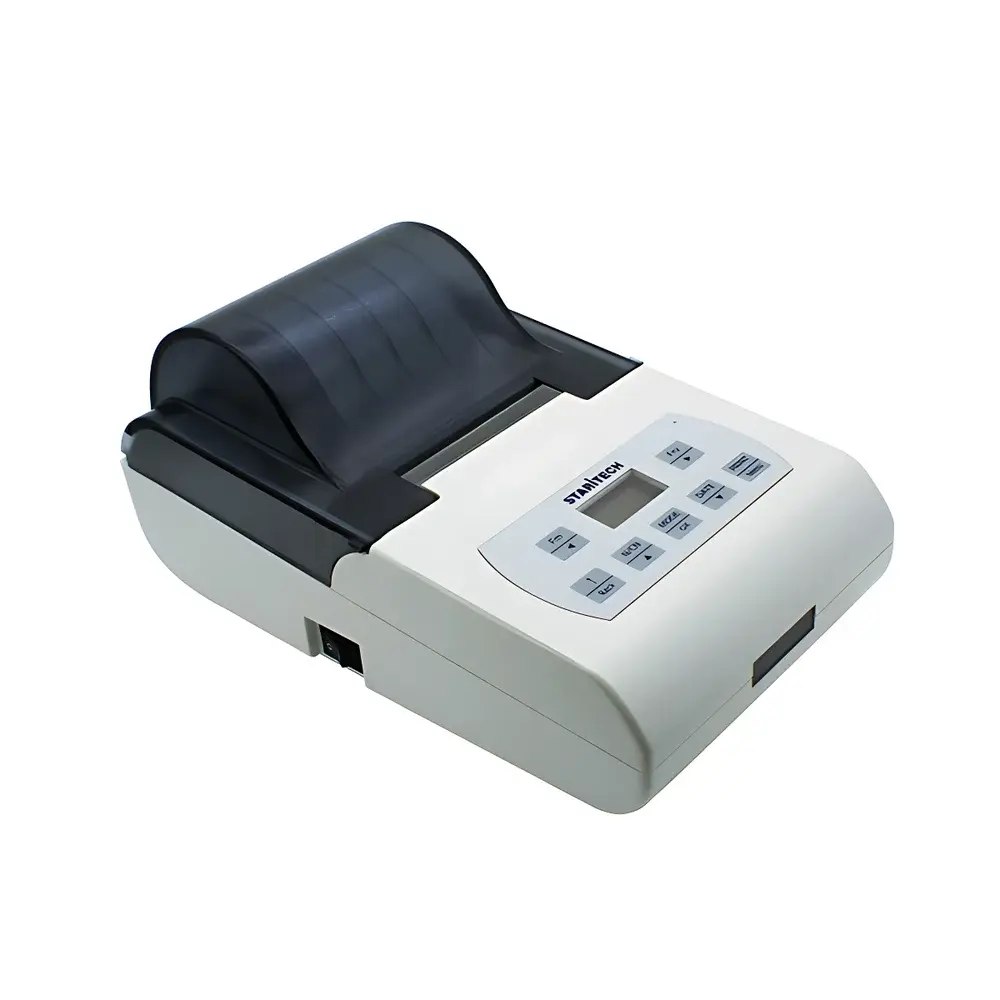
The STARiTECH TX-100/110/120 Series Balance Data Printer is a dedicated peripheral device engineered for seamless integration with laboratory and industrial electronic balances and scales. Designed to meet the rigorous documentation requirements of regulated environments, it functions as a standalone data acquisition and reporting terminal—capturing real-time weight values, metadata, and derived calculations directly from connected weighing instruments. Unlike generic receipt printers, this series implements deterministic serial communication protocols (RS-232/RS-485) and USB HID/COM emulation to ensure stable, low-latency data capture without dependency on host PC software. Its dual-mode printing architecture—supporting both impact dot-matrix (for archival-grade carbon-copy reports using standard 57 mm plain paper and ribbons) and thermal printing (for rapid draft output)—ensures compliance with long-term record retention mandates under GLP (Good Laboratory Practice), GMP (Good Manufacturing Practice), and ISO/IEC 17025 frameworks.
Key Features
- Dual-printing capability: Impact dot-matrix printing enables durable, tamper-evident hard copies suitable for audit trails; thermal mode supports high-speed label-style output.
- Full GLP/GMP traceability: Time-stamped records include operator ID (via optional keyboard input), balance serial number, sample ID/batch code, tare/net/gross weights, and calibration timestamps—all embeddable in customizable report headers and footers.
- On-device statistical computation: Performs real-time sum, mean, standard deviation, and coefficient of variation calculations—eliminating post-acquisition manual entry errors.
- Regulatory-ready configuration: Two-tier user access control (administrator/operator) restricts parameter changes, date/time adjustments, and report template edits—fully aligned with FDA 21 CFR Part 11 electronic record requirements.
- Expandable I/O ecosystem: Integrated support for USB flash drives (FAT32 formatted) enables direct export of CSV-formatted datasets to Excel-compatible spreadsheets; optional barcode scanner or external keyboard connects via USB host port for automated sample identification.
- High-contrast 128×64 OLED display with bilingual UI (English/Chinese) provides real-time preview of print content, error status, and system diagnostics without requiring external monitoring.
Sample Compatibility & Compliance
The TX-series printer maintains broad interoperability across major balance manufacturers—including METTLER TOLEDO, SARTORIUS, OHAUS, SHIMADZU, and AND—with configurable baud rates (1200–115200 bps), parity settings, and data framing to match instrument-specific ASCII or binary output protocols. All printed outputs conform to ISO 9001 documentation control clauses and satisfy Annex 11 (EU GMP) and USP analytical instrument qualification criteria for data integrity. Raw weight logs—including minimum sample weight verification flags—can be embedded in every report line, supporting ALCOA+ principles (Attributable, Legible, Contemporaneous, Original, Accurate, Complete, Consistent, Enduring, Available).
Software & Data Management
No proprietary PC software is required for basic operation; configuration is performed locally via OLED menu navigation. Advanced users may deploy optional firmware update tools (Windows-based, digitally signed) to enable new features or regulatory patches. Data exported to USB storage adheres to ICH M7-compliant file naming conventions (e.g., “BAL_TX110_20240522_143022.csv”) and includes embedded hash checksums for integrity validation. Audit trail functionality logs all critical events—including firmware version changes, user logins, and report template modifications—with immutable timestamps stored in non-volatile memory.
Applications
- Pharmaceutical QC labs: Generating auditable weight records for reference standards, active pharmaceutical ingredients (APIs), and excipients during batch release testing.
- Chemical manufacturing: Documenting raw material intake, in-process blending ratios, and final product packaging weights per ISO 80000-1 traceability standards.
- Clinical research facilities: Supporting pipette calibration workflows per ISO 8655-6, with automatic uncertainty propagation and pass/fail flagging against tolerance thresholds.
- Food safety laboratories: Recording moisture content determinations per AOAC 950.46 and generating compliant Certificates of Analysis (CoA).
- Academic teaching labs: Enabling student-led statistical analysis exercises with real-time mean/SD feedback and instructor-locked parameter settings.
FAQ
Does the TX-110 support RS-485 multidrop configurations for connecting multiple balances?
Yes—it operates in master-slave mode with configurable node addressing, enabling up to 32 balances on a single daisy-chained bus.
Can report templates be remotely deployed across multiple TX units in a lab network?
Template files (.tpl) may be copied via USB drive; centralized deployment requires third-party MDM tools compatible with FAT32 filesystems.
Is the impact print head rated for continuous-duty operation in high-throughput QC environments?
Rated for 5 million characters per ribbon cartridge and 10 million line feeds, with field-replaceable print head modules.
How is time synchronization maintained during power outages?
Integrated RTC (real-time clock) with lithium backup battery retains accuracy within ±2 seconds/month for ≥5 years.
Does the printer generate electronic signatures or digital certificates?
No—it produces human-readable, attributable records; digital signing must be implemented at the LIMS or ELN layer per 21 CFR Part 11 §11.200(a).