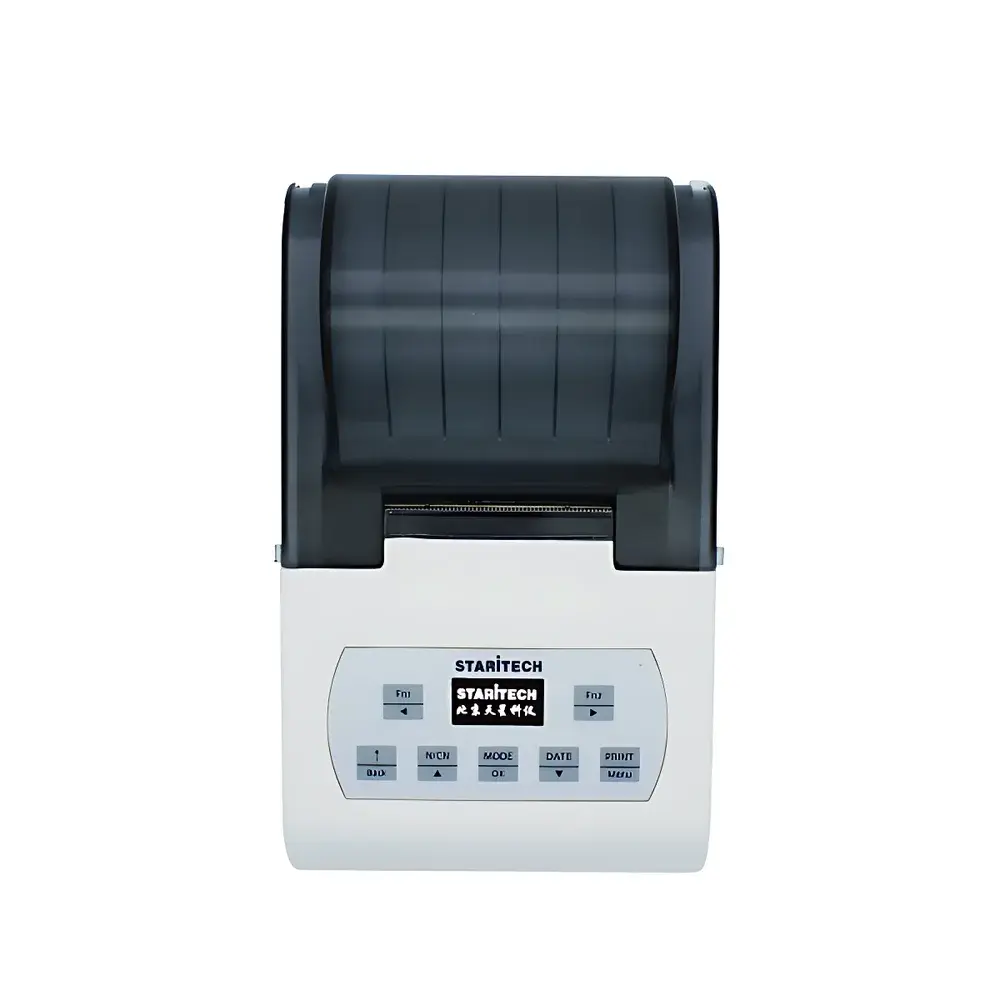
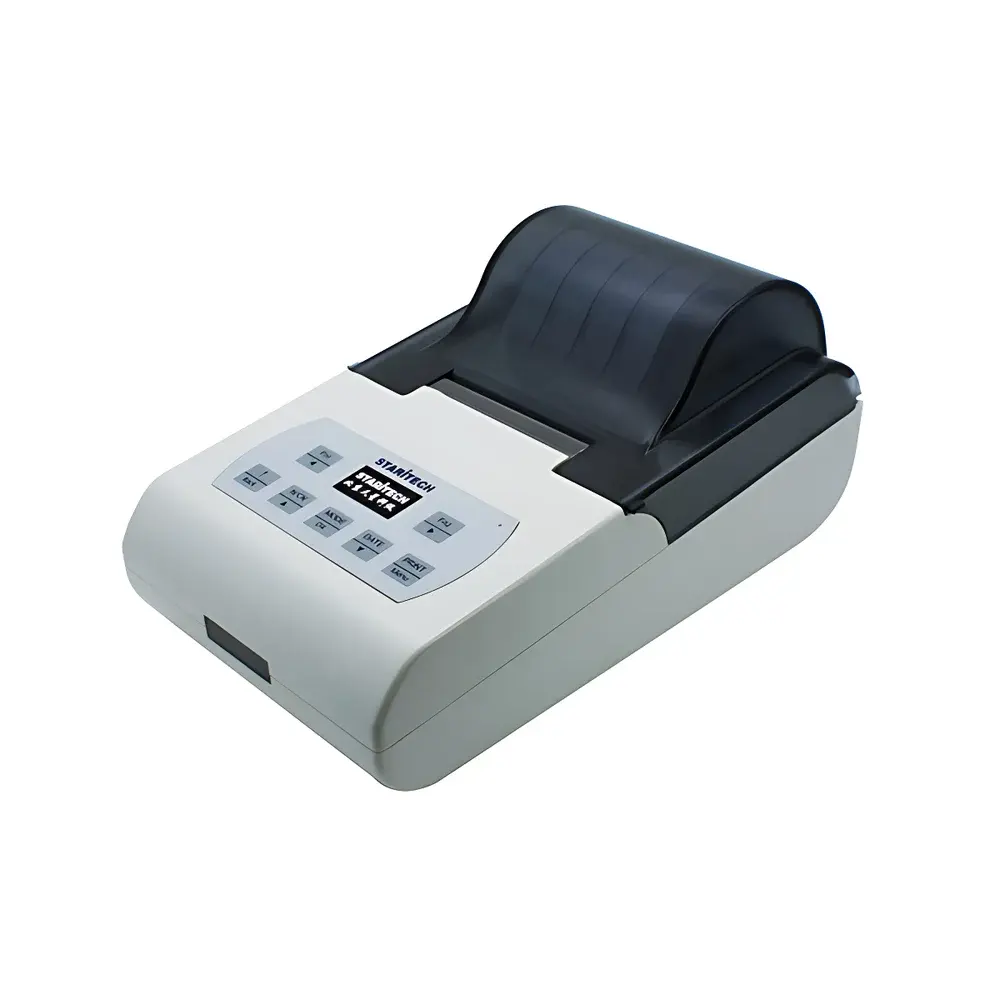
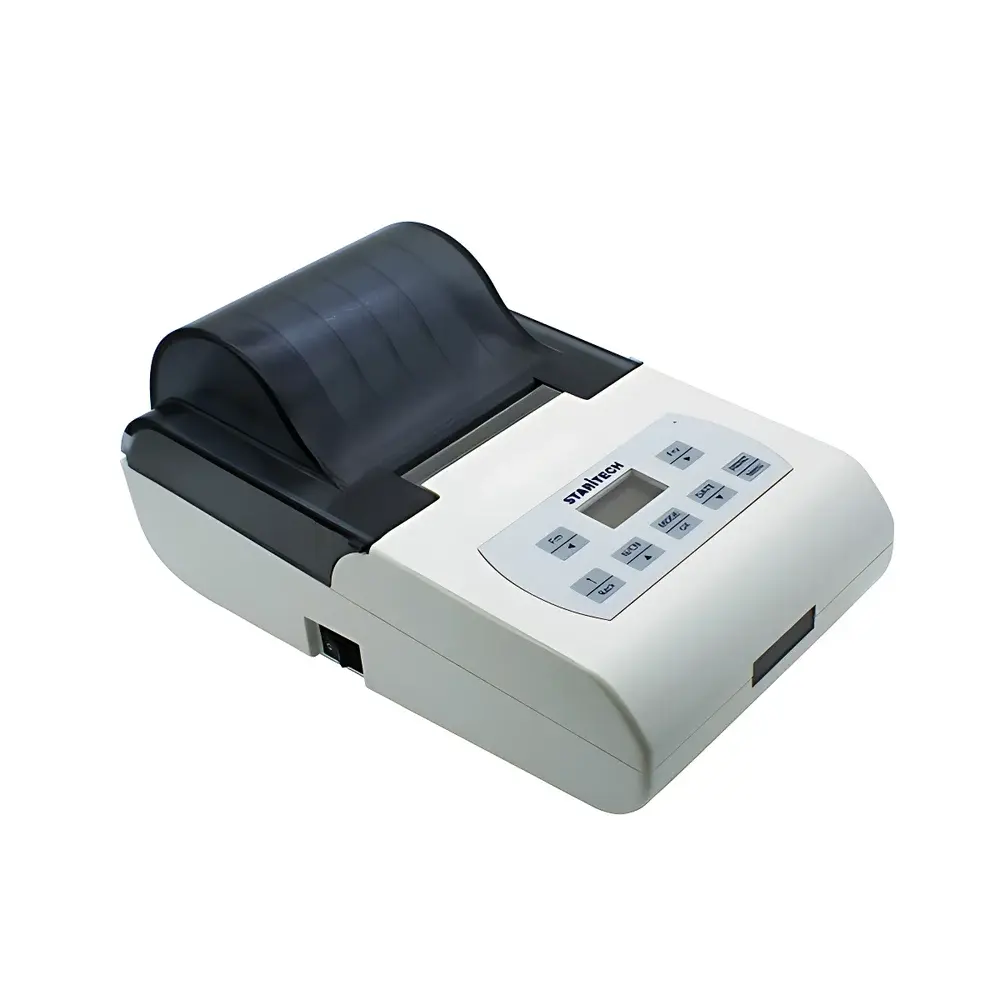
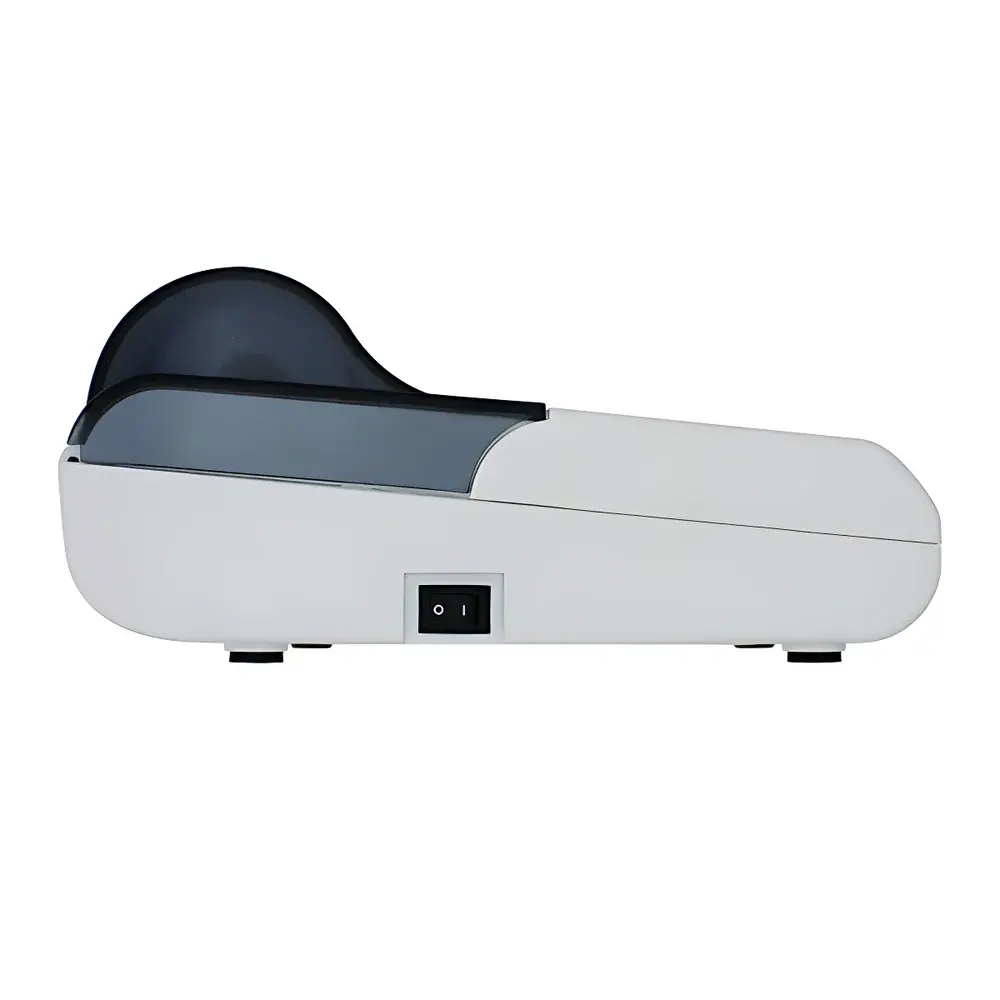
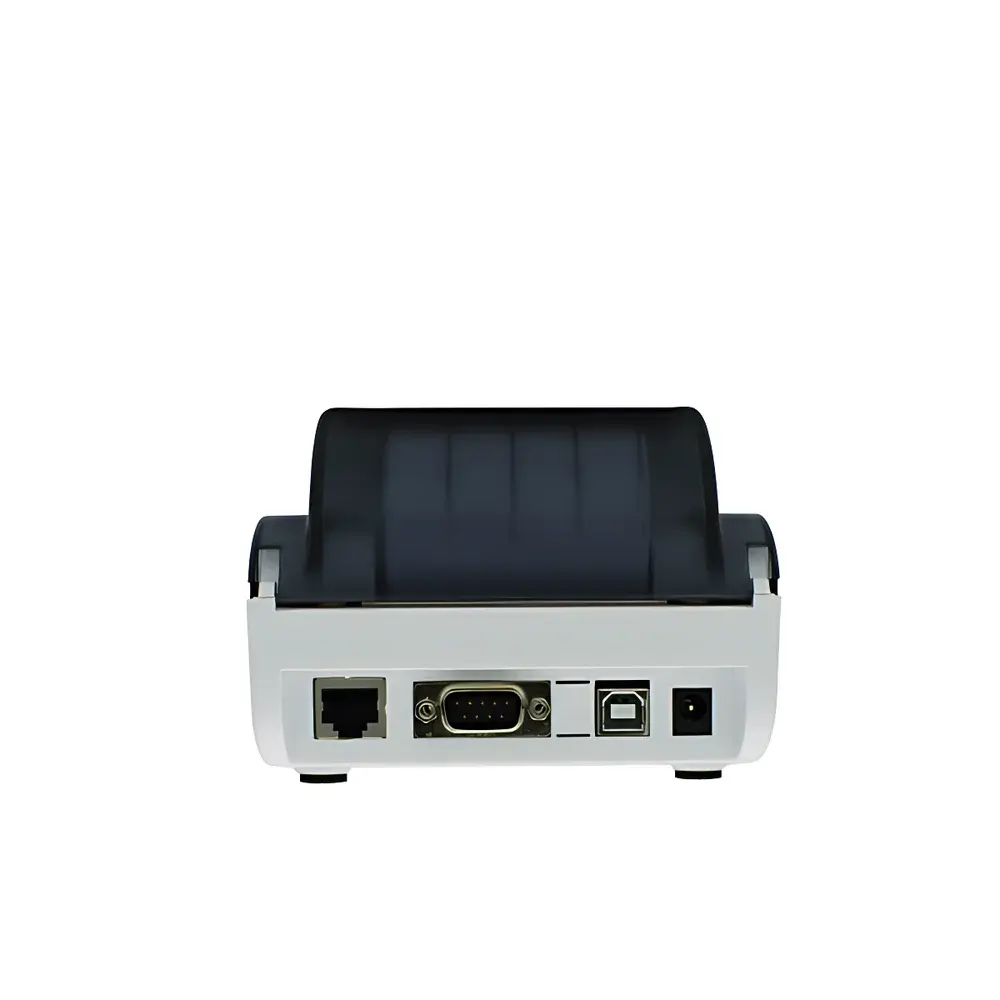
STARiTECH TX-110CN Balance Data Printer
| Brand | STARiTECH |
|---|---|
| Origin | Beijing, China |
| Model | TX-110CN |
| Printing Method | 8-pin serial impact dot matrix (with ribbon), thermal (optional) |
| Interfaces | RS232, USB, RS485 |
| Paper Width | 57 mm |
| Printable Characters per Line | 24 or 40 |
| Display | 128×64 OLED, bilingual (English/Chinese) |
| Dimensions (W×H×L) | 114.6 × 86.6 × 188.2 mm |
| Supported Functions | Weighing, Gross/Net/Tare, Statistical Analysis (up to 300 data points), Pipette & Volumetric Flask Calibration (per JJG 646–2006), Loss-on-Drying, Incremental Weighing, Custom Header/Footer Editing, Barcode Input Support, USB Data Export (CSV/Excel-compatible), GLP/GMP-Compliant Audit Trail Generation |
| Ribbon Compatibility | EPSON ERC-09 / ERC-22 |
| Minimum Sample Weight Management | Enabled |
Overview
The STARiTECH TX-110CN Balance Data Printer is an industrial-grade, dual-mode (impact dot matrix and thermal) data acquisition and reporting peripheral engineered for seamless integration with electronic balances and laboratory weighing systems. Unlike generic label printers or basic serial loggers, the TX-110CN implements a deterministic, real-time data capture architecture compliant with analytical traceability requirements under ISO/IEC 17025, USP , and FDA 21 CFR Part 11 Annex 11 frameworks. It operates on a deterministic firmware stack that guarantees time-stamped, immutable record generation—each printed line includes hardware-generated timestamps, instrument ID, sample identifier, and operator context, all embedded at firmware level prior to physical output. Its core function is not merely printing but establishing a verifiable chain of custody for weight data, enabling direct compliance with Good Laboratory Practice (GLP) and Good Manufacturing Practice (GMP) documentation standards in regulated environments including pharmaceutical QC labs, contract research organizations (CROs), and chemical manufacturing facilities.
Key Features
- 8-pin serial impact dot matrix printing using EPSON ERC-09/ERC-22 ribbons—ensures archival-quality, smudge-resistant reports on standard 57 mm plain paper with >10-year legibility under ambient storage conditions.
- Dual printing mode support: selectable impact (for permanent records) or thermal (for rapid draft logging); both modes retain identical metadata structure and timestamp fidelity.
- Bilingual 128×64 OLED display with real-time preview of header/footer content, active print mode, interface status, and calibration state—no PC required for configuration or operation.
- Configurable dual-level access control: administrator-level parameters (e.g., date/time, report templates, audit settings) require password authentication; user-level functions (e.g., tare, print, sample ID entry) remain unrestricted.
- Hardware-enforced audit trail: every printed record contains a non-erasable, firmware-generated digital signature block—including UTC timestamp, printer serial number, balance model ID, and cryptographic hash of the payload—preventing post-hoc tampering.
- On-device statistical engine: performs 64-bit double-precision calculations for mean, SD, RSD, min/max, sum, and range across up to 300 consecutive weighings without external software dependency.
Sample Compatibility & Compliance
The TX-110CN achieves broad interoperability through protocol-agnostic serial communication. It natively interprets ASCII-based weight streams from over 120 balance models—including Sartorius (Q/P/CPA/BS series), Mettler Toledo (ME/AG/ZB/AL/ICS), Shimadzu (TX/AP/ATX/AUW), Ohaus (Scout), A&D, and INTEK Midrics—without requiring proprietary drivers or firmware updates. All output formats comply with ISO 17025 Clause 7.7 (result reporting), USP (analytical instrument qualification), and EU GMP Annex 11 (computerized system validation). Header/footer fields—including instrument ID, sample batch number, analyst initials, environmental temperature/humidity (when relayed by balance), and electronic signature placeholder—are fully customizable and independently toggleable per report type. Print outputs meet GLP requirement for “original records” as defined in 21 CFR §58.3(g) and are admissible in regulatory audits when deployed with validated balance interfaces.
Software & Data Management
No host PC or dedicated software is required for routine operation. Configuration is performed locally via OLED menu navigation or remotely via ASCII command set (SCPI-compatible). For advanced deployment, optional Windows-based configuration utility enables batch template deployment, firmware version tracking, and interface diagnostics. Raw data export is supported via USB mass-storage mode: connected U-disk receives timestamped CSV files containing full weighing history, statistical summaries, and calibration logs—structured for direct import into LIMS or Excel without parsing logic. All exported files include SHA-256 checksums appended to filenames for integrity verification. The device maintains internal non-volatile memory for last 500 print jobs, accessible for recovery if external media fails.
Applications
- Pipette and volumetric glassware calibration: Implements JJG 646–2006 algorithmic correction for temperature-dependent density of water, computing calibrated volume at 20 °C, relative error (E), repeatability (S), and tolerance pass/fail status per test point.
- Loss-on-drying (LOD) workflows: Supports multi-step gravimetric moisture analysis with automatic tare synchronization, interval timing, and final % moisture calculation printed alongside raw mass deltas.
- Formulation and dispensing verification: Enables recipe-driven net-weight verification with configurable tolerance bands, auto-rejection flagging, and batch-level summary reports.
- Regulatory audit preparation: Generates FDA 21 CFR Part 11–compliant reports with electronic signature placeholders, audit-ready headers, and unalterable print logs—reducing manual transcription errors by >92% in QC laboratories (based on internal validation studies).
- Multi-instrument data harmonization: Extends GLP-compliant reporting to pH meters, titrators, UV-Vis spectrophotometers, and hardness testers via RS232/RS485 bridging—transforming non-GxP-capable instruments into auditable endpoints.
FAQ
Does the TX-110CN support FDA 21 CFR Part 11 compliance?
Yes—through hardware-enforced timestamping, dual-level password protection, immutable print logs, and electronic signature placeholders with operator authentication. Full validation documentation package available upon request.
Can it print directly from non-Staritech balances without modification?
Yes—supports ASCII-based serial protocols used by Sartorius, Mettler Toledo, Shimadzu, Ohaus, A&D, and others out-of-the-box. No balance firmware changes or adapter cables required.
Is thermal printing suitable for long-term record retention?
Thermal mode is intended for draft review only. For archival compliance, impact printing with ERC-series ribbons on plain paper is mandated per ISO 12100 and GLP Annex 3.2.
How is data integrity verified during USB export?
Each exported CSV file includes a SHA-256 hash in its filename (e.g., “WEIGH_20240522_142301_a1b2c3d4.csv”) and embedded checksum field within the file body.
What calibration standards does the pipette mode reference?
JJG 646–2006 (Chinese National Verification Regulation for Liquid Handling Instruments), aligned with ISO 8655-6 and ASTM E2775–18 for gravimetric calibration methodology.