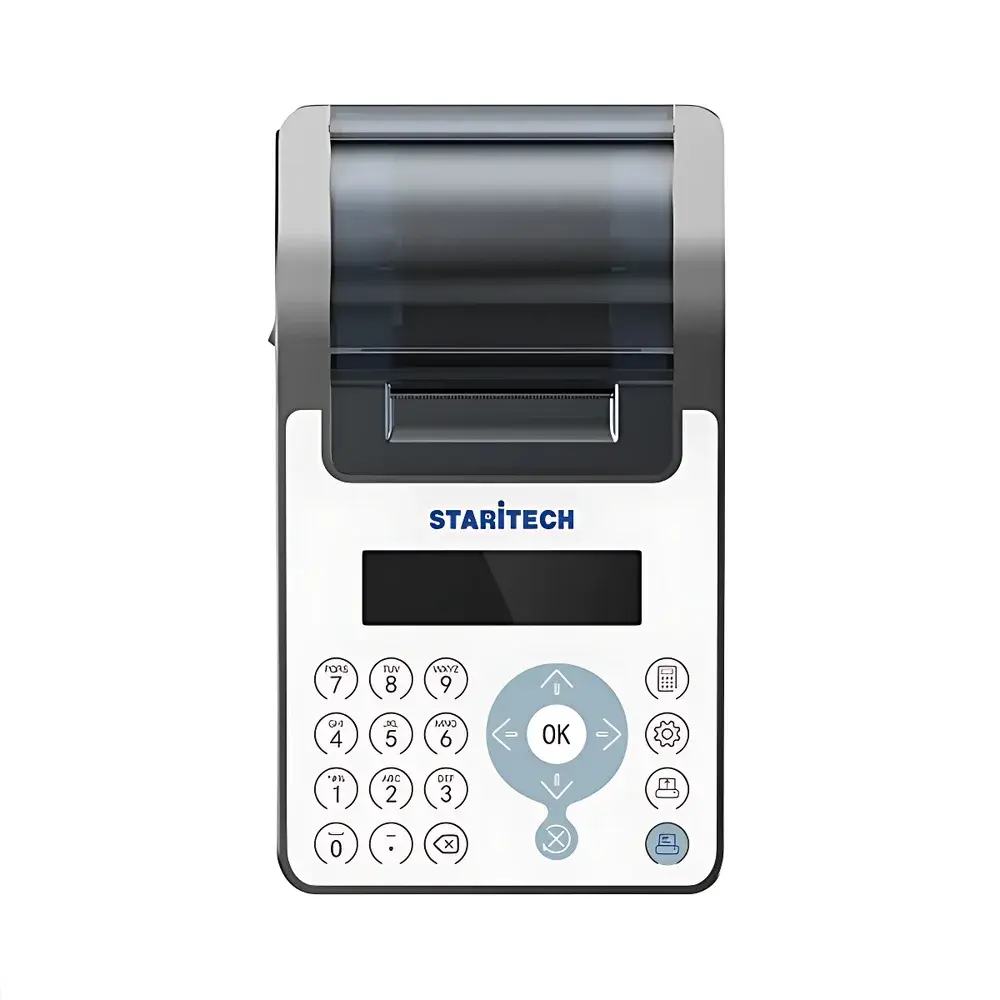
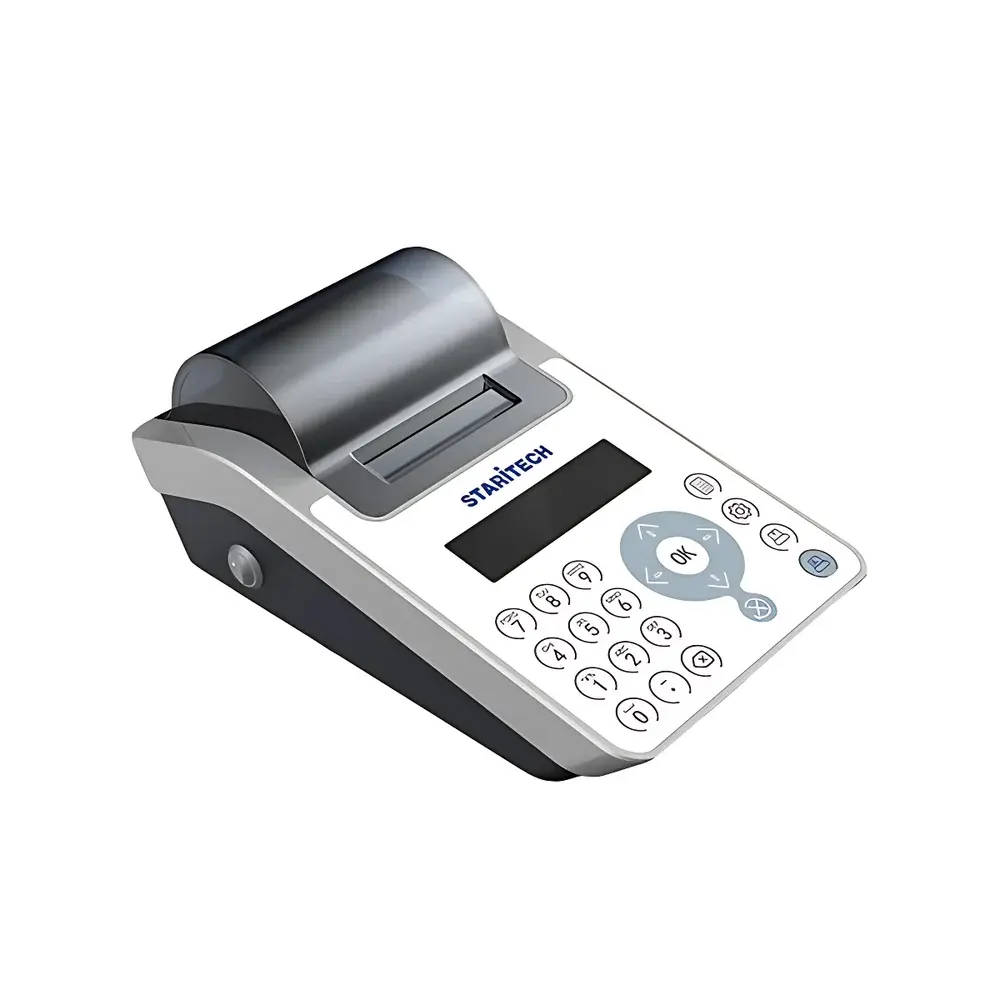
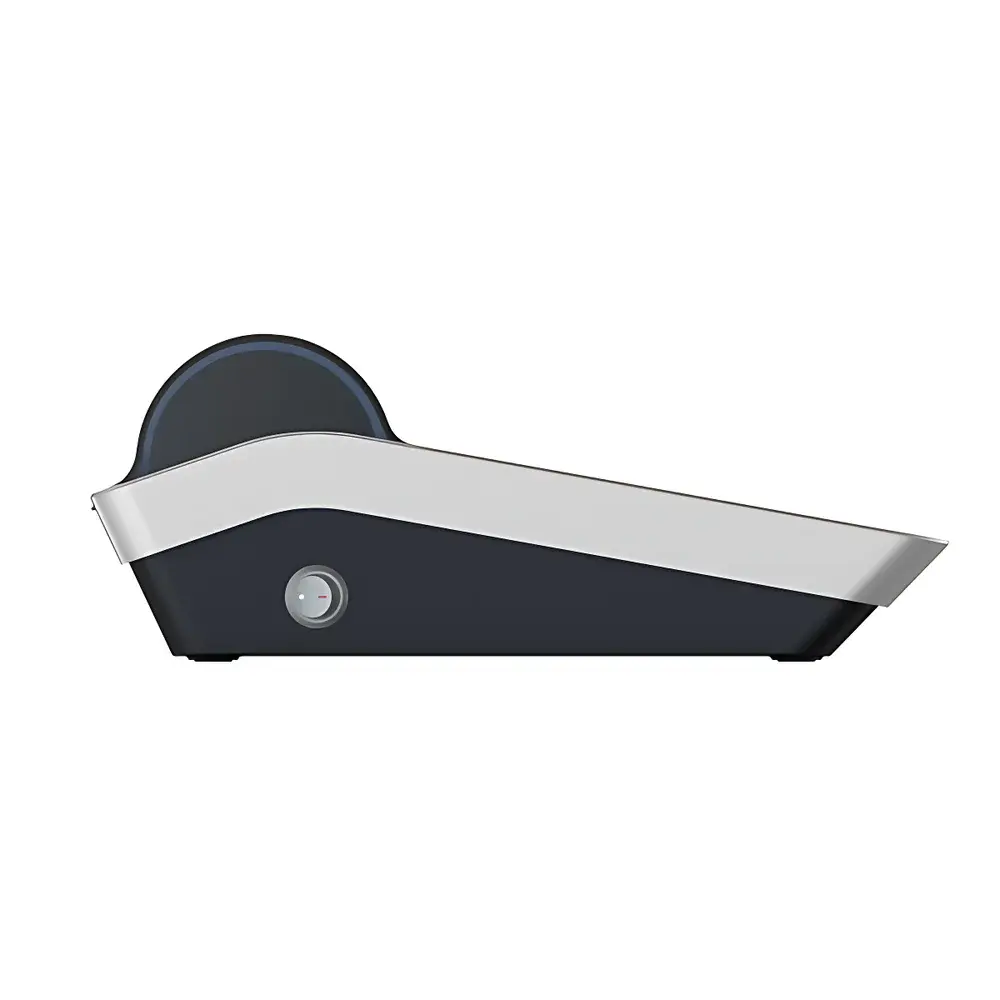
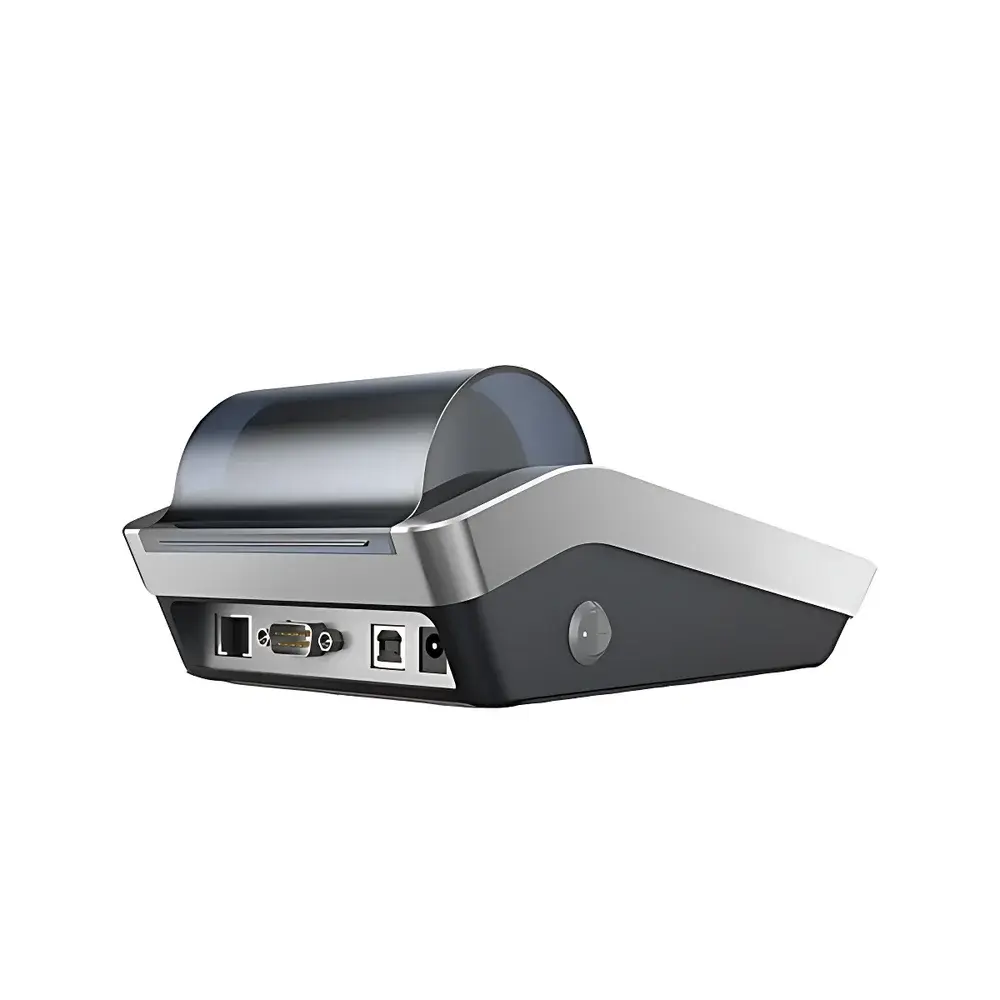
STARiTECH TX-180/181/182/183 Series Balance Data Printers
| Brand | STARiTECH |
|---|---|
| Origin | Beijing, China |
| Manufacturer Type | Authorized Distributor |
| Product Category | Domestic |
| Model | TX-180 |
| Printing Method | Dot Matrix / Thermal |
| Data Interfaces | RS232, USB, RS485 |
| Applications | Weighing, Statistical Analysis, Formulation Management, Tare/Net/Gross Weighing, Pipette & Volumetric Flask Calibration |
| Characters per Line | 24 or 40 |
| Paper Width | 57 mm |
| Media Type | Plain Paper (Dot Matrix) or Thermal Paper |
| Dimensions (W×H×L) | 114.6 × 86.6 × 188.2 mm |
| Minimum Weight Management | Supported |
Overview
The STARiTECH TX-180/181/182/183 Series Balance Data Printers are purpose-built, regulatory-compliant peripheral devices engineered to interface with laboratory electronic balances, industrial scales, and analytical instruments. Designed in alignment with the China NMPA’s Regulations on Record and Data Management for Pharmaceutical Products, these printers implement deterministic data capture, immutable audit trails, and role-based access control—core requirements for GLP, GMP, and FDA 21 CFR Part 11 compliance. Unlike generic label printers or basic serial output devices, the TX-series functions as a certified data integrity gateway: it receives raw weight data via standardized protocols (e.g., ASCII-based balance command sets), enriches it with configurable metadata (operator ID, sample ID, timestamp, instrument S/N), applies mathematical transformations where required (e.g., temperature-corrected volume calculation per JJG 646–2006), and outputs fully traceable, human-readable, and archive-stable reports. The TX-182 variant integrates native Ethernet (RJ45) connectivity, enabling secure, authenticated communication with LIMS, ELN, or MES systems through TLS-secured HTTP APIs or MODBUS TCP interfaces.
Key Features
- Multi-interface compatibility: RS232 (3-wire TTL/RS-232C), USB Virtual COM, RS485 (2-wire half-duplex), and 10/100BASE-TX Ethernet—ensuring seamless integration with all major balance brands (Mettler Toledo, Sartorius, Shimadzu, Ohaus, AND, etc.) and non-balance lab instruments.
- Dual printing technologies: TX-180/TX-181 support dot-matrix printing using standard 57 mm plain paper and ribbon—guaranteeing archival stability (>25 years under ISO 11799 conditions); TX-182/TX-183 offer optional thermal printing for high-speed batch reporting.
- FDA 21 CFR Part 11–ready audit trail: TX-182 logs every user login (ID + timestamp), report generation event, header/footer modification, and time adjustment—including pre-change and post-change values, operator identity, and system clock synchronization source.
- Minimum weight management enforcement: Enforces pharmacopeial minimum weight thresholds (e.g., USP , EP 2.1.6) by validating incoming weight values against user-defined limits before report finalization—preventing sub-threshold data from entering the record.
- Full keyboard with multi-input modes: Supports Pinyin input, numeric code lookup (via user-uploaded CSV-encoded dictionaries), barcode scanner integration (USB HID mode), and direct list selection—reducing manual entry errors and accelerating sample labeling.
- Configurable report architecture: Header and footer sections are independently enabled/disabled and populated with up to 16 user-defined fields (e.g., material code, batch number, reviewer signature line), each assignable to precise positional coordinates within the print buffer.
Sample Compatibility & Compliance
The TX-series supports all standard balance communication protocols, including Mettler Toledo’s MT-SICS, Sartorius’ SICS, and generic ASCII formats (e.g., “S” command for stable weight readout). It is validated for use in regulated environments requiring adherence to ISO/IEC 17025, ICH Q7, USP , and Annex 11. All firmware versions undergo periodic third-party verification for data integrity (bit-for-bit reproducibility of printed output vs. transmitted payload) and cryptographic hash consistency (SHA-256 of stored audit log entries). The device itself carries CE marking (EMC Directive 2014/30/EU, LVD Directive 2014/35/EU) and meets RoHS 2011/65/EU requirements.
Software & Data Management
No host PC installation is required—the printer operates autonomously with embedded firmware (v3.2+). Configuration is performed via local LCD menu navigation or remote web interface (HTTPS-enabled, password-protected). Audit logs are stored in non-volatile FRAM memory with cyclic overwrite protection and exportable via USB mass storage or HTTP GET request (CSV/JSON format). All timestamps comply with NTP synchronization (configurable server address); clock drift compensation ensures ±0.5 s/day accuracy. Data export payloads include digital signatures (ECDSA-P256) to verify authenticity during regulatory inspection.
Applications
- Weighing Documentation: Generates compliant reports with mandatory header (manufacturer, model, S/N, date/time, operator, sample ID) and footer (reviewer signature, end time, checksum), supporting both single-weigh and multi-weigh workflows.
- Pipette & Volumetric Calibration: Implements JJG 646–2006 algorithmic correction: accepts ambient temperature input, computes Kt factor, converts measured mass to volume at 20 °C, calculates repeatability (standard deviation), relative error (%), and mean volume across up to 10 calibration points.
- Statistical Process Control: Performs real-time statistical analysis on up to 999 sequential weighings using IEEE 754 double-precision arithmetic—outputting mean, SD, RSD, min/max, sum, and range without rounding artifacts.
- Formulation & Batch Tracking: Enables auto-incrementing batch numbers (e.g., “BATCH-001” → “BATCH-002”) and dynamic field insertion (e.g., lot code + expiry date pulled from barcode scan) to support cGMP manufacturing documentation.
- Loss-on-Drying (LOD) & Gravimetric Titration: Supports sequential tare/weight cycles with time-stamped intermediate readings and cumulative mass difference reporting.
FAQ
Does the TX-182 meet FDA 21 CFR Part 11 requirements for electronic records and signatures?
Yes—the TX-182 implements full Part 11 controls: unique user authentication, operation-specific audit trails with immutable timestamps, electronic signature capability (via configurable signature field), and system validation documentation available upon request.
Can the printer store and retrieve historical reports locally?
Yes—internal flash memory retains up to 10,000 report templates and 50,000 audit log entries; reports are searchable by date range, sample ID, or operator ID via the web interface or front-panel navigation.
Is thermal paper suitable for long-term archival in regulated labs?
Thermal printing (TX-182/TX-183 option) is intended for short-term operational logs only; for permanent records, STARiTECH recommends dot-matrix printing on acid-free plain paper with carbon-impregnated ribbon (ISO 9706 compliant).
How is data integrity verified during LIMS integration?
All Ethernet-transmitted payloads include SHA-256 message digests; LIMS-side validation confirms digest match prior to database ingestion—ensuring zero-data-loss transmission integrity.
What calibration standards does the pipette mode reference?
The calibration engine follows JJG 646–2006 (Chinese National Metrological Verification Regulation for Pipettes), incorporating temperature-dependent density of water and air buoyancy corrections per ISO 8655-6.