
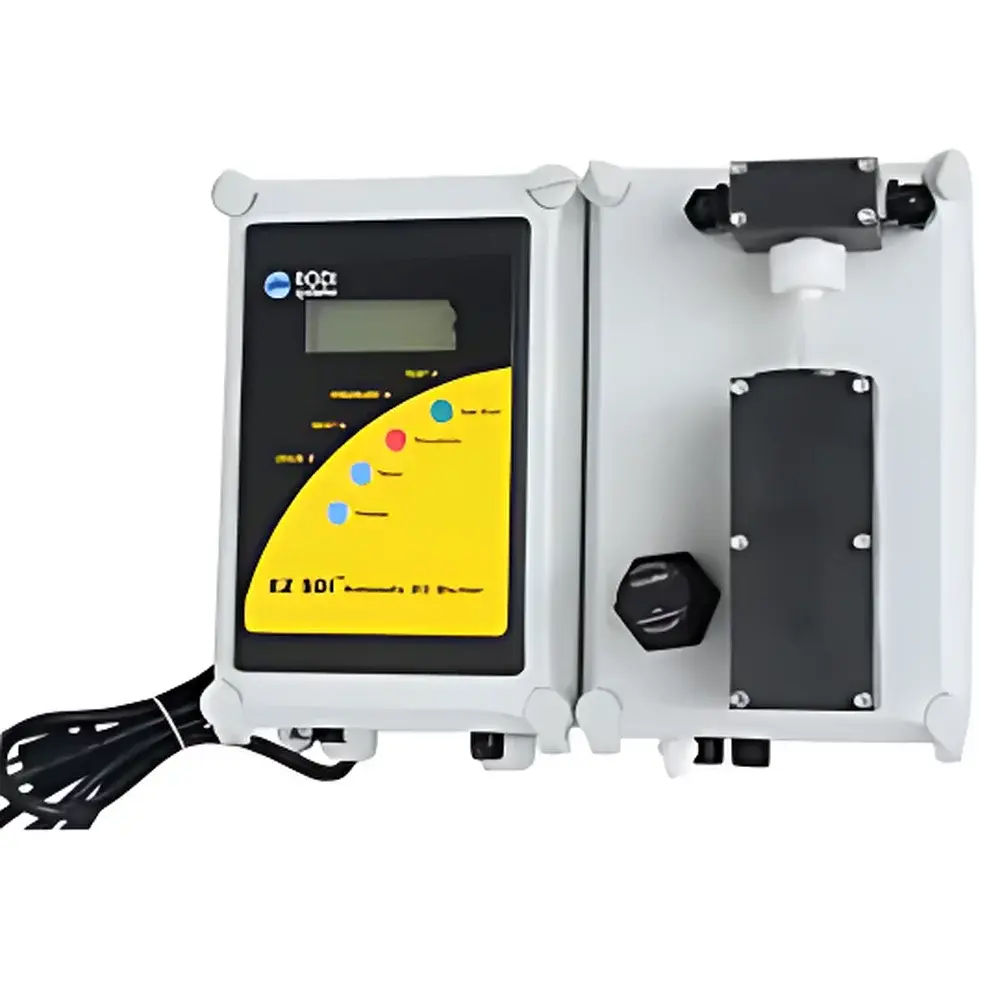
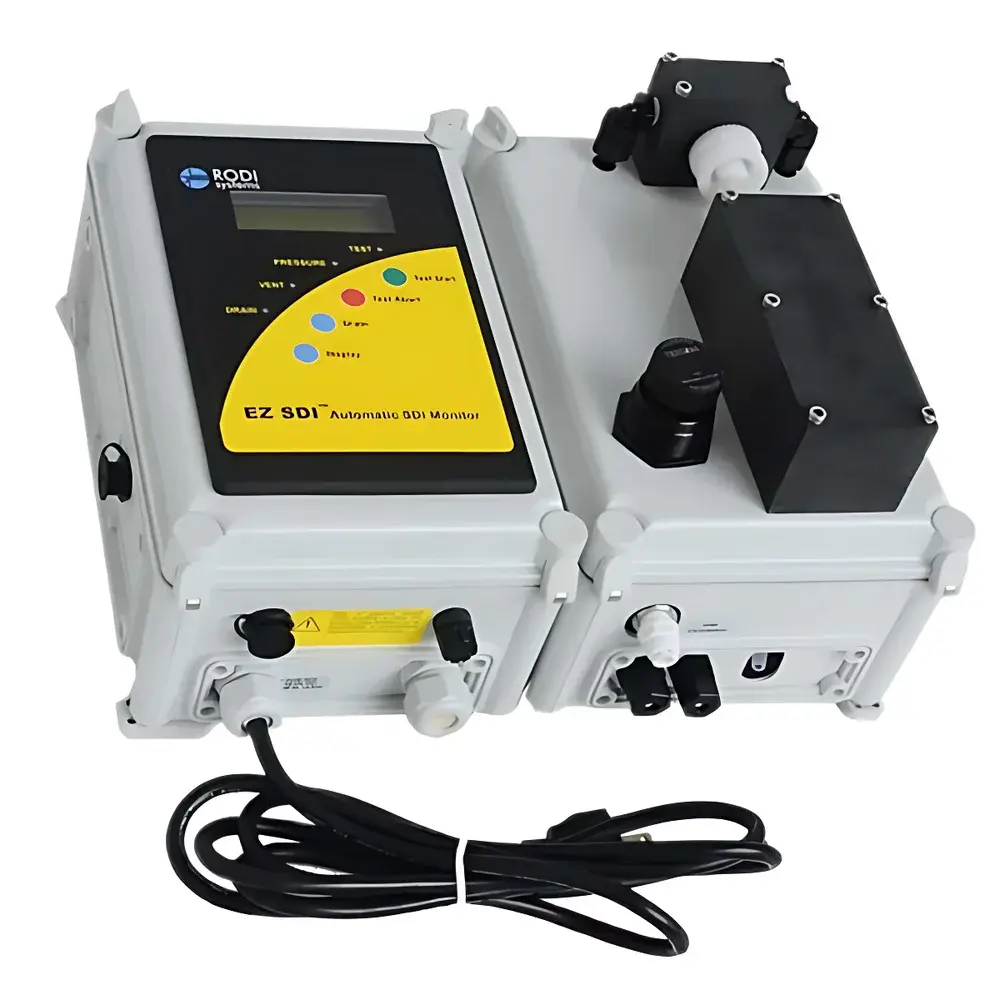
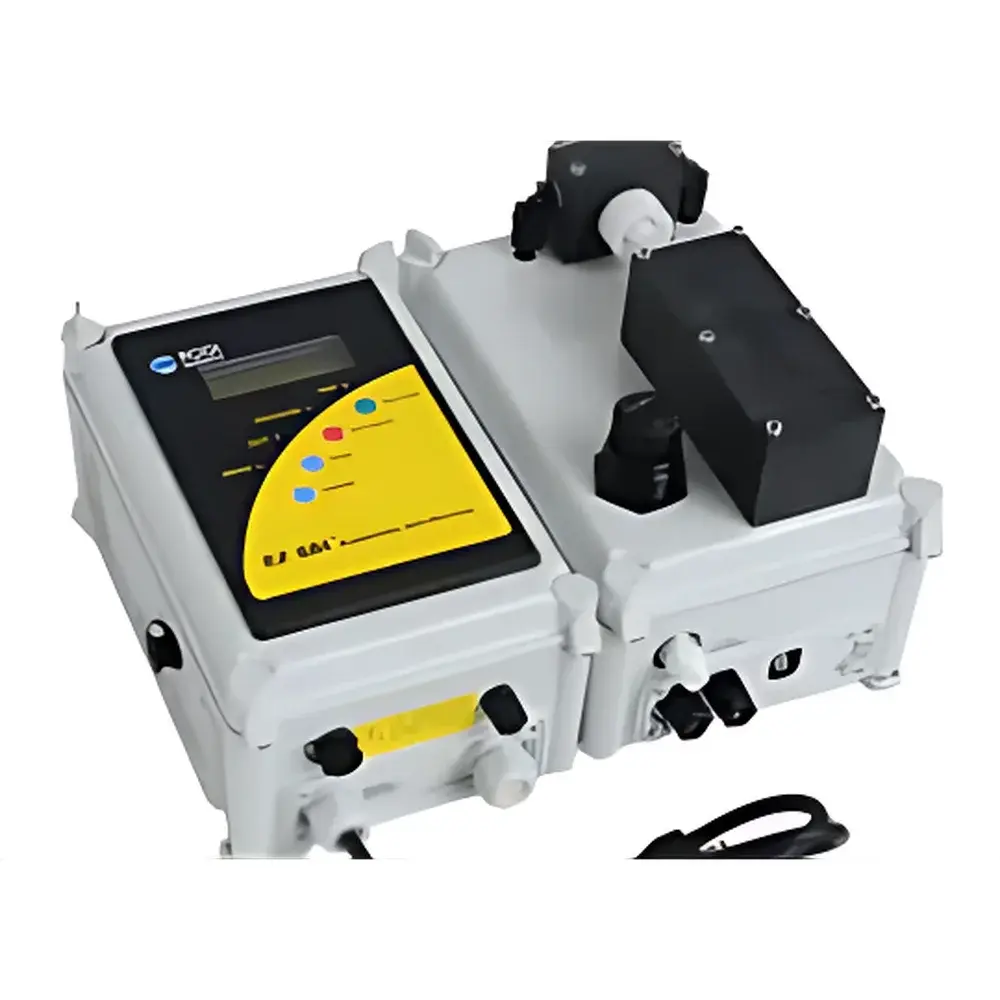
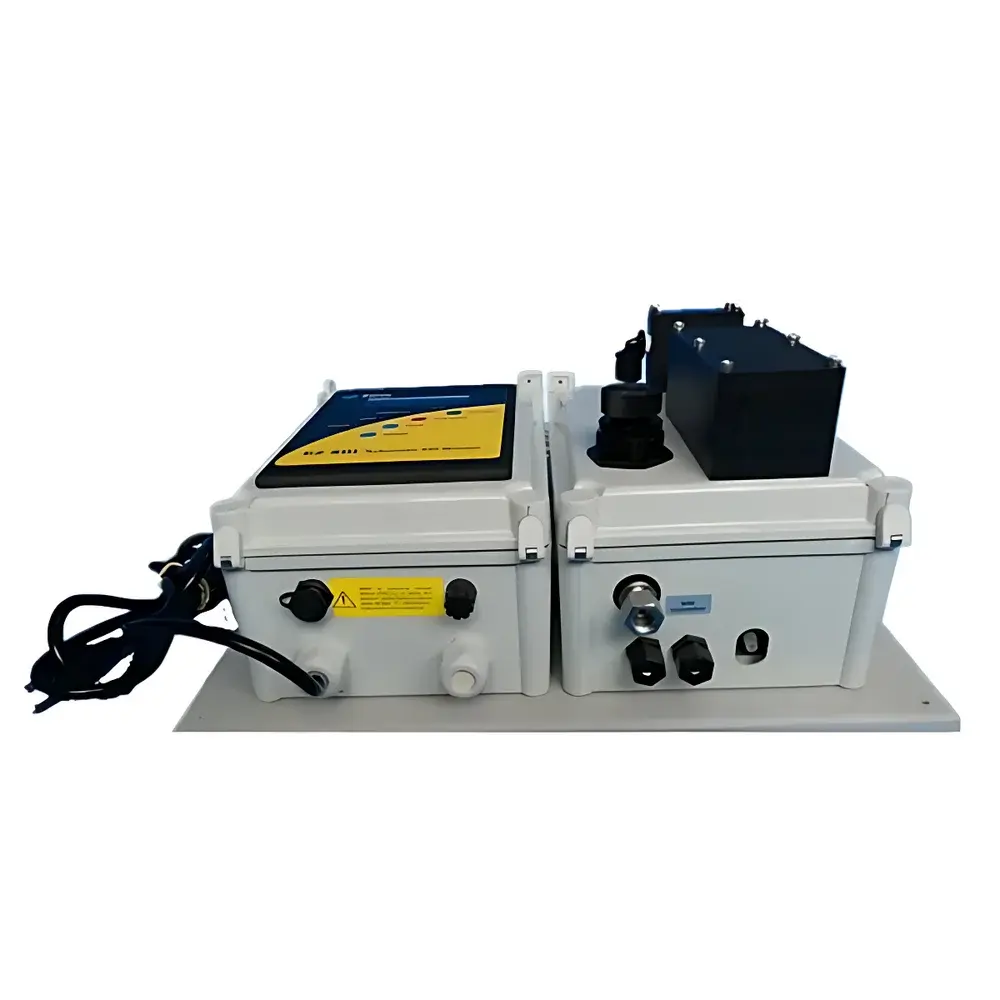
Starwood EZ-SDI-1-C Fully Automatic Online Silt Density Index (SDI) Analyzer
| Brand | Starwood |
|---|---|
| Model | EZ-SDI-1-C |
| Origin | Beijing, China |
| Manufacturer Type | OEM Manufacturer |
| Country of Origin | China |
| Price Range | USD 14,000 – 42,000 |
| Output Signal | 4–20 mA analog |
| Compliance Standard | ASTM D4189-95 |
| Display | 4×20 backlit LCD |
| Enclosure Rating | NEMA 4X |
| Filter Diameter | 25 mm |
| Test Durations | SDI₅, SDI₁₀, SDI₁₅ |
| Flow Rate | 1000 mL/min |
| Operating Pressure | 70–1500 psi |
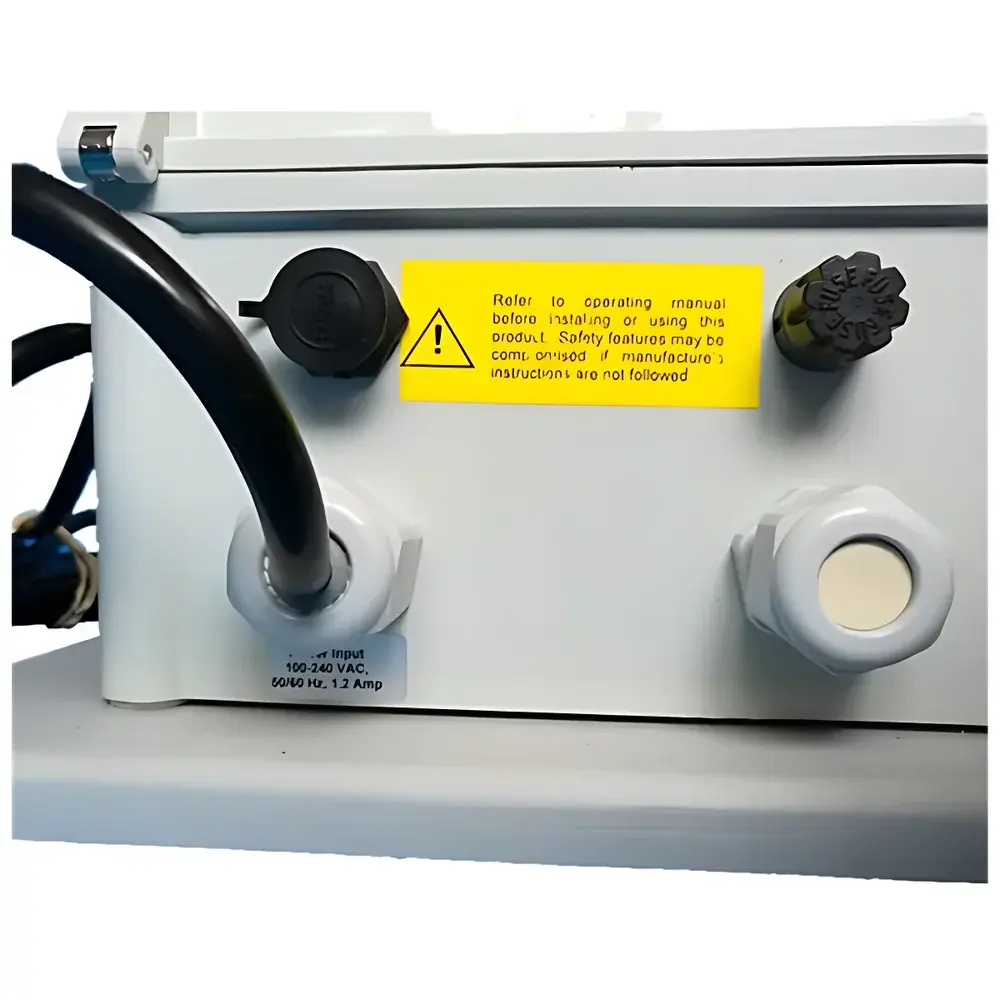
| Power Supply | 240 VAC, 60 Hz |
| Communication Interface | RS-232 |
| Dimensions (H×W×D) | 279 × 381 × 229 mm |
| Weight | Not specified |
Overview
The Starwood EZ-SDI-1-C Fully Automatic Online Silt Density Index (SDI) Analyzer is an industrial-grade, microprocessor-controlled instrument engineered for continuous, real-time assessment of colloidal and particulate fouling potential in feedwater streams destined for reverse osmosis (RO) membrane systems. It implements the standardized pressure-decay filtration methodology defined in ASTM D4189-95, which quantifies the rate of flux decline across a 0.45 µm microporous membrane under constant differential pressure. SDI serves as a critical operational parameter in pretreatment validation—particularly for low-turbidity (<1.0 NTU) source waters such as groundwater, clarified surface water, or filtered process water. Unlike manual SDI testing—which introduces variability due to operator timing, membrane handling, and pressure stabilization—the EZ-SDI-1-C eliminates human intervention through fully automated cycle sequencing, precise pressure regulation, and integrated flow control. The analyzer computes and reports SDI₅, SDI₁₀, and SDI₁₅ values in accordance with ASTM D4189-95, enabling predictive maintenance planning, RO system performance benchmarking, and regulatory documentation compliance.
Key Features
- Fully automatic operation: Unattended SDI measurement cycles—including membrane priming, pressurization, timed filtration, and data calculation—executed without manual intervention.
- One-touch membrane replacement: Standard 25 mm diameter filter cartridges mount onto a quick-release holder; full exchange completed in ≤2 minutes without tools or system depressurization.
- Triple-interval SDI computation: Simultaneous derivation of SDI₅, SDI₁₀, and SDI₁₅ from a single test sequence, with real-time display of elapsed time, applied pressure, and instantaneous flux decay.
- NEMA 4X-rated enclosure: Stainless steel or reinforced polycarbonate housing rated for outdoor, washdown, and corrosive industrial environments; IP66 equivalent ingress protection.
- Dual-output interface: Isolated 4–20 mA analog outputs scaled per SDI interval (e.g., 4–20 mA = 0–20 for SDI₅; 0–10 for SDI₁₀; 0–6.7 for SDI₁₅), plus RS-232 serial port for direct SCADA or historian integration.
- Backlit 4×20 character LCD: High-contrast display with ambient-light-adaptive backlighting; intuitive menu navigation via four tactile membrane keys.
- Integrated temperature monitoring: Onboard thermistor records inlet water temperature during each test cycle, supporting temperature-corrected interpretation where required by internal QA protocols.
Sample Compatibility & Compliance
The EZ-SDI-1-C is validated for use with low-turbidity feedwaters meeting ASTM D4189-95 input criteria: suspended solids <5 mg/L, turbidity <1.0 NTU, and absence of macroscopic debris requiring pre-filtration (e.g., 50 µm guard filtration is mandatory upstream). It supports operation across a wide pressure range (70–1500 psi), accommodating both high-pressure RO skid feed lines and low-pressure side-stream monitoring configurations. For applications where line pressure falls below 70 psi, optional Starwood-certified booster pump modules (e.g., SP-70B series) are available—designed to deliver stable, pulse-free flow at 1000 mL/min while maintaining pressure stability within ±2% during test duration. The analyzer conforms to electromagnetic compatibility (EMC) requirements per IEC 61326-1 and carries CE marking for industrial instrumentation. While SDI itself is not a regulatory endpoint under US EPA or EU WFD directives, its use is embedded in ISO 15270:2017 (Water treatment — Guidelines for RO system design) and referenced in FDA’s Guidance for Industry: Process Validation (2011) for pharmaceutical water systems.
Software & Data Management
The device operates on embedded firmware with non-volatile memory storing ≥1000 test records, including timestamp, SDI₅/₁₀/₁₅ values, inlet temperature, applied pressure, and pass/fail flags relative to user-defined thresholds (e.g., SDI₁₅ < 3.0 for RO acceptance). RS-232 output supports ASCII protocol for direct logging into LIMS, PI System, or custom Python-based data pipelines. No proprietary software is required; raw output is compatible with Modbus RTU mapping upon request. Audit trail functionality meets GLP/GMP-aligned record-keeping expectations: all parameter changes, calibration events, and membrane replacements are time-stamped and logged internally. Though not 21 CFR Part 11-compliant out-of-the-box, the unit can be deployed within validated environments when paired with electronic signature-capable SCADA platforms that enforce user authentication and change control.
Applications
- Continuous monitoring of RO pretreatment effluent in municipal desalination plants and industrial water reuse facilities.
- Performance verification of multimedia filters, cartridge filters, and ultrafiltration (UF) membranes prior to RO train entry.
- Commissioning support for new RO installations—documenting baseline SDI stability over 72-hour qualification periods.
- Root cause analysis during RO flux decline events: correlating SDI spikes with coagulant dosing adjustments or seasonal particulate load changes.
- Pharmaceutical purified water (PW) and water for injection (WFI) distribution loop surveillance per USP <1231> guidance on particulate control.
- Offshore platform seawater pretreatment systems, where biofouling and silt loading demand frequent SDI trending.
FAQ
What is the minimum required feed pressure for reliable operation?
The EZ-SDI-1-C requires a minimum sustained inlet pressure of 70 psi (4.8 bar) to initiate and maintain ASTM-compliant filtration. Systems operating below this threshold must integrate a certified booster pump.
Can the instrument accommodate alternative membrane pore sizes?
No. Per ASTM D4189-95, only 0.45 µm nominal pore size cellulose acetate or mixed ester membranes are permitted. The EZ-SDI-1-C accepts standard 25 mm diameter disc filters compliant with HAWP04700 or A045 specifications.
Is temperature compensation applied to SDI calculations?
The instrument measures and logs inlet temperature but does not apply automatic thermal correction to SDI values; users must reference ASTM D4189-95 Annex A1 for empirical adjustment factors if operating outside 20–25°C.
How frequently should the system be calibrated?
No field calibration is required. Accuracy relies on mechanical consistency of the pressure regulator, flowmeter, and timer—all factory-verified against NIST-traceable standards. Annual verification using reference pressure gauges and certified flow meters is recommended.
Does the unit support remote alarm notification?
Yes. When integrated with PLC or DCS systems via 4–20 mA or RS-232, programmable alarms (e.g., SDI₁₅ > 5.0) can trigger SMS/email alerts via external gateway hardware.
Related Products







