
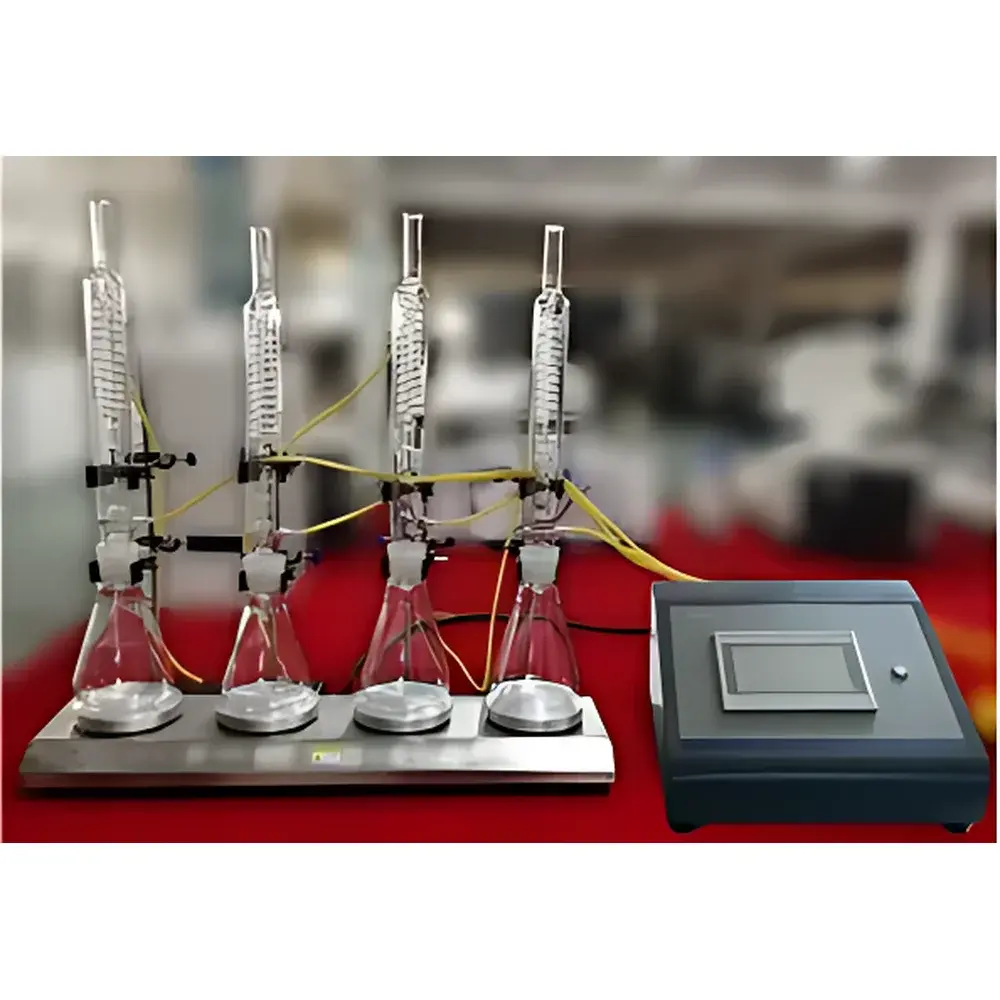
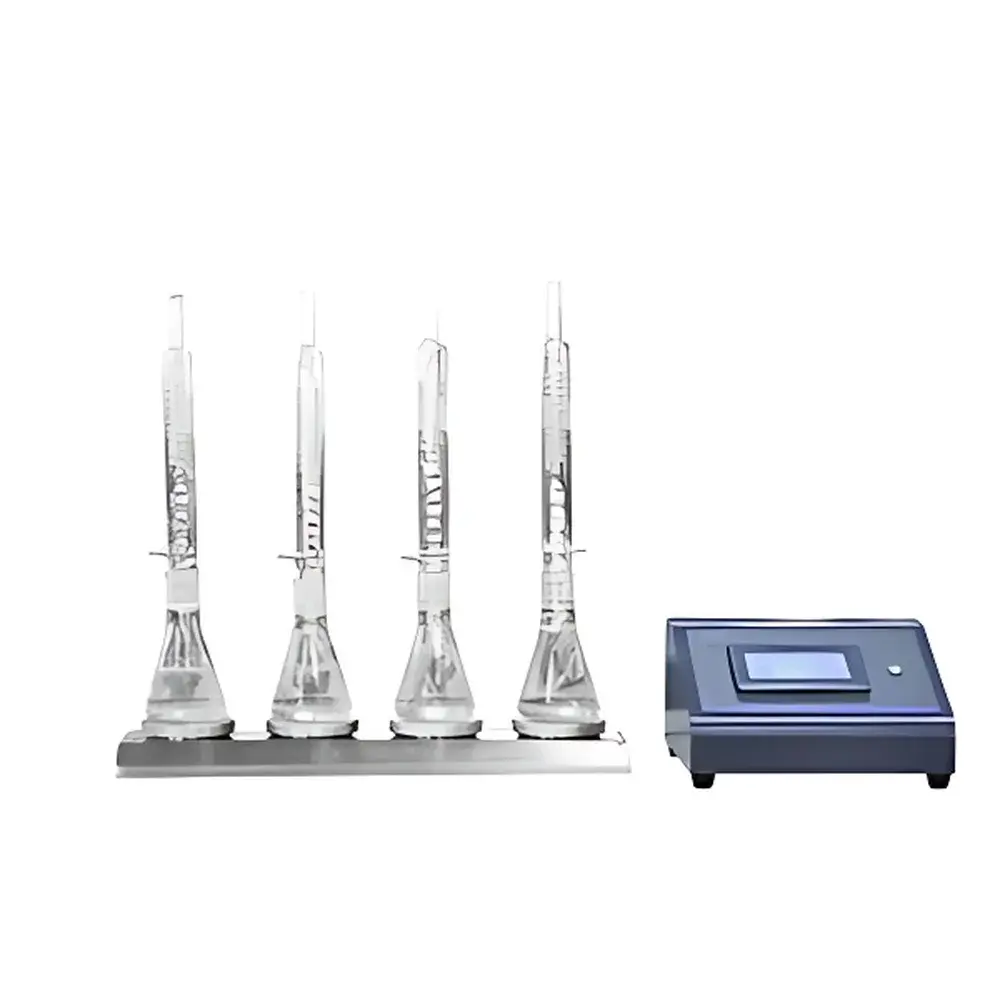
Starwood SDW-4334 Intergranular Corrosion Testing System
| Brand | Starwood |
|---|---|
| Origin | Beijing, China |
| Manufacturer Type | Direct Manufacturer |
| Model | SDW-4334 |
| Price Range | USD 2,800 – 7,000 |
| Heating Capacity | 4 independent stations (500 W each) |
| Max Operating Temperature | 400 °C |
| Compliance | GB/T 4334–2020 (including optional Method A) |
| Control System | PLC + PID temperature regulation |
| Cooling | Integrated reflux condensation system with auto-recirculation |
| Safety Features | Low-coolant alarm, auto-shutdown, power-interruption resume function |
| Power Supply | 2000 W total |
| Optional Modules | ICT-W closed-loop chiller, ICT-M Wi-Fi remote monitoring, ICT-S SMS-based remote control, ICT-A sensitization test kit, acid fume extraction cabinet |
Overview
The Starwood SDW-4334 Intergranular Corrosion Testing System is an engineered laboratory instrument designed for standardized evaluation of intergranular corrosion (IGC) susceptibility in austenitic stainless steels, nickel-based alloys, aluminum alloys, and copper-zinc (brass) materials. IGC is a localized electrochemical degradation mechanism that proceeds preferentially along grain boundaries due to compositional heterogeneity—such as chromium depletion zones formed during improper heat treatment—or segregation of impurities (e.g., carbon, sulfur, phosphorus) at interfaces. This mode of attack compromises structural integrity without visible surface deterioration, making it a critical failure mode in pressure vessels, piping systems, nuclear components, and aerospace structures. The SDW-4334 implements controlled thermal-acid exposure per the requirements of GB/T 4334–2020, China’s national standard equivalent to ASTM A262 and ISO 3651-2, enabling reproducible assessment of material resistance under accelerated corrosive conditions.
Key Features
- Four independently controlled heating stations (500 W each), supporting parallel testing of up to four specimens under identical or differentiated thermal profiles.
- PLC-based digital controller with PID algorithm ensures ±1 °C temperature stability across the operational range (ambient to 400 °C), critical for maintaining consistent boiling point and acid activity during extended tests (e.g., 24–168 h).
- Integrated reflux condensation system using 450 mm ground-glass (50#) condensers; vaporized reagent (e.g., 65% HNO3, mixed acid per Method E) condenses and returns automatically to the reaction vessel, minimizing concentration drift and ensuring compliance with GB/T 4334–2020 volumetric consistency requirements.
- Touchscreen HMI interface with intuitive parameter entry, real-time temperature logging, and event-triggered alarms (e.g., coolant interruption, overtemperature, power loss).
- Intelligent power-resume functionality: Upon restoration after blackout, the system resumes timing from the pre-interruption elapsed duration—preserving test validity without manual recalibration.
- Fail-safe architecture includes dual-stage thermal cutoffs, low-water-level detection, and automatic heater deactivation upon fault detection.
Sample Compatibility & Compliance
The SDW-4334 accommodates standard coupon geometries defined in GB/T 4334–2020: flat specimens (typically 15 mm × 10 mm × 3 mm) prepared per ASTM E3, with surface finish meeting Ra ≤ 0.8 µm. It supports all five test methods in the standard—particularly Method B (Huey test, 65% HNO3) and Method E (mixed acid)—and optionally integrates ICT-A hardware for Method A (oxalic acid etch screening). The system is validated for use with common IGC electrolytes including nitric acid, ferric sulfate–sulfuric acid mixtures, and copper-copper sulfate solutions. All operational parameters—including bath temperature uniformity, reflux efficiency, and thermal ramp rates—are traceable to internal calibration records and align with GLP documentation requirements for quality-controlled metallurgical laboratories.
Software & Data Management
The embedded controller stores time-stamped temperature logs (sampling interval: 10 s) for each station, exportable via USB to CSV format for post-test analysis. Optional ICT-M module enables secure HTTPS-based remote access through a web dashboard or native iOS/Android application, supporting live parameter adjustment, alarm notification push, and historical trend visualization. For regulated environments (e.g., ISO 17025-accredited labs), audit trails—including user login events, setpoint changes, and emergency shutdowns—are retained for ≥90 days and comply with FDA 21 CFR Part 11 electronic record principles when paired with optional electronic signature authentication.
Applications
- Qualification of solution-annealed or welded stainless steel components prior to service in chemical processing plants.
- Validation of heat treatment cycles (e.g., stabilization annealing of 321/347 grades) to prevent Cr-carbide precipitation.
- Comparative assessment of alloy variants (e.g., 304L vs. 316L) under standardized corrosive stress.
- Research into sensitization kinetics and inhibitor effectiveness in acidic chloride media.
- Third-party certification testing for ASME BPVC Section VIII, PED 2014/68/EU, and NACE MR0175/ISO 15156 compliance programs.
FAQ
What standards does the SDW-4334 support?
It fully complies with GB/T 4334–2020 and is operationally compatible with ASTM A262 (Methods A–E), ISO 3651-2, and EN ISO 3651-2.
Can the system operate unattended for multi-day tests?
Yes—equipped with uninterruptible timing logic, auto-reflux, and remote monitoring options (ICT-M or ICT-S), it supports fully autonomous 168-hour runs with minimal intervention.
Is acid fume containment included?
The base configuration requires external ventilation; however, the optional acid fume extraction cabinet (ICT-F) provides integrated sensing, activated carbon filtration, and exhaust ducting to external stacks.
How is temperature uniformity verified across the four stations?
Each station features individual PT100 sensor feedback and dedicated solid-state relays; factory calibration reports document inter-station deviation ≤ ±0.8 °C at 250 °C.
What maintenance is required for long-term reliability?
Annual verification of condenser seal integrity, PID tuning validation, and replacement of silicone gaskets and PVC tubing per manufacturer-recommended intervals—documented in the supplied GLP-compliant maintenance log template.



