
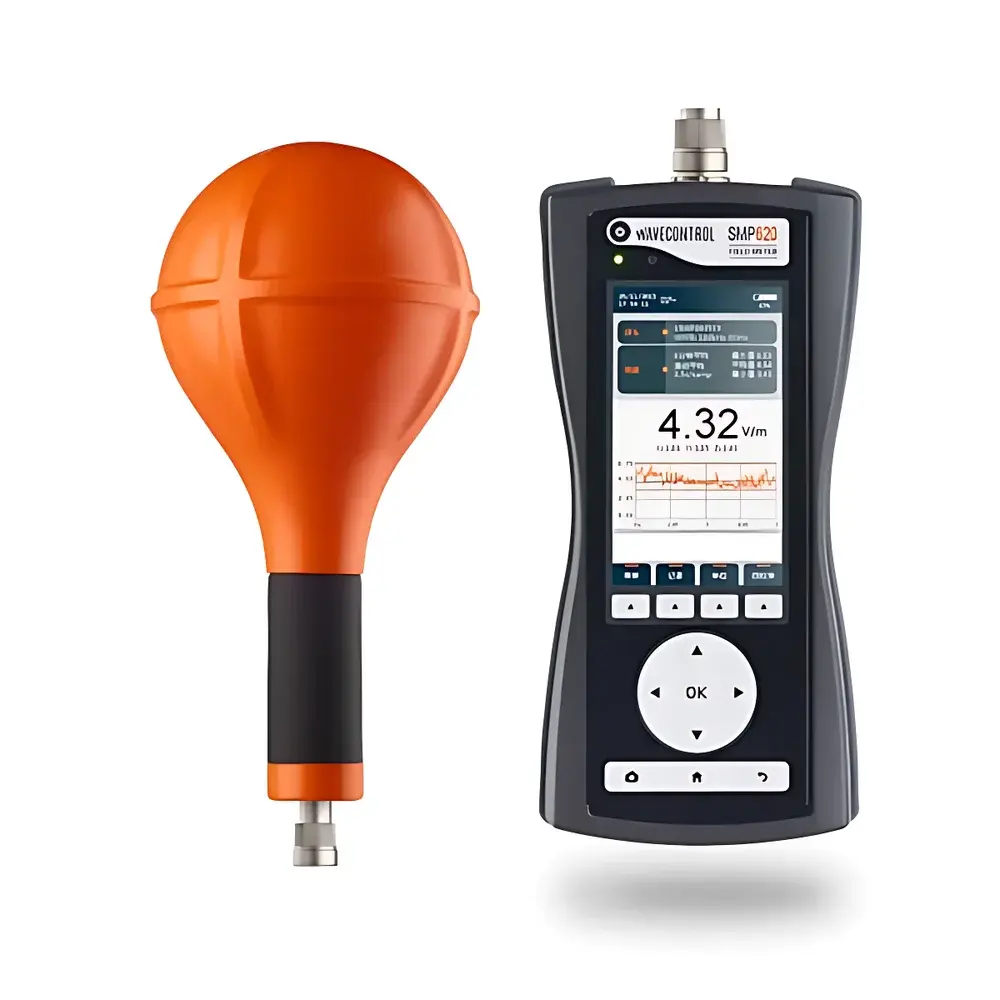
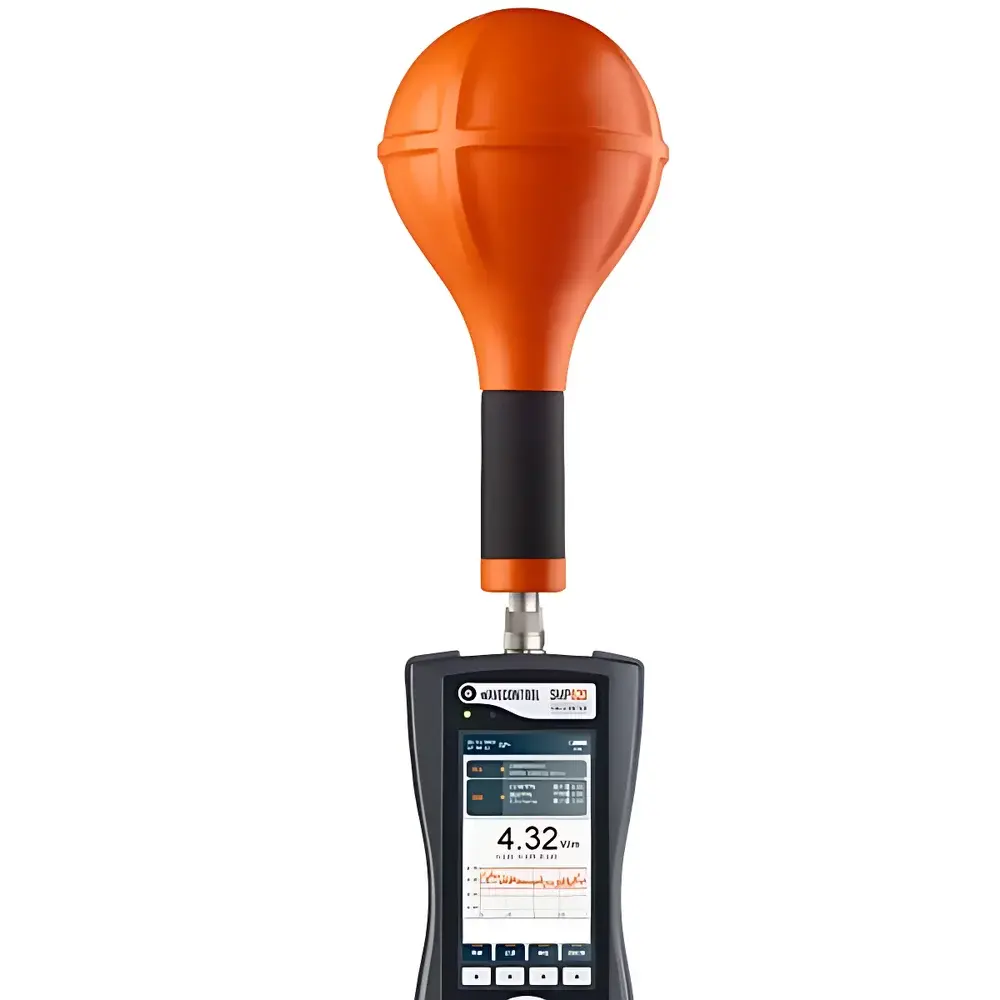
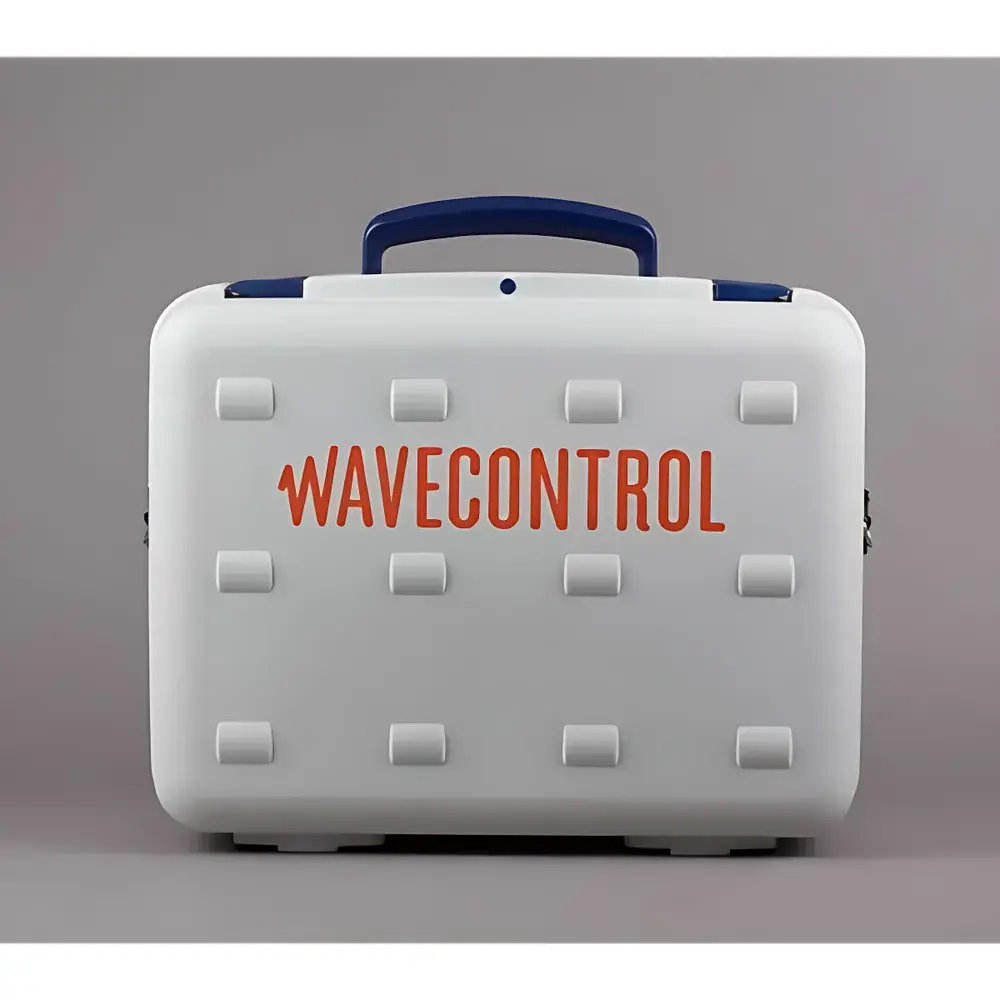
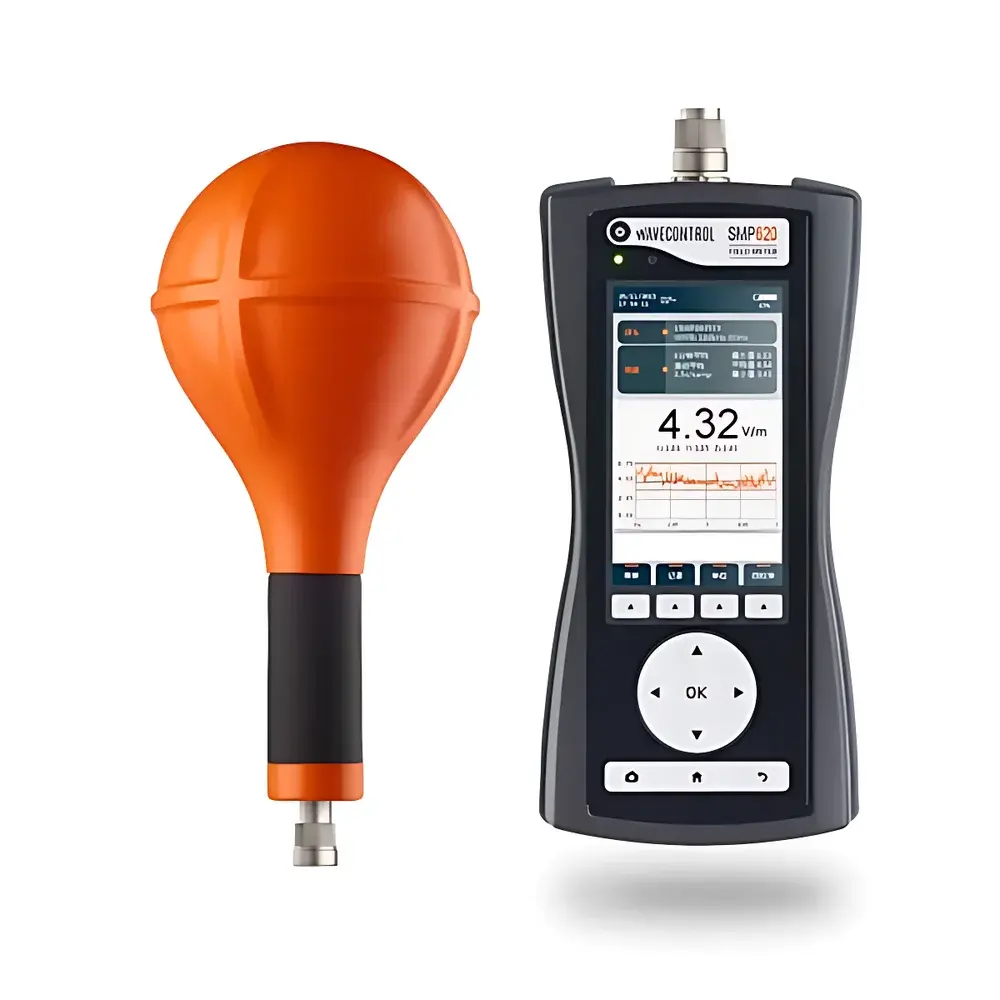
Starwood SMP620 Electromagnetic Field Strength Analyzer
| Brand | Starwood |
|---|---|
| Model | SMP620 |
| Category | Electromagnetic Field Strength Analyzer |
| Frequency Range | DC to 300 GHz (probe-dependent) |
| Electric Field Measurement Range | Up to 100 kV/m (with appropriate probe) |
| Magnetic Field Measurement Range | Up to 10 T (with appropriate probe) |
| Accuracy | ±1.5% (typical, probe- and frequency-dependent) |
| Data Storage | 4 GB internal (expandable) |
| Sampling Interval | 0.5 s to 100 h (1 s step) |
| Display Units | V/m, kV/m, µW/cm², mW/cm², W/m², nT, µT, mT, T, A/m, mG, % of exposure limit |
| Compliance Support | ICNIRP, IEEE C95.1, GB 8702–2014, EN 50492, EN 62233 |
Overview
The Starwood SMP620 Electromagnetic Field Strength Analyzer is a handheld, dual-band (low-frequency to millimeter-wave) broadband measurement system engineered for precision assessment of non-ionizing electromagnetic fields (EMF) in occupational, public, and environmental settings. It operates on the principle of isotropic field detection using triaxial probes—each sensor independently calibrated to capture orthogonal components (X/Y/Z) of electric (E-field) and magnetic (H-field) vectors simultaneously. The instrument computes true RMS values in real time, enabling compliance evaluation against internationally recognized exposure limits—including ICNIRP 2020, IEEE Std C95.1–2019, EU Directive 2013/35/EU, and China’s GB 8702–2014. Its architecture integrates analog front-end signal conditioning, high-speed ADC sampling, and embedded digital signal processing to minimize phase error and aliasing across its full operational bandwidth (DC to 300 GHz, dependent on probe selection). Designed for field-deployable robustness, the SMP620 meets IP54 ingress protection standards and operates continuously for >12 hours on a single charge of its rechargeable lithium-ion battery.
Key Features
- Triaxial isotropic probe auto-recognition: Automatically detects and configures calibration coefficients, frequency response, and unit mapping upon probe attachment.
- Multi-parameter real-time display: Simultaneous readout of E-field (V/m), H-field (A/m), power density (W/m²), magnetic flux density (µT), and % of applicable exposure limit (using built-in weighting curves).
- Configurable temporal resolution: Adjustable sampling intervals from 0.5 s to 100 h (1 s increment), supporting both transient pulse analysis and long-term monitoring campaigns.
- Advanced averaging modes: Arithmetic mean, sliding average (user-defined window), and time-weighted averaging aligned with regulatory averaging periods (e.g., 6-min ICNIRP, 30-min IEEE).
- Extended data logging: 4 GB internal flash memory stores >1 million timestamped records; supports SD card expansion for archival-grade storage.
- Remote operation & integration: Fiber-optic isolation interface (IEC 61000-4-6 compliant) and Mini-USB port enable secure, noise-immune remote control via tablet-based software; optional backend data management platform supports automated report generation (PDF/CSV), audit trails, and multi-site comparative analytics.
- Programmable alarm system: User-definable threshold alerts (sound + visual), with configurable hysteresis and unit-specific trigger logic (e.g., % limit, V/m, or W/m²).
Sample Compatibility & Compliance
The SMP620 is compatible with a modular suite of NIST-traceable, factory-calibrated isotropic probes covering discrete frequency bands: ELF (1 Hz–10 kHz), RF (100 kHz–6 GHz), and mmWave (18–300 GHz). Each probe undergoes individual amplitude and phase linearity verification per ISO/IEC 17025 requirements. The system supports spatial averaging across up to 100 predefined locations—recording individual point measurements alongside vector-summed total field magnitude—enabling full-spectrum EMF surveys per EN 50492 and IEC 62110. All firmware and calibration data are digitally signed and version-controlled, ensuring traceability for GLP/GMP audits. Optional FDA 21 CFR Part 11-compliant software modules provide electronic signatures, audit logs, and role-based access control for regulated environments.
Software & Data Management
The SMP620 interfaces with Starwood EMF Suite v4.x—a Windows-based desktop application supporting raw data export (IEEE 1584-compliant .csv), spectral visualization, exposure limit overlay, and customizable reporting templates. Field data synchronization occurs via encrypted USB transfer or fiber-optic link, preserving metadata integrity (GPS coordinates, operator ID, probe SN, temperature/humidity logs). The optional Cloud Data Hub enables centralized ingestion, automated validation checks (e.g., outlier detection, missing calibration flags), and REST API access for integration into enterprise EHS platforms. All stored datasets include embedded EXIF-style headers compliant with ISO 14050:2007 terminology for acoustic and electromagnetic emission documentation.
Applications
- Telecom infrastructure compliance: Base station site surveys (5G NR FR2, LTE-A, WiMAX), small cell deployment validation, and backhaul link characterization.
- Industrial hygiene monitoring: Assessment of EMF emissions from induction heaters, MRI fringe fields, RF plasma systems, and welding equipment per EN 62311 and EN 62233.
- Public environment evaluation: Schools, hospitals, residential zones near HV transmission lines or broadcast antennas—aligned with national reference levels (e.g., Germany BImSchV, UK ICNIRP guidelines).
- Research & development: Antenna pattern verification, shielding effectiveness testing, and bioelectromagnetics dosimetry support (SAR proxy metrics).
- Military & aerospace: Radar cross-section (RCS) facility safety sweeps, avionics EMI pre-compliance screening, and EW system emission profiling.
FAQ
What frequency ranges does the SMP620 cover?
The SMP620 itself is a universal analyzer platform; its effective frequency coverage depends entirely on the connected triaxial probe. Available probes span DC–10 kHz (ELF), 100 kHz–6 GHz (RF), and 18–300 GHz (mmWave), with no internal frequency limitation imposed by the host unit.
Does the SMP620 meet international calibration traceability requirements?
Yes—each probe ships with an ISO/IEC 17025-accredited calibration certificate issued by Starwood’s CNAS-accredited metrology lab (No. CNAS L9287), including uncertainty budgets and frequency-specific correction factors.
Can the SMP620 perform time-domain pulse analysis for radar or UWB sources?
Yes—its fast RMS detection mode (≤100 ns rise time, 10 MHz bandwidth) satisfies EN 62233 Annex D requirements for pulsed RF field assessment, including peak hold and duty-cycle-weighted averaging.
Is remote firmware update supported?
Firmware updates require local USB connection and authenticated digital signature verification; over-the-air (OTA) updates are intentionally excluded to maintain regulatory compliance and cybersecurity integrity per IEC 62443-3-3.
How is measurement uncertainty quantified in reports?
Total expanded uncertainty (k=2) is calculated per GUM (JCGM 100:2008) and reported in all exported datasets, incorporating probe calibration uncertainty, temperature drift coefficients, isotropy error, and instrument repeatability—fully documented in the user manual Annex B.
Related Products







