
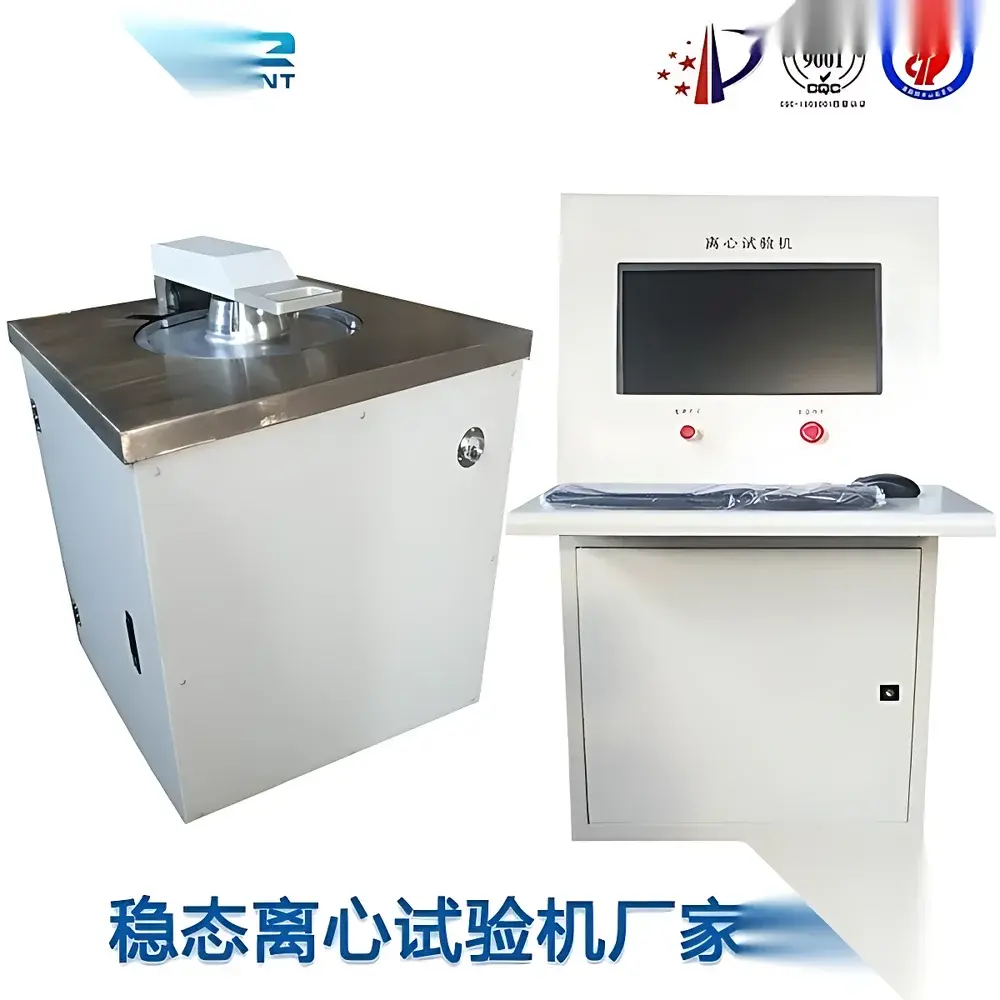
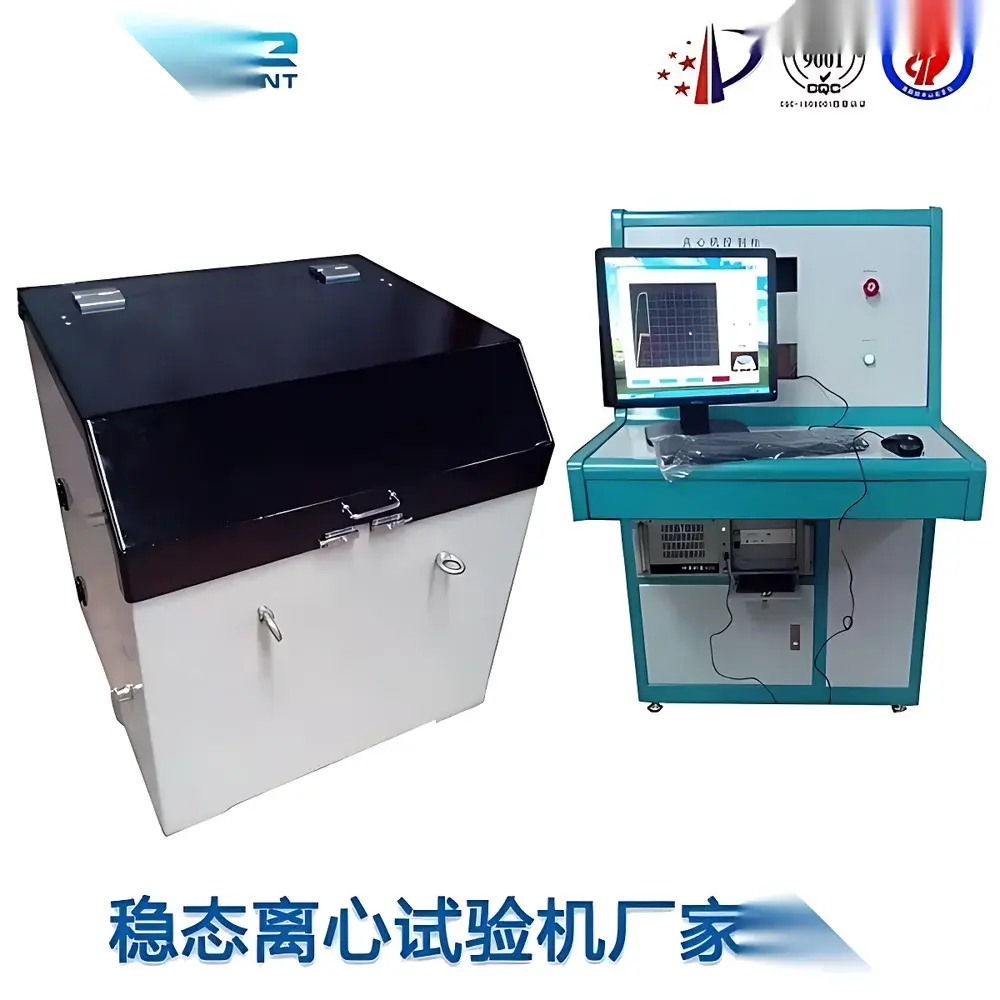
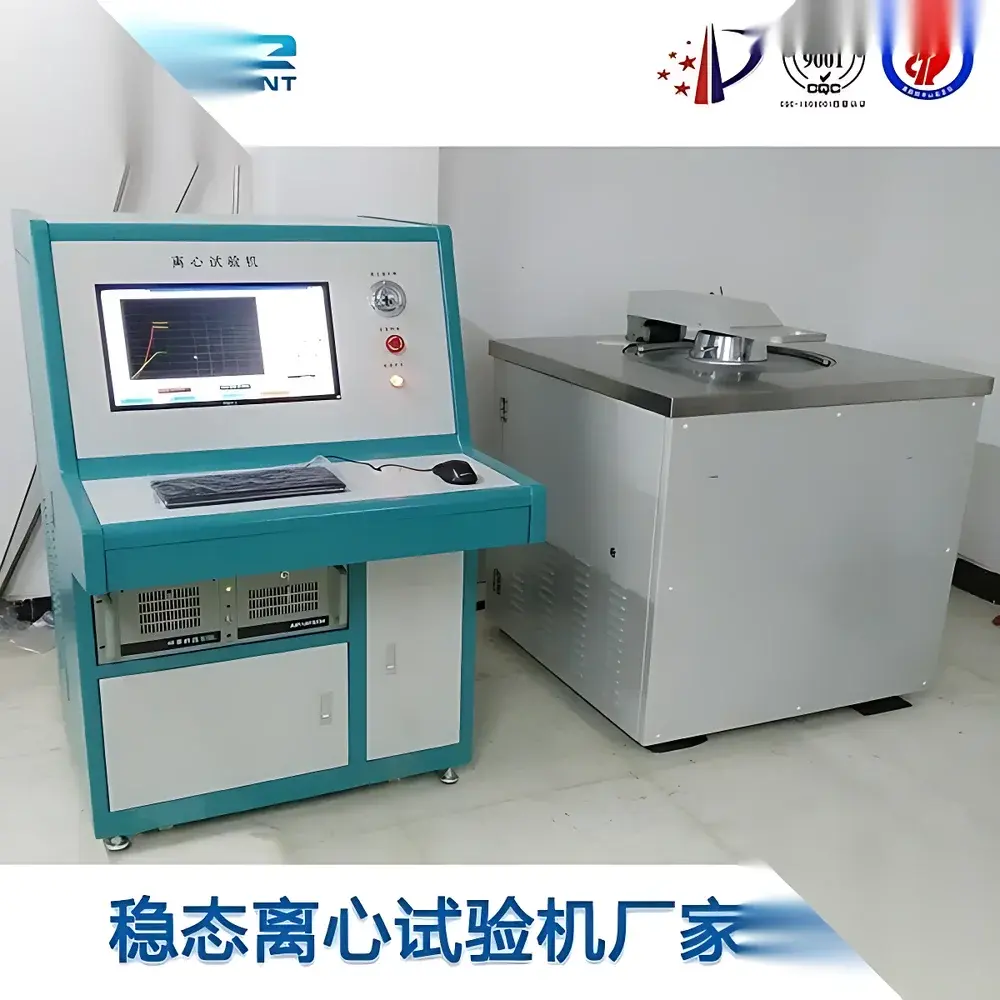
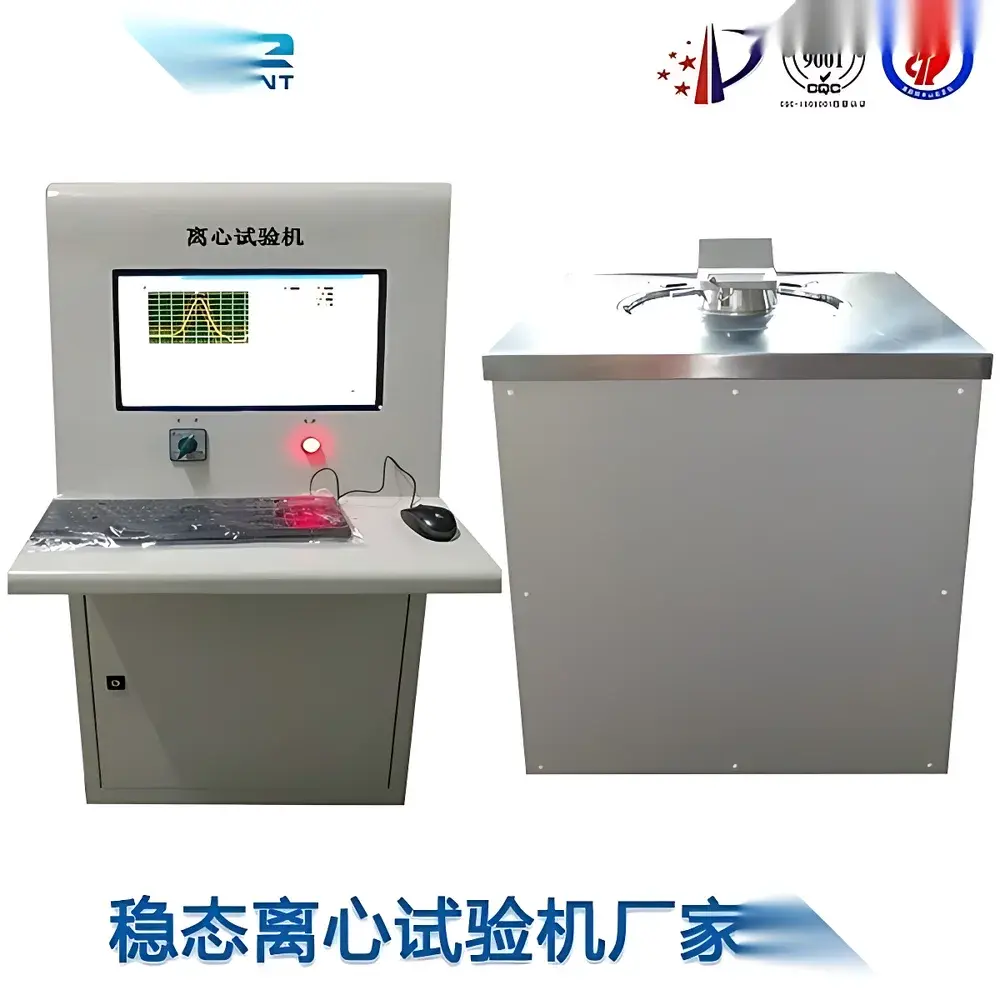
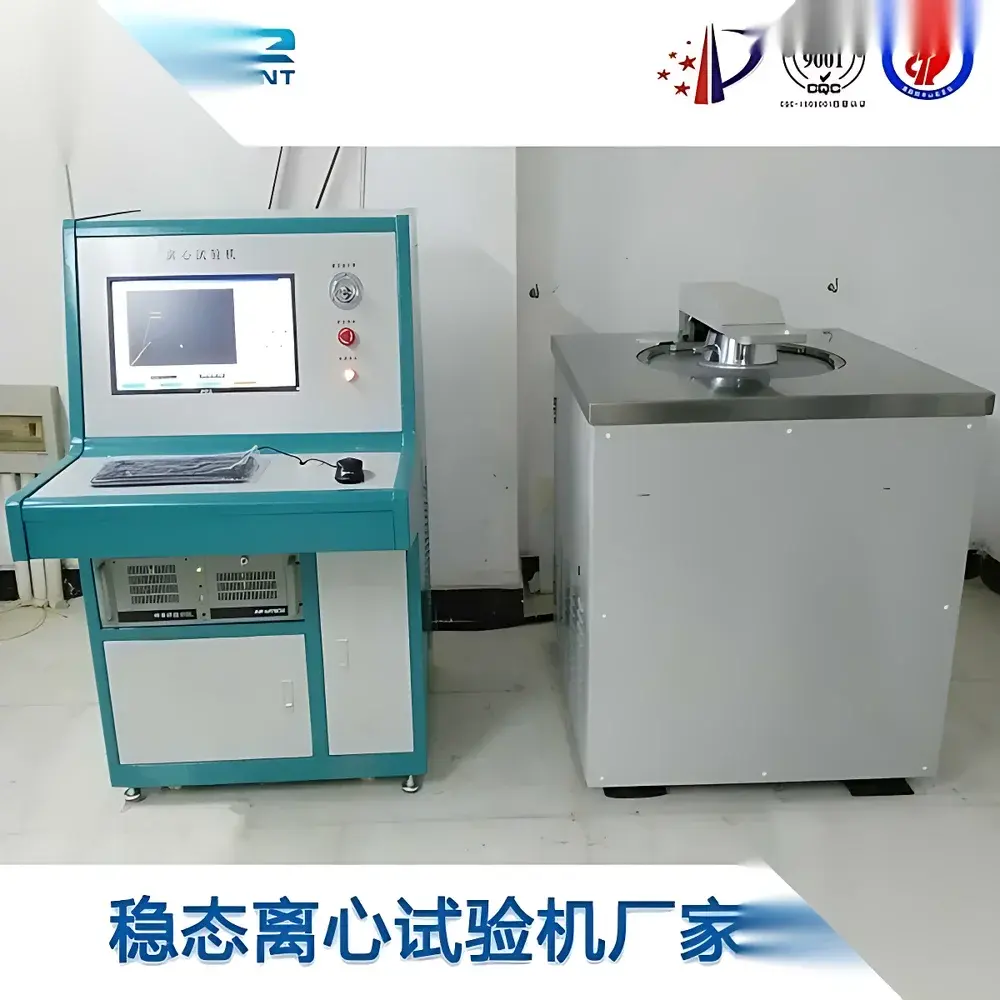
Steady-State Acceleration Centrifuge Test System
| Brand | OEM |
|---|---|
| Origin | Imported |
| Manufacturer Type | Authorized Distributor |
| Price | USD 28,000 (FOB) |
Overview
The Steady-State Acceleration Centrifuge Test System is an electromechanical test apparatus engineered to subject electronic components, micro-assemblies, and small-scale electro-mechanical devices to controlled, sustained radial acceleration fields—distinct from gravitational loading. It operates on the principle of rotational inertial force generation, where specimens mounted at a defined radius from the axis of rotation experience centripetal acceleration proportional to ω²r (angular velocity squared × radial distance). This enables precise simulation of high-g mechanical stress environments encountered during launch, ballistic deployment, rapid maneuvering, or explosive shock events. Unlike transient shock testers, this system delivers stable, programmable acceleration profiles over extended durations—critical for evaluating structural integrity, solder joint reliability, internal bond strength, and functional performance under sustained overload conditions. Designed in strict alignment with military and industrial environmental test standards, it serves as a core qualification tool in aerospace electronics, defense avionics, automotive safety modules, and high-reliability semiconductor packaging validation.
Key Features
- Real-time industrial PC-based control architecture with deterministic timing resolution (<10 ms loop cycle) and integrated data acquisition at ≥1 kHz sampling rate
- Multi-step acceleration profile programming: supports up to 16 discrete g-level segments with ramp/hold/step transitions
- Triple-axis sequential testing capability (X/Y/Z orientation) via reconfigurable specimen mounting plates and precision indexing fixtures
- Comprehensive hardware safety interlocks: overspeed cutoff (±2% tolerance), current-limiting slip-ring protection, open-circuit detection, and thermal shutdown monitoring
- Dual-mode operation: fully automated test execution with preloaded profiles or manual incremental g-level adjustment with real-time feedback
- Modular slip-ring assembly: configurable for up to 15 independent current channels (500 V / 5 A rating), supporting active device monitoring during centrifugation
- Calibration-traceable acceleration output verified per ISO/IEC 17025-accredited procedures; system uncertainty ≤ ±1.5% of full scale
Sample Compatibility & Compliance
The system accommodates specimens up to 200 mm in height and 10 kg mass (model-dependent), with center-of-gravity positioning accuracy ±0.5 mm relative to the designated mounting radius. Specimen mounting interfaces comply with MIL-STD-1377 mechanical interface specifications. All operational modes meet the technical requirements of GJB 150.15A–2012 (China), MIL-STD-810H Method 513.6 (USA), MIL-STD-883K Method 2001.1 (microelectronics), IEC 60068-2-27 (Ed. 4.0), and GB/T 2423.15–2008. Test reports include full audit trails compliant with GLP and GMP documentation frameworks, including timestamped raw acceleration data, environmental chamber logs (if integrated), and operator authentication records.
Software & Data Management
The embedded test software provides ISO/IEC 17025-aligned reporting functionality, generating PDF and CSV outputs with embedded digital signatures. Each test session automatically archives waveform metadata (sampling rate, sensor calibration ID, ambient temperature/humidity), acceleration vs. time curves with user-defined tolerance bands, pass/fail status per specification clause, and deviation annotations. Audit trail features satisfy FDA 21 CFR Part 11 requirements for electronic records and signatures—including user login history, parameter change logs, and report revision timestamps. Data export supports SCPI command protocol for integration into enterprise LIMS or MES platforms.
Applications
- Qualification testing of MEMS accelerometers, gyroscopes, and inertial measurement units (IMUs) under sustained g-loading
- Evaluation of solder joint fatigue resistance in BGA and QFN packages subjected to 500–50,000 g fields
- Structural validation of miniature actuators, optical alignment mounts, and RF switch assemblies
- Reliability screening of space-grade connectors, flex circuits, and hybrid microcircuits per MIL-PRF-38534
- Failure mode analysis of ceramic capacitors and thin-film resistors under centrifugal tensile stress
- Pre-compliance verification for DO-160 Section 16 (acceleration) in airborne equipment certification
FAQ
What acceleration range is achievable across different models?
Standard configurations deliver 30–2000 m/s² (3–204 g) for mid-capacity systems; high-g variants extend to 200,000–400,000 m/s² (20,400–40,800 g) with reduced payload capacity and specialized rotor design.
Can the system perform combined environmental testing (e.g., temperature + acceleration)?
Yes—optional climate chamber integration enables simultaneous thermal conditioning (−65°C to +150°C) with centrifugal loading, meeting MIL-STD-810H paragraph 513.6.11 requirements.
Is third-party calibration certification included?
Each unit ships with NIST-traceable factory calibration certificate; annual recalibration services are available through ISO/IEC 17025-accredited partner labs.
How is specimen center-of-rotation alignment verified?
Integrated laser alignment system and precision machined reference surfaces ensure ≤ ±0.3 mm radial offset; verification procedure is documented in the User Manual Annex C.
Does the software support custom pass/fail criteria beyond standard test methods?
Yes—user-defined acceptance thresholds, dynamic tolerance windows, and multi-parameter logical gating (e.g., “pass only if current < 200 mA AND acceleration deviation < ±0.8%”) are fully configurable.
Related Products



