
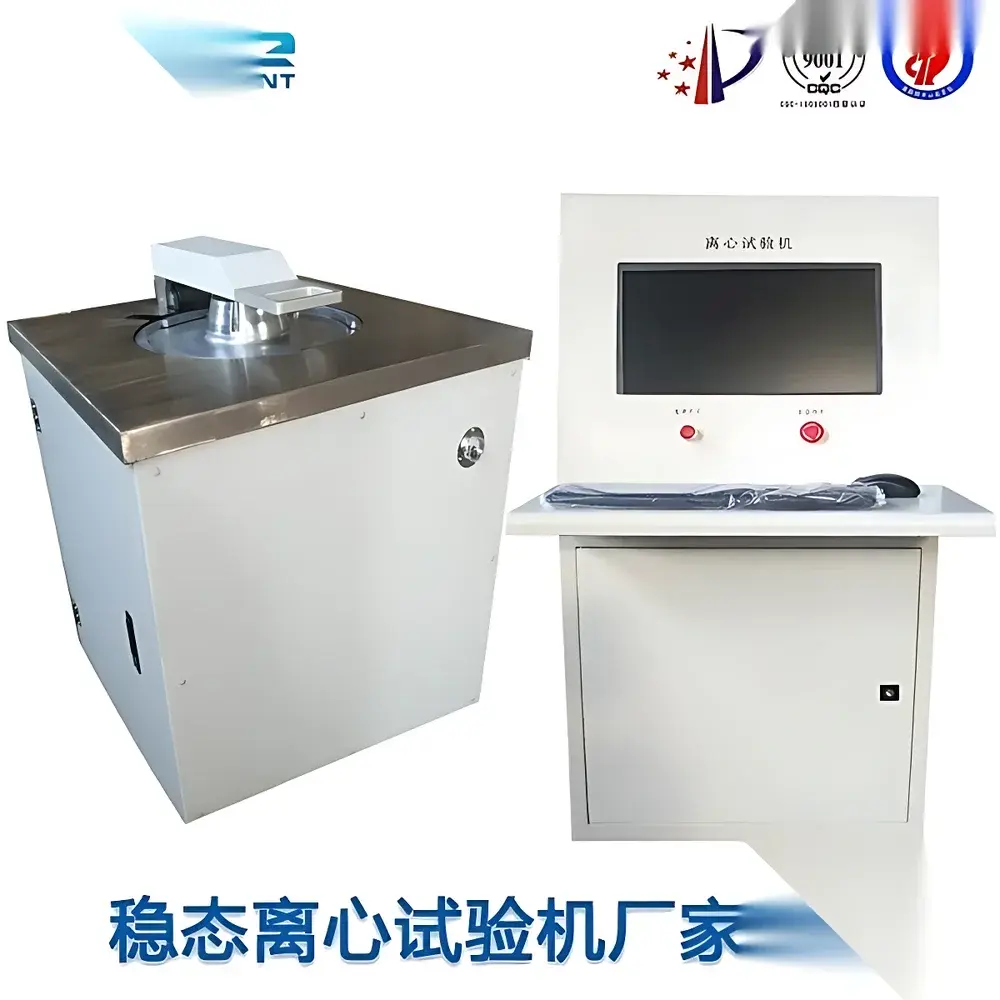
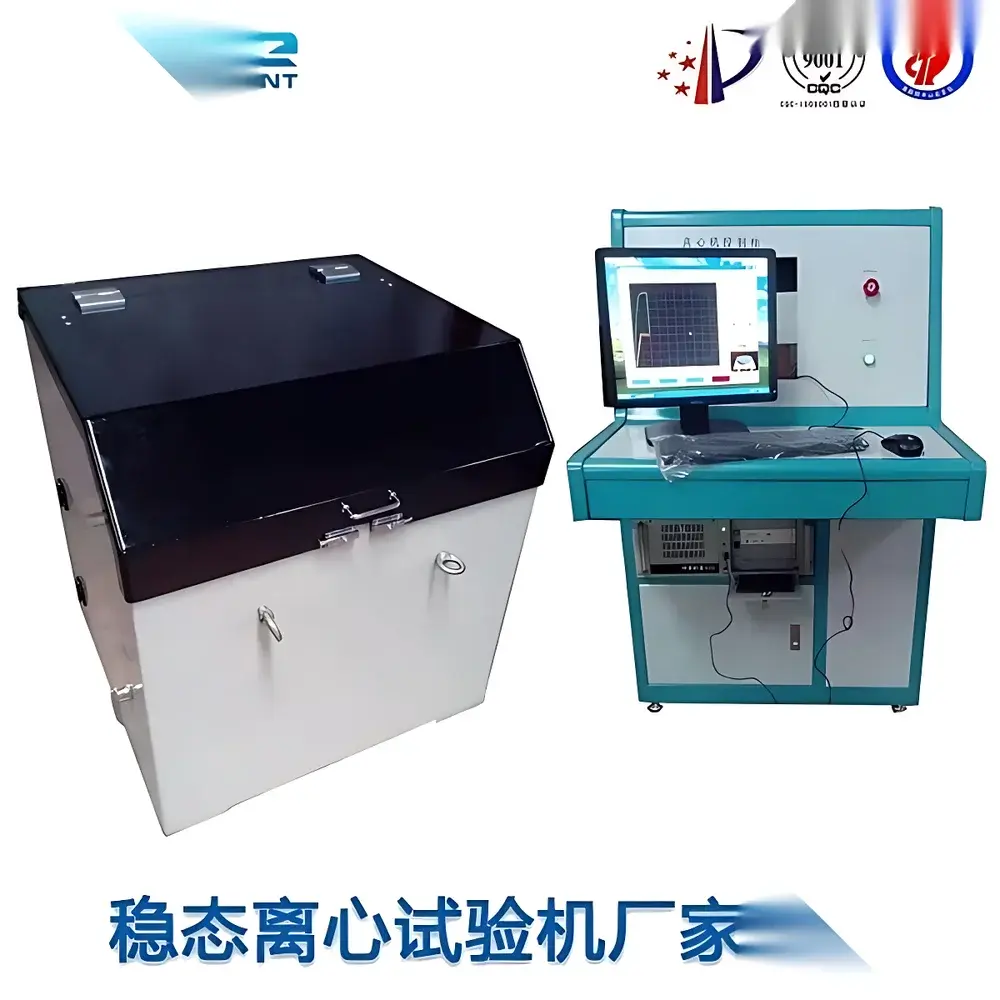
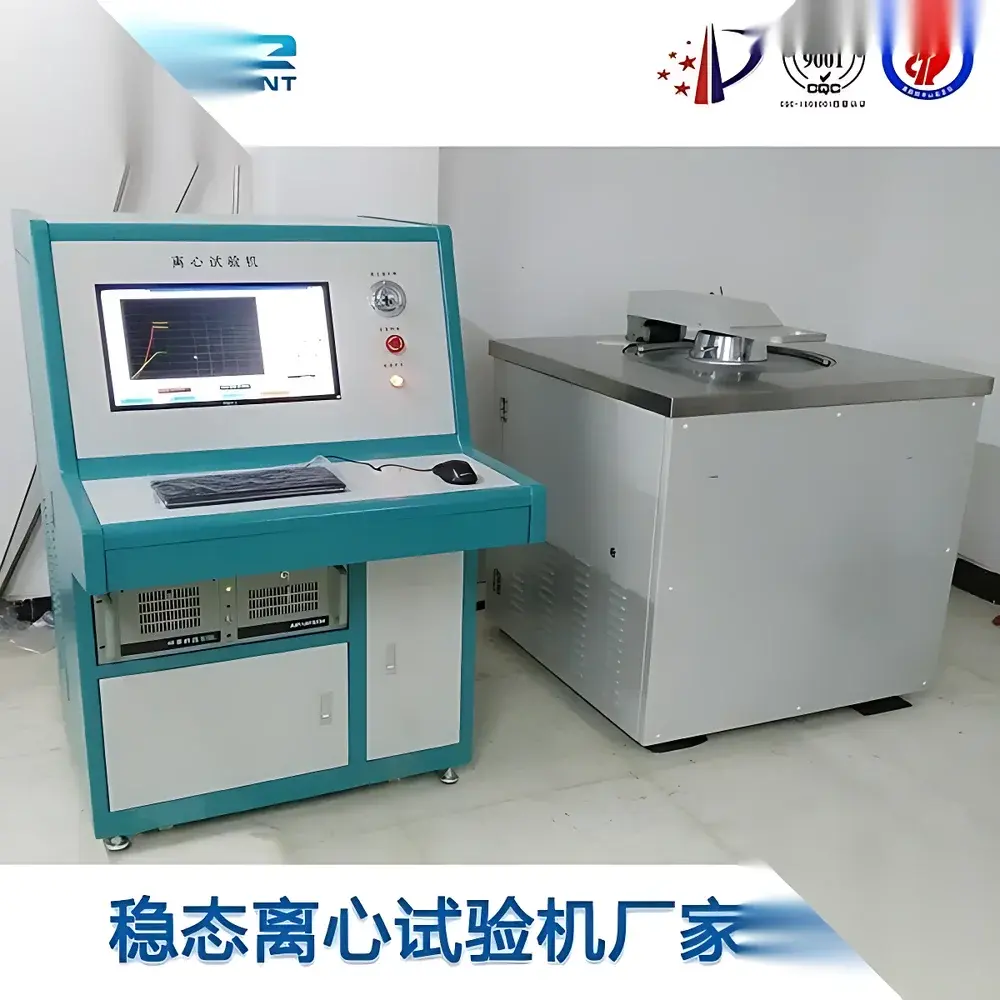
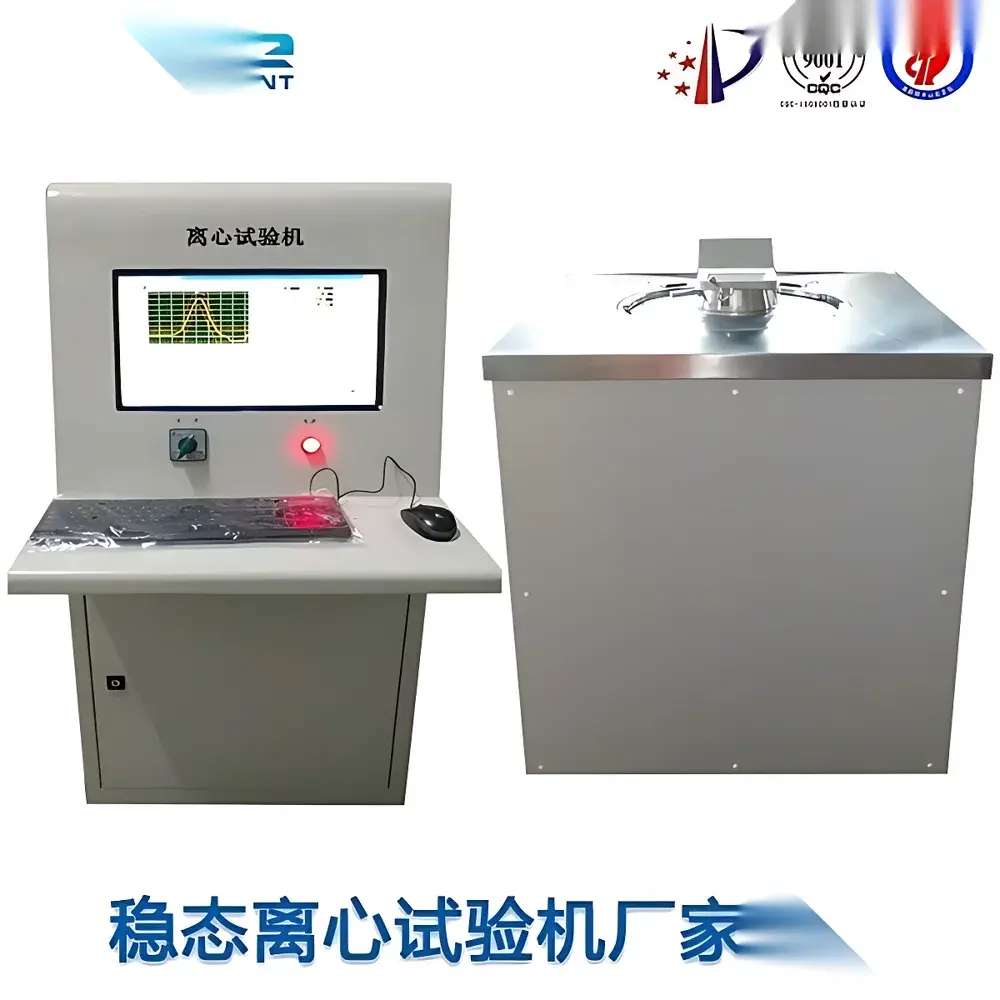
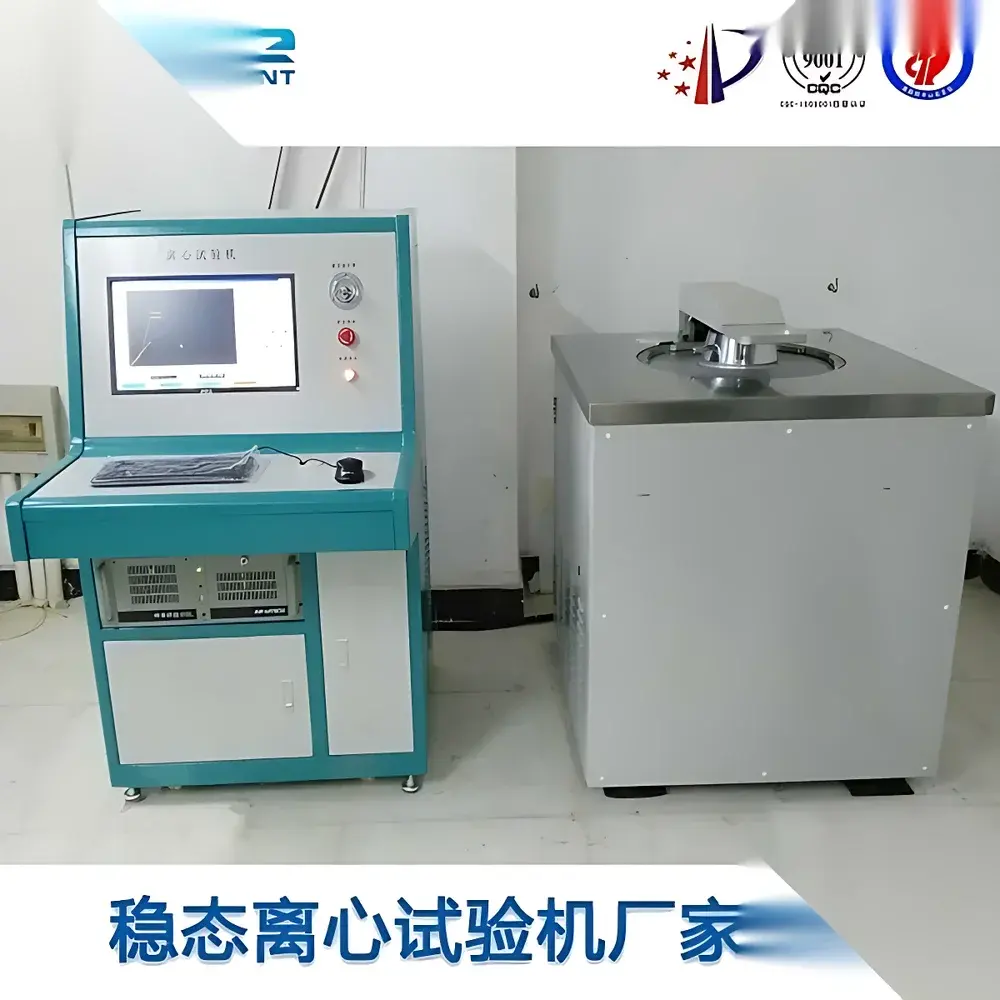
Steady-State Acceleration Centrifuge Tester LXJ Series
| Key | Brand: Other Brands |
|---|---|
| Origin | Imported |
| Manufacturer Type | Authorized Distributor |
| Price | USD 28,000 (FOB) |
| Acceleration Range | 30–400,000 m/s² |
| Test Axes | X, Y, Z orthogonal directions |
| Max Load Capacity | 200 kg |
| Sample Height Limit | 200–300 mm |
| Radial Installation Radius | 200–1000 mm |
| Power Supply | AC 380 V, 1.5–6.5 kVA |
| Continuous Operation Time | 30–60 min |
| Compliance | MIL-STD-810F, MIL-STD-883C, GJB 150A, GJB 360B, GB/T 2423, IEC 60068-2-27 |
Overview
The Steady-State Acceleration Centrifuge Tester LXJ Series is an electromechanical test system engineered to apply precisely controlled, constant-magnitude centrifugal acceleration fields to electronic components, microelectromechanical systems (MEMS), avionics modules, and other small-scale electro-mechanical devices. Unlike transient shock or vibration testing, this instrument subjects specimens to sustained inertial loading—simulating high-G environments encountered during launch, ballistic flight, or rapid maneuvering. The system operates on the principle of rotational kinematics: by rotating a test arm at angular velocity ω about a fixed axis, it generates radial acceleration a = ω²r, where r is the effective radius from rotation center to specimen center of mass. Acceleration is expressed in SI units (m/s²), with traceable calibration against NIST-traceable accelerometers and high-resolution optical encoders. Designed for laboratory-grade repeatability and long-term stability, the LXJ platform delivers steady-state G-loading without harmonic ripple or drift exceeding ±0.5% over full operational duration.
Key Features
- Real-time industrial PC-based control architecture with deterministic timing loop (≤1 ms cycle resolution)
- Multi-stage acceleration profile programming: up to 8 discrete acceleration levels per test sequence, each with independent dwell time, ramp rate, and direction assignment
- Triaxial test capability: interchangeable fixture plates enable sequential or isolated application of acceleration along X, Y, and Z axes relative to the specimen’s functional orientation
- Integrated safety interlock system: hardware-enforced cutoffs for overspeed (>105% setpoint), current overload (>110% rated), and thermal threshold (motor winding >120°C)
- Slip-ring assembly configurable with up to 15 independent current channels (500 V, 5 A max per channel), supporting real-time power delivery and sensor signal transmission during rotation
- Automated report generation compliant with ISO/IEC 17025 documentation requirements—including timestamped raw data, tolerance band overlay, pass/fail annotation, and operator ID audit trail
Sample Compatibility & Compliance
The LXJ series accommodates specimens ranging from surface-mount resistors (0402 footprint) to compact PCB assemblies (max 300 mm height × 200 mm depth). Fixturing uses non-magnetic, low-outgassing aluminum alloy tooling with adjustable clamping force (0.5–15 N·m torque range) to prevent micro-fracture during high-G onset. All models meet mechanical and electromagnetic compatibility requirements for Class II laboratory use per IEC 61000-6-3 and IEC 61000-6-4. Certification documentation includes full test reports verifying conformance to MIL-STD-810F Method 513.6 (Acceleration), MIL-STD-883C Method 2001.2 (Centrifugal Acceleration), GJB 150.15A–2012, and GB/T 2423.15–2008. Optional third-party verification available for GLP/GMP environments under FDA 21 CFR Part 11-compliant data integrity protocols.
Software & Data Management
Control and analysis are executed via LXJ-TestSuite v4.2—a Windows-based application built on .NET Framework 4.8 with deterministic real-time kernel extensions. The software supports dual-mode operation: manual jog mode for setup verification and automated sequence execution with preloaded test plans (.lxt files). All acquired data—including angular position, motor current, chamber temperature, and user-defined analog inputs—are logged at 1 kHz sampling rate to binary-encoded .lxd files. Export formats include CSV (for MATLAB/Python post-processing), PDF (formatted test certificates), and XML (for integration into LIMS platforms such as LabWare or Thermo Fisher SampleManager). Audit trails record every parameter change, user login/logout, and calibration event with SHA-256 hashing and immutable timestamps.
Applications
- Qualification testing of inertial sensors (accelerometers, gyroscopes) under sustained acceleration stress
- Evaluation of solder joint integrity in high-reliability aerospace PCBAs per IPC-J-STD-001 Class 3 criteria
- Structural validation of MEMS mirror actuators and RF switch packages subjected to launch-profile G-loads
- Screening of adhesive bond strength in hybrid microcircuit encapsulation systems
- Verification of mechanical latch retention force in satellite deployable mechanisms
- Supporting failure analysis root cause determination when combined with post-test SEM/FIB cross-sectioning
FAQ
What standards does the LXJ tester support out-of-the-box?
The system ships with preconfigured test templates for MIL-STD-810F Method 513.6, GJB 150.15A, and GB/T 2423.15. Custom profiles can be authored for proprietary or emerging standards.
Can the system perform simultaneous multi-axis acceleration?
No—it applies uniaxial steady-state acceleration per test run. Triaxial evaluation requires reorientation and three separate runs; fixture interchange is tool-less and completed in <2 minutes.
Is remote monitoring supported during operation?
Yes. Via optional Ethernet interface, live telemetry (acceleration value, elapsed time, status flags) streams to secure web dashboard accessible on internal network—no cloud dependency or external data routing.
What maintenance intervals are recommended?
Bearing lubrication and encoder alignment verification every 500 operational hours; main drive motor insulation resistance testing annually; full calibration traceable to national metrology institutes recommended biannually.
Does the system include shock or vibration functionality?
No. The LXJ series is dedicated exclusively to steady-state centrifugal acceleration. For combined environmental stress, integration with external electrodynamic shakers or thermal chambers is supported via IEEE-488 (GPIB) or Modbus TCP synchronization.



