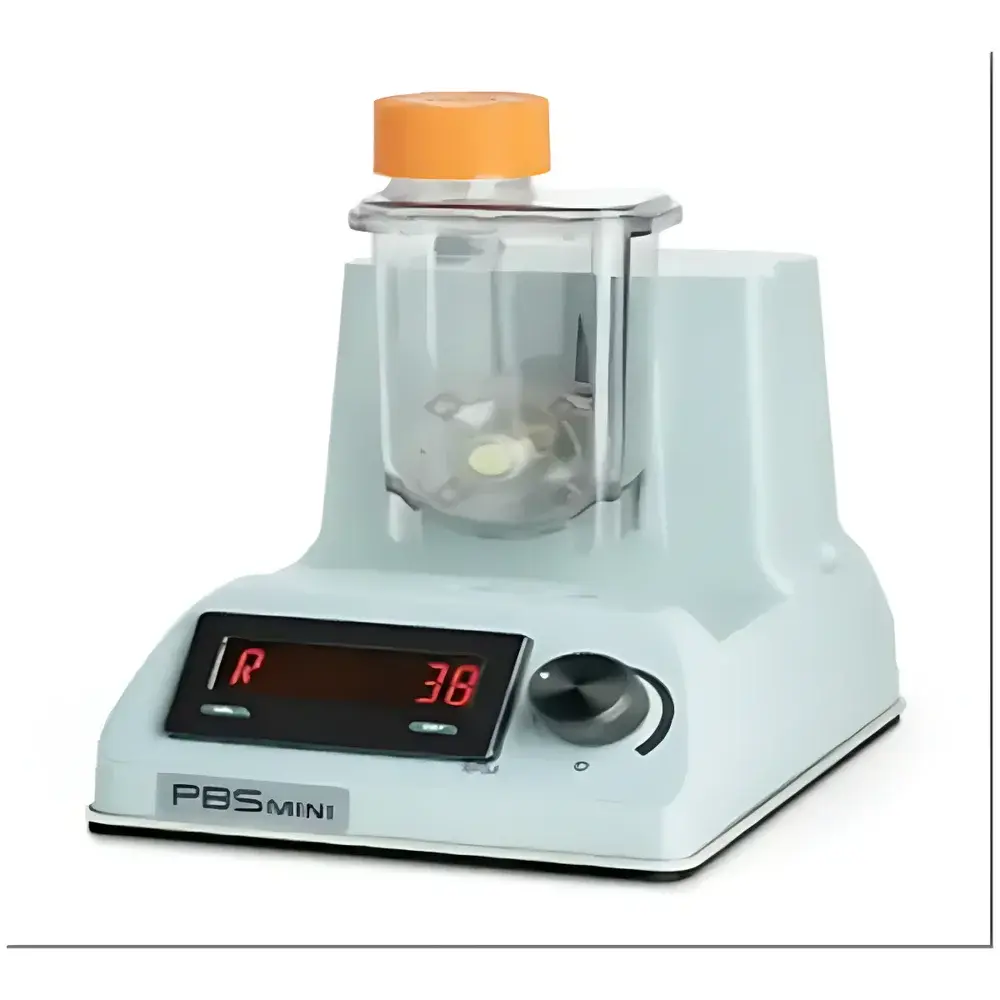
StemCell Technologies PBS-MINI Bioreactor (Suspension Culture System)
| Brand | StemCell Technologies |
|---|---|
| Origin | Canada |
| Model | PBS-MINI |
| Category | Suspension-Based Human Pluripotent Stem Cell (hPSC) Bioreactor |
| Regulatory Status | CE-IVD, ISO 13485 Manufactured |
| Intended Use | GMP-Compatible Scalable hPSC Expansion under Serum-Free, Microcarrier-Free Conditions |
| Compliance | Designed for adherence to USP <1043>, ISO 20387, and GLP/GMP-aligned process documentation requirements |
| Software Interface | Compatible with third-party SCADA and LIMS via RS-232/Modbus TCP |
Overview
The StemCell Technologies PBS-MINI Bioreactor is an engineered suspension culture platform specifically designed for the scalable, serum-free, microcarrier-free expansion of human pluripotent stem cells (hPSCs) in three-dimensional (3D) aggregates. Operating on the principle of controlled orbital agitation within a gas-permeable, single-use bioreactor vessel, the PBS-MINI maintains physiological oxygen transfer rates (kLa ≈ 12–18 h−1) and low-shear hydrodynamic conditions optimized for hPSC aggregate integrity and uniform growth. Its architecture integrates passive gas exchange through a silicone membrane base and precision-controlled temperature regulation (±0.3°C), enabling reproducible maintenance of undifferentiated hPSC phenotypes across passages. The system is validated for use with defined, xeno-free media formulations—including mTeSR™3D and TeSR™-E8™3D—and supports transition from research-scale flask-based cultures to clinical-grade manufacturing workflows.
Key Features
- Compact benchtop footprint (28 × 22 × 26 cm) with integrated temperature control (37°C ± 0.3°C) and humidity retention
- Single-use, gamma-sterilized polycarbonate bioreactor vessels (100–500 mL working volume), pre-validated for endotoxin levels (<0.25 EU/mL) and extractables profiling per USP
- Orbital shaking mechanism (30–90 rpm, programmable ramp profiles) calibrated to minimize aggregate shear stress while ensuring homogenous nutrient distribution
- No requirement for microcarriers, extracellular matrix coatings, or serum supplementation—fully compatible with chemically defined, animal component-free media systems
- Scalable process design: achieves ≥1 × 10⁹ viable hPSCs in 14–21 days starting from ≤5 × 10⁵ seeded cells, with population doubling times consistent with monolayer controls (≈24–30 h)
- Integrated barcode scanning support for vessel traceability and alignment with electronic batch record (EBR) systems
Sample Compatibility & Compliance
The PBS-MINI is qualified for use with multiple hPSC lines—including WA09 (H9), HUES-7, and iPSC-derived clinical master cell banks—across both feeder-free and feeder-dependent derivation backgrounds. It supports direct inoculation of dissociated single-cell suspensions or pre-formed aggregates (80–200 µm diameter). All vessel materials comply with ISO 10993-5 (cytotoxicity), USP (biological reactivity), and ISO 11137 (radiation sterilization validation). Process outputs meet ICH Q5A(R2) comparability criteria when transitioning from static to suspension culture, and are documented to retain >95% OCT4/NANOG expression and >90% TRA-1-60 positivity post-expansion. The system architecture enables alignment with FDA 21 CFR Part 11 requirements when paired with validated electronic data capture tools.
Software & Data Management
While the PBS-MINI operates as a stand-alone hardware platform without embedded software, it provides analog and digital I/O interfaces (0–10 V, RS-232, Modbus TCP) for integration into facility-wide automation infrastructures. Temperature setpoints, agitation speed, and run duration are configured via front-panel keypad with non-volatile memory retention. All operational parameters—including cumulative runtime, total agitation cycles, and thermal deviation logs—are timestamped and exportable as CSV files for audit trail generation. When deployed in regulated environments, users commonly interface the device with validated LIMS or MES platforms to enforce change control, user authentication, and electronic signature workflows compliant with ALCOA+ principles.
Applications
- Clinical-grade hPSC expansion for autologous and allogeneic cell therapy manufacturing (e.g., retinal pigment epithelium, cardiomyocytes, neural progenitors)
- High-throughput screening of differentiation protocols using uniform, scalable starting material
- Bioprocess development studies evaluating media optimization, feeding strategies, and aggregate size distribution dynamics
- Regulatory submission support: generation of process characterization data aligned with ICH Q5D and Q5A(R2) guidance documents
- Training platform for GMP-compliant cell culture operations in academic Good Manufacturing Practice (GMP) training centers
FAQ
Is the PBS-MINI suitable for cGMP manufacturing?
Yes—the system is routinely deployed in Phase I/II clinical manufacturing suites under quality agreements with Health Canada and EMA-recognized contract development and manufacturing organizations (CDMOs), provided ancillary systems (media, reagents, analytics) meet applicable GMP standards.
Can the PBS-MINI be used with non-StemCell Technologies media?
It is technically compatible with other defined suspension media; however, full performance validation—including aggregate morphology stability, viability retention, and marker expression fidelity—is only established for mTeSR™3D and TeSR™-E8™3D.
What is the recommended seeding density for optimal aggregate formation?
Initial seeding is validated at 0.2–0.5 × 10⁶ viable cells/mL in 100–200 mL working volume, with aggregation kinetics monitored by brightfield imaging at 24–48 h post-inoculation.
Does the system include real-time dissolved oxygen or pH monitoring?
No—these parameters are managed indirectly via controlled gas blending (5% CO2/air) and validated media buffering capacity; inline sensors may be added externally via custom manifold integration.
How is sterility maintained during feeding operations?
All feed additions are performed aseptically using sterile-filtered syringes or peristaltic pumps connected via vented, gamma-irradiated tubing sets—no vessel opening is required during the culture period.