
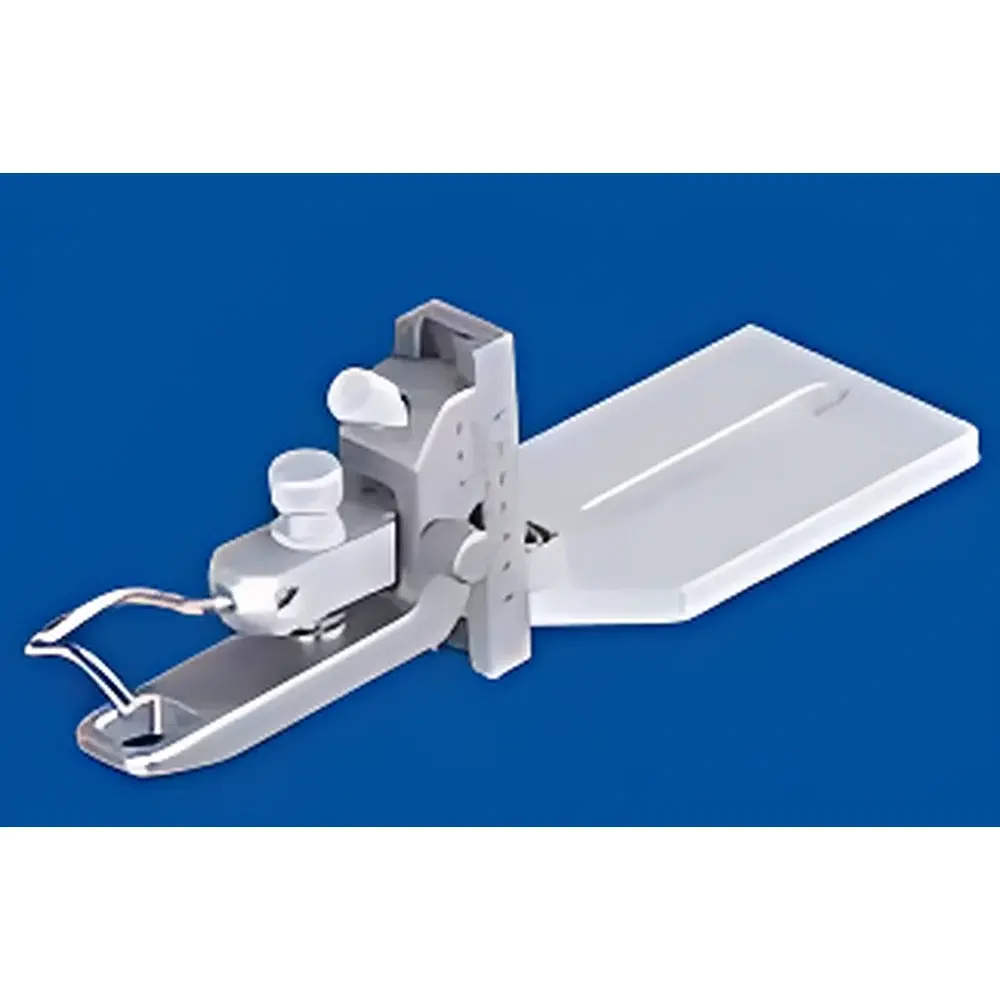
Stereo-Targeting Adapter Kit for Small Animal Neurosurgery – Model 68010
No specifications available.
Overview
The Stereo-Targeting Adapter Kit (Model 68010) is a precision-engineered accessory designed for integration with standard stereotaxic frames used in preclinical neuroscience research. It enables reproducible, anatomically aligned head fixation of mice and juvenile rats during intracranial procedures—including microinjection, electrophysiology, optogenetics, and cranial window implantation. Unlike conventional rat adapters relying on bilateral ear bar insertion, the 68010 adapter employs a non-invasive, dual-point fixation strategy: upper palate and incisor clamping. This approach mitigates mechanical stress on the thin calvarium of murine subjects—critical for maintaining physiological integrity, minimizing postoperative complications, and ensuring spatial fidelity across repeated experimental sessions. The adapter operates on a calibrated linear translation mechanism with ±30 mm vertical travel (±10 mm to −20 mm relative to reference plane), 43.5 mm anterior–posterior displacement, and 35° rotational capability around the naso-occipital axis—all engineered for sub-100 µm positional repeatability.
Key Features
- Biomechanically optimized head fixation: eliminates reliance on ear canal insertion, reducing risk of tympanic membrane perforation, temporal bone deformation, and respiratory compromise in mice and juvenile rats.
- High-resolution vertical adjustment: 30 mm range with 100 µm resolution via micrometer-driven stage; accommodates inter-individual skull thickness variation and surgical angle requirements (e.g., horizontal vs. angled bregma-lambda alignment).
- Three-axis positioning control: independent vertical, anteroposterior, and rotational degrees of freedom allow precise registration to stereotaxic coordinates derived from digital atlases (e.g., Paxinos & Franklin).
- Modular compatibility: interchangeable with standard stereotaxic frames featuring 19 mm or 25 mm mounting rails; supports optional accessories including soft-tipped ear bars (model 68010-S) and stainless-steel tooth clamps with adjustable torque limiters.
- Material-selective design: resin-composite ear bars (available in model 68030 variant) reduce thermal conductivity and mechanical impedance mismatch versus metal, minimizing localized tissue strain during prolonged fixation.
Sample Compatibility & Compliance
The adapter kit supports murine models ranging from P14 weanlings to adult C57BL/6, BALB/c, and CD-1 mice (body weight: 12–35 g). Juvenile rats (P21–P35, 40–120 g) may also be secured using the 68030 variant, which integrates zygomatic arch stabilization sleeves to replace traditional ear bar engagement where external auditory canals remain underdeveloped. All components comply with ISO 10993-5 (cytotoxicity) and ISO 13485 manufacturing standards for Class I medical devices. Sterilization is validated for autoclaving (121°C, 20 min) and ethylene oxide exposure. Documentation includes traceable calibration certificates for linear actuators and mechanical tolerance reports per ASME B89.1.10M.
Software & Data Management
While the 68010 adapter operates as a hardware-only module, its coordinate system is fully compatible with industry-standard stereotaxic planning software—including Neurolucida Stereotaxic (MBF Bioscience), Stereotaxic Navigator (RWD Life Science), and open-source tools such as BrainReg and QuickNII. Positional metadata (e.g., bregma offset, lambda tilt, interaural line deviation) can be exported in CSV or JSON format for integration into electronic lab notebooks (ELNs) compliant with 21 CFR Part 11 audit trail requirements. When paired with motorized stereotaxic systems, encoder feedback from the adapter’s translation stages interfaces directly with LabVIEW-based control suites for closed-loop coordinate validation.
Applications
- High-precision intracerebral injections (AAV, lentivirus, pharmacologic agents) requiring sub-millimeter targeting accuracy in hippocampal, cortical, or thalamic nuclei.
- In vivo two-photon imaging through chronic cranial windows, where minimal head motion artifact is essential for longitudinal dendritic spine tracking.
- Chronic electrode array implantation (e.g., Neuropixels, Michigan probes) demanding stable orientation over multi-day recording sessions.
- Behavioral neuroscience paradigms combining optogenetic stimulation with real-time neural ensemble recording, necessitating repeatable anatomical alignment across cohorts.
- Developmental neurobiology studies in juvenile rodents, where conventional ear bar fixation induces unacceptable craniofacial distortion affecting growth trajectory and baseline physiology.
FAQ
Is the 68010 adapter compatible with all commercially available stereotaxic frames?
Yes—it mounts via standardized 19 mm or 25 mm rail interfaces found on major platforms including Stoelting, RWD, TSE Systems, and Muromachi models.
Can this adapter be used for neonatal mice (P0–P10)?
No—the 68010 is designed for post-weaning mice (≥P14); neonatal fixation requires specialized vacuum-based or custom-molded cradles not covered by this kit.
Does the adapter include calibration tools or documentation?
Each unit ships with a NIST-traceable calibration certificate, micrometer zeroing jig, and ISO-compliant assembly instructions with torque specifications.
How does the 68010 differ from the 68030 adapter?
The 68030 adds zygomatic stabilization sleeves and resin ear bars for juvenile rats; the 68010 is optimized exclusively for adult and adolescent mice with incisor/palate fixation only.
Are replacement parts (e.g., incisor clamps, micrometer knobs) available separately?
Yes—full component-level spares are cataloged under part numbers 68010-CLAMP, 68010-KNOB, and 68010-RING, with lead times under 5 business days.





