
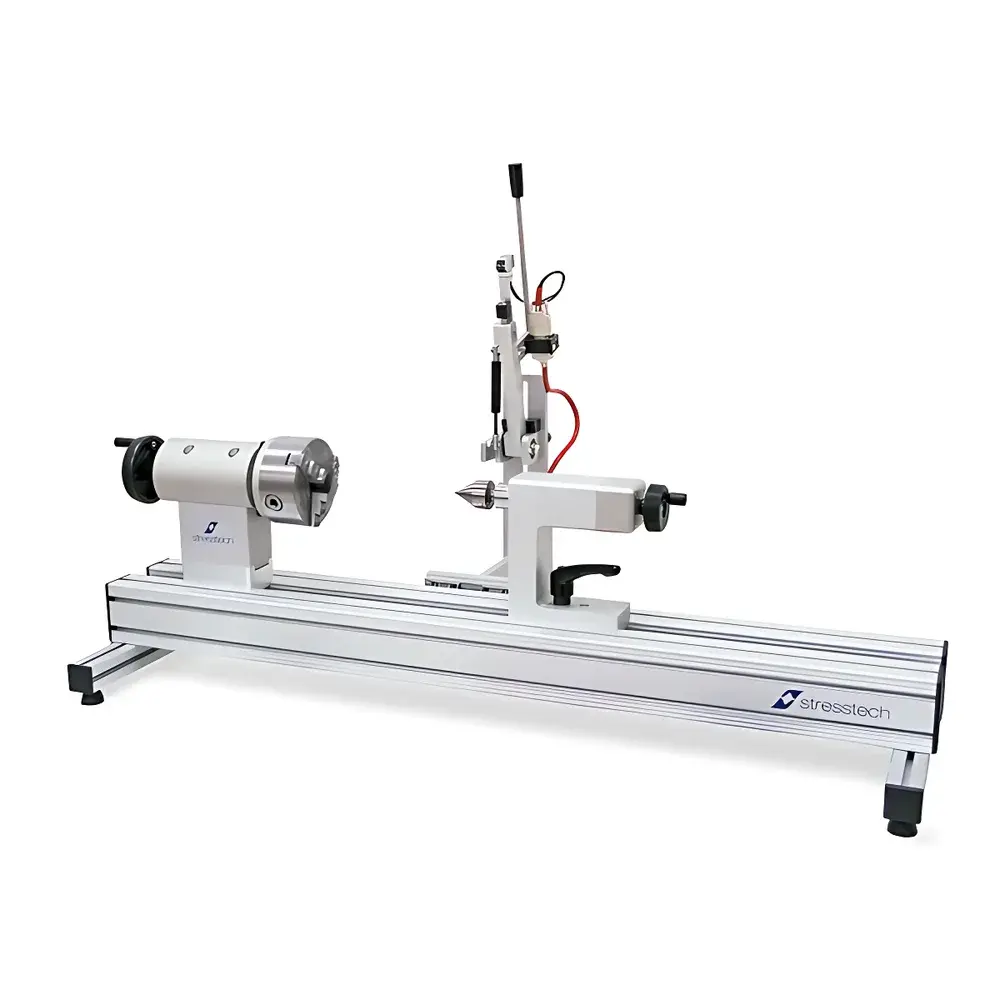
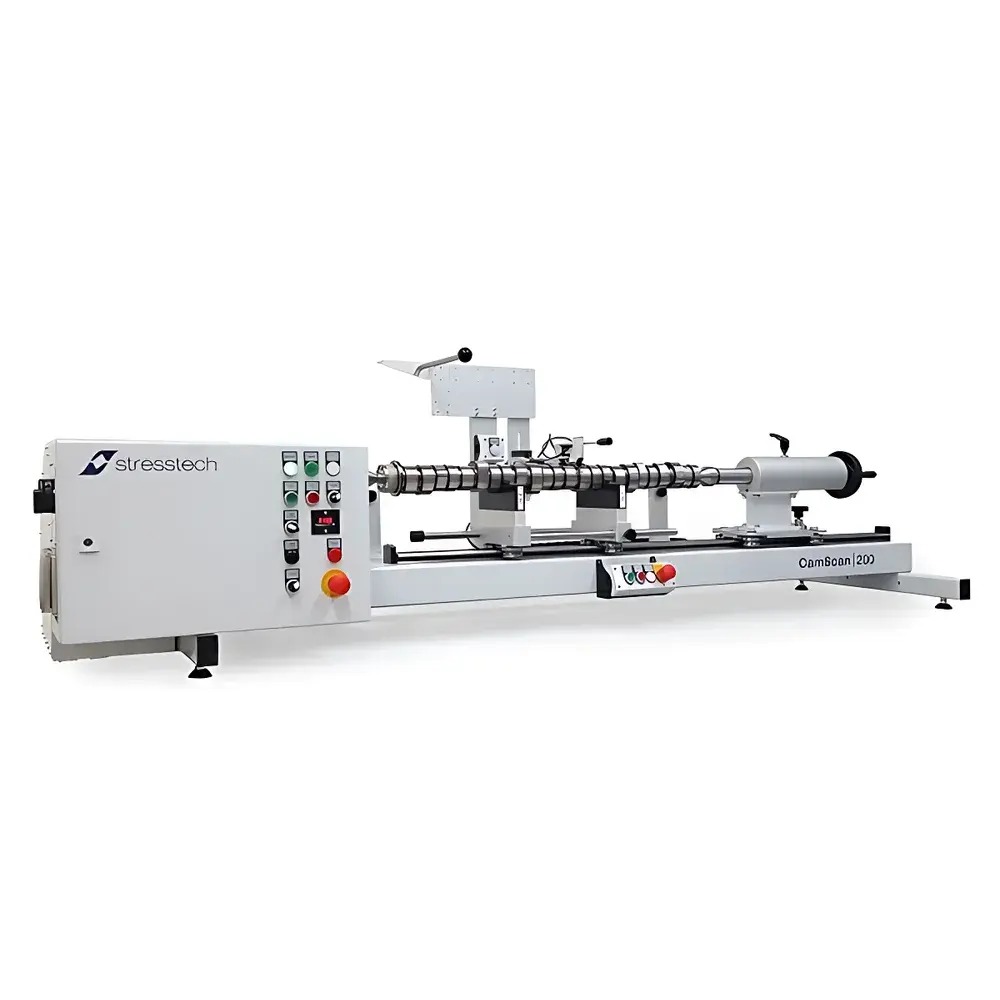
Stresstech CamScan1000 Camshaft Surface Quality Analyzer
| Brand | Stresstech Oy |
|---|---|
| Origin | Finland |
| Model | CamScan1000 |
| Measurement Principle | Magnetic Barkhausen Noise (MBN) |
| Cycle Time | 6–8 seconds per lobe |
| Channel Configuration | Single- or Multi-channel |
| Detection Type | Non-destructive, quantitative surface burn assessment |
| Alarm Threshold | User-definable |
| Compliance | Designed for ISO/IEC 17025-aligned QA environments |
| Application Scope | In-line and off-line camshaft inspection |
Overview
The Stresstech CamScan1000 Camshaft Surface Quality Analyzer is a dedicated non-destructive testing (NDT) system engineered for the rapid, quantitative evaluation of grinding-induced surface damage and heat treatment burns on camshafts. It operates on the physical principle of Magnetic Barkhausen Noise (MBN), which detects irreversible domain wall movements in ferromagnetic materials under controlled magnetic excitation. When localized microstructural changes occur—such as those caused by excessive grinding temperatures, phase transformations (e.g., untempered martensite), or residual tensile stress concentrations—the MBN signal amplitude, frequency distribution, and noise envelope exhibit statistically significant deviations from baseline material behavior. The CamScan1000 captures these variations with high temporal resolution and correlates them to subsurface integrity metrics, enabling objective pass/fail decisions without chemical etching or destructive sectioning.
Key Features
- Non-destructive, contact-based MBN measurement requiring no surface preparation, acid etching, or coating removal
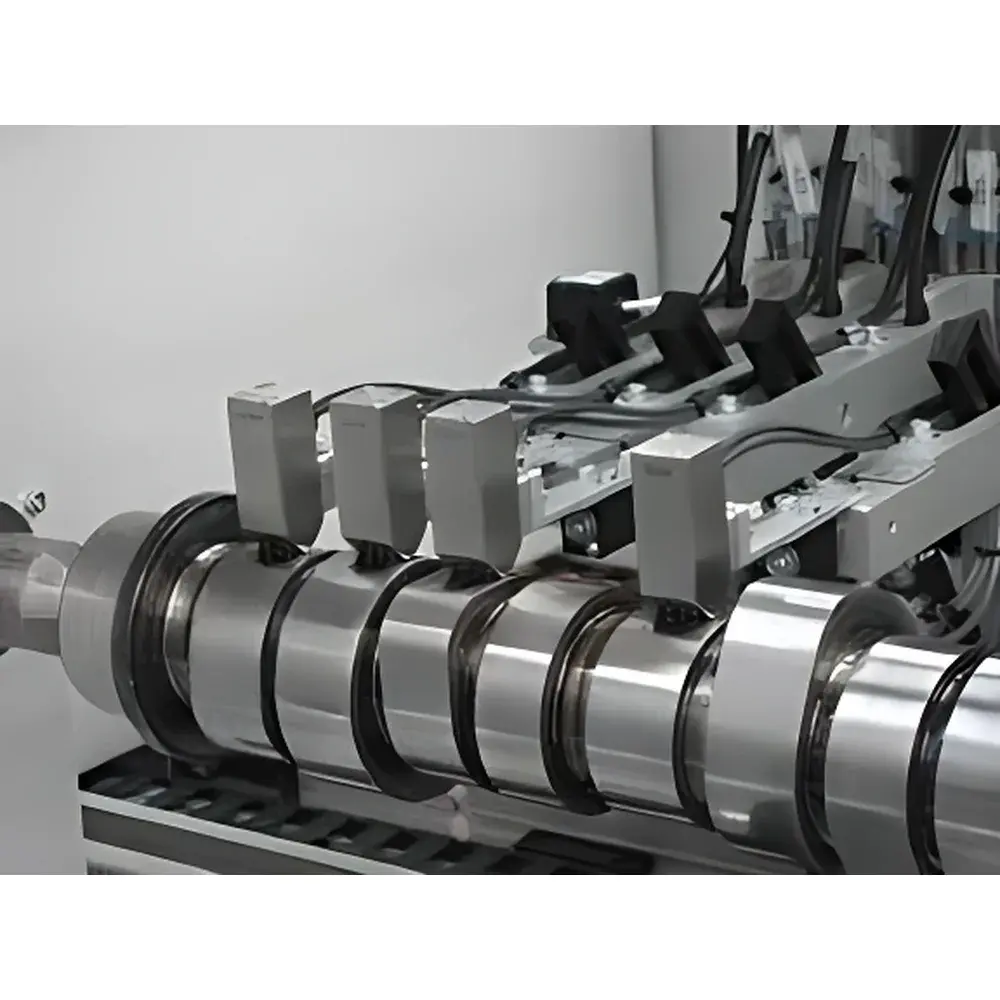
- High-throughput inspection: 6–8 seconds per cam lobe, scalable via multi-channel probe configurations for simultaneous multi-lobe evaluation
- Quantitative defect classification: Output includes normalized MBN peak amplitude, root-mean-square (RMS) voltage, and spectral centroid shift—parameters traceable to ASTM E3047-21 (Standard Guide for Magnetic Barkhausen Emission Testing)
- Configurable alarm thresholds with real-time visual and audible alerts; full audit trail of all threshold modifications logged with timestamp and operator ID
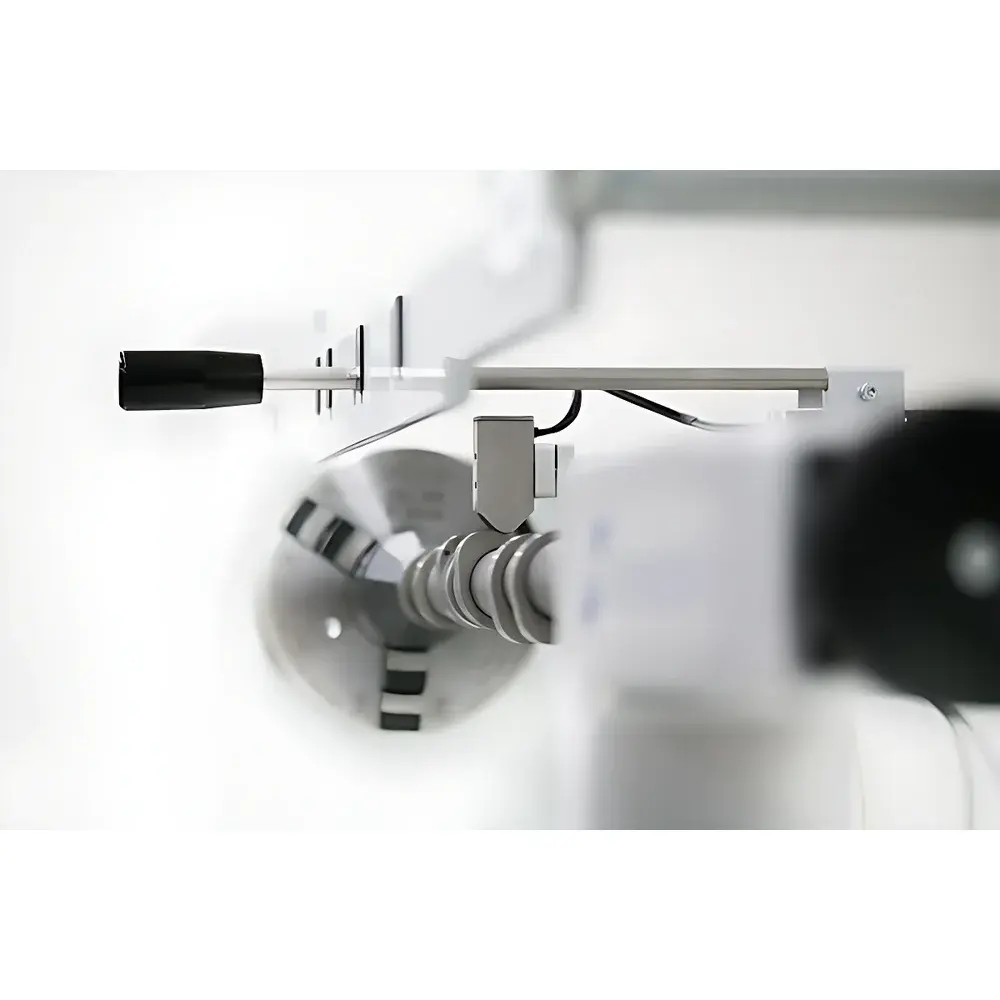
- Ruggedized industrial probe designs—including axial, radial, and contour-following variants—for reliable coupling on complex cam geometries (e.g., asymmetrical lobes, tight base circles, and transition radii)
- Embedded temperature compensation algorithm to minimize drift during extended in-process monitoring
Sample Compatibility & Compliance
The CamScan1000 is validated for use on hardened steel camshafts (e.g., 100Cr6, 52100, 42CrMo4) with hardness ranges from 55 to 65 HRC. Probe selection is matched to part geometry, surface finish (Ra ≤ 1.6 µm recommended), and magnetic permeability consistency. The system complies with electromagnetic compatibility (EMC) requirements per EN 61326-1 and meets functional safety guidelines aligned with ISO 13849-1 PLd. Data acquisition and reporting support GLP/GMP-relevant workflows, including user access control, electronic signatures, and 21 CFR Part 11-compliant audit trails when integrated with Stresstech’s optional Q-Soft Suite v5.2.
Software & Data Management
Control and analysis are performed using Stresstech’s proprietary Q-Soft software platform, deployed on an embedded industrial PC or external workstation. Q-Soft provides synchronized waveform capture, real-time FFT-based spectral analysis, spatial mapping of MBN response across cam profiles, and statistical process control (SPC) charting (X̄/R, Cpk). All raw time-domain signals, processed features, and inspection metadata are stored in a vendor-neutral SQLite database with configurable retention policies. Export formats include CSV, PDF reports (with embedded calibration certificates), and XML for integration into MES or LIMS platforms via OPC UA or RESTful API.
Applications
The CamScan1000 is routinely deployed in Tier 1 automotive powertrain manufacturing lines for 100% in-line verification of camshaft grinding processes. It supports root-cause analysis of thermal damage linked to wheel dressing cycles, coolant flow rates, feed rates, and workpiece fixturing. Beyond camshafts, the platform has been adapted—with appropriate probe and calibration—on crankshafts, gear teeth, bearing races, and turbine blade roots. End users include OEM engine plants, aerospace MRO facilities, nuclear component suppliers, and national metrology institutes conducting inter-laboratory round-robin studies on MBN repeatability per ISO/IEC 17043.
FAQ
What standards govern MBN-based surface burn detection?
ASTM E3047-21 provides procedural guidance for MBN system setup, calibration, and data interpretation; ISO 20957-2 specifies performance requirements for NDT equipment used in production environments.
Can CamScan1000 distinguish between grinding burn and decarburization?
Yes—through multi-parameter MBN signature analysis (amplitude decay rate, harmonic content, and pulse duration distribution), supported by reference libraries calibrated against metallographically verified samples.
Is operator certification required to operate the system?
Personnel must complete Stresstech’s Level 2 MBN Method Training (per EN ISO 9712), with annual competency reassessment documented in the system audit log.
How is calibration maintained across shifts and production runs?
Daily verification uses NIST-traceable reference specimens with certified burn severity levels; full recalibration is scheduled every 12 months or after 10,000 inspections, whichever occurs first.
Does the system integrate with factory automation networks?
Yes—via Ethernet/IP, PROFINET, or Modbus TCP for PLC-triggered inspections and automated pass/fail result forwarding to SCADA systems.




