
Stresstech GearScan Gear Grinding Burn Detection System
| Brand | Stresstech Oy |
|---|---|
| Origin | Finland |
| Model | GearScan |
| Measurement Principle | Barkhausen Noise Analysis (BNA) |
| Diameter Range | 5–2000 mm |
| Module Range | 1–70 |
| Measurement Time per Tooth | 2–30 s (dependent on geometry and surface condition) |
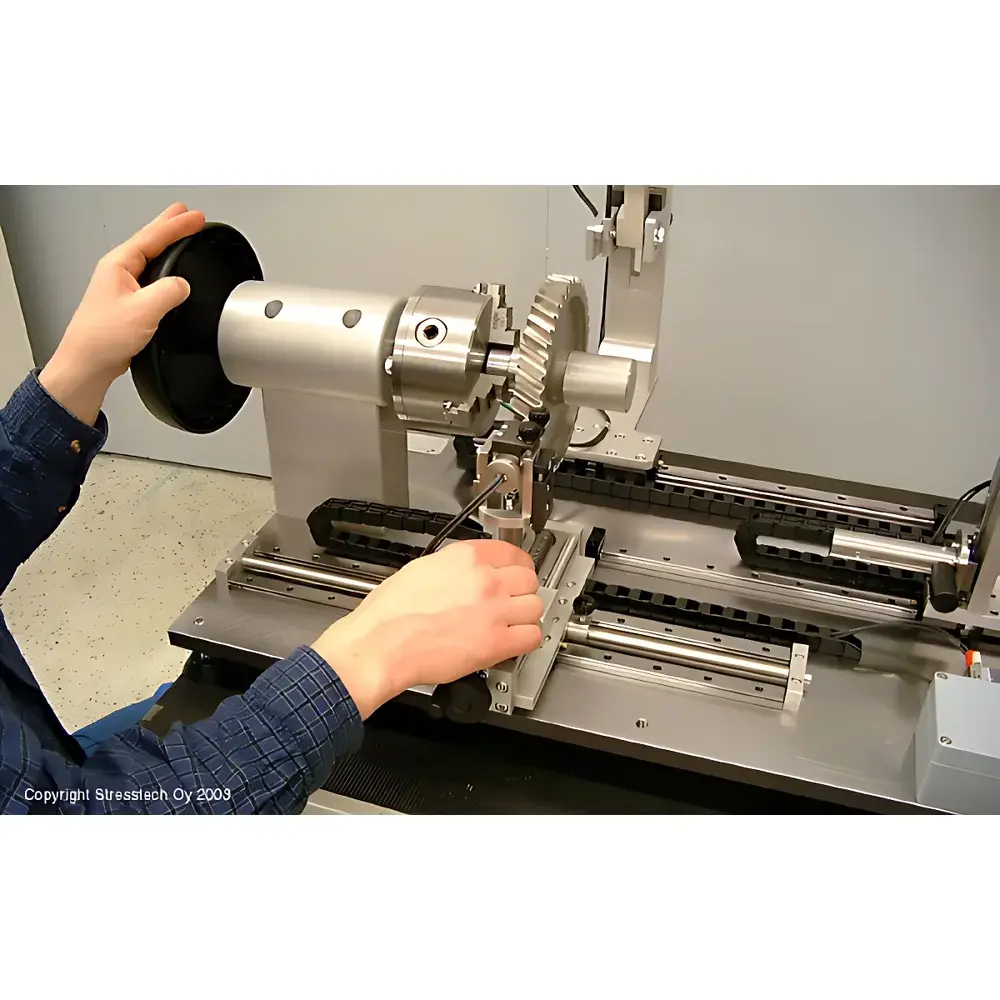
| Motion Control | Computer-controlled precision DC servo motor with linear-bearing-driven probe |
| Compliance | Designed for ISO 13302, ASTM E2964, and EN 10327-based residual stress and grinding burn assessment workflows |
| Software | RoboScan™ PC-based acquisition and analysis suite with audit trail, user access levels, and GLP/GMP-ready reporting |
Overview
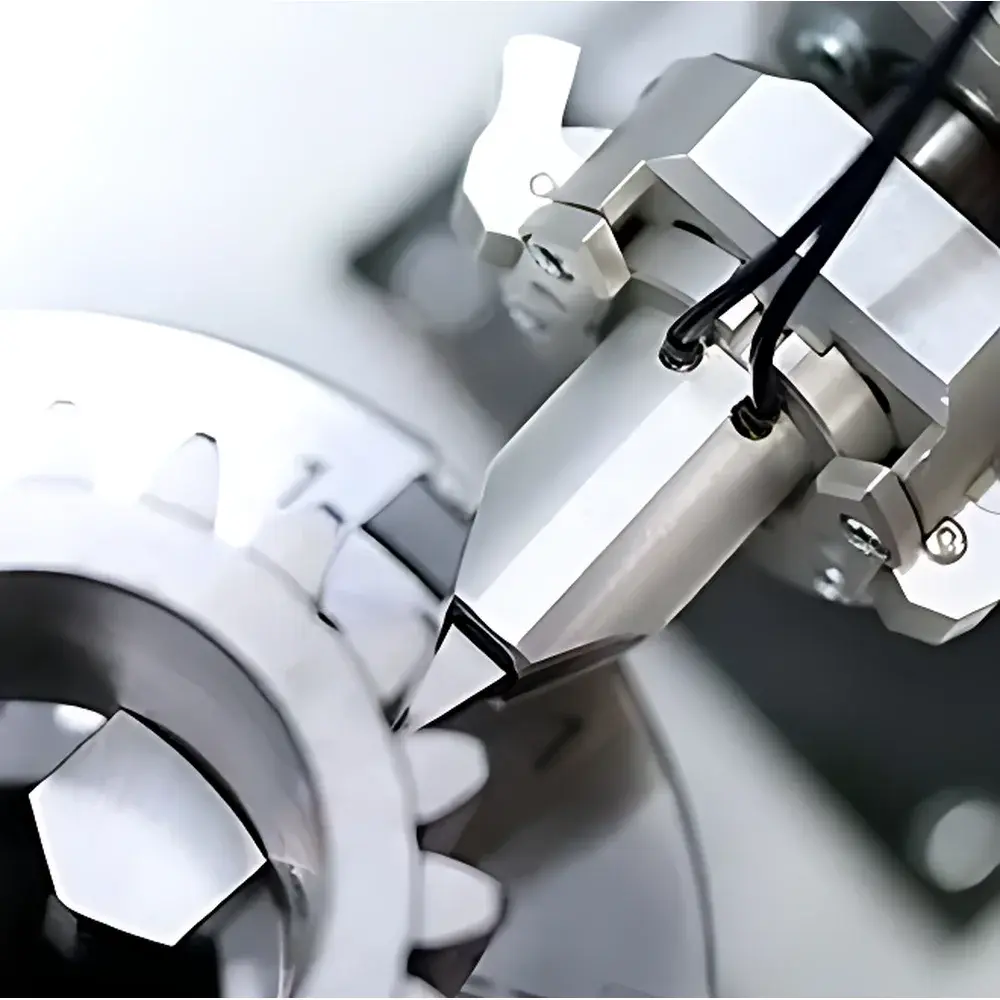
The Stresstech GearScan is a high-precision, non-destructive testing (NDT) system engineered specifically for the detection of grinding-induced thermal damage—commonly referred to as “grinding burn”—in case-hardened ferromagnetic gears and other critical rotating components. Unlike destructive acid etching or time-intensive metallographic sectioning, the GearScan employs the physics-based Barkhausen Noise Analysis (BNA) method: it measures transient magnetic domain wall activity induced by localized microstructural changes—including martensite reversion, untempered martensite, and residual tensile stress gradients—that arise during improper grinding cycles. This enables rapid, quantitative, and repeatable assessment directly on production-floor parts without surface preparation, coating removal, or part disassembly.
Key Features
- Non-contact, non-destructive evaluation compatible with finished, oil-lubricated, or coated gear surfaces—no acid etching, no surface conditioning required.
- Modular probe architecture with linear-bearing-guided transducer positioning ensures consistent probe lift-off control and mechanical repeatability across tooth flanks and root fillets.
- Computer-controlled DC servo motion system enables programmable scanning trajectories—including full-face, single-tooth, or root-to-tip profiles—with sub-millimeter positional accuracy.
- Real-time signal processing engine delivers calibrated BNA amplitude, RMS noise, and frequency-domain metrics aligned with industry-established burn severity thresholds.
- Robust industrial enclosure rated IP54; designed for integration into shop-floor environments with ambient temperature fluctuations, vibration, and electromagnetic interference mitigation.
- Compliant with functional safety requirements for Class 1 laser-free NDT equipment; CE-marked and RoHS-compliant.
Sample Compatibility & Compliance
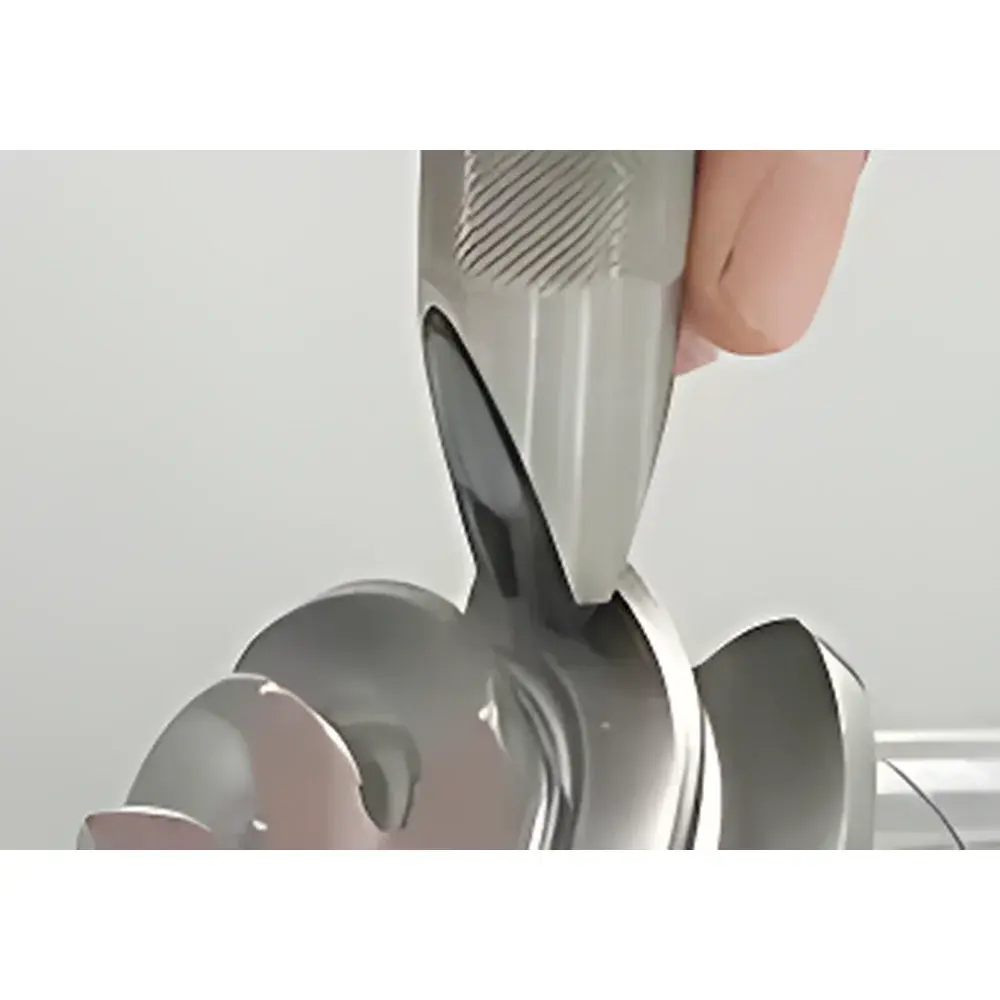
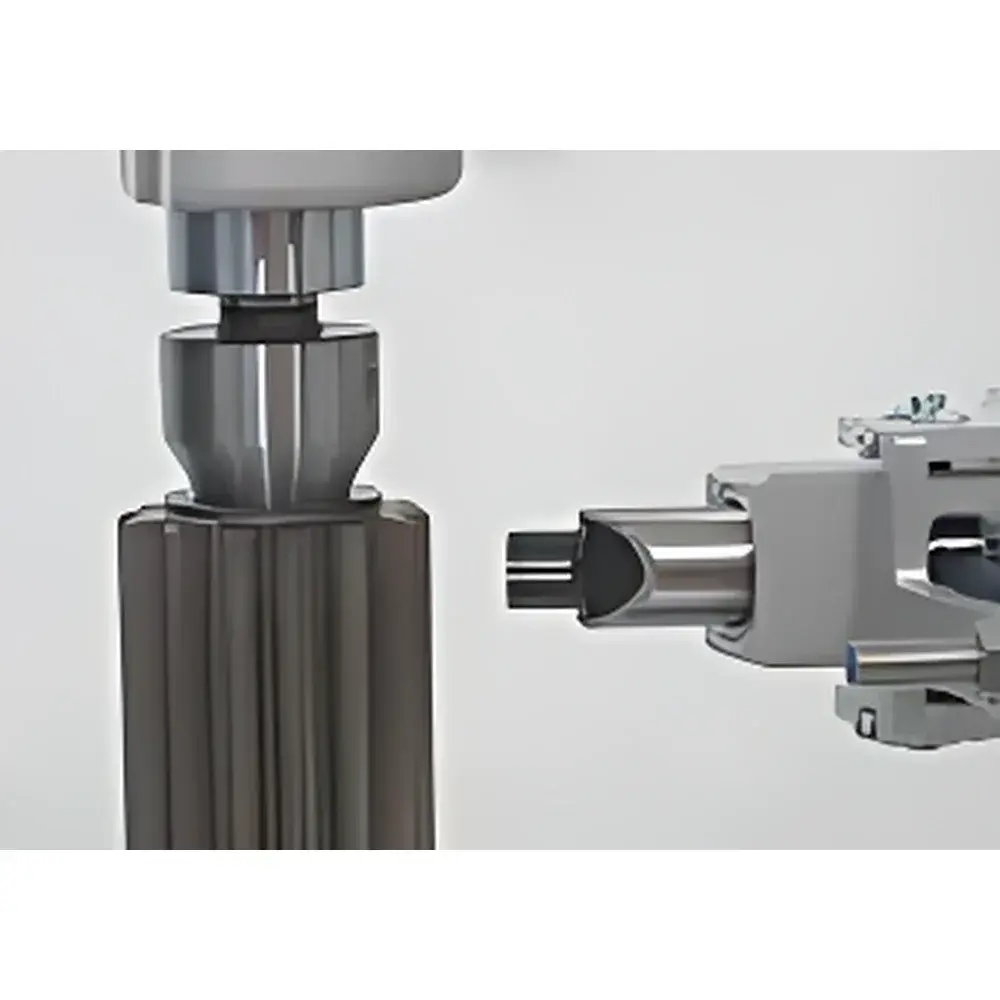
The GearScan accommodates a broad spectrum of gear geometries: spur, helical, herringbone, and internal gears with pitch diameters from 5 mm to 2000 mm and module values spanning 1 to 70. It is routinely deployed for quality assurance on aerospace transmission gears (e.g., planetary carriers), automotive differential pinions, wind turbine main shaft gears, and heavy-duty marine propulsion gears. The system supports compliance documentation aligned with AS9100 Rev D (aerospace), ISO/IEC 17025 (testing laboratories), and customer-specific PPAP Level 3 submissions. All measurement data adhere to traceable calibration protocols per ISO/IEC 17025 Annex A.2, and software validation includes IQ/OQ documentation packages for regulated manufacturing environments.
Software & Data Management
The RoboScan™ software platform provides a secure, Windows-based interface for test configuration, real-time visualization, statistical process control (SPC), and automated report generation. Each measurement session captures full waveform data, position metadata, environmental timestamps, and operator credentials. Audit trails record all parameter modifications, report exports, and user logins in accordance with FDA 21 CFR Part 11 requirements. Role-based access control (RBAC) supports multi-tier permissions—e.g., Operator, Supervisor, Administrator—with password-protected configuration locks. Export formats include CSV, PDF/A-2b (archival compliant), and XML for MES/ERP integration. Optional add-ons include SPC dashboard widgets, batch trend analysis, and API-enabled RESTful data ingestion for Industry 4.0 platforms.
Applications
- Verification of grinding process stability in heat-treated gear manufacturing lines.
- In-process screening of gear blanks prior to final finishing or assembly.
- Root cause analysis of premature gear failure in field-recovered components.
- Qualification of new grinding wheel formulations or coolant delivery systems.
- Residual stress mapping of gear tooth surfaces to support fatigue life modeling (e.g., ISO 6336-5 Annex F).
- Supporting GMP-compliant validation of machining processes in medical device drivetrain production.
FAQ
Does the GearScan require surface cleaning or degreasing before inspection?
No—Barkhausen Noise signals are insensitive to thin oil films or light oxide layers typical in post-grinding handling. However, thick rust, paint, or non-ferromagnetic coatings (>50 µm) must be removed to ensure reliable coupling.
Can GearScan differentiate between grinding burn and shot peening effects?
Yes—the system’s multi-parameter BNA signature (amplitude, skewness, power spectral density centroid) allows discrimination between compressive stress from peening and tensile-dominant microstructural damage from overheating.
Is calibration traceable to national standards?
Yes—Stresstech provides annual calibration certificates traceable to NIST and MIKES (Finnish Metrology Institute), including uncertainty budgets per ISO/IEC 17025.
What training and technical support options are available?
Stresstech offers factory-certified on-site installation, operator certification courses (8-hour hands-on), and remote diagnostics via secure VPN. Extended warranty and service level agreements (SLA) include 24/7 priority response for Tier-1 aerospace and nuclear clients.
Related Products




