
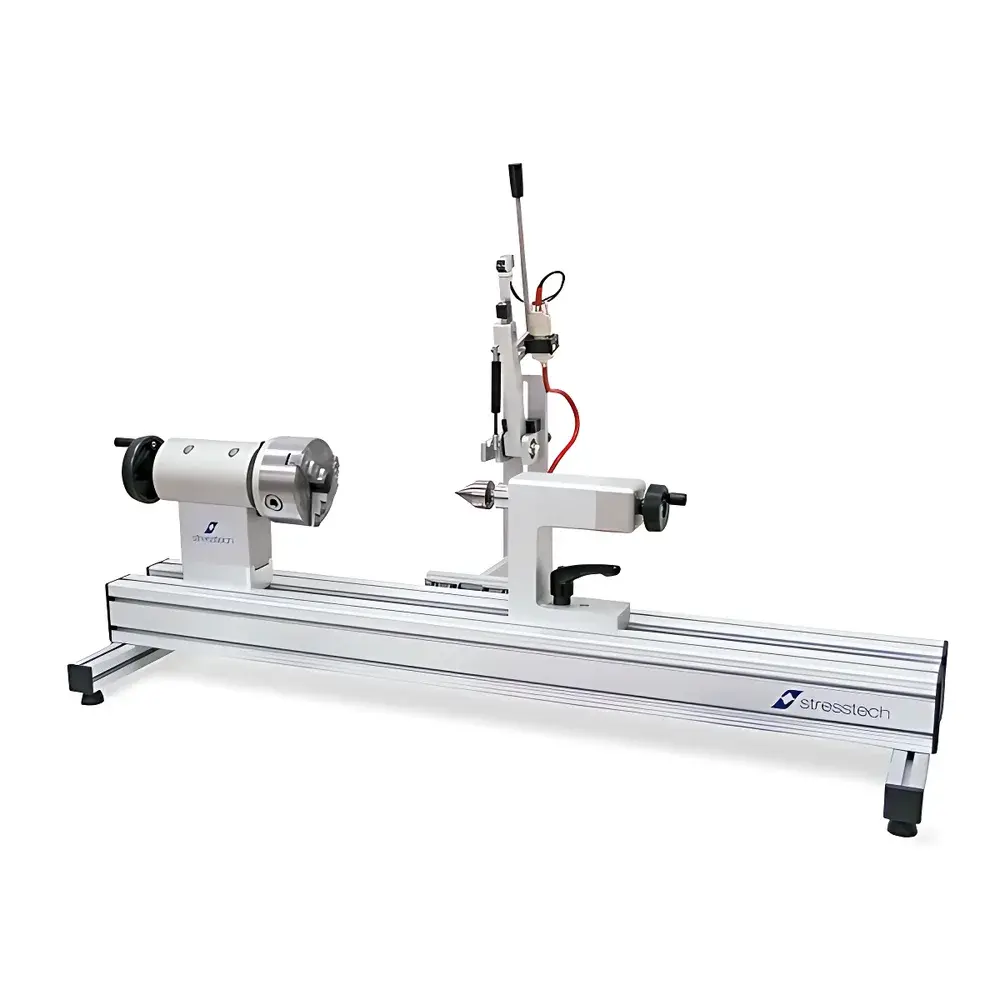
Stresstech Oy CamScan Barkhausen Noise Analyzer for Camshaft Grinding Burn Detection
| Brand | Stresstech Oy |
|---|---|
| Origin | Finland |
| Model | CamScan |
| Measurement Principle | Magnetic Barkhausen Noise (MBN) Analysis |
| Application | Non-destructive grinding burn and heat treatment defect detection on ferromagnetic components |
| Compliance | Designed per ISO 20086, ASTM E3154 (guideline), and aligned with automotive OEM process validation requirements (e.g., GM W31, Ford WHT-502, VW PV 2079) |
| Channel Configuration | Single- or multi-channel operation |
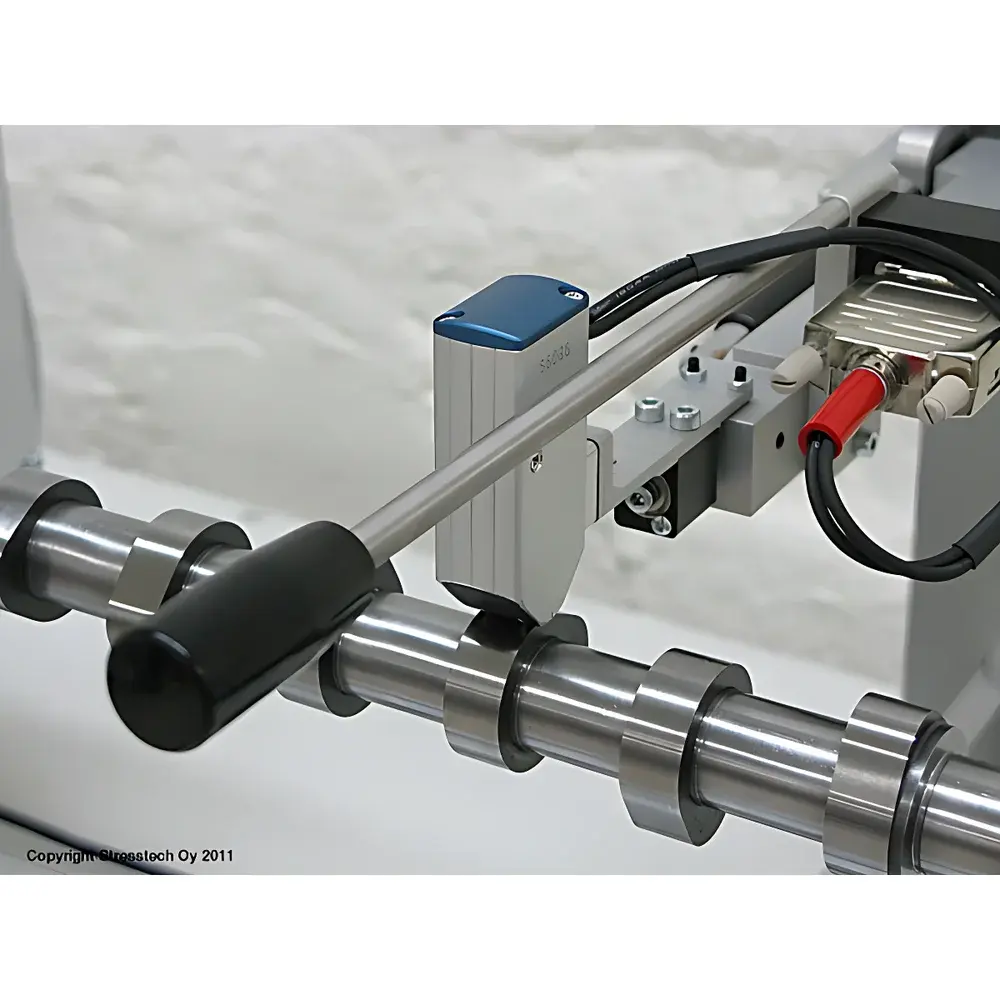
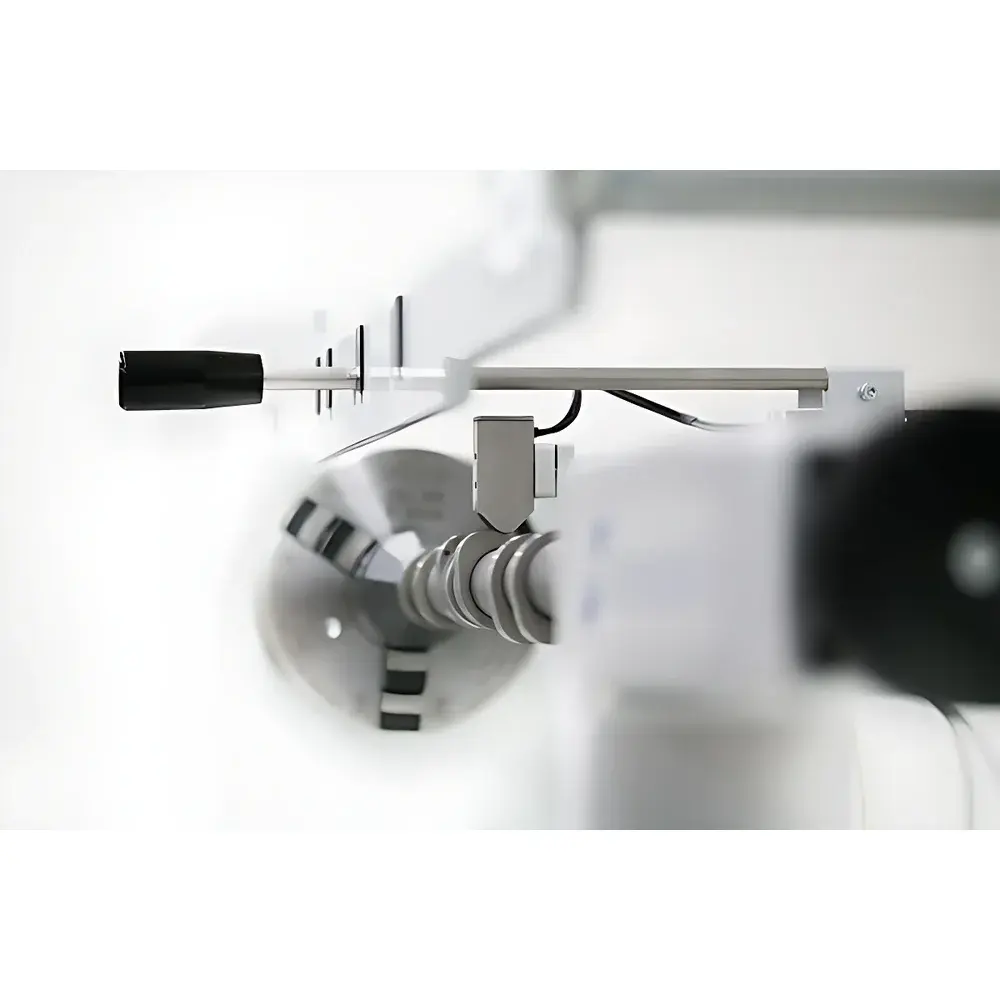
| Probe Options | Surface-contact transducers for cam lobes, journals, and complex geometries |
| Data Output | Real-time MBN amplitude & frequency spectrum, RMS voltage, peak-to-peak noise, and derivative-based burn index |
| Software Interface | CamView™ v5.2 with configurable pass/fail thresholds, statistical process control (SPC) export, and audit-trail logging compliant with FDA 21 CFR Part 11 (optional configuration) |
Overview
The Stresstech Oy CamScan Barkhausen Noise Analyzer is a precision-engineered, portable non-destructive testing (NDT) instrument specifically developed for the detection and quantification of grinding-induced thermal damage—commonly referred to as “grinding burn”—on ferromagnetic camshafts and other critical powertrain components. It operates on the physical principle of Magnetic Barkhausen Noise (MBN) analysis: when a time-varying magnetic field is applied to a ferromagnetic material, abrupt, stochastic domain wall movements generate high-frequency voltage pulses in a pickup coil. These pulses are highly sensitive to near-surface microstructural changes—including residual stress gradients, martensitic phase transformations, and microcracking—induced during aggressive grinding or improper heat treatment. Unlike destructive metallography or time-consuming acid etching, the CamScan delivers objective, repeatable, and traceable surface integrity assessment directly on the shop floor or in the quality lab—without part modification or surface preparation.
Key Features
- Engineered for high reproducibility in serial production environments: calibrated probe lift-off compensation and temperature-stable signal conditioning ensure consistent readings across shifts and operators.
- Multi-probe compatibility: interchangeable surface-contact probes—including contour-conforming cam lobe probes and journal-specific flat/curved transducers—enable reliable inspection of geometrically complex features without repositioning or fixturing.
- Real-time parametric output: simultaneous acquisition of MBN root-mean-square (RMS) amplitude, spectral centroid frequency, pulse count rate, and derivative-based burn severity index supports both qualitative screening and quantitative trending.
- Configurable channel architecture: supports single-channel verification or synchronized multi-channel mapping (up to 4 channels) for full-camshaft scanning or comparative analysis between lobes and journals.
- Ruggedized industrial design: IP54-rated enclosure, shock-absorbing housing, and battery-operated portability facilitate use in machining cells, final assembly lines, and incoming inspection bays.
Sample Compatibility & Compliance
The CamScan is validated for use on hardened and tempered steel camshafts (e.g., 16MnCr5, 20MnCr5, 42CrMo4, and similar case-hardened alloys) with hardness ranges from 55–65 HRC. It is equally applicable to crankshafts, gear teeth, bearing races, and other ground ferromagnetic components where subsurface tempering, rehardening, or untempered martensite formation may compromise fatigue life. The system complies with internationally recognized NDT guidance documents, including ISO 20086:2017 (“Non-destructive testing — Magnetic Barkhausen noise method — General principles”) and serves as a technical basis for conformance to automotive OEM specifications such as General Motors’ W31, Ford’s WHT-502, and Volkswagen Group’s PV 2079. When configured with CamView™ software and enabled audit-trail functionality, it meets documentation requirements for GLP and GMP-aligned quality systems.
Software & Data Management
CamView™ v5.2 is the dedicated PC-based control and analysis platform for the CamScan. It provides real-time waveform visualization, automated threshold-based pass/fail classification, and statistical reporting tools compatible with SPC frameworks (X-bar/R charts, Cp/Cpk calculation). All measurement sessions are timestamped and logged with operator ID, probe type, calibration date, and environmental metadata. Optional 21 CFR Part 11 compliance mode enables electronic signatures, user access controls, and immutable audit trails—supporting regulatory submissions and internal quality audits. Export formats include CSV, XML, and PDF reports suitable for integration into MES or QMS platforms (e.g., Siemens Opcenter, ETQ Reliance).
Applications
- Detection of grinding burn on cam lobes and bearing journals following cylindrical or profile grinding operations.
- Identification of quench cracks and stress-induced microcracks formed during heat treatment or induction hardening.
- Verification of tempering adequacy in surface-hardened zones to prevent premature fatigue failure.
- Process validation and monitoring for grinding wheel wear, coolant depletion, or feed-rate excursions.
- Root cause analysis in field failure investigations involving camshaft fracture or abnormal wear patterns.
FAQ
What materials can the CamScan inspect?
It is designed exclusively for ferromagnetic steels—primarily medium- to high-carbon alloy steels used in camshafts, gears, and bearings. Non-ferrous metals, austenitic stainless steels, and aluminum alloys are not detectable.
Does the CamScan require surface preparation before testing?
No—measurements are performed directly on finished surfaces. Oil film, light rust, or standard shop coatings do not interfere; however, thick paint, plastic coatings, or heavy scale must be removed.
How is calibration maintained?
The system uses traceable reference standards (e.g., Stresstech-certified burn blocks with defined microstructural states) and includes built-in self-diagnostic routines. Annual recalibration by an accredited Stresstech service center is recommended for metrological continuity.
Can CamScan data be integrated into our existing quality database?
Yes—via standardized CSV/Excel export or OPC UA interface (optional hardware module), enabling direct ingestion into SQL-based QMS or Industry 4.0 analytics dashboards.
Is operator certification required?
While intuitive to operate, optimal interpretation requires familiarity with MBN signal morphology and metallurgical failure modes. Stresstech offers Level 2 NDT training per EN ISO 9712 upon request.






